Quick verdict: Choose a Whippet if you want a sturdier, medium-sized running companion with a calmer household presence. Choose an Italian Greyhound if you want a much smaller, highly affectionate lap dog and can manage a more delicate frame, sensitive temperament, and stricter dental care.
Whippets and Italian Greyhounds share the elegant outline and chase instinct of sighthounds, but they are not interchangeable in daily life. Their differences in size, physical durability, exercise style, toilet training, and family compatibility can matter more than their similar appearance.
This guide compares the two breeds using practical criteria: living space, activity needs, temperament, training, grooming, health considerations, children, other pets, and the amount of supervision each dog may need. For broader breed comparisons, you can also visit the LaokPet homepage or read our comparison of French Bulldogs and Boston Terriers.
1. Start with the lifestyle differences that matter most
The most useful way to compare these breeds is not to ask which one is “better” in general. Ask which dog fits your household’s physical environment, schedule, and tolerance for supervision.
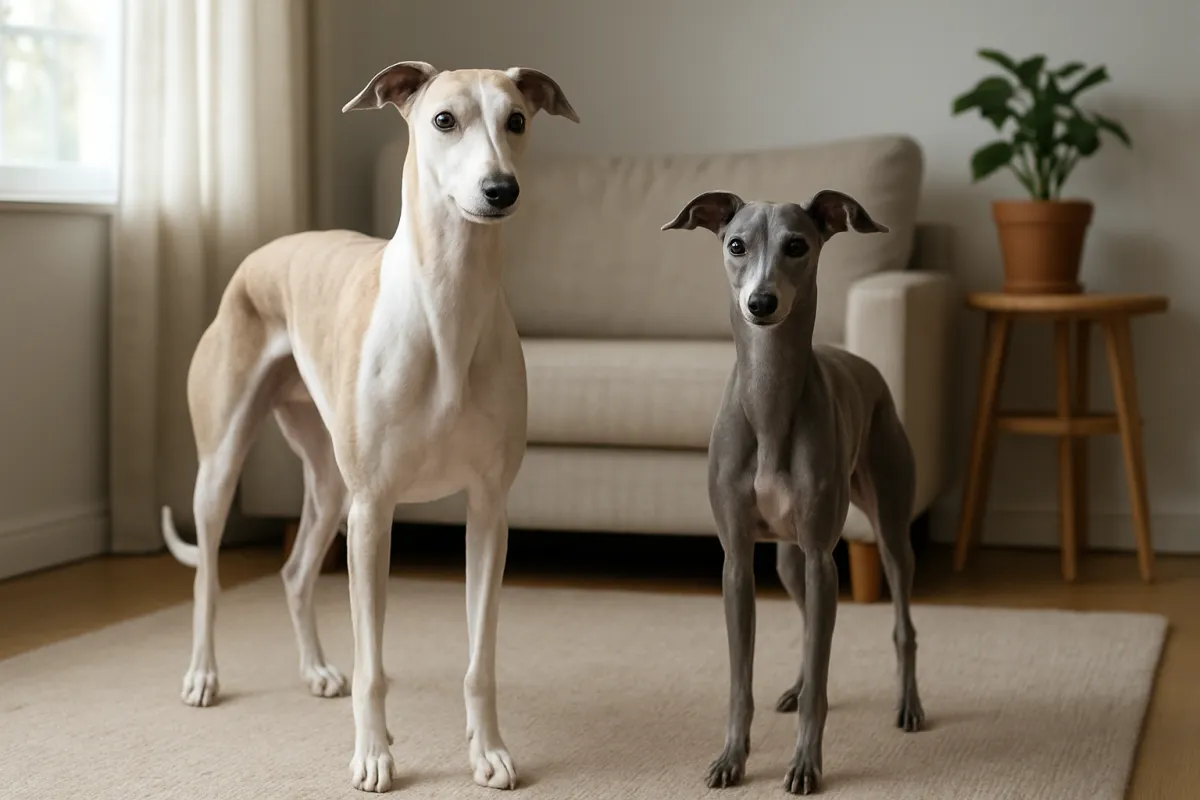
A Whippet is a medium-sized dog, commonly standing around 18 to 22 inches at the shoulder and weighing roughly 25 to 40 pounds. The American Kennel Club describes the breed as athletic but calm in the home, with a short coat and relatively low grooming demands. The AKC Whippet profile is a useful starting point for the breed’s general care needs.
An Italian Greyhound is a toy-sized sighthound. It can be active and playful, but its small, fine-boned body changes the practical responsibilities of ownership. The Italian Greyhound Club of America notes that the breed is affectionate, sensitive, and not usually the best match for very young or rough children. The breed-club overview provides additional background.
Both breeds need secure control outdoors. A sighthound may chase a squirrel, rabbit, or other moving animal before responding to a recall cue, so an unfenced open area is not a safe substitute for a properly enclosed space.
Decision criteria to use before choosing
- Household handling: Can everyone handle the dog gently and consistently?
- Outdoor access: Do you have a secure fenced area or a realistic plan for lead walks?
- Activity pattern: Do you want a dog for longer walks and running, or mostly indoor companionship?
- Temperature: Can you provide coats, warm bedding, and indoor comfort in cold weather?
- Training patience: Are you prepared for sensitive, independent hound behavior?
- Supervision: Can you prevent falls, jumping accidents, door-dashing, and rough play?
2. Whippet vs Italian Greyhound: side-by-side comparison
The table below summarizes the practical tradeoffs. Individual dogs vary, so use these points as tendencies rather than guarantees.
| Decision area | Whippet | Italian Greyhound | What it means for you |
|---|---|---|---|
| Size | Medium-sized and substantial | Very small and light | The Whippet is easier to handle during active outings; the IG is easier to accommodate in a small home. |
| Exercise | Short bursts of fast running plus regular walks | Daily play and walks, usually in shorter sessions | Neither is a couch-only breed, but their exercise can be adapted to different homes. |
| Indoor behavior | Often calm after exercise | Affectionate, playful, and likely to seek close contact | Both can settle indoors when their needs are met. |
| Physical durability | Generally sturdier, though still athletic and injury-prone at speed | More vulnerable to injury from falls, jumps, and rough play | The IG requires stricter environmental management. |
| Training style | Intelligent but sometimes independent | Intelligent, sensitive, and often easily discouraged by harsh methods | Reward-based training is the safer approach for both. |
| Grooming | Short coat with modest brushing needs | Very short coat, but regular tooth brushing is especially important | The IG may require more attention to dental routines. |
| Children | Can suit respectful older children and some family homes | Usually a poor match for rough or unpredictable handling | Supervision is essential; size alone does not make a dog child-proof. |
| Cold weather | Needs protection in cold conditions | Often especially sensitive to cold | Plan for coats, warm resting areas, and shorter winter outings. |
| Best general fit | Active companion who also enjoys relaxing | Close companion for a careful, affectionate household | Your preferred relationship and management style should decide the final choice. |
3. Compare exercise, prey drive, and outdoor safety
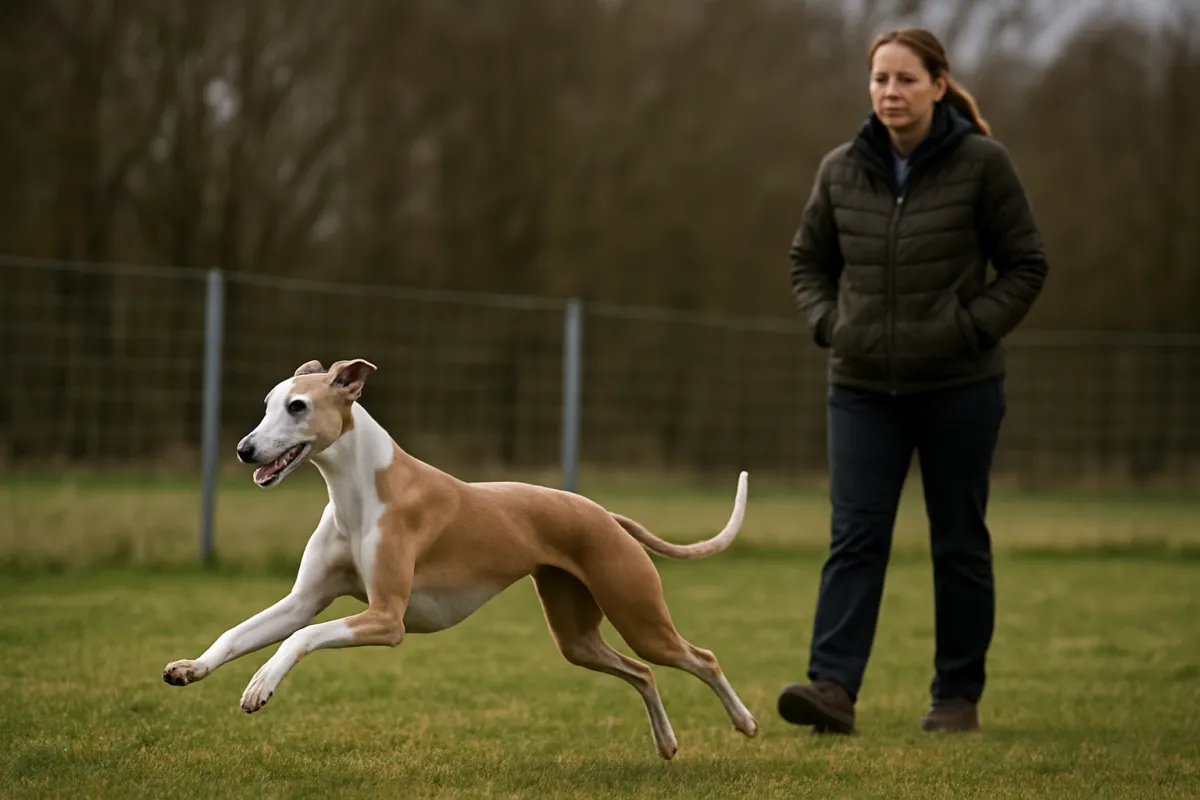
Whippets are sprinters rather than endurance athletes. They may enjoy a vigorous run, retrieving games, lure coursing, or a brisk walk, then spend much of the day resting. The AKC describes them as capable of apartment living when their exercise needs are handled properly. Its Whippet lifestyle guide explains why daily activity does not necessarily mean constant high energy.
Italian Greyhounds also need regular movement and mental engagement, but their exercise is usually easier to provide through indoor play, short walks, training games, and carefully supervised outdoor time. Their size makes them convenient for travel and small living spaces, but it does not remove their instinct to chase.
For either breed, an unfenced dog park can be risky. The Italian Greyhound Club of America specifically warns that moving small animals can trigger a chase, while the AKC recommends keeping Whippets on lead outside securely fenced areas. Recall training is valuable, but it should not be treated as a guaranteed emergency brake.
Which dog fits an active household?
Choose the Whippet if you want a dog that can participate more comfortably in longer walks, controlled running, or larger-dog activities. Choose the Italian Greyhound if you prefer brief outings and indoor games, and you are willing to keep outdoor exercise controlled rather than letting the dog free-run in exposed areas.
4. Compare temperament, attachment, and training
Whippets are often affectionate, gentle, and relatively quiet in the home. They can be independent and may not respond to training with the eager obedience associated with retriever or herding breeds. Short sessions, clear cues, food rewards, and repetition generally work better than pressure.
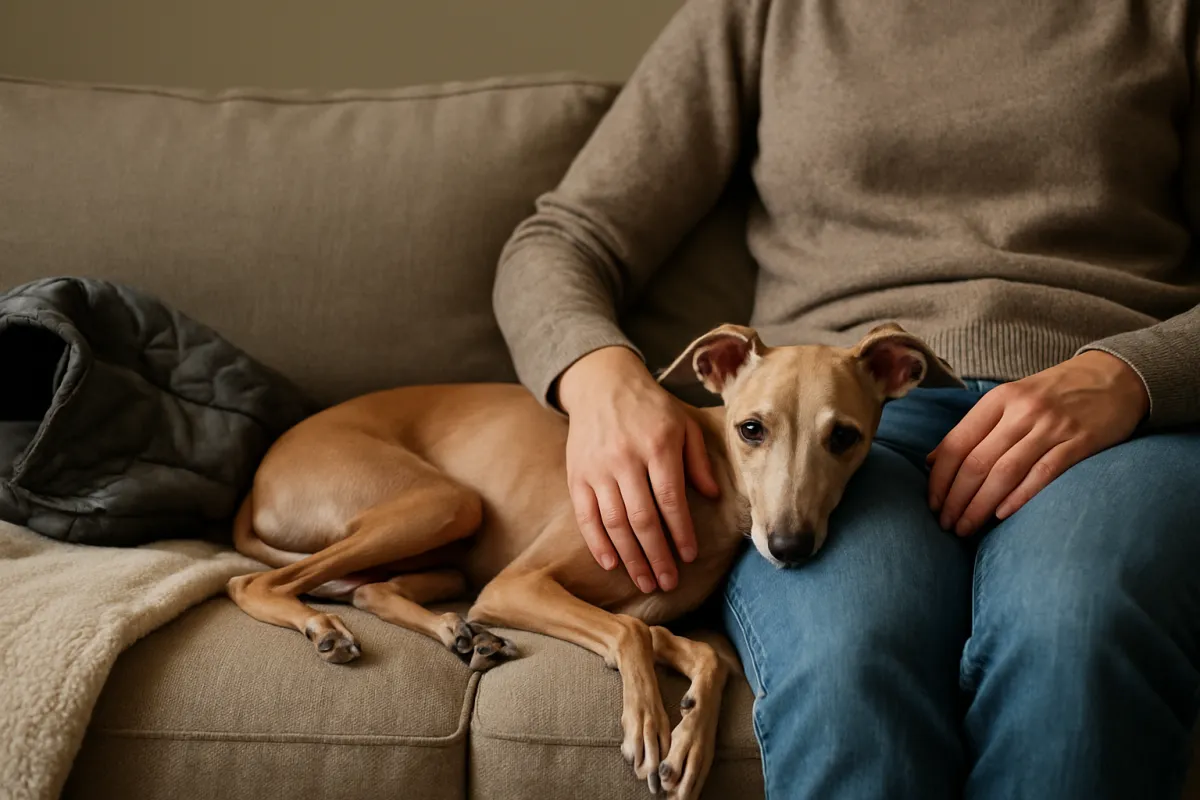
Italian Greyhounds are often intensely people-oriented. They may follow you from room to room, seek warmth and contact, and become distressed if left without enough preparation. Their sensitivity can be endearing, but it also means that shouting, physical corrections, or chaotic training can damage confidence.
Both dogs benefit from early socialization. Introduce them gradually to household sounds, visitors, grooming, car travel, veterinary handling, calm dogs, and different surfaces. Socialization should create positive experiences; forcing a frightened puppy into a situation can make the problem worse.
House-training deserves realistic expectations
Some Italian Greyhounds are notably difficult to house-train, particularly in cold, wet, or inconvenient weather. A consistent schedule, frequent outdoor opportunities, close supervision, and immediate rewards can help, but prospective owners should be prepared for a longer process than they may expect.
Whippets are not automatically effortless to house-train either, especially as puppies, but their larger size and more conventional outdoor routine may be easier for many households to manage. Ask a breeder or rescue organization about the individual dog’s history instead of relying only on breed reputation.
5. Consider children, cats, and other dogs
A Whippet may work well in a family with respectful children who understand that a sleeping or resting dog should be left alone. Its larger body is generally better suited to normal household movement than an Italian Greyhound’s, but it can still be injured or frightened by grabbing, chasing, or roughhousing.
Italian Greyhounds are usually better suited to adults, older children, or families capable of maintaining calm handling rules. A child who wants to carry, dress, chase, or play physically with a dog may not be a suitable match for this breed.
Both breeds can live with other dogs, especially when introductions are gradual and play is well matched. Cats and small pets require individual assessment because both breeds may have prey drive. A dog that has lived peacefully with cats is a safer starting point than one with an unknown history, but supervision remains necessary.
- Use baby gates and separate feeding areas during introductions.
- Give the smaller or more cautious animal a safe retreat.
- Interrupt chase games before they become frantic.
- Do not leave a new dog and small pets unsupervised until trust is well established.
6. Compare grooming, dental care, and everyday maintenance
Neither breed needs elaborate coat styling. A Whippet’s short, smooth coat generally needs occasional brushing, nail care, ear checks, baths when dirty, and routine tooth brushing. Short hair does not mean no shedding, so furniture and clothing may still collect loose hair.
The Italian Greyhound’s coat is similarly simple, but dental care deserves special attention. The AKC recommends regular tooth brushing, preferably daily, and veterinary dental cleaning when appropriate. Begin slowly with a dog-safe toothbrush and toothpaste, rewarding calm cooperation rather than forcing the mouth open.
Both breeds have little natural insulation. Soft bedding, indoor sleeping, and weather-appropriate clothing may be useful. Clothes should fit without restricting movement, rubbing the skin, or creating a chewing hazard.
If shedding and household cleaning are major concerns, our guide to removing pet hair from furniture offers practical maintenance ideas. For bathing products, see how to choose a gentle dog shampoo for sensitive skin.
7. Treat health and injury risk as a real selection factor
A Whippet’s lean appearance is normal, but weight should still be monitored. Responsible breeders may screen for cardiac disease, eye disorders, and hearing problems, among other concerns. Ask for documented health testing and discuss the breed’s common risks with a veterinarian before committing.
Italian Greyhounds are often long-lived, but their fine bones can be vulnerable to fractures, particularly during puppyhood or in homes with stairs, furniture, slippery floors, or larger dogs that play roughly. Their health planning may include attention to patellas, eyes, thyroid function, dental disease, and orthopedic injuries.
These are general breed tendencies, not a diagnosis or a prediction about an individual dog. A pre-adoption veterinary examination, reliable medical records, and a breeder or rescue group that answers questions openly are more useful than a claim that a breed is “healthy” or “low maintenance.”
Questions to ask a breeder or rescue organization
- What health examinations or genetic tests have been completed?
- Has the dog lived with children, cats, or other dogs?
- How does the dog respond to handling, nail trims, and tooth brushing?
- Has the dog shown separation distress or house-training problems?
- Are there known injuries, dental issues, allergies, or medications?
- What type of fencing, flooring, and daily routine has the dog used?
8. Match each breed to a specific household
Choose a Whippet if you want:
- A medium-sized dog that is athletic outdoors and relaxed indoors.
- A companion for regular walks, secure-yard running, or dog sports.
- A breed that can fit apartment life when exercise and enrichment are planned.
- A dog that may be more physically forgiving than a toy-sized sighthound.
- A quiet, affectionate companion without intensive coat grooming.
Choose an Italian Greyhound if you want:
- A very small dog that enjoys close human companionship.
- A breed suited to a careful adult household or older, gentle children.
- A playful dog whose activity can often be provided indoors and in short outings.
- A travel-friendly companion with minimal coat maintenance.
- A dog whose sensitive personality matches a patient, reward-based trainer.
Consider neither breed for now if:
- You want a reliably off-leash dog in unfenced spaces.
- Your household includes very young children who cannot follow handling rules.
- You are away for long periods and cannot plan gradual alone-time training.
- You dislike dental care, weather protection, or careful injury prevention.
- You want a dog that will tolerate harsh corrections or inconsistent routines.
9. Use this checklist before making the final choice
- Measure the places where the dog will sleep, eat, and move safely.
- Check stairs, balconies, slippery floors, gaps in fencing, and tall furniture.
- Plan a secure outdoor exercise option before bringing the dog home.
- Budget for routine veterinary care, dental care, training, bedding, and coats.
- Meet adult dogs, not only puppies, to observe typical size and behavior.
- Ask whether the dog can settle alone and how house-training has progressed.
- Arrange a veterinary appointment soon after adoption or purchase.
- Choose a reward-based trainer familiar with sensitive sighthounds.
10. Common mistakes when comparing Whippets and Italian Greyhounds
Mistake 1: Choosing by appearance alone
Their similar silhouette can hide major differences in size, strength, and injury management. Imagine the adult dog in your home, not just the puppy in a photograph.
Mistake 2: Assuming small means easy
An Italian Greyhound may need less physical space, but it can require more careful handling, more dental attention, and more patience with house-training.
Mistake 3: Treating a fenced yard as optional
A yard is not mandatory for every owner, but a safe plan for controlled exercise is. Neither breed should be trusted loose simply because it has learned basic obedience.
Mistake 4: Ignoring cold sensitivity
Short-coated sighthounds can become uncomfortable quickly in cold or wet conditions. Build weather protection into your routine rather than treating it as an occasional accessory.
Mistake 5: Expecting instant obedience
Both breeds can learn, but they may weigh the reward and the situation before responding. Keep training short, calm, consistent, and worthwhile.
11. What if your situation is unusual?
What if you live in an apartment? Either breed can potentially adapt if you provide daily movement, enrichment, and safe toilet routines. The Whippet needs room for larger equipment and a sturdier walking setup; the Italian Greyhound may be easier to carry or transport but still needs regular outdoor opportunities.
What if you already have a cat? Choose an individual dog with a known history around cats when possible. Use controlled introductions and never assume that a calm first meeting eliminates prey-drive risk.
What if you have young children? A Whippet may be the more realistic option between the two, but only when adults supervise and children can follow boundaries. For a chaotic household, waiting or choosing a sturdier, more tolerant breed may be wiser.
What if the dog is limping, repeatedly avoiding stairs, or showing dental pain? Restrict risky activity and contact a veterinarian promptly. Small dogs with sudden lameness and any dog with significant pain should not be managed only with home observation.
12. Final verdict: which dog is better for you?
In the Whippet vs Italian Greyhound decision, the Whippet is usually the better all-round choice for an active household that wants a medium-sized dog capable of running, walking, and relaxing at home. It offers more physical substance while retaining the affectionate, quiet, low-coat-maintenance qualities many people like in sighthounds.
The Italian Greyhound is the better choice when your priority is a very small, devoted companion and your household can provide gentle handling, warm conditions, dental care, and careful injury prevention. Its size is convenient, but its needs are not automatically simpler.
Choose the Whippet if you want more versatility and sturdiness. Choose the Italian Greyhound if you want maximum closeness in a smaller package and are comfortable managing a sensitive, delicate dog. Whichever breed you prefer, let the individual dog’s health, temperament, history, and compatibility with your home outweigh color, fashion, or appearance.