Quick verdict: Choose a French Bulldog if you want a calmer, highly adaptable companion with modest exercise needs. Choose a Boston Terrier if you prefer a more energetic, athletic, and generally eager-to-train small dog. Neither breed is automatically “better.” The right choice depends on how much activity, training, heat management, and health-related care you can provide.
French Bulldog vs Boston Terrier is a close comparison because both breeds are small, social, short-coated, and well suited to many homes. Their differences become more important when you consider your daily schedule, summer climate, children, other pets, and expectations about exercise.
This guide compares the breeds by size, temperament, activity, training, grooming, health considerations, and household fit. It also highlights the tradeoffs that are easy to miss when you choose based mainly on appearance.

1. Start with the lifestyle you can realistically provide
The best breed decision begins with your normal week, not your ideal weekend. Consider how long the dog may be alone, how often you walk, whether your home gets hot, and whether you want a companion for dog sports or simply a nearby household pet.
- Daily time: Both breeds need companionship, socialization, basic training, and routine care.
- Activity level: French Bulldogs usually suit moderate exercise plans, while Boston Terriers often enjoy more active games and structured activities.
- Climate: Both have short muzzles and need careful management in heat and humidity.
- Noise and neighbors: Individual dogs vary, but neither breed should be selected on the assumption that every dog will be silent.
- Budget: Purchase or adoption cost is only one part of ownership. Food, preventive care, training, insurance, boarding, and unexpected veterinary treatment matter more over time.
For general breed information, compare the American Kennel Club’s French Bulldog profile with its Boston Terrier profile. Breed descriptions are useful starting points, but an individual dog’s genetics, upbringing, age, and health still shape its behavior.

2. Compare the physical differences before choosing
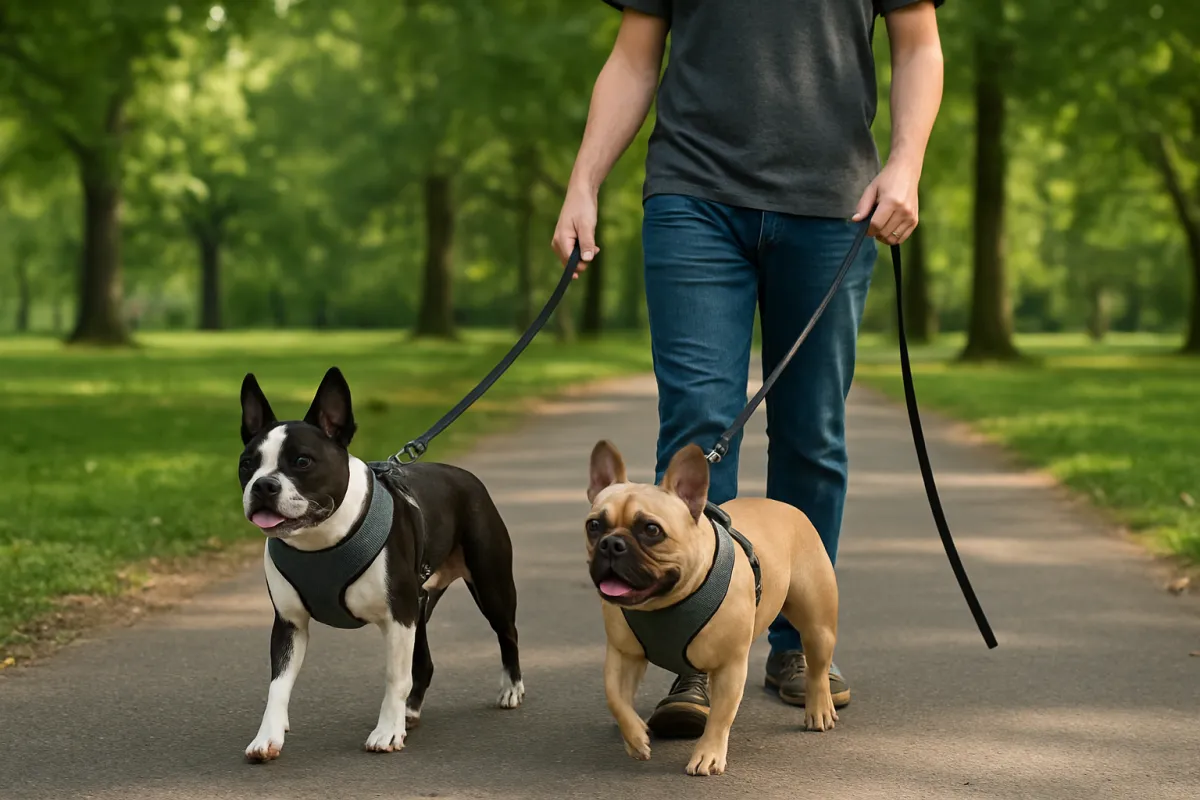
Both dogs are compact and sturdy, but they have noticeably different proportions. French Bulldogs generally have a heavier, broader build, while Boston Terriers tend to look lighter, leggier, and more athletic.
According to the AKC, French Bulldogs are typically about 11–13 inches tall and weigh under 28 pounds. Boston Terriers are also small, with an AKC breed standard that allows a range of weights up to 25 pounds, divided into weight classes. Individual dogs can vary, so use adult parents and veterinary guidance as better indicators than appearance alone.
The French Bulldog’s stocky body, large head, short muzzle, and upright “bat ears” give it a more solid appearance. The Boston Terrier usually has a square head, large round eyes, a compact body, and distinctive white markings that create its familiar tuxedo look.
These shapes are not only cosmetic. A Frenchie’s front-heavy structure means it should never be left unattended around water. Both breeds may have breathing limitations associated with short facial anatomy, so neither is a good choice for owners expecting a jogging or hot-weather adventure partner.
Before bringing either breed home, ask a breeder or rescue organization about the dog’s breathing, exercise recovery, eyes, spine, knees, and previous veterinary history. A physical examination by your own veterinarian is important after adoption or purchase.
Here is a practical side-by-side summary:
| Factor | French Bulldog | Boston Terrier |
|---|---|---|
| Typical build | Broad, muscular, stocky, and front-heavy | Compact, square, lighter-looking, and more athletic |
| Weight range | Usually under 28 pounds | Commonly up to 25 pounds, with weight classes |
| Exercise style | Short walks and controlled play | Brisk walks, games, and more active training |
| Training tendency | Affectionate but can be stubborn | Often eager to please and responsive to rewards |
| Grooming | Weekly brushing plus wrinkle care | Weekly brushing and routine nail care |
| Heat and exertion | Needs especially careful heat and breathing management | Also vulnerable to overheating, despite being more athletic |
| Best general match | Relaxed households wanting a close companion | Active households wanting a playful small dog |
3. French Bulldog vs Boston Terrier temperament
French Bulldog personality
French Bulldogs are commonly described as affectionate, playful, social, and adaptable. Many are content to stay close to their people and spend much of the day relaxing, with short periods of play and walking.
That does not mean a Frenchie is maintenance-free. They can be determined, easily distracted, or selective about following instructions. Short, reward-based sessions usually work better than repetitive drilling or harsh corrections. A French Bulldog may be a good fit if you want a companion that participates in family life without needing hours of vigorous activity.
Boston Terrier personality
Boston Terriers are often lively, curious, friendly, and entertaining. The AKC describes them as sociable dogs that can form strong bonds with their families and may enjoy meeting people and other dogs when properly socialized.
Many Bostons bring more energy into the home than a typical Frenchie. They may want several play sessions, brisk walks, puzzle toys, or training games throughout the day. They can also be sensitive, so reward-based methods and calm consistency are preferable to punishment.
Neither breed should be judged solely by its reputation. Meet the actual adult dog if possible, observe how it reacts to handling and new people, and ask whether it can settle indoors after activity.
4. Exercise, heat, and outdoor safety
Exercise is one of the clearest differences in this comparison. A healthy French Bulldog often does well with a short daily walk and indoor or outdoor play. A Boston Terrier may appreciate longer walks, faster games, and dog activities such as obedience, rally, or agility, provided the individual dog is healthy and the conditions are safe.
More athletic does not mean heat-proof. Both breeds can struggle in hot or humid weather because short-muzzled dogs may have less efficient breathing. Plan walks for cooler parts of the day, provide water and shade, avoid forced exertion, and stop if your dog shows unusual fatigue or breathing difficulty. A cooling mat may be useful as one part of a broader summer plan; see our guide to choosing a dog cooling mat for hot weather.
- Do not use strenuous exercise to “wear out” either breed in high heat.
- Use a harness that does not put unnecessary pressure on the neck.
- Watch recovery after walks rather than focusing only on distance.
- Never assume a French Bulldog can swim; its front-heavy shape creates a serious water risk.
- Seek urgent veterinary help for collapse, blue or gray gums, severe distress, or breathing that does not settle with rest.
5. Training and time alone
Both breeds benefit from early socialization, puppy classes, household rules, and reward-based training. The Boston Terrier often has an advantage if you want a dog that enjoys learning tricks, obedience exercises, and active games.
French Bulldogs can learn well, but stubbornness and low motivation may require more creativity. Keep sessions brief, use food or play rewards, and stop before the dog becomes bored. Training should include calm handling of the face, feet, ears, and body because routine care is easier when the dog accepts gentle examination.
Time alone deserves equal attention. Companion breeds may become frustrated or anxious when isolated for long periods. If you work away from home, plan for a dog walker, sitter, daycare assessment, or midday visit rather than expecting the dog to cope indefinitely.
6. Grooming and everyday household care
Neither breed has a long coat, so grooming is relatively straightforward. Weekly brushing can remove loose hair and help you notice skin changes. Both still shed, and short hair can be surprisingly visible on upholstery and clothing; our practical guide on removing pet hair from furniture covers useful cleaning routines.
French Bulldogs require extra attention to facial folds. Folds should be checked and kept clean and dry according to your veterinarian’s advice. Moisture, odor, redness, discharge, or persistent scratching deserves professional attention rather than repeated home treatment.
For both breeds, maintain regular nail trims, dental care, ear checks, parasite prevention, vaccinations, and weight monitoring. A small dog can gain excess weight quickly, and extra weight is particularly unhelpful when breathing or joint problems are possible.
7. Health questions to investigate before adoption
Health is the area where a cute appearance can hide significant responsibility. Both breeds can experience eye problems and breathing-related concerns, and both may be sensitive to heat and anesthesia. French Bulldogs may also have spinal, joint, skin, or digestive issues; Boston Terriers can have eye, kneecap, skin, or breathing concerns.
These are breed tendencies, not a diagnosis for every dog. Ask for veterinary records, screening information for parents when buying from a breeder, and a clear explanation of any symptoms or previous procedures. A responsible breeder should be willing to discuss health testing and should not pressure you to make a rapid decision.
The AKC’s direct French Bulldog and Boston Terrier comparison also emphasizes careful management of heat, exercise, anesthesia, and breed-specific concerns. Use it as background, then discuss the individual dog with a veterinarian who understands brachycephalic breeds.
8. Which breed fits common household scenarios?
Choose a French Bulldog when…
- You want a close, affectionate companion that usually needs moderate exercise.
- You live in an apartment or smaller home and can provide daily walks and interaction.
- You prefer relaxed indoor time over long outdoor adventures.
- You are prepared for wrinkle care, careful heat management, and possible breed-related veterinary needs.
Choose a Boston Terrier when…
- You want a small dog with more enthusiasm for brisk walks, games, and training.
- You enjoy teaching tricks or participating in suitable companion-dog activities.
- You prefer a dog that may be more immediately responsive during training.
- You can provide attention and do not expect the dog to remain alone for most of the day.
Consider neither—or keep researching—when…
- You want a running, hiking, or hot-weather sports partner.
- You cannot reliably manage indoor temperature during warm weather.
- You are unwilling to budget for preventive care and possible specialist treatment.
- You want a dog that needs little human interaction or training.
9. Common mistakes when choosing between them
- Choosing by face alone: Appearance does not reveal exercise tolerance, health history, or separation behavior.
- Assuming small means easy: Both breeds need training, socialization, supervision, and veterinary care.
- Underestimating heat risk: A Boston’s energy does not remove its short-muzzle limitations, and a Frenchie should not be pushed to exercise in heat.
- Ignoring the individual dog: Breed averages cannot replace observation and medical records.
- Accepting vague health answers: Ask specific questions about breathing, eyes, spine, knees, skin, anesthesia, and prior surgery.
- Overfeeding because the dog is inactive: Measure meals and monitor body condition with your veterinarian.
10. Action checklist before you decide
- Write down your normal weekday schedule and the maximum time the dog would be alone.
- Compare your climate and home temperature-control options with the breed’s heat limitations.
- Meet adult French Bulldogs and Boston Terriers, not only puppies.
- Observe whether each dog can play, recover, and settle comfortably.
- Ask for veterinary records and parent health-screening information where applicable.
- Plan training, socialization, grooming, insurance or emergency savings, and daily exercise before bringing the dog home.
- Arrange a first veterinary examination soon after adoption or purchase.
11. What if your situation changes?
If you are considering a move to a hotter climate, reassess both breeds rather than assuming air conditioning solves every problem. If your work schedule becomes longer, arrange reliable daytime care. If your dog develops noisy breathing, exercise intolerance, repeated skin infections, eye changes, or difficulty recovering after activity, schedule a veterinary assessment.
For older dogs or dogs with joint limitations, adjust walks and ask your veterinarian about supportive rest areas. Our guide to orthopedic dog beds for senior dogs may help you evaluate bedding features, but bedding cannot replace diagnosis or treatment.
12. Final decision: French Bulldog or Boston Terrier?
French Bulldog vs Boston Terrier is ultimately a choice between two different versions of a small companion dog. The French Bulldog is usually the better match for a calmer household that values adaptability and moderate activity. The Boston Terrier is usually the better match for someone who wants more playfulness, movement, and trainable enthusiasm.
If your priority is athletic outdoor activity, neither breed is ideal. If you can offer companionship, controlled exercise, careful temperature management, preventive veterinary care, and consistent training, either may fit well. Choose the individual dog whose health, temperament, and daily needs match your actual routine—not the breed that simply looks most appealing in photos.
Pingback: Whippet vs Italian Greyhound: Which Dog Is Better for You? – LaokPet