The best dog shampoos for sensitive skin are usually simple, dog-specific, fragrance-free or lightly scented formulas that clean without leaving the coat dry or irritated. For routine bathing, start with a gentle oatmeal or hypoallergenic shampoo. If your dog has persistent itching, odor, greasy skin, sores, or hair loss, choose veterinary guidance rather than trying stronger products at random.
Sensitive skin can result from dry skin, allergies, parasites, infection, overbathing, or a reaction to an ingredient. This guide compares seven useful options by formula type, intended use, rinsing, and limitations so you can select a sensible first wash without confusing a grooming product with medical treatment.
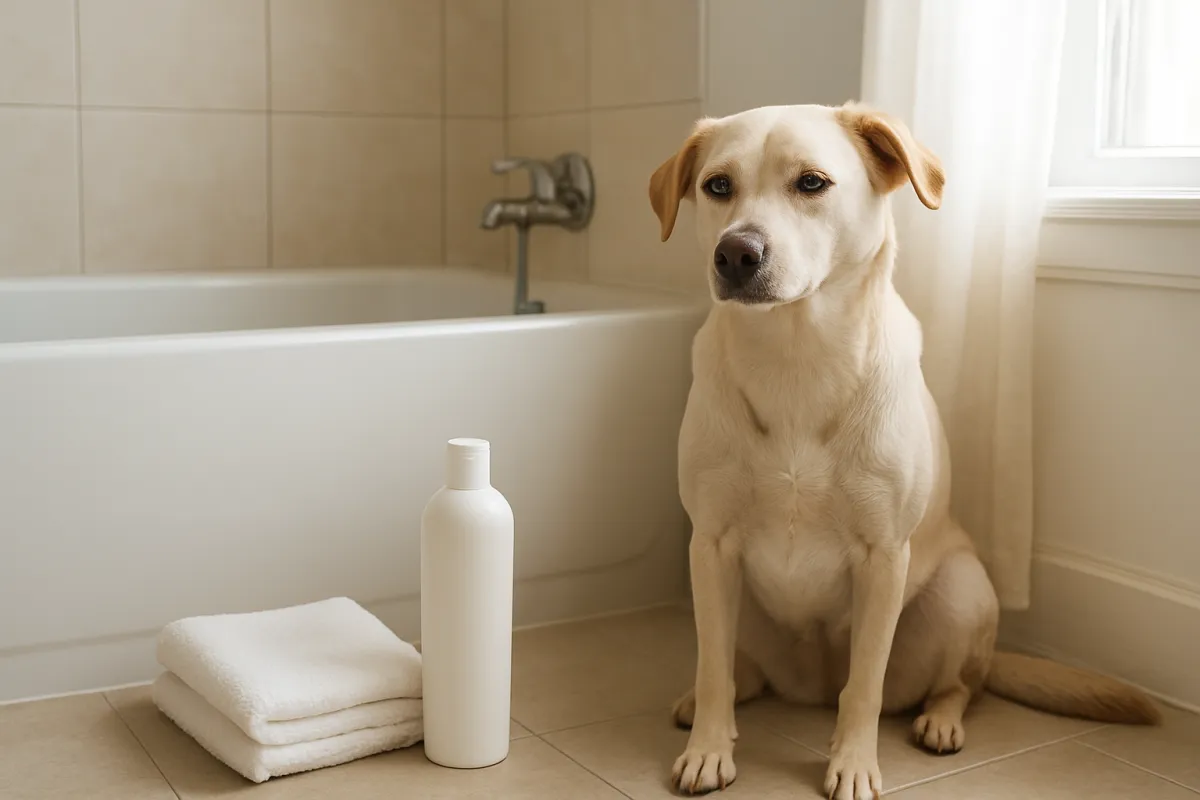
1. Decide what your dog actually needs before buying
“Sensitive skin” is a useful shopping description, but it is not a diagnosis. A dog that is mildly dry after winter walks needs a different product from a dog that scratches daily, smells yeasty, or develops red patches between the toes.
For routine grooming, look for a short ingredient list, a formula made specifically for dogs, and clear directions for dilution and contact time. The American Kennel Club recommends dog-specific, soap-free options and advises avoiding human shampoo because canine skin has different requirements. Artificial fragrance, dyes, and harsh cleansers may also be poor choices for dogs that react easily. The American Kennel Club’s dog shampoo guide provides a useful ingredient overview. ([akc.org](https://www.akc.org/expert-advice/health/dog-shampoos/?utm_source=openai))
- Dry, flaky, or mildly itchy: begin with fragrance-free oatmeal, aloe, or another moisturizing routine formula.
- Very reactive to scents: prioritize unscented products and avoid essential-oil-heavy formulas.
- Long or easily tangled coat: consider a gentle conditioner, provided it is designed for dogs.
- Greasy coat, strong odor, crusting, sores, or recurrent itching: ask a veterinarian whether a medicated shampoo is appropriate.
- Quick dirt between baths: use a dog-safe waterless foam, but do not treat it as a substitute for a proper rinse when the coat is heavily soiled.
2. Compare the best dog shampoos for sensitive skin
The ranking below is based on practical suitability rather than claimed cure rates. I prioritized gentle formulas for routine use, transparent ingredient positioning, useful application formats, and a clear reason to choose each product. Product formulas and labels can change, so check the current package directions before purchase.
Comparison guide: what each type does best
| Rank and option | Best for | What to look for | Warning sign or limitation |
|---|---|---|---|
| 1. Natural Dog Company Sensitive Skin Shampoo | Very reactive skin and scent-sensitive households | Fragrance-free, hypoallergenic positioning with colloidal oatmeal | Not a replacement for treatment of infection or severe allergy |
| 2. Earthbath Oatmeal & Aloe Fragrance-Free Shampoo | Regular bathing of dry or sensitive skin | Oatmeal-and-aloe style soothing formula without added fragrance | May not be enough for greasy, infected, or persistently inflamed skin |
| 3. 4-Legger Organic, Hypo-Allergenic Oatmeal Shampoo | Owners who prefer plant-based ingredients | Oatmeal-focused formula and soap-free positioning | Natural ingredients can still trigger an individual dog |
| 4. Pure and Natural Pet Hypoallergenic Organic Shampoo | Simple, unscented grooming | Hypoallergenic positioning and minimal fragrance | Check the current full ingredient list and coat-conditioning needs |
| 5. Vet’s Best Waterless Dog Bath | Spot cleaning and dogs that resist tubs | Foam application with no immediate full bath | Residue can remain if overused; not ideal for heavy dirt |
| 6. Earthbath Oatmeal & Aloe lightly scented formula | Dogs needing gentle cleansing when scent is acceptable | Moisturizing oatmeal and aloe positioning | Fragrance is a disadvantage for highly reactive dogs |
| 7. Vet-directed chlorhexidine or antifungal shampoo | Suspected bacterial or yeast-related skin disease | Correct active ingredient, veterinary instructions, and contact time | Do not self-select it for unexplained itching or use it like ordinary shampoo |
1. Natural Dog Company Sensitive Skin Shampoo — best overall for highly sensitive skin
This is the strongest general-purpose choice when your main concern is minimizing potential irritants. The manufacturer describes it as fragrance-free and hypoallergenic, with colloidal oatmeal as a central ingredient. That makes it a reasonable first option for a dog that becomes dry or uncomfortable after ordinary scented washes. ([naturaldog.com](https://naturaldog.com/products/sensitive-skin-shampoo?variant=32951664509021&utm_source=openai))
Best for: dogs with mild dryness, scent-sensitive homes, and owners who want a deliberately simple routine shampoo.
Limitations: “Hypoallergenic” does not mean that every dog will tolerate every ingredient. Patch-test cautiously on a small area when practical, rinse thoroughly, and stop if redness or discomfort worsens.
2. Earthbath Oatmeal & Aloe Fragrance-Free Shampoo — best for routine baths
A fragrance-free oatmeal-and-aloe shampoo is a practical match for dogs that need regular cleaning but do not have a diagnosed skin condition. Oatmeal-based products are commonly used to support a more comfortable bath for dry or itchy skin, while the absence of added fragrance reduces one avoidable source of irritation.
Best for: routine bathing, dry coats, and households that prefer no noticeable scent.
Limitations: a gentle wash may clean the coat without addressing the cause of repeated itching. If your dog needs frequent baths to stay comfortable, ask your veterinarian whether the schedule and product are appropriate.
3. 4-Legger Organic, Hypo-Allergenic Oatmeal Shampoo — best for plant-focused formulas
This option suits owners who prefer an oatmeal-centered product with organic and plant-based positioning. It may appeal when you want a cleansing shampoo that avoids a heavily perfumed presentation while still offering a conventional liquid format.
Best for: everyday grooming when plant-based sourcing is important to you.
Limitations: “natural” is not the same as risk-free. Botanical extracts and essential oils can bother some dogs, so read the label rather than choosing solely from front-of-bottle claims.
4. Pure and Natural Pet Hypoallergenic Organic Shampoo — best unscented alternative
A hypoallergenic, low-fragrance formula can be useful when you are trying to reduce variables in your dog’s grooming routine. This type of product is especially sensible if your dog has reacted to strongly scented shampoos but still needs a normal bath.
Best for: owners seeking a basic unscented wash and a short, understandable ingredient list.
Limitations: check whether the current version includes conditioning ingredients. Dogs with long, dense, or curly coats may still need separate coat care to prevent post-bath tangles.
5. Vet’s Best Waterless Dog Bath — best for quick cleanups
Waterless foam can help with muddy paws, a dirty underside, or a dog that cannot tolerate a full bath every time. Apply only as directed, work it through the affected fur, and remove loosened dirt with a clean towel or brush.
Best for: travel, small messes, senior dogs that struggle with tubs, and between-bath maintenance.
Limitations: waterless products do not provide the same rinsing action as a full bath. They are a convenience tool, not the best choice for fecal contamination, oily residue, heavy mud, or a coat with product buildup.
6. Earthbath Oatmeal & Aloe lightly scented formula — best when a mild scent is acceptable
The lightly scented version may be suitable for dogs that tolerate fragrance and for owners who prefer a fresher-smelling coat after bathing. The oatmeal-and-aloe approach remains more relevant to the sensitive-skin question than a heavily perfumed deodorizing wash.
Best for: mildly sensitive dogs without a known fragrance reaction.
Limitations: fragrance is unnecessary for skin function. If your dog is itchy, start with the fragrance-free version before testing a scented alternative.
7. Veterinary medicated shampoo — best for diagnosed skin problems
Medicated shampoos may contain antibacterial, antifungal, anti-itch, or other targeted ingredients. VCA Animal Hospitals notes that the correct product depends on the underlying condition, and that veterinary instructions may include a specific contact time and bathing frequency. ([vcahospitals.com](https://vcahospitals.com/know-your-pet/how-to-bathe-dogs-?utm_source=openai))
Best for: a dog whose veterinarian has identified or strongly suspects a condition needing topical treatment.
Limitations: do not use a chlorhexidine, ketoconazole, or combination shampoo simply because your dog is itchy. Some problems are allergic, parasitic, or unrelated to the skin surface, and the wrong treatment can delay proper diagnosis.
3. Choose ingredients and avoid common irritants
For ordinary sensitive skin, look for dog-specific formulas with soothing or moisturizing ingredients such as colloidal oatmeal, aloe, glycerin, or vitamin-rich conditioning agents. These ingredients may improve bathing comfort, but they are not guaranteed to resolve an allergy or infection.
Be cautious with strongly fragranced formulas, heavy deodorizing claims, dyes, and unnecessarily complicated ingredient lists. Avoid human shampoo as a routine substitute; veterinary-reviewed guidance explains that human and canine skin differ in pH and structure. ([petmd.com](https://www.petmd.com/dog/general-health/can-you-use-human-shampoos-on-dogs?utm_source=openai))
- Prefer fragrance-free when your dog has a history of reactions.
- Choose soap-free or pH-balanced dog shampoo where the label provides that information.
- Do not assume essential oils are automatically gentle or safe.
- Check age restrictions before using a formula on a puppy.
- Never use dog shampoo on a cat unless the label specifically says it is safe for cats; some dog ingredients can be harmful to them. ([petmd.com](https://www.petmd.com/dog/vet-verified/best-dog-shampoos?utm_source=openai))
4. Bathe a sensitive-skinned dog without creating more irritation
- Brush first if the coat is long or matted. Water can tighten tangles.
- Use lukewarm water and wet the coat thoroughly down to the skin.
- Dilute the shampoo if the label instructs you to do so.
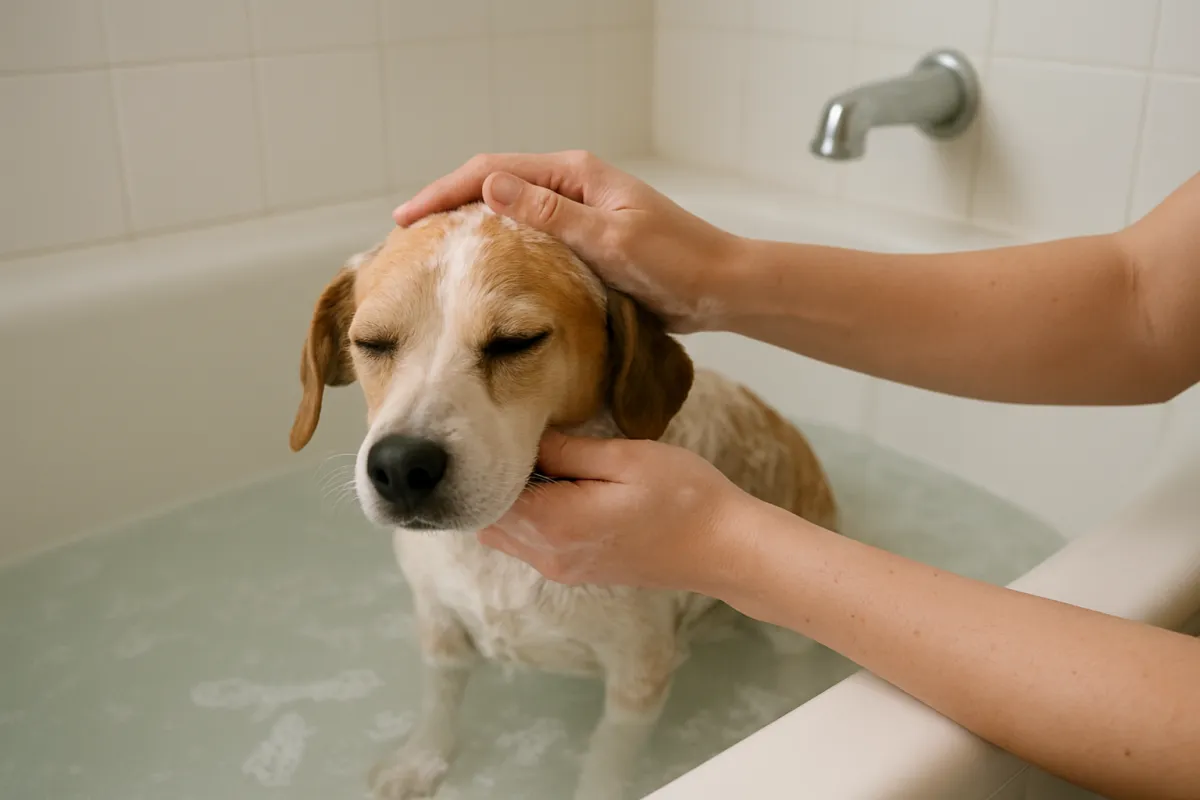
- Massage gently with your fingertips. Do not scrub hard or use a rough brush on inflamed skin.
- Keep shampoo away from the eyes, ear canals, mouth, and broken skin unless directed otherwise.
- Rinse longer than you think necessary. Leftover product is a common cause of post-bath itching.
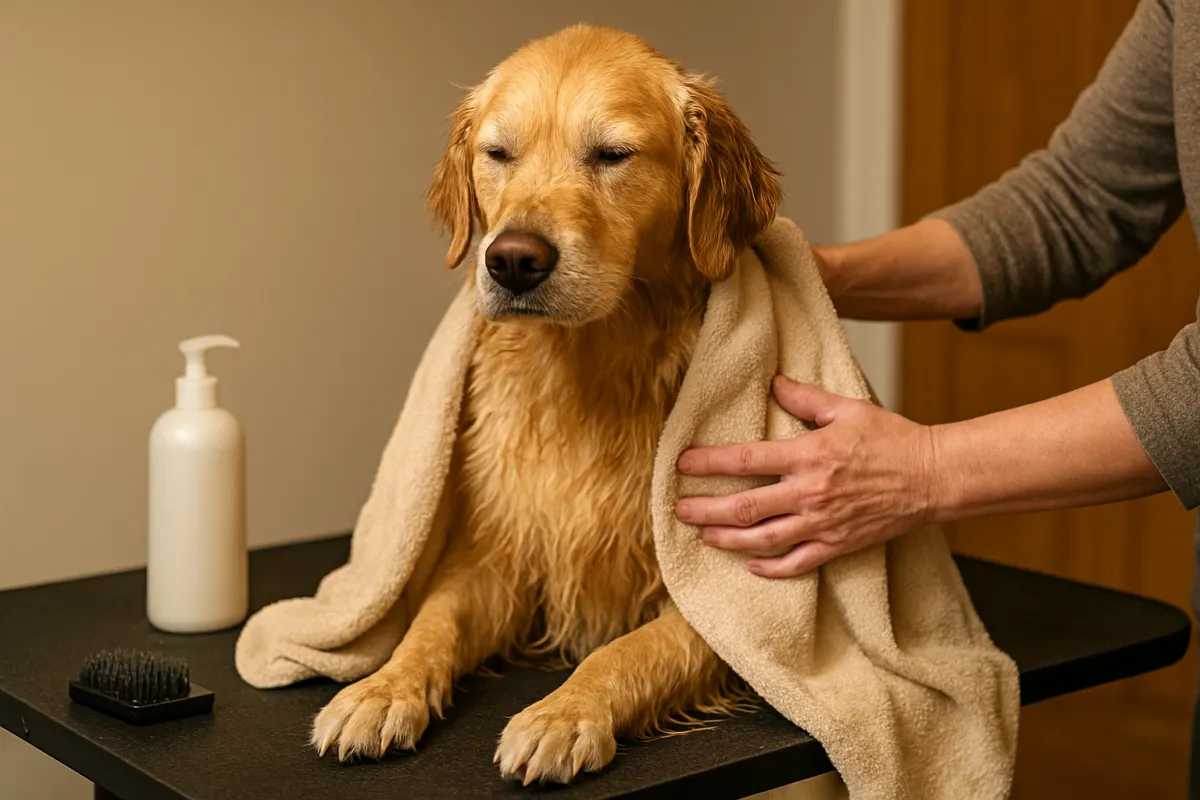
- Towel-dry without vigorous rubbing, then keep your dog warm until fully dry.
Bath frequency depends on the dog, coat, season, and product. A veterinary-reviewed PetMD guide recommends following the specific label because ordinary grooming shampoos and medicated formulas can have different use instructions. ([petmd.com](https://www.petmd.com/dog/vet-verified/best-dog-shampoos?utm_source=openai))
5. Use this buyer checklist before you order
- Purpose: Is the product for routine cleaning, dry skin, odor, spot cleaning, or a diagnosed condition?
- Fragrance: Is it fragrance-free, lightly scented, or heavily perfumed?
- Active ingredients: Does it contain a medication you were told to use?
- Coat compatibility: Will your dog need conditioner or detangling afterward?
- Rinsing: Can you rinse the product completely in your bathing setup?
- Age and species: Is it labeled for your dog’s age, size, and species?
- Directions: Does the label explain dilution, contact time, and frequency?
- Packaging: Can you read the complete current ingredient list before buying?
6. Common mistakes when choosing dog shampoo for sensitive skin
- Choosing the strongest product first: More active ingredients do not automatically mean better care.
- Buying for scent: A pleasant smell to you may be unnecessary or irritating to your dog.
- Changing products repeatedly: Use one suitable formula consistently long enough to observe how your dog responds.
- Blaming shampoo for every itch: Fleas, environmental allergies, food reactions, and infections can look similar.
- Under-rinsing: Residue can cause itching even when the formula itself is gentle.
- Bathing too often without advice: Excessive washing can worsen dryness or disrupt the coat’s natural oils.
7. What if your dog is still itchy after the bath?
If itching lasts more than a short period, becomes frequent, or is accompanied by redness, odor, pustules, scabs, ear problems, hair loss, or licking that damages the skin, contact your veterinarian. VCA notes that dogs can have more than one type of allergy, and regular bathing may help remove allergens without identifying the underlying cause. ([vcahospitals.com](https://vcahospitals.com/know-your-pet/allergy-general-in-dogs?utm_source=openai))
Stop using a new shampoo if your dog develops hives, facial swelling, marked redness, vomiting, breathing difficulty, or sudden worsening. Facial swelling or breathing difficulty is urgent and warrants immediate veterinary attention.
8. Final recommendations by scenario
- Best first choice for most sensitive dogs: a fragrance-free colloidal oatmeal shampoo.
- Best for a dog that reacts to perfume: Natural Dog Company Sensitive Skin Shampoo or another clearly unscented formula.
- Best for regular baths: Earthbath Oatmeal & Aloe Fragrance-Free Shampoo.
- Best for plant-focused shopping: 4-Legger Organic, Hypo-Allergenic Oatmeal Shampoo, after reviewing the full ingredient list.
- Best for quick messes: Vet’s Best Waterless Dog Bath.
- Best for infection or recurring flare-ups: the medicated shampoo selected by your veterinarian.
The best dog shampoos for sensitive skin are not necessarily the most heavily marketed or intensely scented. Start with a simple, dog-specific, fragrance-free formula; rinse thoroughly; and move to veterinary assessment when the skin problem is persistent, painful, or more complicated than ordinary dryness.
For broader pet-care routines, you can also explore LaokPet’s guides to dog cooling mats for hot weather, orthopedic dog beds for senior dogs, and removing pet hair from furniture.
Pingback: Poodle vs Portuguese Water Dog: Which Is Better for Your Family? – LaokPet
Pingback: Whippet vs Italian Greyhound: Which Dog Is Better for You? – LaokPet