The most effective way to remove pet hair from furniture is to loosen embedded fur first, gather it with a rubber tool or fabric brush, and then vacuum the surface and seams. Use a method that matches the upholstery, and test any damp product or cleaning solution on a hidden area before treating the visible fabric.
Pet hair is easiest to remove when you work in stages rather than relying on a single lint roller. This guide explains how to prepare the furniture, choose the right removal method, handle stubborn hair, and create a routine that keeps fur from building up again.
1. Prepare the furniture and check the upholstery
Before choosing a tool, identify what you are cleaning. A tightly woven microfiber sofa, a velvet chair, a canvas cushion, and a leather recliner can all react differently to friction, moisture, and suction.
Gather the basic supplies
- Vacuum cleaner with an upholstery brush or crevice attachment
- Rubber cleaning glove, silicone brush, or rubber squeegee
- Fabric-safe pet-hair roller or lint roller
- Clean, dry microfiber cloth
- Small trash bag or container for collected hair
- Optional: washable furniture cover or throw blanket
Remove loose cushions and inspect underneath them. Check seams, piping, corners, and the gap between the back and seat because hair often collects in these areas before it becomes visible on the main surface.
Look for the manufacturer’s cleaning code on the furniture tag or care instructions. A code indicating water-based cleaning, solvent-based cleaning, or vacuum-only care should guide your method. If there is no clear label, begin with dry cleaning methods and test first in an inconspicuous place.
Safety checkpoint
Keep your pet away while you are using a vacuum, adhesive roller, or cleaning product. Do not leave loose rubber pieces, adhesive sheets, or chemical products where an animal can chew or ingest them. The ASPCA advises keeping household cleaning products out of pets’ reach and seeking guidance after possible exposure; its cleaning-agent safety guidance is a useful reference.
2. Vacuum the loose hair before scrubbing
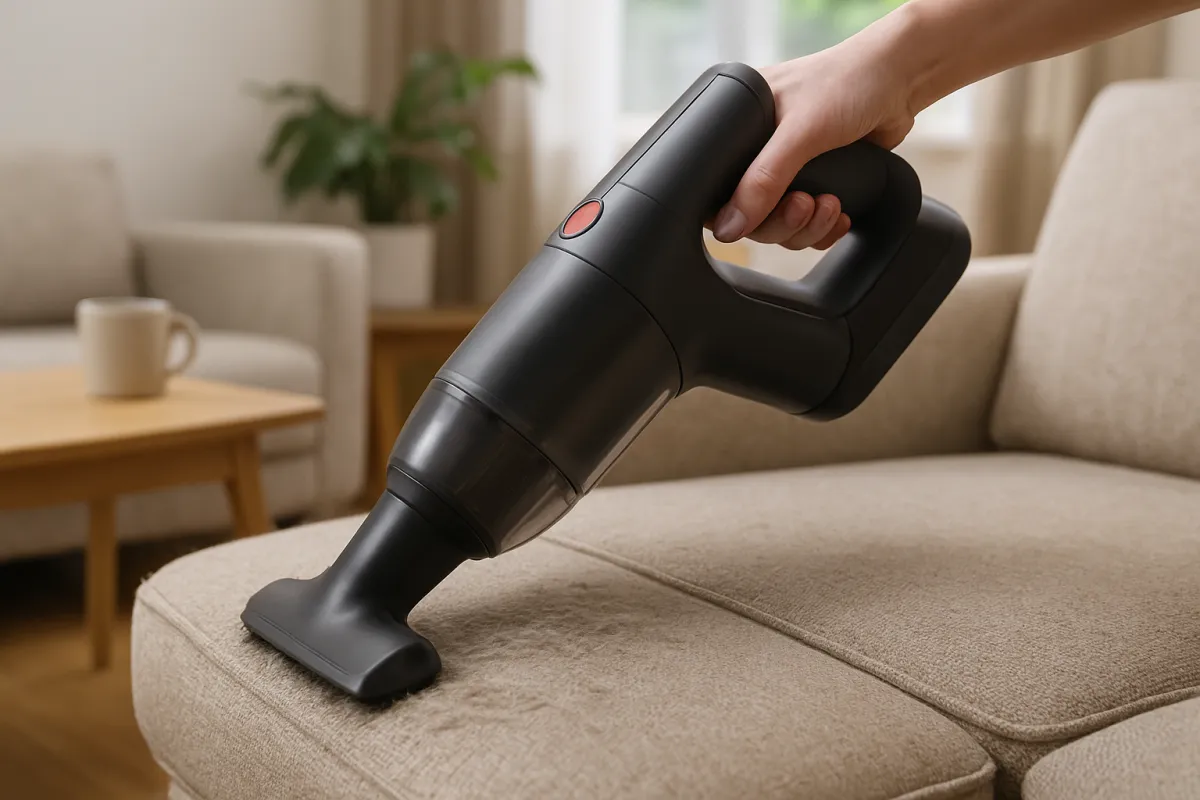
Start with dry vacuuming. Use the upholstery attachment on broad surfaces and the crevice tool around seams, under cushions, and along the furniture frame.
Move slowly in overlapping passes. Fast passes may collect hair that is sitting on top, but they are less likely to lift fur caught in the weave. Use moderate suction where possible, especially on older upholstery or loose fabric.
How to vacuum more effectively
- Vacuum from several directions instead of moving only front to back.
- Press the attachment lightly against flat fabric, but do not grind it into the upholstery.
- Use the crevice tool around cushion edges and beneath removable covers.
- Empty the vacuum canister or replace a full bag before deep cleaning.
- Check the brush roll afterward and remove wrapped hair if necessary.
Checkpoint: After vacuuming, run your clean hand lightly over the surface. If hair gathers into small lines or clumps, the remaining fur is probably embedded and needs to be loosened mechanically.
3. Loosen embedded hair with the right dry tool
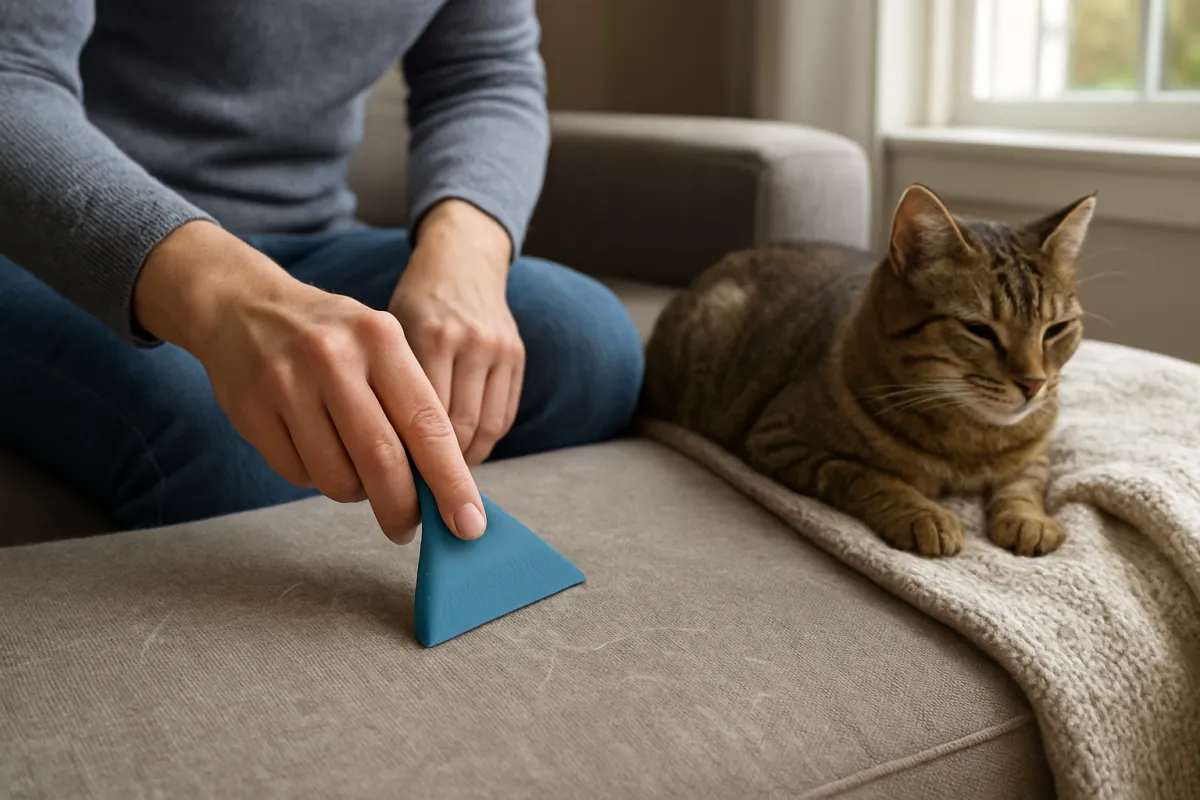
For most fabric furniture, friction is more useful than moisture. A rubber glove, silicone brush, or upholstery squeegee can pull hair out of the fabric so it can be collected and vacuumed.
Rubber glove method
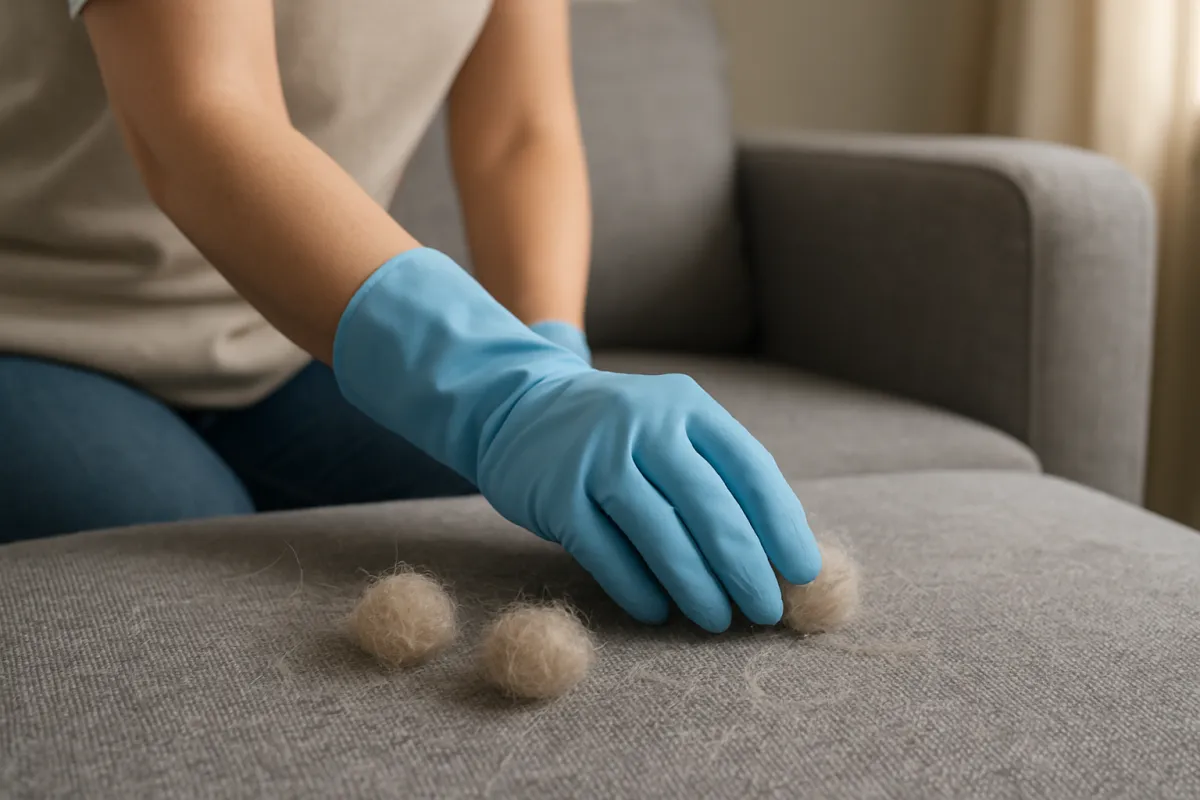
Put on a clean, dry rubber glove and move your hand in short strokes across the fabric. Work in one direction at first, then change direction across areas where the hair is tightly woven in.
As the fur gathers into rolls, pick it up rather than spreading it to another part of the sofa. If the glove becomes covered, remove the hair over a trash bag and continue with a dry glove surface.
Silicone brush or squeegee method
Use a soft silicone brush or small rubber squeegee on flat, durable upholstery. Pull the tool toward you with light, even pressure. This usually works best on short-pile fabric, microfiber, canvas, and other materials that can tolerate gentle surface friction.
Do not use a sharp edge, stiff metal scraper, or aggressive carpet rake on upholstery. These tools can snag threads, roughen the nap, or damage seams.
Here is a practical guide to matching the method with the surface:
| Furniture surface | What to look for | Preferred method | Warning sign |
|---|---|---|---|
| Tightly woven fabric | Hair sits on the surface or gathers in seams | Vacuum, then rubber glove or silicone tool | Threads begin lifting or snagging |
| Microfiber | Fine fur is pressed into the nap | Dry rubber tool followed by vacuuming | Fabric changes direction or develops dark streaks |
| Velvet or delicate pile | Visible nap with a directional finish | Gentle vacuuming in the fabric direction | Pile looks flattened, crushed, or patchy |
| Leather or faux leather | Hair rests mainly on the surface and in joints | Soft vacuum brush and dry microfiber cloth | Surface becomes scratched, sticky, or discolored |
| Loose-weave fabric | Hair is trapped between larger threads | Light vacuuming and careful hand removal | Threads pull or loops catch on the tool |
4. Collect the loosened fur and vacuum again
Once the hair has gathered into rolls or small piles, remove it before using the vacuum. Picking up the larger clumps first helps prevent the vacuum brush from becoming overloaded.
Vacuum the furniture a second time, concentrating on the places where you used the rubber tool. Finish with the seams, cushion gaps, and the floor immediately around the furniture because loosened hair often falls downward.
For narrow crevices, wrap a clean, dry cloth loosely around the end of a blunt tool and use it to pull hair from the gap. Do not force a hard object between cushions, and do not use anything sharp near the upholstery.
Checkpoint: the two-pass test
Place a dark cloth or clean piece of clothing against the furniture for a few seconds, then inspect it. If it picks up a large amount of fur, repeat the loosen-and-vacuum cycle. If only a few strands remain, the surface is probably clean enough for routine maintenance.
5. Use adhesive rollers only for the final layer
Lint rollers are useful for finishing touches, but they are inefficient when the furniture is heavily covered. Start with vacuuming and a rubber tool, then use the roller on arms, headrests, cushion fronts, and other visible areas.
Roll in short, overlapping strokes and replace the adhesive sheet when it stops picking up hair. On delicate fabrics, use light pressure. If the roller pulls at fibers or leaves adhesive behind, stop and switch to a dry microfiber cloth or the upholstery attachment.
A reusable fabric pet-hair roller can reduce waste, but clean it according to its instructions and remove the collected hair after each use. Never assume that a sticky tool is safe for every textile.
6. Treat special furniture materials carefully
Microfiber and synthetic upholstery
Microfiber often holds fine hair in its short nap. A dry rubber glove or silicone tool can loosen it, followed by vacuuming in more than one direction. Avoid saturating the fabric because excess moisture can create rings or uneven marks.
Velvet and other delicate fabrics
Use the least abrasive method that works. Vacuum with a soft brush attachment, following the direction of the pile, and remove individual hairs by hand if necessary.
Do not repeatedly rub velvet with a rubber tool unless the care instructions allow it. If the nap changes appearance after testing, stop and consider professional upholstery cleaning.
Leather and faux leather
Hair generally stays on the surface of leather, so a soft vacuum brush followed by a dry microfiber cloth is usually sufficient. Pay attention to stitching, folds, and the space beneath cushions.
Avoid scraping leather with a stiff tool. If you use a conditioner or cleaner, choose one intended for that material and follow the manufacturer’s directions rather than applying a general household product.
Removable covers
Vacuum or shake covers outdoors before washing them. Follow the care label, close zippers, and avoid putting heavily fur-covered items directly into the washing machine because loose hair can collect in the filter or drain system.
For broader pet-cleaning routines, the ASPCA Pet Health Insurance spring-cleaning guidance also recommends paying attention to bedding and other areas where pets regularly rest.
7. Reduce the amount of hair that reaches the furniture
Cleaning works better when you also reduce the supply of loose fur. Regular brushing can remove some shedding hair before it lands on the sofa. The ASPCA’s dog-grooming guidance explains that brushing helps remove loose hair and maintain coat condition; grooming needs vary by coat type and individual animal.
- Brush your pet in an easy-to-clean area, preferably away from upholstered furniture.
- Wash or vacuum your pet’s bed regularly.
- Place a washable throw where your pet usually sleeps.
- Keep a small rubber tool and handheld vacuum near the favorite resting spot.
- Vacuum furniture lightly on a schedule instead of waiting for a heavy buildup.
- Clean floors after furniture so fallen hair is removed at the end of the routine.
A cover will not eliminate shedding, but it can make routine washing easier and protect high-use areas. Choose a cover that stays securely in place and does not create a loose-loop hazard for pets that chew or scratch fabric.
Common mistakes when removing pet hair
- Using water first: Moisture can make hair clump and press deeper into fabric.
- Relying only on a lint roller: Adhesive sheets are better for finishing than for thick, embedded fur.
- Scrubbing too aggressively: Excessive friction can damage fibers or change the fabric’s appearance.
- Ignoring seams and undersides: Hidden hair often returns to the visible surface later.
- Vacuuming with a blocked brush roll: Wrapped hair reduces cleaning performance and can strain the machine.
- Applying an untested cleaner: A product that is safe for floors may stain or weaken upholstery.
- Cleaning only after shedding becomes obvious: Frequent light maintenance is usually easier than one large cleanup.
What if the usual method is not working?
What if hair is woven deeply into the fabric?
Use several short cycles: loosen one small section with a rubber tool, remove the fur, vacuum it, and then move to the next section. Working in small areas gives you better control and makes it easier to notice fabric damage.
What if the vacuum does not pick up the hair?
Check whether the upholstery attachment is clogged, the filter needs cleaning, or the canister is full. You may also be trying to vacuum hair that is still held in the fabric; use a dry rubber tool first.
What if the fabric changes color or texture?
Stop immediately and do not continue rubbing or adding moisture. Brush the nap gently in its original direction if appropriate, then consult the care instructions or a professional upholstery cleaner.
What if your pet suddenly sheds much more than usual?
Seasonal shedding can be normal, but sudden or excessive hair loss may be accompanied by itching, bald patches, redness, or skin irritation. If you notice those signs, arrange a veterinary assessment instead of treating the furniture problem alone.
Actionable checklist for removing pet hair
- Check the upholstery care code.
- Remove cushions and inspect seams.
- Vacuum loose hair with a soft attachment.
- Test a rubber glove, silicone tool, or brush in a hidden area.
- Loosen embedded hair using light, controlled strokes.
- Pick up gathered fur before vacuuming again.
- Use a lint roller only for remaining visible strands.
- Clean the floor and empty or inspect the vacuum.
- Place a washable cover on the pet’s preferred resting area.
Advanced tips for heavy shedders and multi-pet homes
If several pets use the same furniture, divide the job into zones and clean the most-used areas more often. Keep separate tools for upholstery and litter or floor cleanup so you do not transfer debris between surfaces.
For long-haired pets, inspect the spaces beneath cushions and behind furniture legs during each deeper cleaning. Hair can migrate through gaps and accumulate where it is difficult to see.
If you are already improving your pet-friendly home setup, you may also find LaokPet’s guides to supportive dog beds and making a cat carrier more comfortable useful. Giving pets comfortable, designated resting places can make it easier to keep them off the most difficult-to-clean furniture.
Next actions
- Choose one upholstered chair or sofa section and check its care label.
- Vacuum the surface and seams once.
- Test a dry rubber tool in a hidden area.
- Clean one small section using the loosen-and-vacuum method.
- Compare the cleaned section with the untreated area before continuing.
- Set a simple maintenance schedule based on how quickly hair returns.
The best answer to how to remove pet hair from furniture is not one special product. It is a controlled sequence: identify the material, loosen embedded fur without damaging the fabric, vacuum in detail, and reduce future buildup with grooming, covers, and regular light cleaning.
Pingback: Best Stainless Steel Cat Water Fountains: How to Choose a Cleaner, Quieter Option – LaokPet
Pingback: French Bulldog vs Boston Terrier: Which Dog Is Right for You? – LaokPet
Pingback: Whippet vs Italian Greyhound: Which Dog Is Better for You? – LaokPet