For most active families, the Boxer is the easier choice because it is playful, affectionate, and generally more socially open. Choose the Doberman if you want a highly focused, athletic protector and can provide consistent training, close companionship, and substantial daily activity.
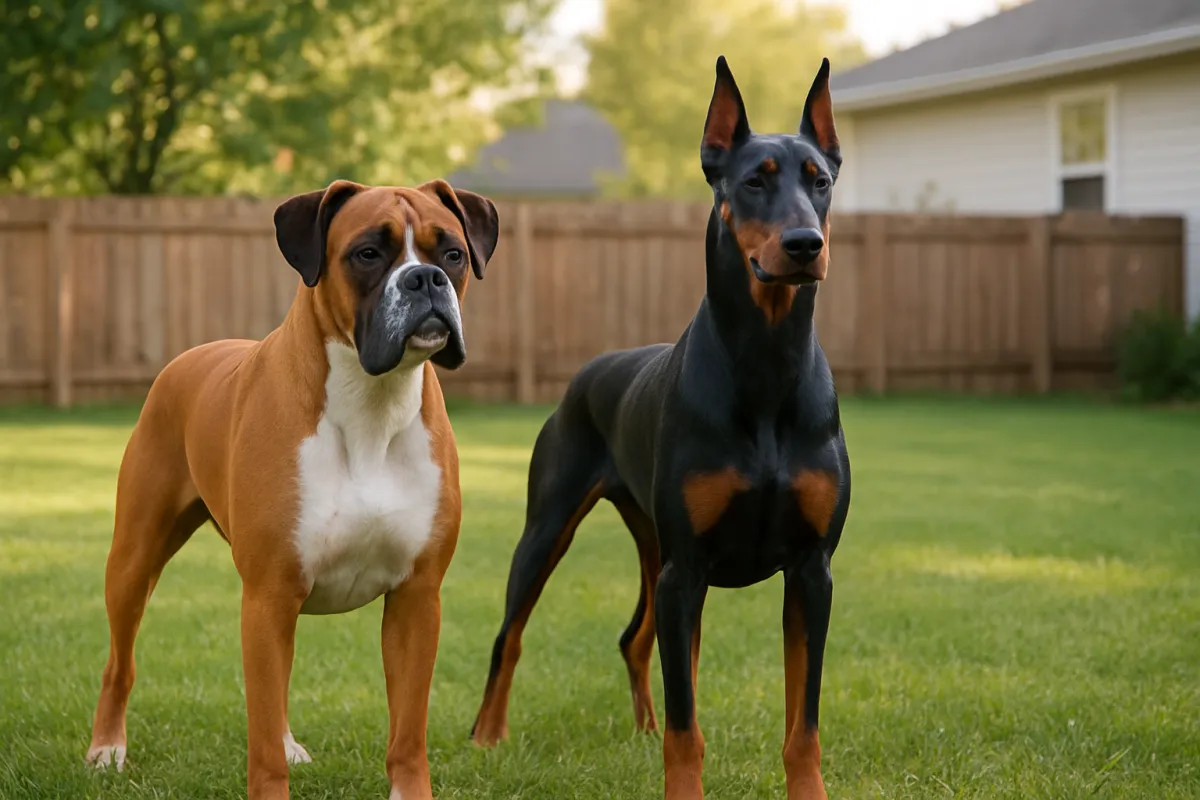
Boxer vs Doberman is not simply a choice between two similar-looking large dogs. Both are intelligent working breeds with short coats, strong family bonds, and real exercise needs, but they often feel very different to live with. This guide compares the practical issues that matter most: energy, trainability, sociability, household fit, grooming, health planning, and the amount of structure you can provide.

1. Start with the lifestyle you can actually provide
The right breed is the one whose normal needs fit your normal week—not the one that matches your ideal weekend. Before comparing appearances or guarding ability, look at your schedule, home setup, dog-handling experience, and tolerance for training work.
Both breeds need daily physical activity and mental engagement. Neither is a good match for a household that expects a large dog to exercise itself in a yard or remain settled for long periods without preparation. The American Kennel Club recommends considering exercise, grooming, size, temperament, and the activities you want to share with your dog when choosing a breed. Its breed-selection guidance is a useful starting point.
- Your daily time: Can you provide walks, training, play, and companionship on ordinary workdays?
- Your handling skills: Can you calmly manage a strong dog around visitors, other dogs, wildlife, and distractions?
- Your household: Are children, older adults, cats, frequent guests, or nervous visitors part of the picture?
- Your expectations: Do you want an outgoing playmate, a serious working partner, or a balance of both?
If your answers are uncertain, meet adult Boxers and Dobermans through reputable breeders, rescue organizations, training clubs, or supervised breed events. Puppies can be appealing, but an adult dog’s energy level and social style are often easier to evaluate.
2. Compare the breeds side by side
The table below summarizes the main decision points. Individual dogs vary, and breeding, early socialization, health, and training can change the experience considerably.
| Decision area | Boxer | Doberman | What it means for you |
|---|---|---|---|
| Typical personality | Playful, affectionate, alert, and often exuberant | Watchful, loyal, determined, and highly people-focused | Boxers often bring more clownish energy; Dobermans may feel more intense and observant. |
| Exercise | High; needs daily activity and structured play | High; needs vigorous activity plus mental work | Neither breed is suited to a mostly sedentary routine. |
| Training style | Intelligent but may become bored with repetition | Quick, responsive, and sensitive to inconsistency | Both need early training; the Doberman usually demands especially clear handling. |
| Strangers | Often social with familiar people and can be protective | Typically more reserved and naturally watchful | A Doberman may require more careful visitor management and socialization. |
| Children | Can be affectionate and patient but may be physically bouncy | Can bond closely with family but needs supervision and good boundaries | Temperament and dog-child management matter more than breed labels alone. |
| Grooming | Short coat; simple routine, regular nails and dental care | Short coat; simple routine, regular nails and dental care | Neither requires elaborate coat grooming, but both shed and need routine hygiene. |
| Best match | Active families wanting a cheerful companion and watchdog | Experienced owners wanting an athletic, close-working guardian | Your preferred level of intensity may decide the comparison. |
3. Understand the temperament difference
The Boxer: affectionate, playful, and physically expressive
Boxers are known for combining loyalty and alertness with a lively, sometimes silly personality. The AKC describes them as intelligent, affectionate, courageous, and high-energy. They often want to be involved in family life and may switch quickly from energetic play to relaxing near their people. The AKC Boxer profile also notes that early socialization and puppy training are important for channeling their enthusiasm.
The main tradeoff is physical exuberance. A young Boxer may jump, rush toward people, grab toys enthusiastically, or forget its size during play. That can be manageable with training, but it is not ideal for a frail adult, a very small child, or anyone who cannot comfortably control a powerful dog.
The Doberman: focused, watchful, and closely bonded
Dobermans are often more serious in how they observe the world. They tend to form strong attachments to their families and may be alert to unfamiliar people, sounds, and changes around the home. The Doberman Pinscher Club of America describes the ideal Doberman as energetic, watchful, determined, fearless, loyal, and obedient, while also emphasizing the breed’s need for close contact and extensive exercise.
This does not mean every Doberman is suspicious or difficult. A stable, well-socialized Doberman can be affectionate, humorous, trainable, and versatile. The practical difference is that the breed’s protective instincts and sensitivity make responsible socialization, visitor routines, and reliable obedience especially important.
4. Match exercise needs to your weekly routine
Both dogs need more than a short bathroom walk. Plan for a combination of brisk walking, play, obedience practice, sniffing, and age-appropriate physical activity. A securely fenced area can help, but a yard does not replace interaction or training.
- Choose a Boxer if you enjoy active family play, varied walks, informal training, and a dog that may be energetic but also entertaining.
- Choose a Doberman if you want a structured exercise partner for hiking, obedience, agility, tracking, or other activities that combine movement with concentration.
Young dogs should not be pushed into repetitive, high-impact exercise before their bodies mature. Ask your veterinarian how to build activity safely for the dog’s age, structure, and health. If your schedule regularly involves long absences, arrange a realistic plan for midday care, training, enrichment, or a dog walker before bringing home either breed.
5. Compare training and socialization demands
Training is not optional for either breed. Both are large, strong, intelligent dogs, and polite behavior needs to be taught before problems become habits.
Boxers usually respond well to short, varied sessions that mix food rewards, play, movement, and clear boundaries. Repetition without purpose can lead to boredom. Focus early on loose-leash walking, calm greetings, recall, leave-it, settling on a mat, and four-paws-on-the-floor behavior.
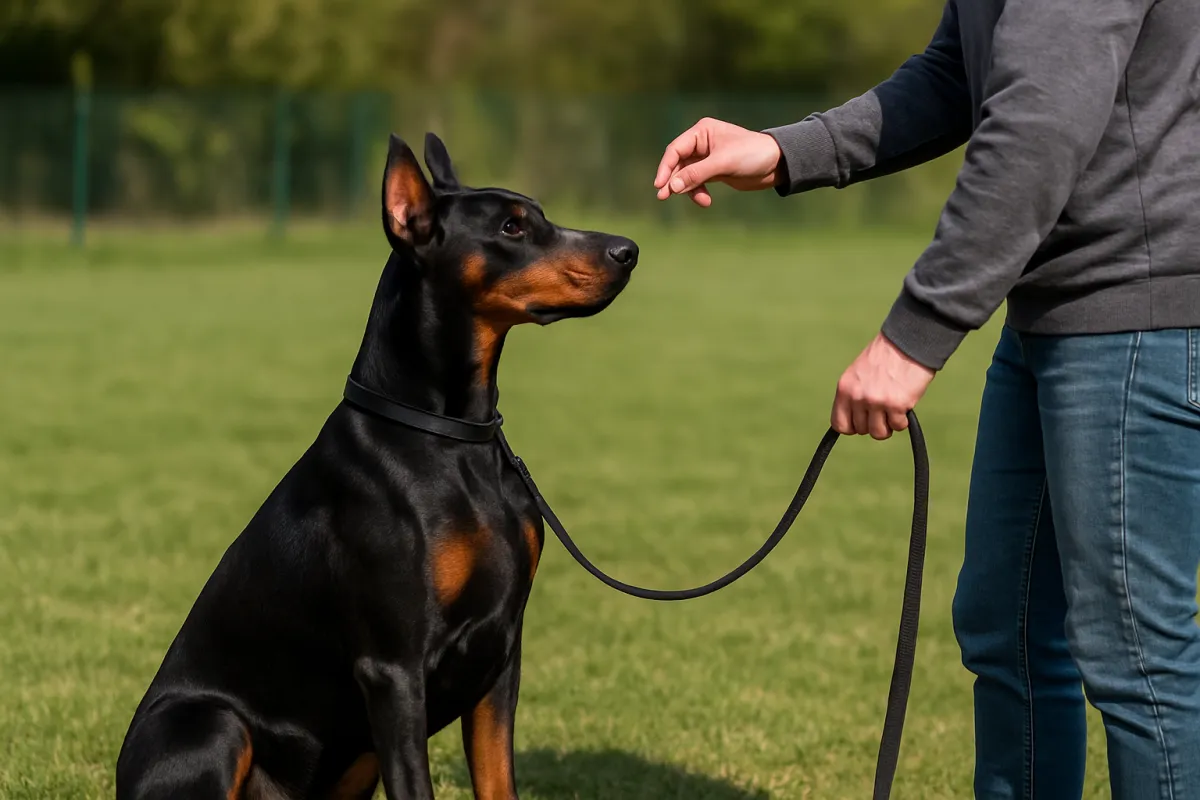
Dobermans can learn quickly and often enjoy having a job, but they may be sensitive to harsh or confusing handling. Use consistent cues, reward-based methods, controlled exposure to new experiences, and calm management around visitors. The goal is not to make a Doberman suspicious or “tough”; it is to develop confidence, impulse control, and dependable responses.
Socialization means carefully introducing the dog to people, surfaces, sounds, places, handling, and appropriate dogs. It does not mean forcing interaction with everyone. If your dog shows persistent fear, reactivity, guarding, or aggression, consult a qualified behavior professional and your veterinarian rather than trying to solve the issue through punishment.
6. Consider family life, visitors, and other pets
A Boxer may suit a busy family that wants an affectionate, interactive dog and can manage enthusiastic behavior. However, children should always be supervised, especially around a young, jumping Boxer. Teach children not to climb on, chase, disturb, or take food and toys from the dog.
A Doberman can be deeply devoted to its household, but its protective nature may make poorly managed visitors more complicated. Establish a routine for door greetings: use a leash or gate, reward calm behavior, and give the dog a quiet place to settle. Do not expect the dog to decide independently which visitors are safe.
With cats or other dogs, the individual dog and introduction process matter greatly. Ask about the dog’s history, prey drive, same-sex dog tolerance, and behavior around small animals. Introduce animals gradually and provide separate feeding, resting, and escape areas.
7. Compare grooming and health planning
Grooming is not the deciding factor here. Both breeds have short coats that are relatively easy to maintain with regular brushing, occasional bathing, nail care, ear checks, and dental hygiene. The AKC notes that Boxers generally need little coat grooming, but routine care remains important for comfort and health.
Health planning deserves more attention than coat care. Boxers can be affected by heart conditions, hip and elbow problems, thyroid disease, degenerative myelopathy, and certain cancers; the AKC lists recommended health evaluations and breed-club screening considerations. Dobermans also have important inherited health risks, including heart disease, so prospective owners should ask breeders or rescues for clear veterinary records and relevant screening information.
No health test eliminates risk, and no breed is guaranteed to be healthy. Before choosing a puppy, ask for documented parent health testing from a reputable breeder. Before adopting an adult, request available medical history and arrange a veterinary examination soon after adoption. Consider pet insurance or a dedicated emergency fund because large-breed veterinary care can be expensive.
8. Choose by scenario, not by appearance
Best for an active family with children
The Boxer is often the more natural starting point if your family wants a playful companion and can teach children safe dog behavior. Its bouncy style still requires supervision, training, and enough exercise. A calmer adult dog may be a better fit than a very young puppy.
Best for an experienced owner seeking a working partner
The Doberman may be the better match if you enjoy structured training and want a dog that stays closely engaged with you. Be prepared to manage socialization, guarding instincts, and daily mental work rather than relying on exercise alone.
Best for someone wanting simple grooming
This is effectively a tie. Both have short coats and modest grooming requirements. Choose based on temperament and activity needs, not on the assumption that a short coat means low overall maintenance.
Best for a first-time owner
Neither breed should be treated as effortless. A first-time owner may find the Boxer’s social, playful style more approachable, but the individual dog, access to training support, and willingness to learn are decisive. A well-bred, stable dog from a responsible source is more important than choosing based on breed reputation alone.
Best for apartment living
Home size is less important than exercise, noise management, and the ability to provide calm indoor behavior. Either breed can struggle in an apartment if under-exercised or poorly trained. A Boxer’s exuberance or a Doberman’s alertness may create neighbor problems if barking, jumping, and settling skills are neglected.
9. Avoid these common decision mistakes
- Choosing by appearance alone: Athletic bodies and protective reputations do not tell you whether the dog fits your schedule.
- Confusing a yard with exercise: Most dogs need shared activity, not just outdoor access.
- Assuming “good with families” means effortless: Children and dogs need active supervision and clear rules.
- Buying the most intense puppy: Confidence, recovery from surprises, sociability, and ability to settle are more useful than constant boldness.
- Skipping breeder or rescue questions: Ask about health, behavior, socialization, previous homes, and return policies.
- Using harsh corrections for guarding behavior: Fear and conflict can worsen reactivity. Use management and qualified training support.
10. Use this final checklist before deciding
- Can you provide daily exercise and training throughout the year?
- Can every adult in the home handle a strong dog safely?
- Do you prefer playful exuberance or focused watchfulness?
- Can you supervise interactions with children and other pets?
- Do you have a plan for visitors, travel, illness, and long workdays?
- Have you budgeted for routine care, training, emergencies, and potential breed-related health needs?
- Have you met adult dogs of both breeds in real household settings?
What if you are still undecided?
Write down a typical weekday and weekend, then mark when the dog would exercise, train, rest, eat, and interact with people. If the plan only works when everything goes perfectly, reconsider. You can also speak with a veterinarian, a reward-based trainer, and breed-specific rescue groups for a more realistic picture.
For related comparisons, see LaokPet’s guides to French Bulldog vs Boston Terrier, Poodle vs Portuguese Water Dog, and Whippet vs Italian Greyhound.
Next actions before bringing one home
- Meet several adult Boxers and Dobermans, not only puppies.
- List your non-negotiable needs: children, cats, visitor traffic, exercise, and time alone.
- Interview breeders or rescues about temperament, health, and support after adoption.
- Book a training class or private consultation before the dog arrives.
- Prepare gates, a crate or safe resting area, chew items, identification, and a veterinary appointment.
Final verdict: Boxer or Doberman?
Choose the Boxer if you want a warm, playful, family-oriented dog and are ready for daily exercise plus patient management of jumping and youthful energy. Choose the Doberman if you want a more focused, watchful companion and can provide close companionship, consistent training, careful socialization, and a structured active life.
In the Boxer vs Doberman decision, neither breed wins universally. The better dog is the one whose energy, protective instincts, training needs, and household behavior match what you can reliably provide every day.