To teach a dog to come when called, make returning to you consistently rewarding, begin in a quiet area, and increase distance and distractions gradually. Never rely on the cue in an unsafe situation until your dog has practiced it successfully many times.
A dependable recall can help you call your dog away from an open gate, road, wildlife, or another hazard. It is also useful in everyday situations, such as ending play or bringing your dog inside. This guide shows you how to build the behavior without turning “come” into a warning that good things are over.
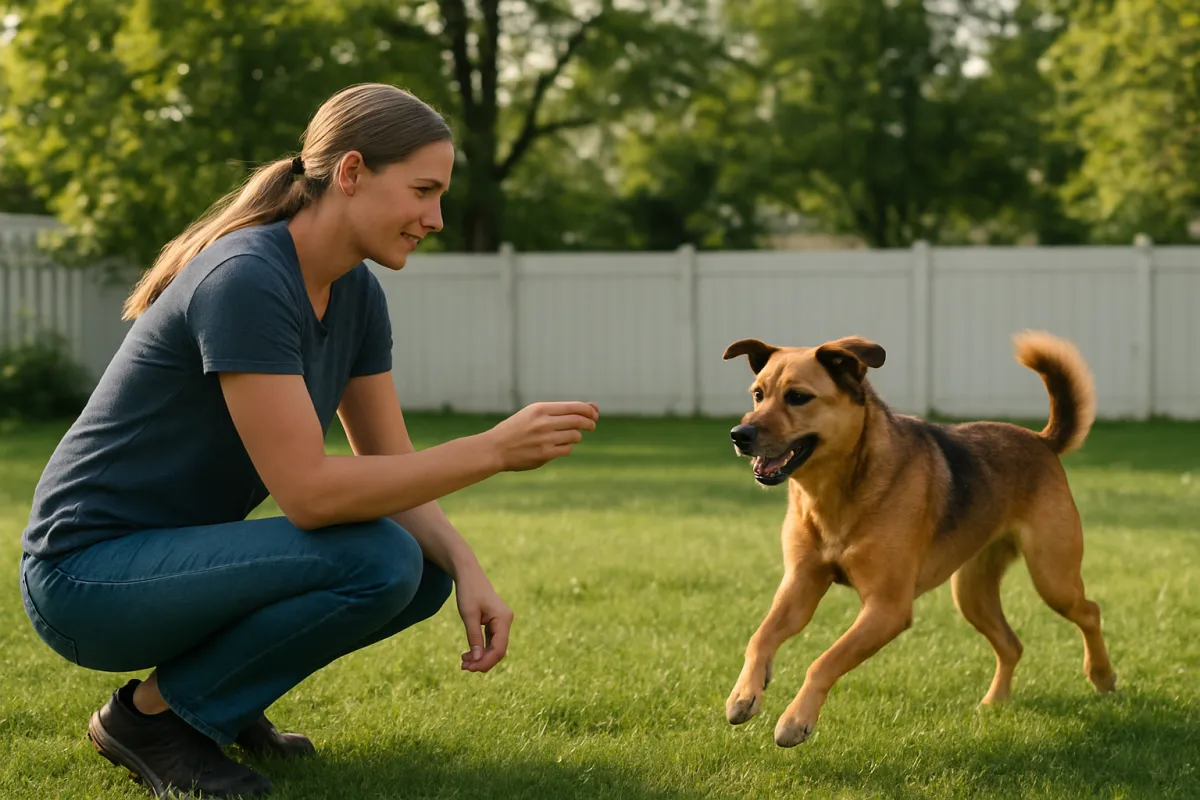
1. Prepare the right equipment and rewards
Recall training works best when your dog can succeed before distractions become difficult. Prepare a quiet starting area, several small treats your dog genuinely values, and a marker word such as “yes” or a clicker.
- Use soft, pea-sized treats that can be delivered quickly.
- Keep a toy available if your dog prefers play to food.
- Use a regular leash indoors or in a secure area.
- For outdoor practice, choose a well-maintained long line attached to a suitable harness or flat collar.
- Train when your dog is alert but not overstimulated, exhausted, or desperate to investigate something.
Avoid beginning off leash in an unfenced area. A long line is a training aid, not a guarantee of control, so keep it away from bicycles, traffic, sharp objects, and other dogs that may become tangled in it.
Reward-based training is recommended by veterinary behavior professionals. The American Veterinary Society of Animal Behavior advises against aversive methods such as shock, leash jerks, shouting, and physical punishment; these methods can create fear or make your dog less willing to approach you. Read the AVSAB humane dog-training position statement.
2. Choose and protect one recall cue
Pick one short word or phrase, such as “come,” “here,” or “this way.” Say it in a friendly, inviting tone. Your goal is for the cue to predict something valuable, not irritation or the end of every enjoyable activity.
If you have already used “come” many times while becoming frustrated, your dog may have learned that the word is optional or unpleasant. In that case, consider starting fresh with a new cue. Do not use the new word casually until you are ready to reward every good response.
Build attention before adding distance
Say your dog’s name once. When your dog looks toward you, mark the instant of attention and reward. Repeat this in several short sessions until the name reliably makes your dog check in with you.
Do not repeat the name over and over. If your dog does not respond, reduce the distraction, move closer, or make the reward more appealing. The American Kennel Club recommends teaching the dog’s name as an attention signal before building the full recall behavior. See the AKC recall-training sequence.
3. Teach the first short-distance recall indoors
Start only a few feet away in a quiet room. Wait until your dog is not already moving toward you. Say the name, then the recall cue once, and use an inviting gesture such as moving backward, crouching slightly, or opening your arms.
- Say your dog’s name and recall cue in a cheerful voice.
- As your dog turns or steps toward you, encourage the movement without grabbing.
- When your dog reaches you, mark the response immediately.
- Give several small treats, praise, or a short favorite game.
- Release your dog with a neutral phrase such as “all done” before repeating.
At first, reward the arrival itself. Later, you can shape a more useful finish by rewarding your dog for coming close enough for you to touch the collar or harness calmly.
Checkpoint: Move to the next stage when your dog turns and comes toward you promptly on most attempts in the current room. If your dog wanders away, shorten the distance and make the exercise easier.
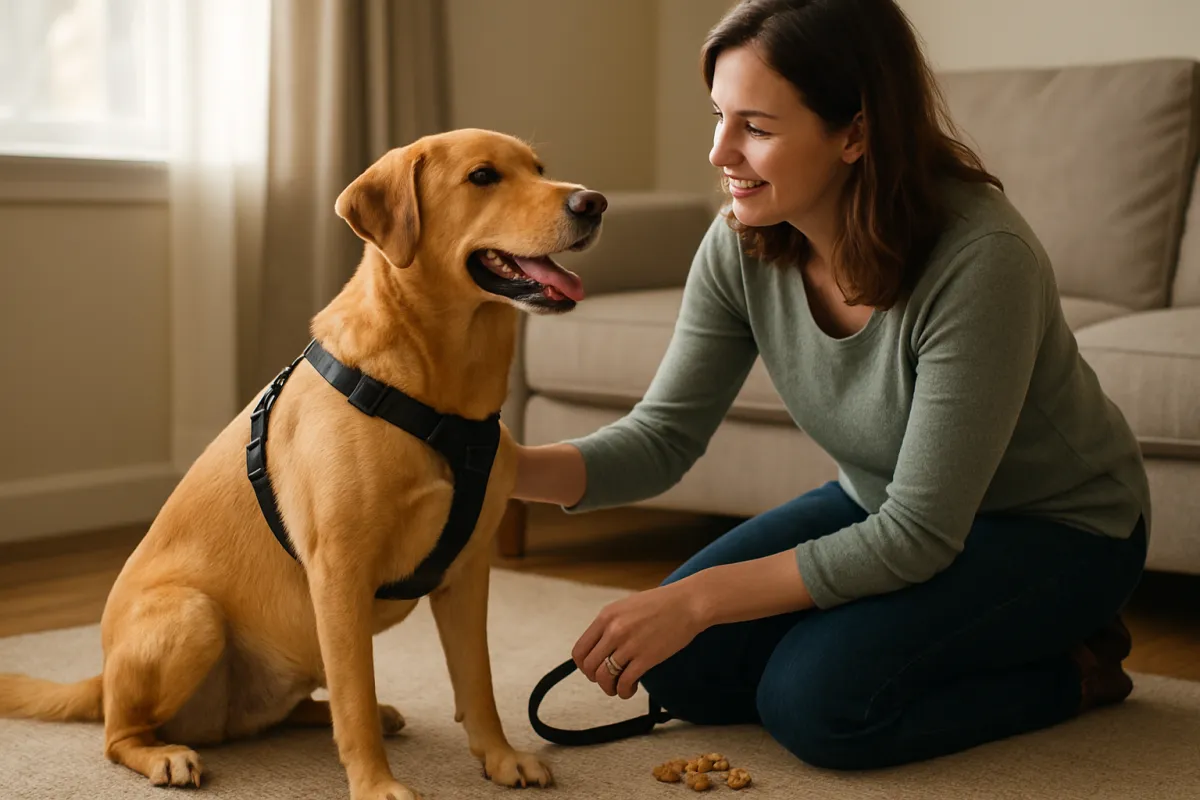
4. Make arriving at you comfortable and worthwhile
Some dogs approach for a treat but move away as soon as a hand reaches toward them. That can become a problem when you need to secure your dog. Add gentle collar or harness handling to successful recalls while keeping the reward generous.
- Touch the collar or harness briefly, then reward.
- Hold it for one second, then reward.
- Take one step with your dog, then reward.
- Occasionally attach the leash, reward, and release your dog again.
Do not call your dog only for nail trimming, medication, bathing, confinement, or the end of an enjoyable outing. When you need to do one of those things, approach calmly when possible, or use a separate routine cue that does not weaken the recall.
Practice “come, reward, and go play” regularly. This teaches your dog that returning to you does not always mean losing freedom.
5. Add distance one small step at a time
Once your dog responds indoors, practice from a greater distance. Move from a few feet to the opposite side of the room, then try another room with the door open. Keep the environment simple.
Increase distance only when your dog is responding consistently. If you add distance and distractions at the same time, you may not know which challenge caused the failure.
Use a simple progression:
- One to three feet in a quiet room.
- Across the same room.
- From another room inside the house.
- In a fenced yard with minimal activity.
- On a long line in a quiet outdoor area.
- Near mild distractions, such as distant people or ordinary smells.
Keep sessions short. Five successful repetitions are usually more useful than twenty repetitions that end with your dog ignoring the cue.
6. Move outdoors with a long line
Outdoor environments compete strongly for your dog’s attention. Begin in a fenced yard or another legally permitted, low-distraction location. Attach the long line securely and allow your dog to explore within the safe range.
Call when your dog is likely to respond, not when they are chasing wildlife, greeting another dog, or intensely tracking a scent. If your dog turns toward you, praise as they travel and reward generously when they arrive.
Do not use the line to drag your dog toward you. If your dog ignores the cue, calmly reduce the distance, use a cheerful movement away from the dog, or wait for a natural pause before trying again.
These criteria can help you decide when to increase difficulty:
| Training stage | What to look for | Warning sign | What to do next |
|---|---|---|---|
| Quiet room | Dog turns promptly and reaches you | Dog needs repeated calls | Shorten the distance and improve the reward |
| Several rooms | Dog leaves mild activity to come | Dog pauses or watches you without moving | Return to the previous distance |
| Fenced yard | Dog responds while sniffing casually | Dog ignores you around exciting smells | Use a higher-value reward and fewer distractions |
| Long line outdoors | Dog returns before reaching line tension | Dog runs to the end of the line | Call earlier and practice closer to home |
| Busy environment | Dog can disengage from moderate distractions | Dog fixates, pulls, or cannot eat | Increase distance from the distraction |
7. Practice recall games instead of only giving commands
Games help your dog learn that paying attention to you is enjoyable. Use them after your dog understands the basic cue.
Ping-pong recall
Two people stand a short distance apart. Each person takes a turn calling the dog, marking the arrival, and rewarding. Increase the distance slowly and stop while the dog is still engaged.
Find me
Have someone hold your dog briefly while you move just out of sight in a safe room. Call once, celebrate the search, and reward when your dog finds you. Keep the hiding place easy at first.
Return and release
Call your dog away from a mild activity, reward, then release them back to it. This uses access to play or sniffing as an additional reward and prevents recall from always predicting restriction.
The AKC describes similar recall games, including hide-and-seek and two-person calling exercises, as ways to make returning to you more rewarding. Explore additional recall games from the AKC.
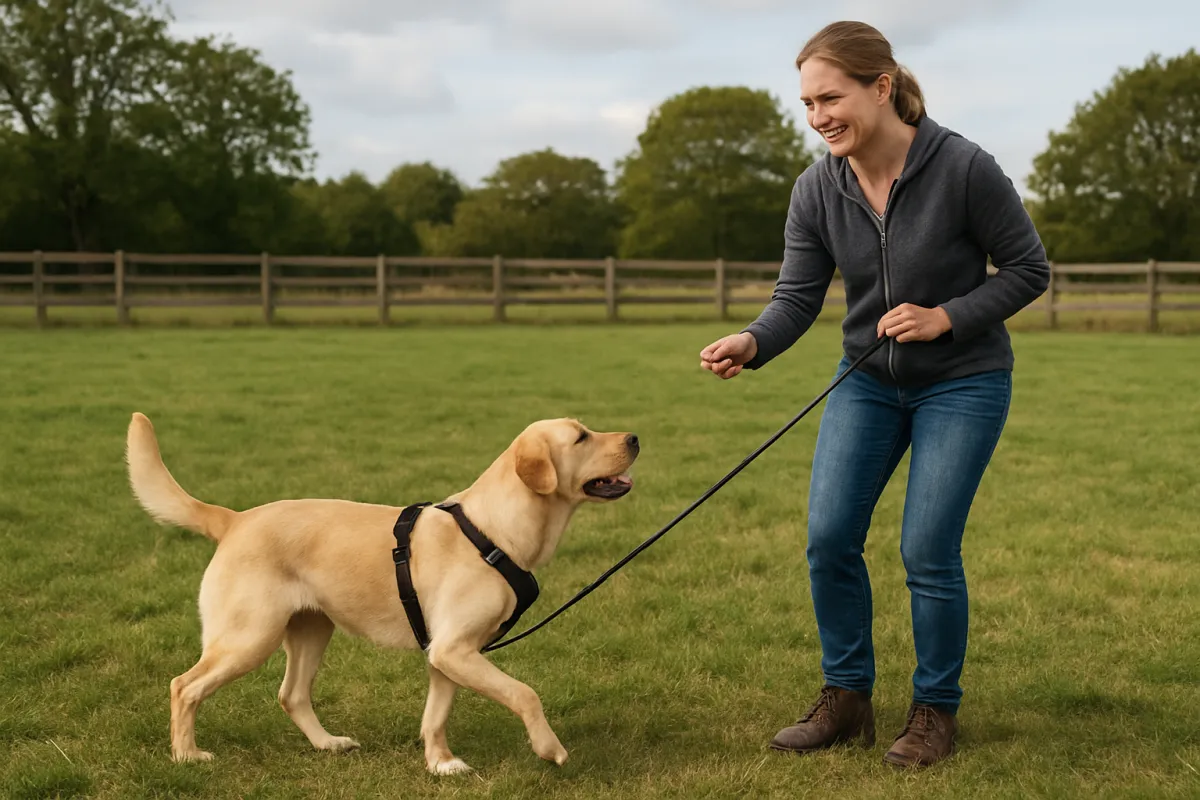
8. Use safety rules while reliability is developing
A recall is not fully reliable simply because it works in the house. Until your dog responds consistently around realistic distractions, use a leash, secure fencing, or a long line.
- Never test an unfinished recall beside traffic, water hazards, livestock, or unfamiliar dogs.
- Check that gates, doors, and fences are secure before practicing.
- Do not wrap a long line around your hand, wrist, or body.
- Watch for line burns, sudden lunges, and tangled equipment.
- Carry identification and keep your dog’s microchip details current.
If your dog is fearful, highly reactive, aggressive, or repeatedly bolts, arrange help from a qualified reward-based trainer or veterinary behavior professional. A professional can identify whether anxiety, predatory behavior, pain, or another issue is interfering with recall.
Common mistakes that weaken recall
- Repeating the cue: Saying “come” five times can teach your dog that the first four repetitions do not matter.
- Calling only for unpleasant events: Your dog may avoid you if recall consistently ends play or leads to something uncomfortable.
- Using a low-value reward: Ordinary kibble may not compete with squirrels, food scraps, or other dogs.
- Increasing difficulty too quickly: Indoor success does not automatically transfer to a park.
- Chasing your dog: Many dogs interpret chasing as a game and move farther away.
- Punishing a late arrival: Even if the dog took too long, reward the return and make the next repetition easier.
- Practicing until the dog quits: End while responses are still enthusiastic.
What if your dog will not come?
What if my dog looks at me but does not move?
You may be too far away, the reward may be insufficient, or the environment may be too difficult. Move closer, turn sideways, use an excited backward movement, and reward even a few steps toward you. Do not keep repeating the cue.
What if my dog runs away when I reach for the collar?
Separate coming from restraint practice. Reward your dog for approaching, then briefly touch the collar and reward again. Build duration gradually before attaching the leash.
What if my dog comes at home but ignores me outside?
That is common because outdoor distractions change the difficulty. Return to a fenced area or long line, increase the reward value, and train at a greater distance from distractions.
What if my recall cue seems ruined?
Stop using it in situations where failure is likely. Choose a new cue and teach it from the beginning in a quiet room. Everyone in the household should use the same word and reward standard.
Actionable recall checklist
- Choose one recall cue and use it consistently.
- Prepare high-value treats or a favorite toy.
- Teach attention to your dog’s name first.
- Begin a few feet away in a quiet room.
- Mark and reward the instant your dog turns and arrives.
- Practice gentle collar and harness handling.
- Call, reward, and release your dog back to enjoyable activities.
- Add distance before adding major distractions.
- Use a long line or secure fencing outdoors.
- End each session after several successful responses.
Advanced tips for stronger real-world recall
Use different reward levels. A small treat may be enough indoors, while a special food reward or brief game may be appropriate near moderate distractions. Delivering several small rewards in a row can make a difficult return more valuable.
Also practice unexpected check-ins during walks. When your dog looks at you voluntarily, mark and reward. This builds the habit of monitoring your location without requiring constant commands.
For dogs with strong chase instincts, recall should not replace management. Use secure containment and avoid settings where a single mistake could lead to injury. The aim is a useful emergency skill, not permission to remove safety equipment prematurely.
Your next steps
Today, choose the cue, prepare the rewards, and complete five easy repetitions indoors. Tomorrow, repeat in a different room. Over the next several sessions, increase distance gradually and record the distractions that cause hesitation.
When you know how to teach a dog to come when called, the most important principle is not a louder command. It is a carefully protected association: turning toward you and arriving should remain safe, clear, and worthwhile. Build that response in small stages, manage the environment, and use professional support if fear or dangerous behavior makes practice difficult.
For more practical pet guidance, visit the LaokPet homepage or explore how to choose calming treats for anxious dogs.