To help a dog adjust to a new home, give them a quiet starting area, keep the first days predictable, and let trust build at the dog’s pace. Avoid overwhelming them with visitors, long outings, or too many new rules at once.
Moving can be stressful even for a confident dog. A newly adopted adult dog may need time to understand the household, while a puppy must learn basic routines from the beginning. This guide shows you how to prepare the home, manage the first day, introduce new experiences safely, and recognize when extra help is needed.
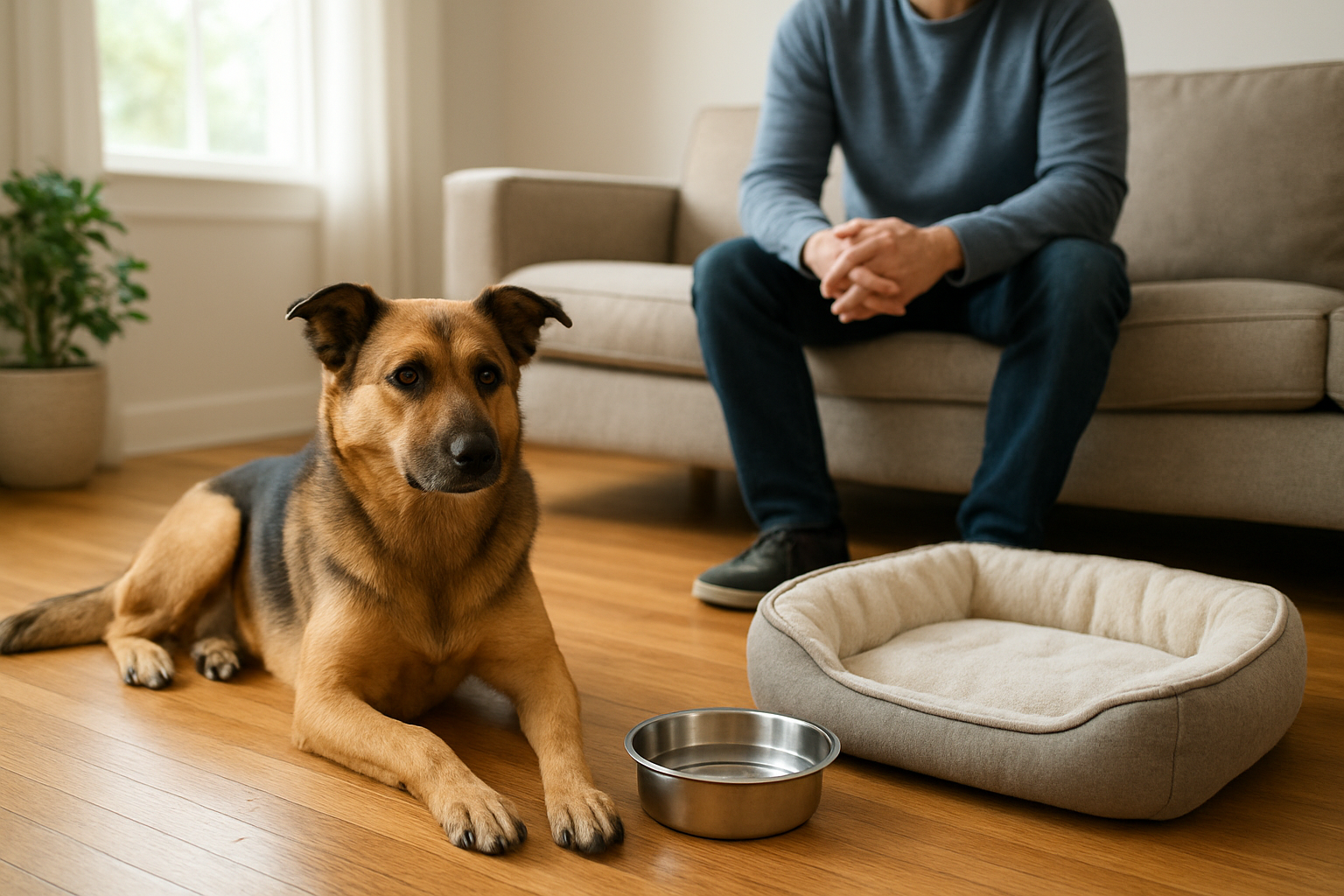
1. Prepare the home before your dog arrives
Preparation reduces decisions and distractions during the first few days. The American Veterinary Medical Association’s pet-care guidance recommends preparing a suitable place to eat and sleep, gathering basic equipment, and pet-proofing the home before arrival.
- Set up a quiet rest area away from heavy foot traffic.
- Prepare food and water bowls, a secure collar or harness, leash, identification tag, waste bags, and washable bedding.
- Remove or secure toxic plants, medications, cleaning products, electrical cords, small objects, and accessible trash.
- Check fences, gates, doors, and windows before allowing off-leash time.
- Ask the shelter, rescue, breeder, or previous owner about food, medication, toilet habits, fears, and known triggers.
If you already have pets, arrange separate spaces and separate feeding areas. Do not assume that a dog who seemed friendly during a brief meeting will immediately settle beside another animal at home.
2. Begin with a small, controlled space
Give your dog access to one prepared room or a gated section rather than the entire house. A smaller area makes it easier to supervise, prevents accidental damage, and gives the dog a place to retreat when the surroundings feel unfamiliar.
Keep the space comfortable but not crowded. Include water, a bed or blanket, a safe chew, and an open crate if your dog already likes crates. Never force a dog into a crate or use the crate as punishment.
Checkpoint: signs the starting area is working
- Your dog can rest without constant pacing.
- They can reach water and bedding without crossing a busy walkway.
- They show some interest in food, treats, toys, or gentle interaction.
- They can move away from people without being cornered.
If the dog hides, freezes, pants heavily, growls, or repeatedly tries to escape, reduce noise and handling. These behaviors are information about stress, not proof that the dog is disobedient.
3. Make the first day calm and predictable
On arrival, take your dog directly to a suitable toilet area before showing them the house. Keep the leash attached until doors and gates are secure. Allow sniffing, but avoid turning the first outing into a long walk if the dog appears tired or overwhelmed.
Inside, let the dog explore gradually. Use a calm voice, offer food without pressure, and allow them to approach you. Children should sit quietly and wait for the dog to initiate contact; hugging, chasing, lifting, and crowding can create fear.
For the first evening, follow a simple sequence: toilet break, water, small meal if appropriate, quiet rest, and another toilet break. A dog may eat less than usual during the first day, but continued refusal to eat or drink deserves veterinary advice.
Use this comparison table to match your response to what you observe:
| What to look for | Likely need | Warning sign |
|---|---|---|
| Sniffing, resting, accepting treats | Short, gentle interaction | Sudden withdrawal after handling |
| Pacing or frequent scanning | Less space, noise, and activity | Repeated escape attempts |
| Loose body and normal breathing | Continue the calm routine | Stiff posture, hard stare, or growling |
| Accidents indoors | More frequent toilet breaks and supervision | Straining, blood, vomiting, or severe diarrhea |
4. Establish a routine before adding freedom
Dogs adjust more easily when important events happen in a recognizable order. Keep feeding, toilet breaks, rest, walks, and bedtime broadly consistent. The schedule does not need to be exact, but predictable patterns help your dog learn what happens next.
- Take puppies outside after waking, eating, drinking, playing, and naps.
- Give adult dogs regular toilet opportunities while you learn their normal schedule.
- Provide quiet rest periods instead of constant entertainment.
- Use the same short cues for everyday behaviors, such as “outside,” “come,” and “bed.”
- Reward desired behavior immediately with a small treat, praise, or access to something the dog enjoys.
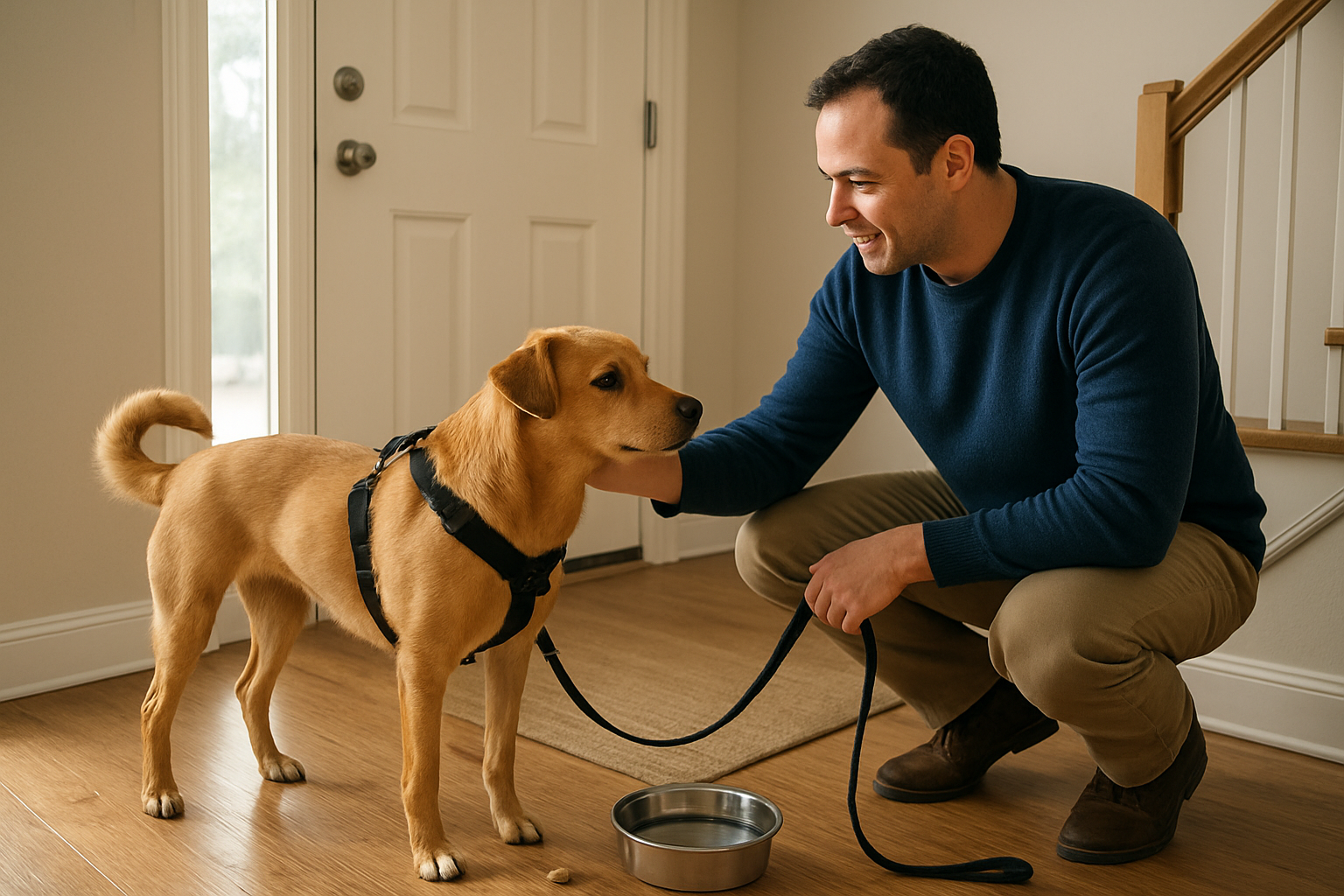
Do not measure progress only by affection. A dog who chooses to sleep, drink, sniff, or calmly watch the room may be adjusting well even if they are not yet cuddly.
5. Build trust with reward-based training
Start with easy behaviors that improve daily life: responding to their name, looking toward you, walking a few steps on leash, going to a mat, and entering a safe area voluntarily. Keep sessions brief and stop while the dog is still comfortable.
Avoid shouting, leash jerks, intimidation, or punishment for accidents and fearful behavior. The RSPCA recommends encouraging good behavior with rewards and avoiding shouting or punishment. If a behavior is unsafe, calmly create distance, manage the environment, and seek qualified help rather than escalating the confrontation.
For puppies, socialization should mean controlled, positive exposure to people, surfaces, sounds, handling, and suitable dogs—not forcing the puppy into every available situation. The AVMA explains that socialization helps dogs become comfortable with people, animals, places, and activities; your veterinarian can help you balance this with local disease risks and vaccination status.
6. Introduce family members, visitors, and other pets slowly
Let your dog meet household members one at a time when possible. Ask people to turn slightly sideways, avoid staring, and let the dog choose whether to approach. Tossing treats away from the person can help the dog feel less pressured.
For a resident dog, use a neutral outdoor area for the first meeting, keep both dogs on loose leashes, and watch for relaxed movement. Then enter the home gradually and separate the dogs when they eat, sleep, or show tension. The RSPCA’s dog-introduction guidance notes that introductions can be affected by prior experiences and socialization, so progress should be based on each dog’s behavior rather than a fixed timetable.
Never leave a new dog and a child or another pet unsupervised, even if early interactions seem positive.
7. Expand access and activity in small stages
Once your dog is resting, eating, eliminating, and responding comfortably in the starting area, open one additional room. Keep supervision in place and return to the smaller area when the dog becomes overstimulated.
Increase walks and outings gradually. Begin with familiar, low-traffic routes, then add busier places only when your dog can recover quickly from ordinary sounds and sights. A dog who is tired but settled after an activity is usually coping better than one who becomes frantic, shut down, or unable to take food.
Common mistakes that slow adjustment
- Inviting a large group of visitors during the first weekend.
- Giving unsupervised access to the whole house immediately.
- Changing food, schedule, equipment, and training rules all at once.
- Forcing contact when the dog is hiding, backing away, or showing tension.
- Correcting fear signals instead of removing the source of pressure.
- Assuming accidents, barking, or clinginess will disappear without management.
- Taking a newly arrived puppy into high-risk public areas before discussing vaccination and disease precautions with a veterinarian.
What if your dog is struggling?
If your dog will not eat or drink
Reduce activity, offer the usual food in a quiet place, and avoid repeated coaxing. Contact a veterinarian promptly if your dog refuses water, seems weak, vomits repeatedly, has severe diarrhea, or does not begin eating within a reasonable period for their age and health history.
If your dog growls or snaps
Stop the interaction and create distance. Do not punish the warning. Keep children and visitors away, use barriers, and contact a veterinarian or qualified reward-based behavior professional for an individualized plan.
If your dog panics when left alone
Do not start with long absences. Practice very short departures while monitoring whether your dog can remain settled. Persistent destruction, vocalization, escape attempts, or self-injury may indicate separation-related distress and warrants professional guidance.
Adjustment checklist and next actions
- Prepare a quiet, secure starting area.
- Confirm food, medical, identification, and vaccination information.
- Book a veterinary appointment according to your dog’s health history and adoption instructions.
- Use a simple daily routine for meals, toilet breaks, rest, and training.
- Keep early introductions brief and supervised.
- Record appetite, stool, sleep, triggers, and progress for the first week.
- Increase freedom only when your dog remains relaxed with the current level of access.
For additional pet-care planning, you can browse the LaokPet homepage, compare practical hydration equipment in our guide to automatic water dispensers for dogs, or review household fit considerations in our Great Dane versus Mastiff comparison.
Learning how to help a dog adjust to a new home is mainly a matter of reducing pressure, observing behavior, and repeating dependable routines. Give your dog enough time to feel secure, reward the choices you want to see, and involve a veterinarian or behavior professional when health or safety concerns go beyond normal settling-in stress.