Quick verdict: A Great Dane is usually the better choice for families that want a social, trainable giant dog with moderate exercise needs. A Mastiff may suit you better if you prefer a calmer, heavier-built companion and are prepared for stronger guarding instincts, more physical strength, and a slower training pace.
Both breeds can be affectionate and dependable, but “family-friendly” does not mean effortless. Their size affects everything from puppy training and home layout to travel, veterinary care, and safe interactions with children. This guide compares the two breeds by the factors that matter most in daily family life.
1. Start with the practical requirements of giant dogs
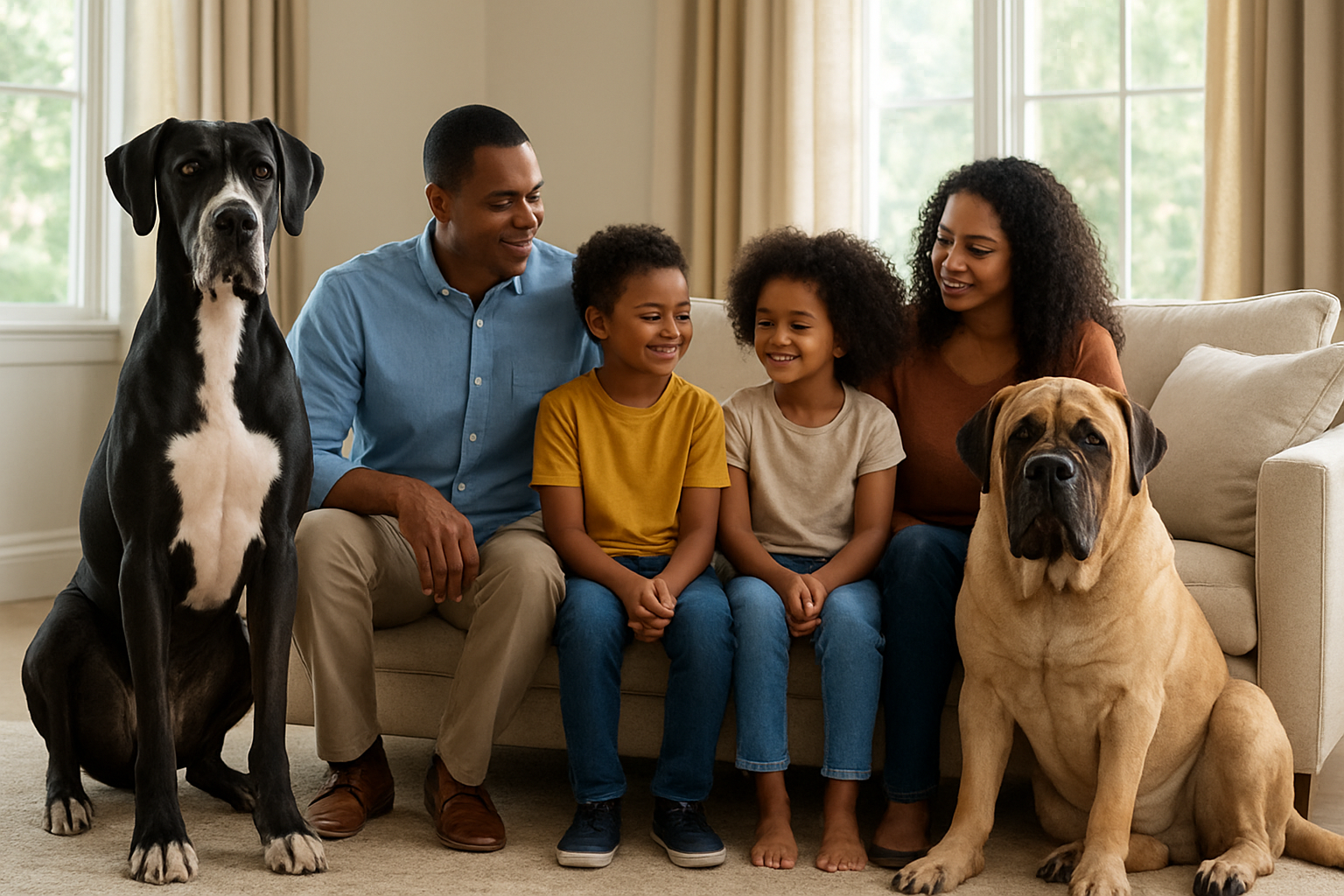
Before comparing personalities, assess whether your household can manage a dog that may weigh well over 100 pounds. A giant breed needs secure walking equipment, strong but humane training, suitable transport, and enough room to turn around without knocking people or furniture over.
- Space: A large home is helpful, but calm behavior and sensible layout matter more than a huge yard.
- Budget: Food, beds, crates, medication, grooming tools, transport, and veterinary treatment generally cost more as dog size increases.
- Supervision: Young children should never be left alone with either breed, even when the dog has a gentle reputation.
- Handling: Every adult who walks or cares for the dog should be able to manage its strength without relying on physical force.
The American Kennel Club’s Great Dane profile describes the breed as easygoing but emphasizes that its size, weight, and strength require serious commitment. The same principle applies to the Mastiff, which the AKC characterizes as docile and dignified but exceptionally powerful.
2. Compare Great Dane and Mastiff temperament
Great Danes are often sociable, people-oriented, and eager to participate in family activities. With appropriate socialization, many are comfortable meeting visitors and living with other animals. They can still be imposing, so polite greetings and impulse control should be taught before adolescence.
Mastiffs are commonly calmer and more reserved. They may be deeply devoted to their household while taking longer to accept unfamiliar people. That protective tendency can be useful for a family seeking a natural watchdog, but it requires careful socialization and clear boundaries around visitors, delivery workers, and children’s friends.
Breed tendencies are not guarantees. Genetics, early handling, training, health, and the individual dog all influence behavior. Meet adult dogs from the breeder or rescue whenever possible, and pay attention to how they recover from new sounds, people, and environments.
The AKC’s overviews of the Great Dane and Mastiff provide useful starting points, but neither source can predict the temperament of a particular puppy.
3. Great Dane vs Mastiff: which is easier to exercise?
Neither breed needs endless high-intensity exercise, and both can suffer if growing puppies are pushed too hard. The goal is steady, age-appropriate activity that supports sound movement without repetitive impact or forced running.
| Factor | Great Dane | Mastiff | What to watch for |
|---|---|---|---|
| Typical adult activity | Regular walks, play, and family involvement | Moderate walks and relaxed household activity | Weight gain and boredom if movement is too limited |
| Energy impression | Often more playful and socially active | Usually calmer and more deliberate | Individual dogs may differ considerably |
| Puppy exercise | Controlled activity while joints mature | Controlled activity through a long growth period | Avoid forced running, repeated jumping, and slippery floors |
| Best family routine | Walks plus training and interaction | Walks plus companionship and short training sessions | Consistency matters more than exhausting the dog |
Great Danes may fit a family that enjoys walks, training games, and outdoor time without needing a canine endurance athlete. Mastiffs can be a better match for households that prefer a slower pace. The AKC notes that Mastiffs generally do not require rigorous exercise, while Great Danes need regular activity and should not be treated as completely sedentary pets.
4. Consider training, guarding, and everyday control
Early training is not optional for either breed. A puppy that is cute at 30 pounds may become difficult to manage at adult size if it jumps, pulls, steals objects, or rushes through doorways.
Great Dane training style
Great Danes are often responsive to consistent, reward-based training and may enjoy learning household manners, leash skills, and basic obedience. Their social nature can make them willing participants, although adolescent stubbornness and distractibility are still possible.
Mastiff training style
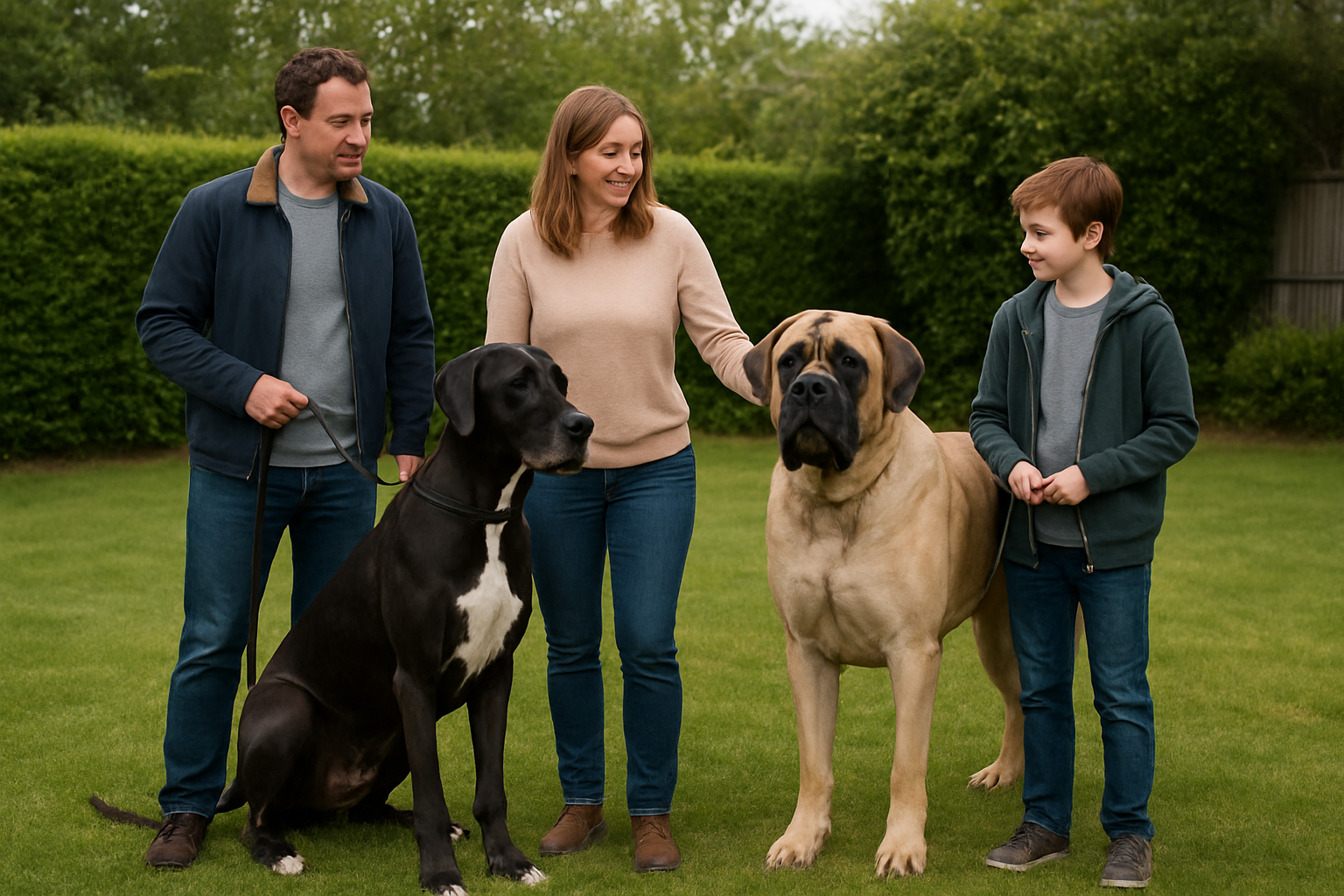
Mastiffs are intelligent but may be slower and more selective in their responses. Short, calm sessions usually work better than repetition or confrontation. Because many Mastiffs are naturally protective, training should include calm visitor introductions, reliable recall management, and a clear routine for the front door.
Use reward-based methods and work with a qualified trainer if you are struggling with pulling, fear, guarding, or reactivity. Avoid equipment or techniques designed to frighten or cause pain, especially with a dog powerful enough to create serious consequences when stressed.
5. Check family compatibility beyond temperament
- Families with young children: Either breed may be affectionate, but their size creates a real knock-over risk. Adults must supervise, provide escape spaces, and teach children not to climb on or disturb the dog.
- Homes with frequent visitors: Great Danes may be easier if you want a more openly social dog. A Mastiff can work, but visitor management must be deliberate.
- Other pets: Early socialization and careful introductions matter more than breed labels. A large dog can accidentally injure a smaller pet during play.
- Apartment living: Possible for some individuals, but elevators, narrow hallways, neighbor tolerance, and access to controlled outdoor exercise require careful planning.
- First-time owners: A stable Great Dane may feel more straightforward than a strong guardian-type Mastiff, but neither is an automatic beginner breed.
6. Account for grooming and health responsibilities
Both breeds have short coats, so grooming is relatively simple compared with long-coated dogs. Regular brushing, nail care, dental care, ear checks, and bathing when needed still form part of the routine. Their size can make every task harder if the dog is not taught to cooperate early.
Giant breeds also deserve careful veterinary planning. Great Danes are associated with serious health concerns including bloat, and their rapid growth makes appropriate puppy nutrition and controlled exercise important. Mastiffs also require attention to body condition, joints, and growth. Ask breeders for relevant health-testing documentation, and discuss preventive care with your veterinarian.
Seek urgent veterinary advice if either dog shows signs such as repeated unproductive retching, a suddenly swollen abdomen, collapse, severe breathing difficulty, or extreme weakness. These signs can indicate an emergency rather than a problem to monitor at home.
7. Match the breed to your household scenario
Choose a Great Dane when…
- You want a tall, affectionate dog that is usually comfortable being part of family life.
- Your household enjoys regular walks and interactive training.
- You prefer a dog that may be more openly social with visitors.
- You can provide space, supervision, and careful management of a very tall adolescent.
Choose a Mastiff when…
- You want a calmer, heavier-bodied companion with a natural protective presence.
- Your family prefers quiet companionship over vigorous activity.
- You have the experience and consistency to manage a reserved guardian-type dog.
- You are comfortable with slower maturation and a more deliberate training style.
8. Avoid these common decision mistakes
- Choosing by appearance alone: A giant dog’s lifestyle needs matter more than its impressive silhouette.
- Assuming gentle means easy: A friendly dog can still knock over a child, pull an adult off balance, or damage a home unintentionally.
- Skipping puppy socialization: Protective or cautious behavior becomes harder to change after it is established.
- Over-exercising a growing puppy: More activity is not automatically better for developing joints.
- Ignoring adult size: Check whether beds, vehicles, crates, gates, and veterinary facilities can accommodate the dog.
- Buying from an unverified source: Ask about health testing, temperament, socialization, contracts, and the breeder’s willingness to take a dog back.
9. Use this final checklist before deciding
- Can every adult in the home safely handle the dog on leash?
- Can you separate the dog from children, guests, and other pets when needed?
- Do you have a plan for puppy classes and ongoing socialization?
- Can your budget absorb giant-breed food, equipment, and unexpected veterinary care?
- Have you met calm adult examples of both breeds?
- Are you choosing for temperament and routine rather than size or status?
What if neither breed feels like the right fit?
If your family wants a large dog but cannot comfortably manage giant-breed strength, consider a smaller, easier-to-transport breed. You can also speak with a reputable rescue organization about an adult dog whose behavior in a home is already known. An adult assessment may give you more reliable information than choosing solely from puppy breed expectations.
Next steps for choosing responsibly
Write down your household’s exercise schedule, visitor pattern, children’s ages, other pets, available space, and realistic budget. Then compare those details with several adult dogs, not just breed descriptions. Arrange a veterinary conversation before bringing home a giant-breed puppy, and select a trainer who understands large, powerful dogs.
Great Dane vs Mastiff comes down to the type of family life you want. The Great Dane is often the stronger match for an active, social household seeking a trainable companion. The Mastiff is often better for a quieter home that values calm protection and can manage greater physical strength. The better family dog is the one whose energy, guarding instincts, size, and care requirements you can support consistently for its entire life.