The best automatic water dispenser for dogs is not necessarily the most advanced model. Choose one that provides a steady supply of fresh water, is simple to clean, resists tipping, and still leaves your dog with a backup bowl if the pump stops.
Automatic dispensers can make water more accessible and may appeal to dogs that prefer moving water, but they are not essential for every pet. The practical decision is whether a fountain solves a real problem in your home without creating a harder cleaning routine.
1. Decide whether your dog actually needs an automatic water dispenser
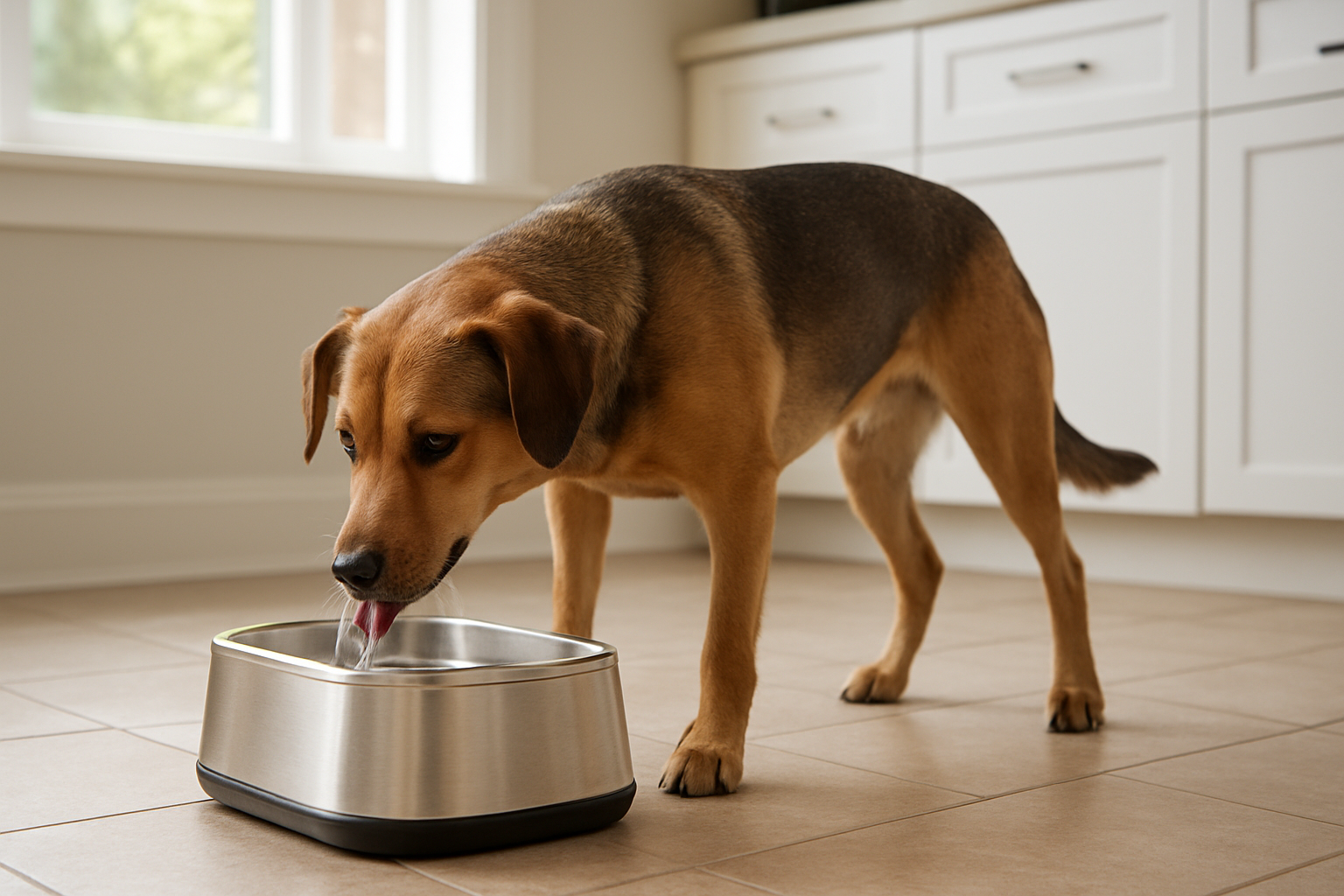
A fountain is most useful when it matches your dog’s habits or your household routine. Some dogs show interest in running water, while others prefer a still bowl and may avoid a new device because of pump noise or unfamiliar movement. Evidence that circulating water reliably increases drinking in dogs is limited, so treat a fountain as an option rather than a guaranteed hydration solution.
It may be worth considering one if your dog:
- Enjoys drinking from taps, hoses, or other moving water sources.
- Leaves hair, food particles, or outdoor debris in the bowl.
- Shares water with another dog and needs a larger reservoir or additional station.
- Spends part of the day alone and benefits from a larger supply between refreshes.
- Needs water kept cooler and cleaner-looking between routine bowl changes.
If your dog already drinks well from a clean bowl, an automatic dispenser may add cost and maintenance without a meaningful benefit. A second stainless-steel bowl in another location may be the simpler solution.
2. Match the dispenser to your dog’s size and drinking style
Capacity should be judged by your dog’s daily needs, the number of pets using the dispenser, and how often you can safely refill it. A small reservoir may be suitable for one toy breed but inadequate for a large dog or a multi-dog household. A larger tank is not automatically better if it is difficult to lift, disassemble, or clean.
Look for a drinking area that allows your dog to approach without pushing its muzzle against a narrow opening. Deep-chested or large dogs may be more comfortable with a broad, accessible surface, while short-nosed dogs may need a low, open design that does not force an awkward posture.
Outdoor use requires extra caution. A plug-in indoor fountain should not be placed where cords can be chewed or where water can reach an unsafe electrical connection. For patios and yards, a sturdy bowl or purpose-built outdoor dispenser may be more practical than a delicate indoor pump.
The comparison below summarizes the features that matter most.
| What to look for | Why it matters | Warning sign |
|---|---|---|
| Wide, weighted base | Reduces sliding and tipping during enthusiastic drinking | Light body that moves across the floor |
| Stainless steel or glazed ceramic drinking surface | Usually easier to inspect and clean than porous or scratched plastic | Deep scratches, rough seams, or a strong plastic odor |
| Replaceable filter with clear availability | Helps trap larger particles and supports routine maintenance | Filters are difficult to identify or frequently unavailable |
| Quiet, adjustable pump | Less likely to disturb noise-sensitive dogs | Persistent rattling, vibration, or a loud motor |
| Simple disassembly | Makes regular washing more realistic | Hidden channels and many small parts that retain slime |
| Low-water shutoff or visible level indicator | Reduces the chance of running the pump dry | Pump stops unpredictably or requires constant checking |
3. Prioritize hygiene over filtration claims
A filter can catch some hair, food particles, and larger debris, but it does not make neglected water hygienic. The reservoir, pump housing, lid, and drinking surface still need regular cleaning. The FDA’s pet-feeding hygiene guidance recommends washing pet bowls and feeding equipment with soap and hot water; that principle is especially important for a fountain with concealed components.
Choose a design that comes apart without special tools. Dishwasher-safe parts can save time, but check whether the pump itself must be hand-washed. A fountain that is technically washable but frustrating to dismantle may receive less care than a basic bowl.
Refresh the water before it becomes cloudy, slimy, or full of debris. Wash the drinking components frequently and follow the manufacturer’s filter replacement instructions. If the filter becomes discolored, clogged, or develops an odor, replace it rather than assuming circulation has solved the problem.
4. Compare fountain types before choosing a model
Stainless-steel fountains
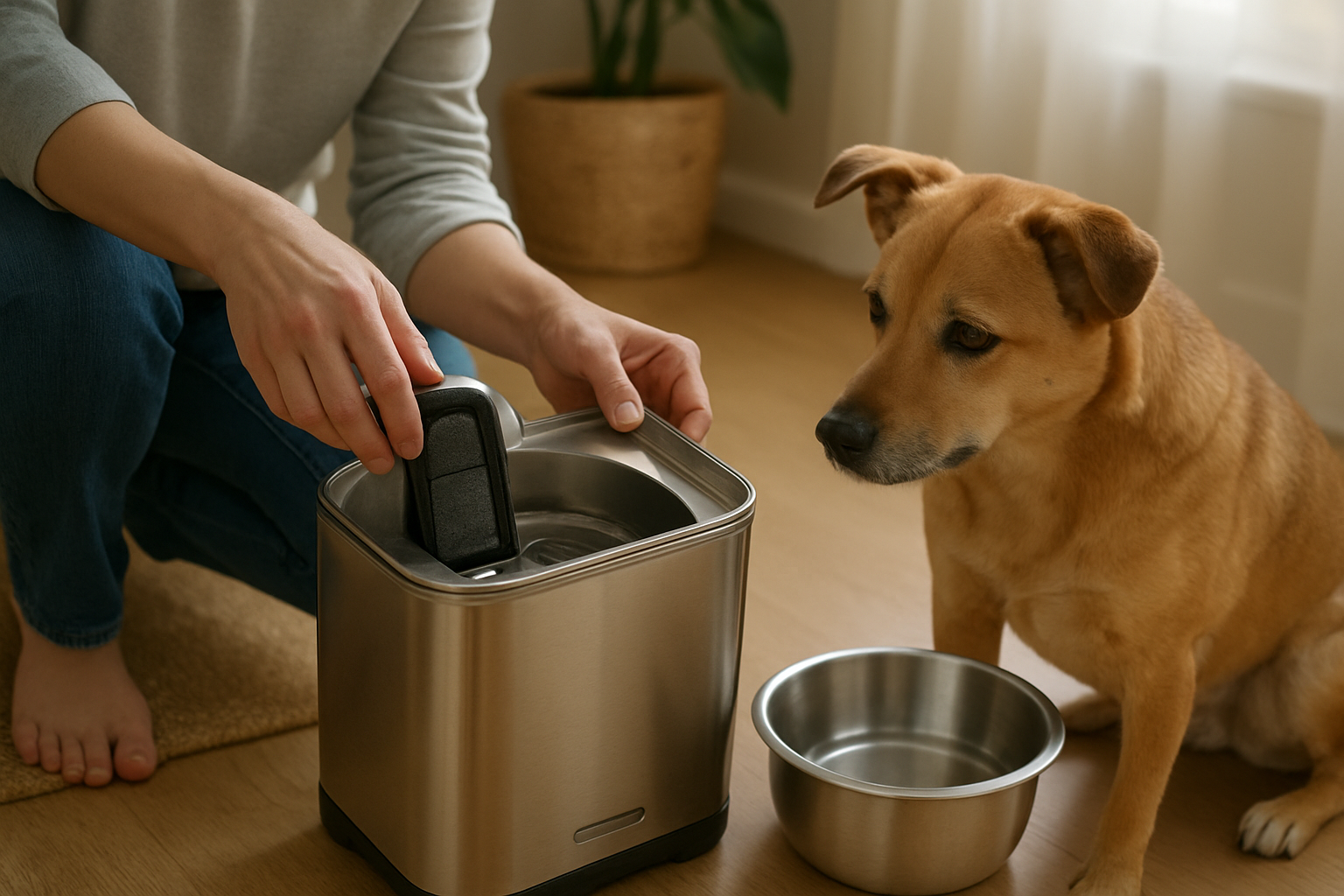
Stainless steel is durable, easy to inspect, and generally a sensible choice for the part your dog drinks from. It can show water spots, but that is usually preferable to a surface where scratches or residue are difficult to see.
Ceramic fountains
Ceramic models can be stable and visually unobtrusive. Their disadvantages are weight, breakage risk, and the possibility of chips or cracks that become harder to clean. Inspect the glaze regularly, especially after moving the fountain.
Plastic fountains
Plastic is often lighter and less expensive, but scratches and seams can hold residue. If you choose plastic, prefer a smooth, robust design and replace it when the surface becomes visibly worn. The American Kennel Club’s fountain guide also advises considering material, cleaning difficulty, noise, and size rather than assuming every fountain suits every dog.
Battery-powered and gravity-fed dispensers
Battery-powered units can avoid some cord-placement problems, but batteries add another maintenance task and may not last as long as expected. Gravity-fed dispensers do not circulate or filter water, but they can provide a useful backup when reliability matters more than running water.
5. Introduce the dispenser gradually and keep a backup
Do not remove your dog’s familiar bowl on the first day. Place the fountain beside it, leave the pump off initially if possible, and allow your dog to investigate without pressure. Once your dog is comfortable, turn it on and observe whether the sound or movement changes its behavior.
Keep a clean bowl available even after your dog accepts the fountain. A power failure, blocked filter, empty reservoir, or pump fault can interrupt water access. The AKC similarly recommends retaining a conventional bowl as a backup rather than relying on a powered device alone.
In a multi-dog home, provide more than one water location. This reduces competition and lets you identify whether one dog avoids the fountain or is being displaced by another.
6. Avoid these common buying mistakes
- Choosing by reservoir size alone: A large tank is unhelpful if it is too heavy or difficult to wash.
- Assuming a filter replaces cleaning: Filters support water quality but do not sterilize the fountain.
- Ignoring pump noise: A sensitive dog may avoid a fountain that hums or vibrates.
- Buying a small cat-sized model for a large dog: Check drinking access, stability, and refill frequency.
- Relying on marketing claims about increased drinking: Individual preference varies, and a fountain is not a treatment.
- Forgetting replacement parts: Confirm that filters and pumps can be purchased before committing to a design.
7. What if your dog still drinks too little or too much?
A fountain should not be used to cover up a sudden change in drinking. Increased or decreased thirst can have medical causes, particularly when it occurs with changes in urination, appetite, energy, weight, vomiting, diarrhea, or heat exposure.
Contact your veterinarian if your dog’s drinking pattern changes noticeably, if it seems weak or dehydrated, or if it refuses water. The AKC notes that unusual drinking patterns warrant veterinary attention rather than simply changing bowls or adding a fountain.
Automatic water dispenser checklist
- Does the base stay stable when your dog drinks?
- Is the drinking surface stainless steel or intact glazed ceramic?
- Can every water-contact part be removed and washed?
- Are replacement filters and pumps easy to find?
- Is the pump quiet enough for your dog?
- Does the capacity suit your dog’s size and the number of pets?
- Can you place the cord safely, or would a non-electric option be better?
- Will you keep a fresh conventional bowl as backup?
Next actions before you buy
First, observe whether your dog prefers still or moving water. Next, measure the space available and estimate how often you can clean and refill the unit. Then compare construction, access, noise, replacement parts, and cleaning effort—not just advertised capacity or smart features.
For additional dog-care guidance, you can browse the LaokPet homepage or read how to choose dog car seat covers for another practical equipment comparison.
Final verdict: which automatic water dispenser is best for dogs?
The best automatic water dispenser for dogs is a quiet, stable, easy-to-clean model that fits your dog’s body size and your maintenance routine. A stainless-steel drinking surface, accessible parts, dependable replacement filters, and a safe backup bowl are more important than app controls or decorative features.
Choose a fountain when it solves a clear problem—such as a preference for moving water, shared access, or frequent bowl debris. If your dog already drinks comfortably from a clean bowl, staying with that simpler option may be the better decision.