The best low-shedding dogs for families with kids are usually the Miniature or Standard Poodle, Bichon Frise, Portuguese Water Dog, and Soft Coated Wheaten Terrier. The right choice depends less on the word “hypoallergenic” and more on your children’s ages, activity level, grooming budget, home space, and ability to supervise interactions.
Low-shedding does not mean maintenance-free, allergy-proof, or automatically child-friendly. This guide ranks practical family options, explains the trade-offs behind each choice, and gives you a safer way to compare breeds before contacting a breeder, rescue, or adoption group.
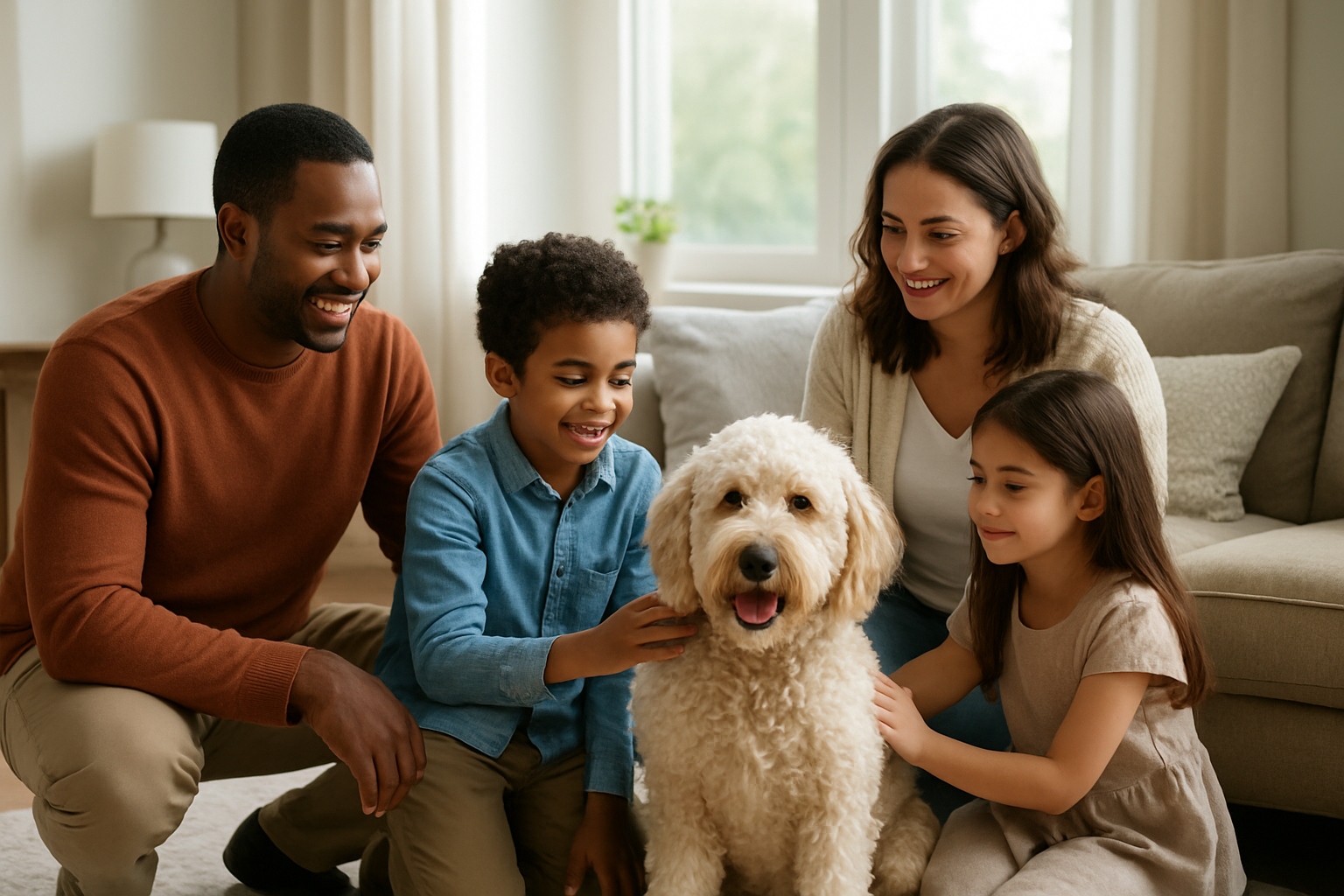
1. Start with the criteria that matter most
For a family dog, shedding is only one part of the decision. A better shortlist considers coat care, size, energy, trainability, tolerance for handling, and how easily the dog can settle indoors.
- Child compatibility: Look for a dog that can learn household rules and recover calmly from normal family activity.
- Size and sturdiness: Very small dogs may be vulnerable to rough play, while very large dogs can knock over toddlers unintentionally.
- Exercise needs: High-energy breeds need daily walks, play, training, and mental work—not just access to a yard.
- Grooming commitment: Hair that keeps growing often requires regular brushing, clipping, bathing, and professional appointments.
- Allergy expectations: No dog is completely hypoallergenic. People may react to dander, saliva, or proteins rather than loose hair alone. The American Kennel Club explains why low-shedding dogs may still trigger allergies. ([akc.org](https://www.akc.org/expert-advice/dog-breeds/hypoallergenic-dog-breeds/))
Before choosing a puppy, spend time with adult dogs of the breed. If allergies are a concern, arrange several visits rather than relying on a breed label.
2. Compare the best low-shedding dogs for families with kids
The table below is a practical starting point. Individual dogs vary, and upbringing, socialization, training, and supervision strongly affect family life.
| Breed | Best for | Activity level | Grooming | Warning sign |
|---|---|---|---|---|
| Miniature Poodle | Trainable small-to-medium companion | Moderate to high | High | Underestimating mental stimulation |
| Standard Poodle | Active families wanting a larger dog | High | High | Too little daily exercise |
| Bichon Frise | Small homes and gentle family play | Moderate | High | Assuming small means low-maintenance |
| Portuguese Water Dog | Outdoor families with older children | High | Moderate to high | Boredom and destructive behavior |
| Soft Coated Wheaten Terrier | Playful medium-sized households | Moderate to high | High | Terrier energy and jumping |
| Miniature Schnauzer | Alert, trainable companion homes | Moderate | Moderate to high | Excessive barking without training |
| Havanese | Affectionate indoor family companion | Moderate | Moderate to high | Separation distress or fragile handling |
3. The seven strongest family-friendly options
1. Miniature Poodle — Best overall for many families
Miniature Poodles combine a manageable size with excellent trainability and an athletic, playful nature. They can suit families that want an interactive dog for walks, games, and training without choosing a large breed.
Why it works: Intelligent dogs often learn household routines quickly when training is consistent and reward-based. Their coat sheds little, but it grows continuously and needs regular care.
Limitations: A bored Poodle may become noisy, restless, or inventive. Young children also need to learn not to grab, chase, or disturb the dog while it is eating or resting.
2. Standard Poodle — Best larger low-shedding choice
The Standard Poodle is a strong option for active families that want a larger dog with a responsive temperament. It can be a good match for hiking, structured play, obedience work, and family routines that include plenty of daily movement.
Why it works: The breed is commonly included among low-shedding options and is known for trainability. A well-socialized adult can be affectionate and adaptable in a busy home.
Limitations: Its size and energy are not ideal for every household. Large dogs need space, careful manners around small children, and an adult who can manage leash behavior.
3. Bichon Frise — Best small companion for gentle homes
The Bichon Frise is cheerful, sociable, and compact enough for many apartments or smaller houses. It is often a practical choice when children can interact gently and adults want a companion that enjoys being near the family.
Why it works: Bichons are playful without needing the same level of exercise as working or sporting breeds. Their coat tends to leave little loose hair around the home.
Limitations: The coat still needs frequent brushing and professional grooming. Because the dog is small, rough handling, falls, or being stepped on can cause serious injury.
4. Portuguese Water Dog — Best for active families
Portuguese Water Dogs are energetic, intelligent, and built for families that genuinely enjoy outdoor activity. They may thrive with older children who can participate in training, fetch, swimming, hiking, or structured games.
Why it works: This breed offers an engaging combination of athleticism and low shedding. The American Kennel Club describes it as an active working breed that needs vigorous daily exercise. Review the breed profile before choosing one. ([akc.org](https://www.akc.org/press-releases/no-shed-2014-oct/))
Limitations: This is not a low-effort family dog. Without enough activity and training, its energy can become jumping, mouthing, barking, or destructive behavior.
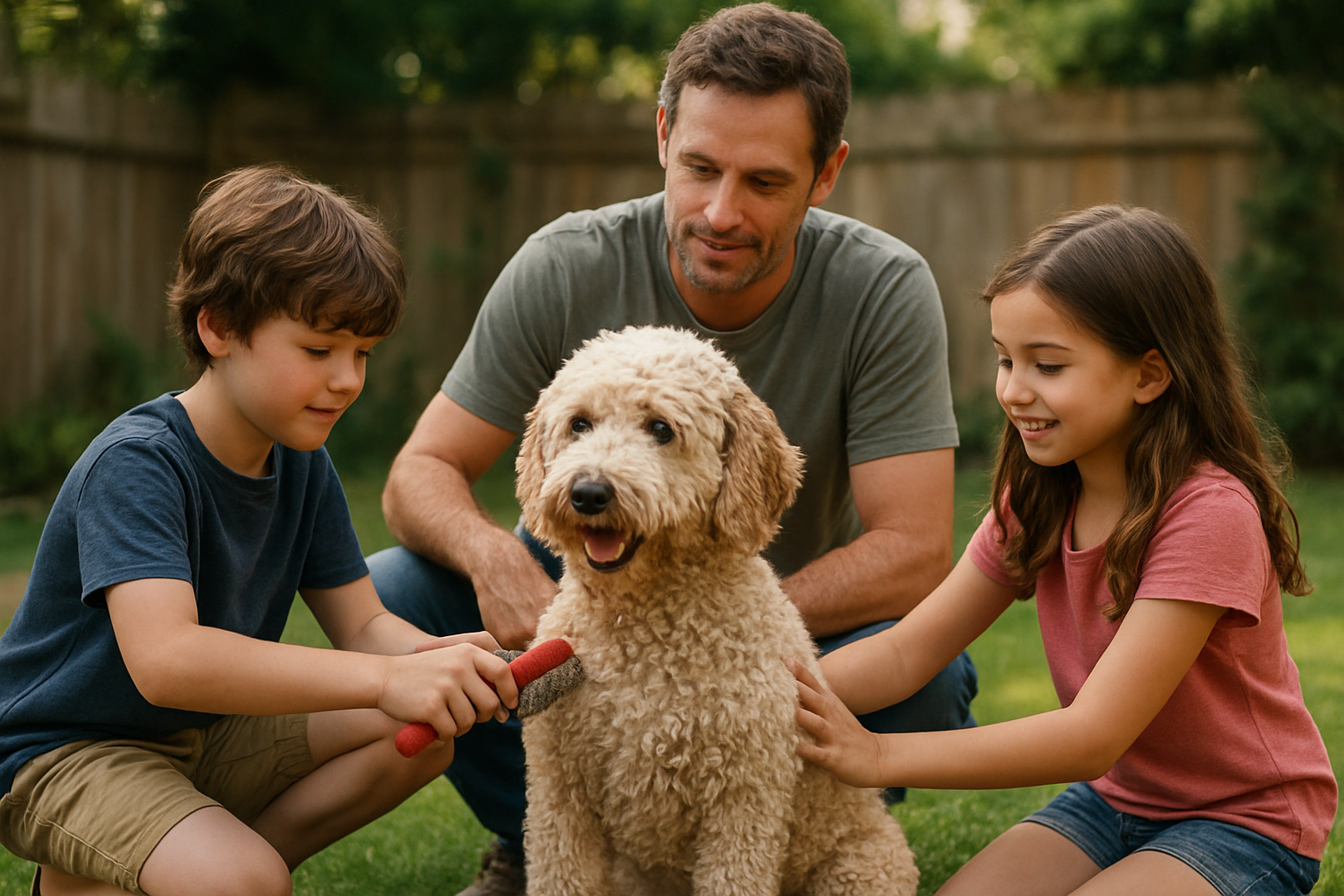
5. Soft Coated Wheaten Terrier — Best medium-sized playful option
The Soft Coated Wheaten Terrier can suit families wanting a friendly, medium-sized dog with a lively personality. Its coat sheds relatively little, but the breed still needs regular brushing to prevent mats.
Why it works: Wheatens can be affectionate, entertaining, and ready to participate in family activities. Their size may feel like a useful middle ground between toy breeds and large dogs.
Limitations: Terrier traits can include persistence, excitement, and a tendency to jump. Early manners training is especially important when children are small.
6. Miniature Schnauzer — Best for an alert, trainable household
Miniature Schnauzers are sturdy small dogs that often enjoy learning, walks, and family interaction. They can be a good fit for households that want a compact dog with more physical confidence than a delicate toy breed.
Why it works: Their coat is generally low-shedding, and they are often responsive to training. They can enjoy active play while still settling indoors after their needs are met.
Limitations: Alertness can become frequent barking if the family does not teach calm behavior. Introduce children to respectful handling and provide the dog with a quiet retreat.
7. Havanese — Best affectionate indoor companion
Havanese are social companion dogs that can work well in homes where someone is present for much of the day. Their small size and affectionate nature appeal to families seeking a close household companion.
Why it works: They often enjoy games, short walks, and learning simple behaviors. Their coat typically sheds less than many common family breeds.
Limitations: A Havanese is not a toy for children. The breed may struggle with long periods alone, and its coat requires consistent brushing and grooming.
4. Match the breed to your children and routine
For toddlers, prioritize calm adult dogs with known behavior around children rather than choosing by appearance. Puppies of any breed require supervision, toilet training, bite-inhibition work, sleep, and careful socialization.
For school-age children, a Poodle, Bichon, Schnauzer, or Wheaten may suit a family that can make training a shared routine. For active older children, a Standard Poodle or Portuguese Water Dog may be more satisfying if adults are prepared to provide daily exercise too.
Every child should learn basic rules: do not climb on the dog, pull its coat, take food away, hug tightly, or disturb it in its bed. The ASPCA’s dog-bite prevention guidance recommends learning canine body language and respecting signs of fear, anxiety, or discomfort. ([aspca.org](https://www.aspca.org/pet-care/dog-care/dog-bite-prevention))
5. Common selection mistakes
- Choosing “hypoallergenic” as if it means allergy-proof.
- Assuming low shedding means little grooming.
- Selecting a high-energy breed because the children promise to exercise it, without an adult plan.
- Picking a very small dog for a home with rough toddler play.
- Judging a breed only by appearance or social-media videos.
- Ignoring the individual dog’s history, fear responses, guarding, or tolerance for handling.
- Leaving children and dogs together without active supervision.
6. What if your family has allergies or a busy schedule?
If allergies are possible, arrange repeated indoor visits with the actual dog and consider speaking with a medical professional before adoption. Keep bedrooms dog-free, wash hands after handling, groom regularly, and use cleaning routines that reduce hair and dander; these steps may help, but they cannot guarantee symptom-free living.
If your schedule is busy, favor a moderate-energy adult dog with a known temperament over a puppy or demanding working breed. A reputable rescue organization, foster home, or responsible breeder should be able to discuss how the dog behaves around children, grooming, noise, handling, and time alone.
7. Family dog selection checklist
- Write down your children’s ages and the dog’s likely daily routine.
- Decide how much exercise an adult—not just the children—can provide.
- Budget for grooming, training, veterinary care, food, boarding, and supplies.
- Meet adult dogs and ask about behavior around children.
- Plan a quiet retreat where the dog can rest undisturbed.
- Teach children safe interaction before the dog arrives.
- Arrange a veterinary visit after adoption and address sudden behavior changes promptly.
For transition planning, see How to Help a Dog Adjust to a New Home. A predictable first week can make the adjustment easier for both the dog and the family.
Final recommendation by family scenario
Choose a Miniature Poodle if you want the most versatile small-to-medium option and can commit to training and grooming. Choose a Standard Poodle for a larger, active family dog. Pick a Bichon Frise or Havanese for a smaller companion in a gentle household, and consider a Portuguese Water Dog only if your family genuinely enjoys daily activity.
The best low-shedding dogs for families with kids are not defined by coat alone. The strongest match is the individual dog whose size, energy, grooming needs, and behavior fit your home—and whose interactions with children will be actively guided by adults.