The best dog car seat covers for protecting upholstery are waterproof, securely anchored, washable, and compatible with your dog’s restraint system. A cover can keep your vehicle cleaner, but it is not a substitute for a crash-tested harness, carrier, or crate.
The right choice depends on your vehicle, your dog’s behavior, and the mess you expect to manage. This guide explains which features matter, which compromises are acceptable, and how to avoid buying a cover that looks useful but shifts, leaks, or blocks safe travel equipment.
1. Start with the safety requirements
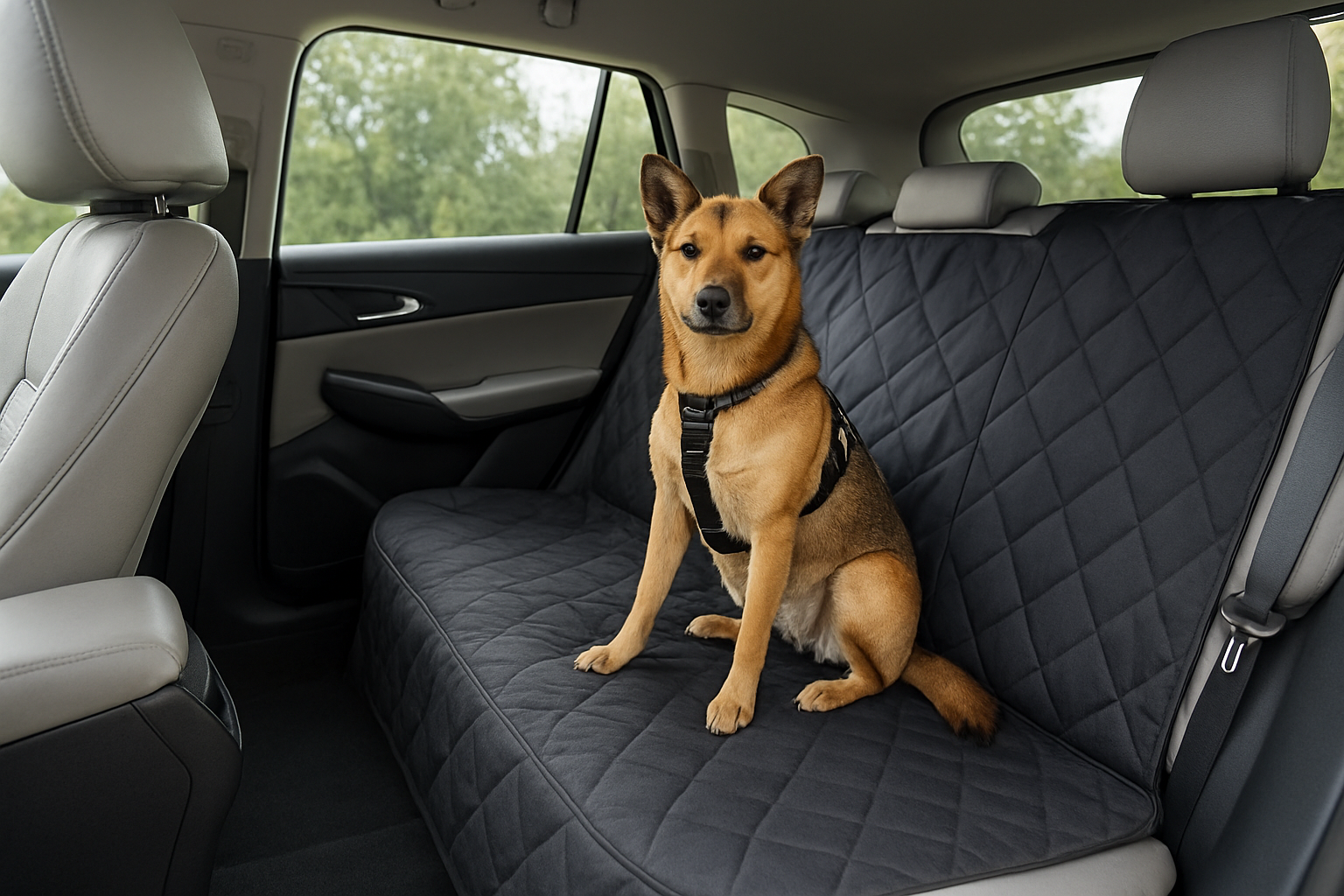
A car seat cover protects the vehicle; it does not restrain the dog during sudden braking or a collision. The American Kennel Club recommends using a crate or a harness that attaches to the vehicle’s seat belt, while the American Veterinary Medical Association warns that an unrestrained pet can distract the driver and put people and animals at risk. The AKC’s dog travel guidance and AVMA’s pet-in-car safety flyer are useful starting points. ([akc.org](https://www.akc.org/expert-advice/travel/dog-comfortable-car-rides/?utm_source=openai))
Before comparing fabrics or colors, check whether the cover allows you to use your preferred restraint correctly. Look for covered openings that let a seat-belt strap pass through without leaving a large gap. Do not attach a tether to a cover’s fabric straps unless the manufacturer specifically identifies that connection as a restraint point.
- Keep your dog in the back seat rather than the front passenger seat.
- Use a properly fitted harness, carrier, or secured crate.
- Make sure the cover does not block buckle receivers or seat-belt routing.
- Never allow your dog to ride on your lap or interfere with the driver.
2. Match the cover style to your vehicle and dog
Dog seat covers are not interchangeable. A design that works well for a calm small dog may be frustrating for a large dog that sheds heavily, scratches at the doors, or steps over the center console.
Use this comparison to narrow the field before looking at individual products.
| Cover style | What to look for | Best suited to | Warning sign |
|---|---|---|---|
| Hammock cover | Four headrest anchors, non-slip base, side flaps, seat-belt openings | Dogs that move around the rear bench or may step toward the front | Only two weak straps or no opening for a harness |
| Bench-seat cover | Quilted waterproof surface, bottom anchors, split-seat compatibility | Dogs that stay seated or lie down and need frequent restraint access | Loose fit around the seat edges or exposed door panels |
| Bucket-seat cover | Exact seat dimensions, elastic edges, non-slip underside | Front passenger or single-seat protection when appropriate | Cover interferes with side airbags or seat controls |
| Cargo-area liner | Raised edges, tailgate flap, side-wall coverage, adjustable fit | Large dogs, SUVs, wagons, and muddy outdoor trips | Flat fabric that leaves carpet and side panels exposed |
| Universal mat | Grippy underside, washable surface, compatible dimensions | Occasional use and simple hair or dirt control | It slides under the dog when the vehicle turns or stops |
3. Evaluate materials for the mess you actually face
Water resistance is useful, but construction matters more
A waterproof or water-resistant top layer helps with wet paws, drool, and minor spills. However, stitching, zippers, and seat gaps can still allow moisture through. If your dog regularly enters the car after swimming or heavy rain, choose a cover with sealed or closely finished seams and a flap that protects the edge of the seat.
For routine shedding, tightly woven polyester or quilted fabric is usually easier to vacuum than plush materials. A smooth surface can be convenient for hair removal, while a lightly textured surface may give your dog better footing. Avoid a slippery cover if your dog struggles to stand or settle during travel.
Scratch protection requires coverage beyond the seat cushion
Dogs often damage door panels, seat backs, and the plastic trim near the cargo opening rather than the seat cushion itself. Hammock covers with side flaps and cargo liners with tailgate protection provide broader coverage. These features add bulk, so confirm that the cover can fold or remove without making everyday use awkward.
4. Check fit, anchors, and everyday usability
A cover that fits poorly can bunch under the dog, expose upholstery, or become a tripping hazard when you load and unload. Measure the usable seat or cargo area rather than relying only on the vehicle category listed by the seller. For a split rear seat, check whether the cover supports a 60/40 or 40/20/40 configuration.
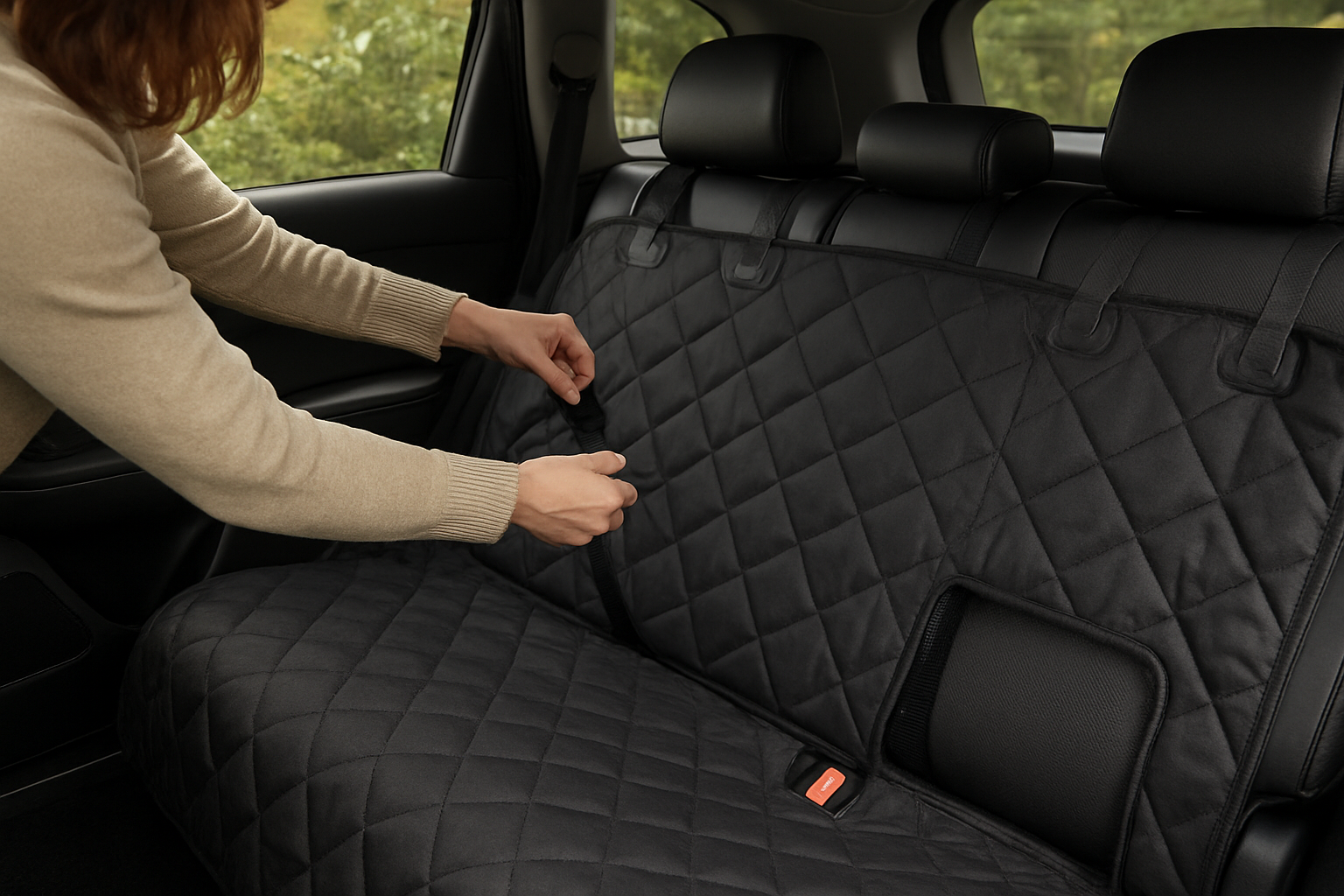
Strong headrest straps, seat anchors, and a non-slip underside help keep the cover in place. Anchors should be easy to install but difficult for a dog to pull out accidentally. Door protectors are especially valuable for dogs that lean against the panels or scratch when waiting to exit.
- Measure seat width, seat depth, and the distance between headrests.
- Check whether rear seat belts remain accessible after installation.
- Look for openings that close around the belt rather than leaving a wide slit.
- Confirm that the cover can be removed without dismantling the restraint system.
- Choose a design that still allows a person to sit in the protected seat when needed.
5. Consider cleaning and long-term maintenance
For frequent travel, cleaning convenience can matter more than decorative quilting. A machine-washable cover is helpful, but verify whether the manufacturer recommends a particular water temperature, drying method, or detergent. Some waterproof backings can crack or lose their coating when exposed to high heat.
Shake out loose dirt before washing and vacuum hair from seams, corners, and the underside. Inspect straps and stitching periodically. Replace the cover if anchors tear, the backing becomes brittle, or the material develops sharp exposed edges.
6. Account for your dog’s behavior and health
A cover cannot solve every travel problem. If your dog pants heavily, vomits, drools excessively, or becomes frantic in the car, work on gradual vehicle training and speak with your veterinarian if the problem is persistent. The AKC recommends short, positive trips and gradual exposure for dogs that are uncomfortable with car travel. ([akc.org](https://www.akc.org/expert-advice/travel/dog-car-safety-training/?utm_source=openai))
For puppies and dogs that are not reliably house-trained, choose a cover with a waterproof barrier and keep absorbent towels or disposable pads available. For older dogs, select a surface that provides traction and avoid a design that forces them to climb over a high center hump.
7. Understand what a cover cannot do
Marketing language such as “protective,” “safety,” or “secure” may describe the cover’s ability to stay in place, not its performance in a crash. Unless a product provides credible, product-specific safety test information, treat it as an upholstery accessory rather than a certified restraint.
The safest setup is usually a compatible cover plus an independent restraint system. The cover should preserve access to the seat belt, keep the dog from slipping, and reduce distractions without being mistaken for crash protection.
Dog car seat cover buying checklist
- Measure the vehicle before ordering.
- Select bench, hammock, bucket-seat, or cargo coverage based on your layout.
- Confirm waterproof or water-resistant construction where needed.
- Check for non-slip backing and multiple secure anchors.
- Verify access to seat belts and restraint attachment points.
- Look for side or tailgate flaps if scratches are a concern.
- Prefer machine-washable materials with clear care instructions.
- Read return terms carefully in case the fit is poor.
- Use a separate harness, carrier, or secured crate for travel safety.
Common mistakes to avoid
- Buying by vehicle name alone: Two vehicles in the same class can have different seat widths, headrest positions, and center humps.
- Treating a hammock as a restraint: Its barrier may limit movement, but it is not automatically designed to withstand crash forces.
- Ignoring the doors: A seat-only cover will not protect door panels from claws or muddy paws.
- Choosing a slippery fabric: Easy-clean material is less useful if your dog cannot stand comfortably.
- Forgetting human passengers: A full-width cover may need to fold or split when another passenger uses the back seat.
- Leaving the cover installed without checking it: Dirt, moisture, and trapped hair can damage upholstery beneath the fabric over time.
What if the cover keeps moving?
First, reinstall it with the seat anchors pushed firmly into the seat crease and the headrest straps tightened evenly. Remove bulky blankets or mats underneath, since they can reduce grip. If the cover still shifts, the dimensions or underside material may not suit your vehicle.
If water reaches the upholstery, inspect the seams, zippers, and seat-belt openings rather than assuming the top fabric has failed. A cargo liner or a cover with higher side walls may be more appropriate for wet or muddy trips.
Next actions before you buy
- Measure your rear bench or cargo area.
- Decide whether your priority is hair, mud, scratches, spills, or all four.
- Choose a cover style that leaves your dog’s restraint system usable.
- Compare anchor design, seat-belt access, washability, and coverage.
- Install the cover at home and test it before taking a long trip.
The best dog car seat covers for protecting upholstery are the ones that fit your vehicle, match your dog’s mess level, and work alongside—not instead of—a proper restraint. If you need broad coverage for an active dog, start with a well-anchored hammock or cargo liner; if you value easy access and flexible seating, a fitted bench cover may be the more practical choice.
For more practical pet-care guidance, visit the LaokPet homepage or explore related advice on safe puppy setups and durable dog products.
Further reading: dog comfort and car safety guidance from the AKC, car-training advice for dogs, and NHTSA vehicle safety reminders. ([akc.org](https://www.akc.org/expert-advice/travel/dog-comfortable-car-rides/?utm_source=openai))