Royal Canin Indoor Adult Dry Cat Food is a reasonable maintenance diet for healthy indoor cats aged 1–7 years, especially if you want moderate calories, added fiber, and a precisely portioned kibble. It is less compelling if your cat needs a high-moisture diet, has a diagnosed medical condition, or you are looking for a meat-first ingredient list.
This Royal Canin Indoor Cat Food review is based on the manufacturer’s current U.S. product information and general pet-food guidance from the FDA and veterinary sources—not personal feeding trials. The goal is to help you decide whether the formula fits your cat’s age, activity level, body condition, and feeding preferences.
1. Confirm that the formula matches your cat
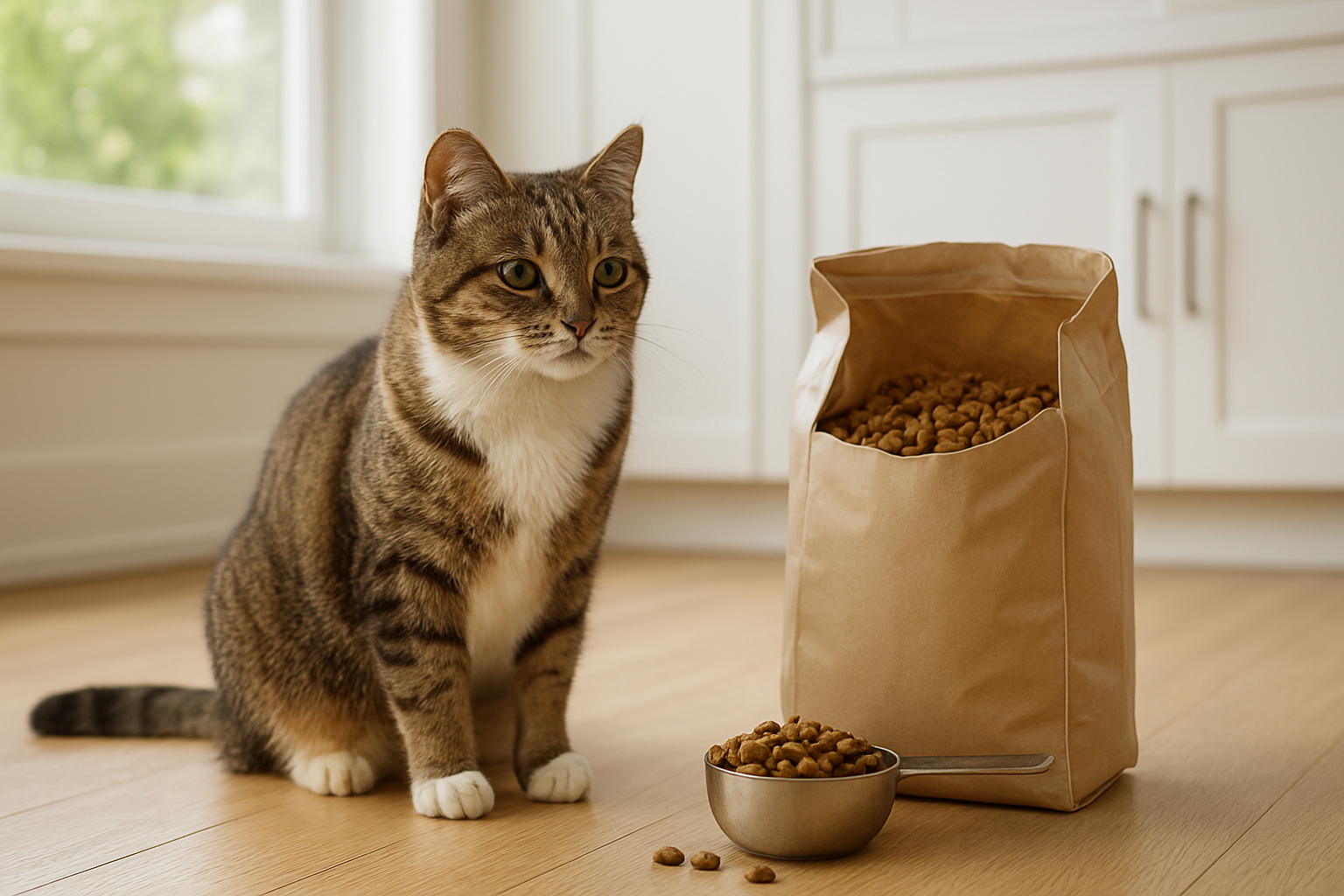
Royal Canin Indoor Adult Dry Cat Food is formulated for indoor cats from 1 to 7 years old. The product is labeled as complete and balanced for adult maintenance under the AAFCO Cat Food Nutrient Profiles. The official Royal Canin product page lists the current ingredients, feeding guidance, calorie content, and guaranteed analysis.
That makes it a maintenance food, not a treatment for obesity, urinary disease, kidney disease, diabetes, food allergy, or chronic digestive problems. If your cat has a medical diagnosis, recurrent vomiting, persistent diarrhea, painful urination, or unexplained weight change, ask your veterinarian before changing diets.
Who this food is designed for
- Healthy adult indoor cats between 1 and 7 years old.
- Cats eating dry food comfortably and drinking adequately.
- Indoor cats with relatively low or moderate daily activity.
- Owners who value measured feeding and a formula aimed at digestion, hairball management, and weight maintenance.
2. Read the nutrition facts before the marketing claims
The current U.S. dry formula lists 27% minimum crude protein, 11% minimum crude fat, 15% maximum crude fat, 5.7% maximum crude fiber, and 8% maximum moisture. It provides 325 kilocalories per cup, or 3,534 kilocalories per kilogram, according to Royal Canin’s product information.
These numbers are useful for portion planning, but they do not tell the entire nutritional story. Guaranteed-analysis figures are listed on an as-fed basis, so comparisons between dry and wet food can be misleading unless moisture is taken into account. The FDA’s explanation of complete-and-balanced pet food describes why moisture and dry-matter calculations matter when comparing products.
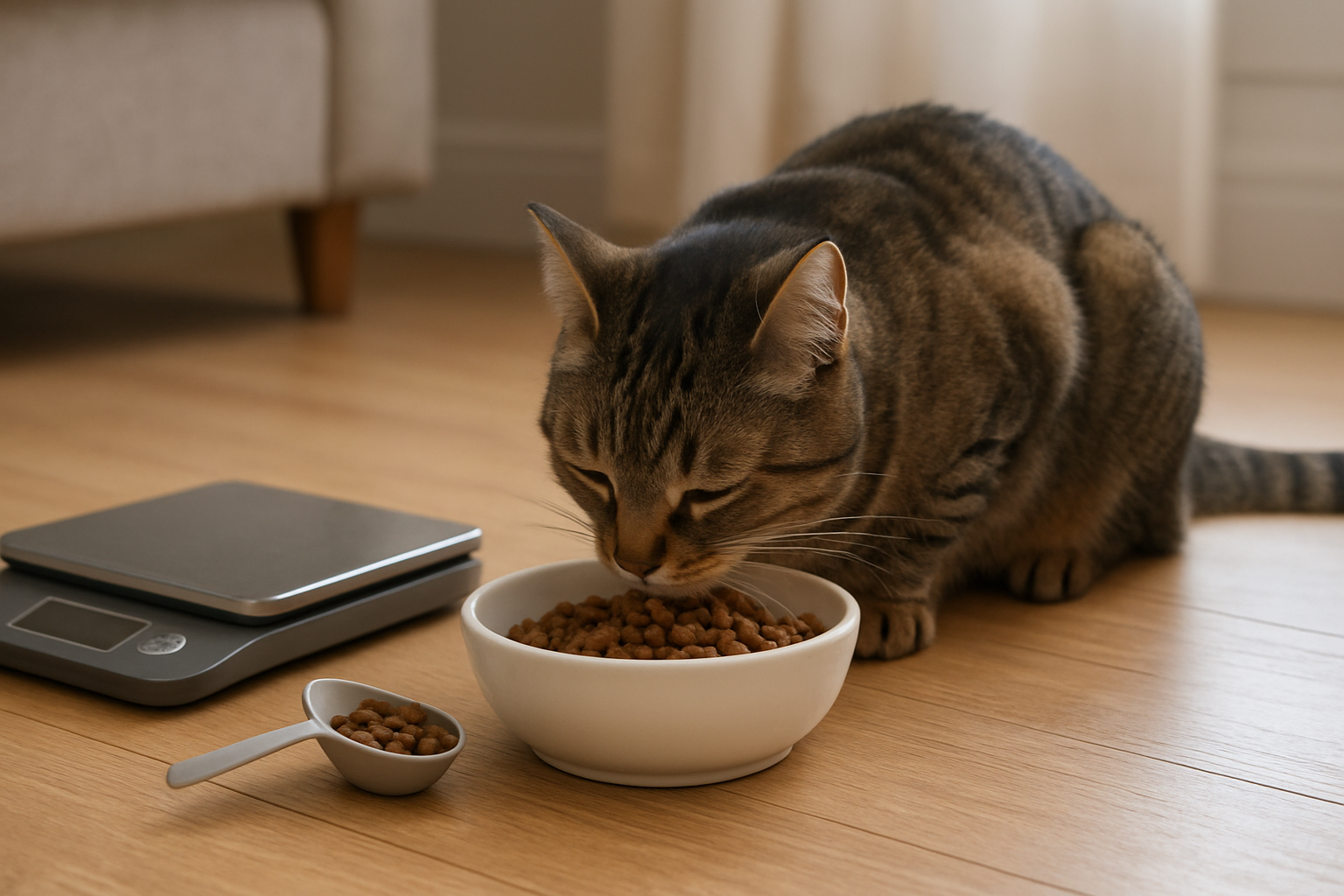
For practical use, weigh the daily portion when possible. A measuring cup can be inconsistent, particularly with small kibble pieces or when the cup is heaped. Treats, toppers, and food used in puzzle toys should also be counted as part of the daily calorie intake.
Here is a practical way to interpret the label:
What the label shows and what it means:
| What to look for | What it suggests | Warning sign |
|---|---|---|
| Adult-maintenance adequacy statement | The food is intended to provide a complete diet for healthy adult cats | Your kitten, pregnant cat, or senior cat may need a different life-stage formula |
| 325 kcal per cup | Portions need to be measured carefully for inactive or weight-prone cats | Free-feeding can gradually add excess calories |
| 27% minimum protein | A stated protein level suitable for comparison with other dry foods | Do not compare directly with wet-food protein percentages without adjusting for moisture |
| 5.7% maximum fiber | Added fiber may support stool regularity and hairball movement | Extra fiber is not a substitute for diagnosing constipation or digestive disease |
| 8% maximum moisture | Typical of a dry kibble diet | A cat that drinks poorly may benefit from complete wet food or a veterinarian-guided feeding plan |
3. Examine the ingredients and functional features
The ingredient list begins with chicken meal, corn, brewers rice, corn gluten meal, wheat, chicken fat, and wheat gluten. It also includes pea fiber, rice hulls, beet pulp, fish oil, fructooligosaccharides, psyllium seed husk, taurine, vitamins, and trace minerals.
Chicken meal supplies concentrated animal-derived protein, while the formula also uses grains and plant-derived ingredients to provide energy, structure, and nutrients. This is not a grain-free or meat-first formula. Whether that is a disadvantage depends on your priorities and your cat’s tolerance; the ingredient list alone cannot establish that a food is complete, digestible, or appropriate for every cat.
Hairball support
Royal Canin uses a combination of fibers, including psyllium and other fiber sources, to help move swallowed hair through the digestive tract. This may be useful for some indoor cats that groom frequently, but it should not be treated as a guarantee that hairballs will disappear.
Frequent vomiting, repeated unproductive retching, appetite loss, or constipation deserves veterinary attention. Brushing your cat regularly can also reduce the amount of loose hair swallowed.
Stool odor and digestion
The formula includes highly digestible protein, fiber sources, fish oil, and prebiotic ingredients. Royal Canin positions these features as supporting digestion and reducing stool quantity or odor. In practice, results can vary with the individual cat, portion size, transition speed, and litter-box hygiene.
Moderate calories
The formula is designed around the lower activity level often associated with indoor living. However, “moderate calorie” does not mean “weight-loss food.” A cat already carrying excess weight may need a structured plan, accurate portions, and sometimes a veterinary therapeutic diet. Veterinary guidance from VCA Animal Hospitals explains why weight loss requires more than simply feeding less of a standard food.
4. Weigh the main strengths and limitations
Potential strengths
- Clear adult-maintenance positioning for indoor cats aged 1–7 years.
- Published calorie information makes portion planning easier.
- Fiber sources may help some cats with hairball passage and stool regularity.
- Moderate fat positioning may suit cats with lower activity levels.
- It is available as part of a broader Royal Canin indoor-cat range, including wet-food options.
Important limitations
- The dry format contains little moisture compared with canned food.
- The recipe includes grains and several plant-derived ingredients, which may not suit owners seeking a meat-first or grain-free formula.
- It is not a veterinary weight-loss, urinary, renal, or allergy diet.
- The 1–7-year age range means it may not be the best default for kittens or mature senior cats.
- Royal Canin products can cost more than supermarket or value-oriented dry foods, so compare cost per calorie or cost per day rather than bag price alone.
5. Compare alternatives by your cat’s actual need
The best alternative depends on the reason you are considering a change.
- For more moisture: compare a complete wet adult food, or use a mixed-feeding plan that reduces the dry portion appropriately.
- For confirmed weight loss: discuss a veterinary weight-management diet rather than relying on an indoor label alone.
- For a different ingredient profile: compare complete adult foods by calories, protein, fat, fiber, adequacy statement, and your cat’s response—not by front-of-bag claims alone.
- For cats over 7 years: consider mature or senior nutrition after reviewing activity, dental health, body condition, and veterinary advice.
Royal Canin also sells Indoor Adult Morsels in Gravy. The manufacturer’s wet-food catalog can help you compare the available indoor options, but check the exact label because formulas, calorie levels, and feeding instructions can differ.
6. Transition and portion the food carefully
Change foods gradually over about a week by mixing increasing amounts of the new food with the old food. Slow the transition if your cat develops loose stool, vomiting, or refuses meals. Cats should not be left without food while you try to force a diet change; contact a veterinarian promptly if appetite loss persists.
Start with the package’s activity-based feeding guidance, then monitor body weight and body condition. Indoor cats often need fewer calories than the label’s higher-activity suggestion. Adjustments should be gradual and based on your cat’s weight trend, not a single day’s appetite.
7. Use this buying checklist
- Check that your cat is an adult between 1 and 7 years old.
- Confirm that the bag is the current Indoor Adult formula and inspect the best-by date.
- Record the calorie content and measure portions in grams if possible.
- Decide whether your cat’s water intake makes a wet-food component sensible.
- Compare the cost per day with at least one complete adult alternative.
- Plan a gradual transition instead of changing food overnight.
- Track stool quality, vomiting, appetite, body weight, and coat condition.
8. Common buying mistakes
- Assuming indoor food automatically prevents weight gain: total calories and portion control still matter.
- Comparing wet and dry protein percentages directly: moisture changes the meaning of the numbers.
- Treating hairball claims as medical advice: repeated vomiting can have causes unrelated to hairballs.
- Free-feeding because the cat seems bored: use play, climbing, food puzzles, and scheduled meals to add activity without continuously adding calories.
- Changing food too quickly: sudden switches can create digestive upset and make it difficult to know whether the recipe suits your cat.
9. What if the food does not work?
If your cat refuses the food, try a slower transition, smaller portions, or a different texture rather than repeatedly switching brands in a single week. If stool odor, diarrhea, constipation, vomiting, itching, or weight change continues, stop treating the issue as a simple preference problem and speak with your veterinarian.
If your cat is overweight, weigh the food and record all treats for two weeks. If weight continues to rise or your cat needs to lose a substantial amount, ask for a measured calorie plan. A veterinary team can determine whether a therapeutic diet, medical testing, or a different feeding schedule is appropriate.
10. Final verdict on Royal Canin Indoor Cat Food
Royal Canin Indoor Adult is a sensible option for a healthy adult indoor cat that accepts dry food and benefits from measured calories and added fiber. Its strongest case is practical: a clearly defined life stage, published calorie information, and features aimed at common indoor-cat concerns.
It is not automatically the best choice for every indoor cat. Choose a different or mixed-feeding approach if moisture is a priority, your cat needs clinical weight loss, your cat is outside the stated age range, or you prefer another ingredient profile. In short, this Royal Canin Indoor Cat Food review supports a conditional recommendation: consider it when the formula matches your cat, but judge success by body condition, digestion, hydration, and veterinary needs—not the word “indoor” on the label.
For more practical pet-care guidance, visit the LaokPet homepage or read how to teach a cat to use a scratching post and our guide to the best cat trees for large cats.