For most first-time owners, the Labrador Retriever is easier to train. Labs are generally eager to please, socially open, and highly motivated by food, play, and retrieving. German Shepherds are also very trainable, but they usually need clearer structure, careful socialization, and more consistent daily work.
The better choice depends on what you mean by “easy.” This comparison looks at responsiveness, motivation, energy, distractions, social behavior, and the amount of experience you bring to training.
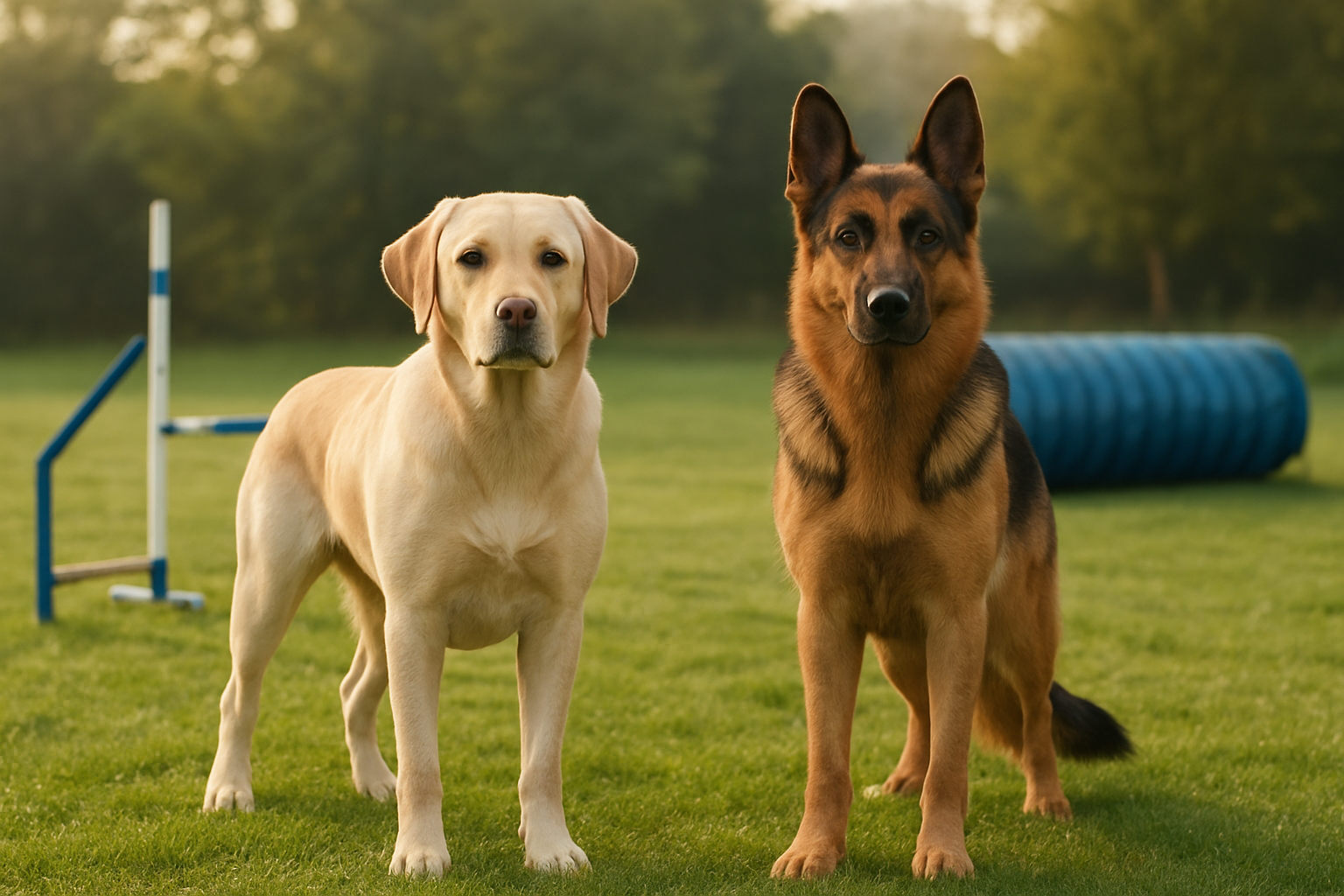
1. Compare the training demands before choosing a breed
Breed tendencies can guide your decision, but they do not predict every individual dog. Age, genetics, early experiences, health, reinforcement history, and the quality of your training can all change the outcome.
The American Kennel Club describes both breeds as energetic and capable working dogs. Its Labrador Retriever breed guide emphasizes the breed’s eagerness, need for daily exercise, and value of early puppy training. Its German Shepherd Dog guide highlights loyalty, courage, intelligence, and the ability to retain training for demanding work.
For a fair comparison, evaluate these questions:
- Does the dog stay engaged when the environment becomes distracting?
- How easily can you motivate the dog with food, toys, praise, or access to movement?
- Can you provide daily physical exercise and short training sessions?
- Are you comfortable managing strength, barking, jumping, chasing, or protective behavior?
- Do you want a relaxed family companion, a sport dog, or a serious working partner?
2. Labrador Retriever vs German Shepherd: which is more responsive?
Both breeds can learn basic cues such as sit, down, stay, recall, loose-leash walking, and leave it. The difference is often the dog’s emotional style and the handler’s ability to maintain focus.
Labradors commonly make training feel straightforward because they tend to enjoy interaction and quickly repeat behaviors that produce rewards. Their friendliness can also make them easier to redirect around visitors, children, and other dogs, although an excited young Lab may still ignore you when something more interesting appears.
German Shepherds often learn quickly and can perform precise behaviors, but their intelligence does not remove the need for skilled training. A Shepherd may notice inconsistencies, become over-alert, or develop unwanted habits if boundaries, reinforcement, and socialization change from day to day.
In practical terms, the Labrador often wins on beginner-friendliness. The German Shepherd may win when the owner wants advanced obedience and is prepared to train with greater precision.
For broader context on how temperament affects training, see the AKC overview of canine temperament and trainability.
3. Motivation, energy, and focus during lessons
Labrador Retriever
Most Labs are highly food-motivated and enjoy retrieving games. This gives you several practical ways to reward attention, recall, settling, and polite walking. The challenge is that enthusiasm can become jumping, mouthing, pulling, or frantic behavior if the dog is rewarded for excitement instead of self-control.
German Shepherd
German Shepherds often enjoy purposeful work, movement, scent games, obedience drills, and structured play. They may be deeply focused with the right handler, but they need an outlet for both their body and brain. Without enough appropriate work, some dogs may invent their own activities, including excessive barking, guarding, chasing, or destructive behavior.
Neither breed is a low-effort option. A Lab may be easier to motivate but physically boisterous. A German Shepherd may be more serious and focused but less forgiving when training is unclear or social experiences are poorly managed.
Use short sessions, clear cues, immediate rewards, and planned rest periods with either breed. Training should build calm behavior, not only speed or enthusiasm.
4. Socialization can make the bigger difference
Socialization means carefully introducing a puppy or dog to people, animals, surfaces, sounds, handling, travel, and everyday environments while keeping the experience manageable. It is not the same as forcing a dog to greet everyone.
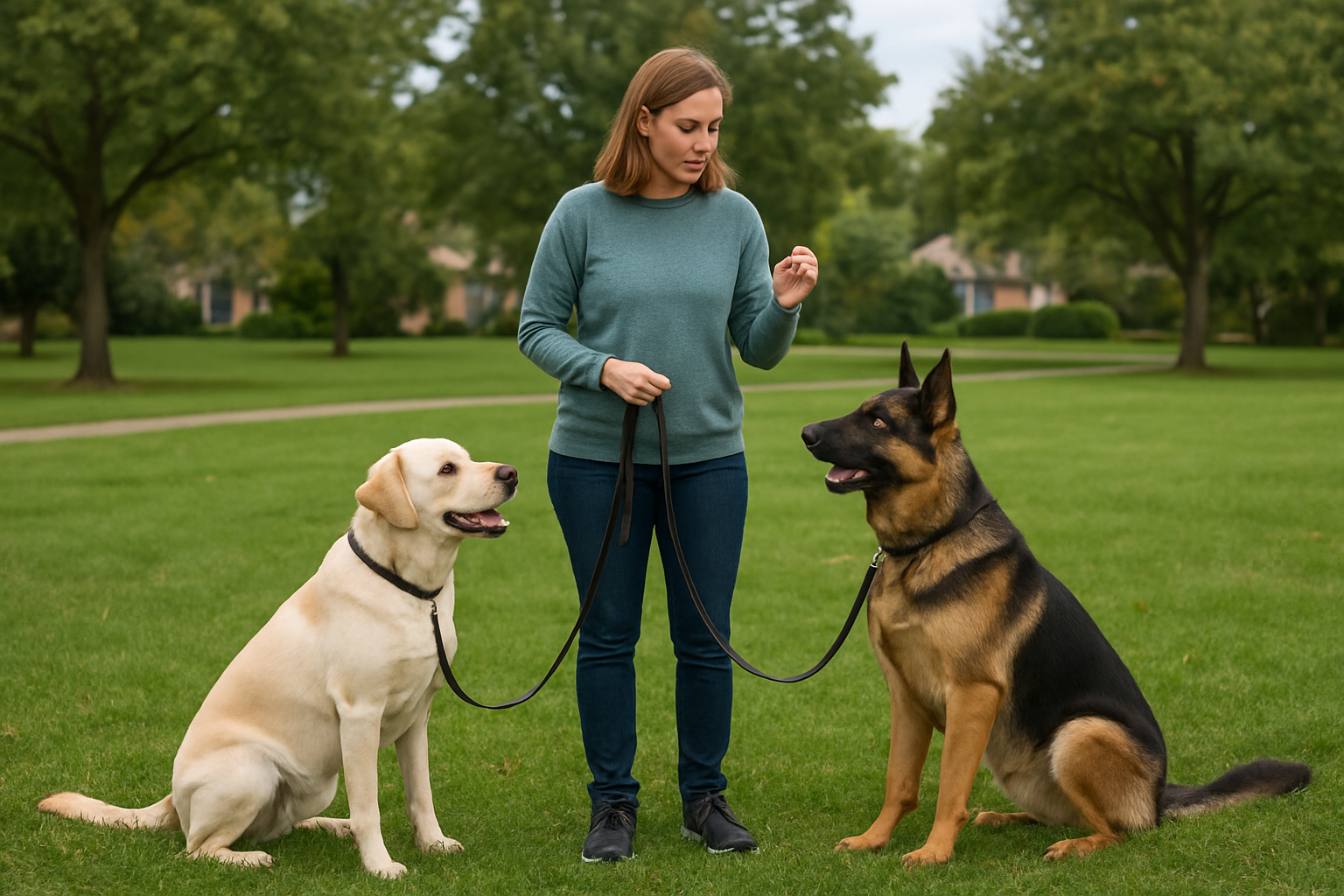
Labradors are often socially open, which can simplify introductions. However, a friendly Lab still needs practice waiting, ignoring strangers, walking politely, and settling around excitement.
German Shepherds may be more reserved or watchful, so thoughtful socialization is especially important. The goal is a confident dog that can observe unfamiliar people and situations without reacting unnecessarily. If your Shepherd shows fear, escalating barking, lunging, or defensive behavior, consult a qualified reward-based trainer or veterinary behavior professional early.
5. Side-by-side training comparison
The table below summarizes the practical tradeoffs rather than declaring one breed universally superior.
| Training factor | Labrador Retriever | German Shepherd | What to look for |
|---|---|---|---|
| Basic obedience | Usually beginner-friendly and reward-responsive | Highly capable but benefits from consistent structure | Reliable response in quiet and distracting settings |
| Common motivation | Food, retrieving, play, and social interaction | Food, toys, movement, scent work, and purposeful tasks | A reward your individual dog values enough to repeat behavior |
| Energy level | High, especially during adolescence | High, with substantial mental and physical needs | Daily exercise followed by the ability to settle |
| Social behavior | Often openly friendly | Can be more reserved, vigilant, or protective | Calm observation rather than indiscriminate greeting or suspicion |
| Main training challenge | Excitement, jumping, pulling, and impulsive retrieving | Over-alertness, inconsistency, guarding, or reactivity | Whether you can prevent rehearsal of unwanted behavior |
| Best owner fit | Families and beginners wanting an active companion | Experienced owners seeking structured work and advanced training | Match the dog’s needs to your real daily schedule |
6. Which dog is easier to train for your situation?
Choose a Labrador Retriever if you want a forgiving family dog
- You are training your first dog or have limited experience.
- You want a sociable companion for walks, games, and family activities.
- You prefer food-based training and playful repetition.
- You can manage a strong, energetic dog but do not want a naturally watchful temperament.
A Lab is not automatically calm or obedient. Plan for puppy biting, jumping, chewing, pulling, and adolescent testing of boundaries. Daily exercise and impulse-control training are essential.
Choose a German Shepherd if you want a serious training partner
- You enjoy structured obedience, scent work, tracking, or dog sports.
- You can provide predictable rules and regular mental challenges.
- You are prepared to socialize carefully and manage a powerful dog in public.
- You want a close-working companion rather than a dog that is friendly with everyone.
The German Shepherd can be an excellent choice for an experienced, involved owner. It is a poor match if you want a dog that can be left without direction for long periods or trained only occasionally.
7. Common mistakes that make either breed seem difficult
- Choosing by intelligence alone: A smart dog still needs exercise, sleep, reinforcement, and clear communication.
- Waiting for problems to appear: Start recall, leash manners, handling, and calm settling early.
- Using only physical exercise: More running does not always solve over-arousal. Add sniffing, food puzzles, controlled training, and rest.
- Repeating a cue: Say the cue once, help the dog succeed, and reward the response.
- Rewarding excitement by accident: Open doors, greet visitors, and start games when the dog is under control.
- Ignoring individual temperament: Meet the puppy or adult dog, ask about behavior history, and consider reputable breeder or rescue guidance.
8. What if training is not going well?
If your dog stops responding, first reduce distractions and make the task easier. Check whether the reward is valuable, the session is too long, or the dog is tired, overstimulated, uncomfortable, or confused.
For sudden behavior changes, pain, extreme fear, aggression, or repeated escape attempts, arrange a veterinary evaluation. A qualified reward-based trainer can help with technique, while a veterinary behaviorist is appropriate for serious anxiety, aggression, or complex behavior cases.
9. A practical decision checklist
- Can you provide daily exercise, training, and quiet recovery time?
- Do you prefer an openly social dog or a more watchful working temperament?
- Can you safely handle a large, strong dog on leash?
- Will everyone in the household use the same cues and rules?
- Are you prepared for the adolescent stage, not just the puppy stage?
- Have you met the individual dog and checked its health and behavior history?
Before bringing either breed home, review practical equipment and routine planning. For example, choosing a secure walking setup matters for strong adolescent dogs; LaokPet’s guide to everyday dog leashes can help you compare options. Regular handling also matters, so practice calm paw handling before nail care; see this step-by-step nail-trimming guide.
Final verdict: which dog is easier to train?
The Labrador Retriever is usually easier to train for the average household, especially for basic manners and family companionship. Its sociability and reward-seeking attitude can make early lessons more forgiving.
The German Shepherd may be the better training dog for an experienced owner who wants advanced obedience, purposeful work, and a close partnership. The conditional verdict is simple: choose the Labrador for general ease and flexibility; choose the German Shepherd when you have the time, structure, confidence, and interest required by a serious working breed.