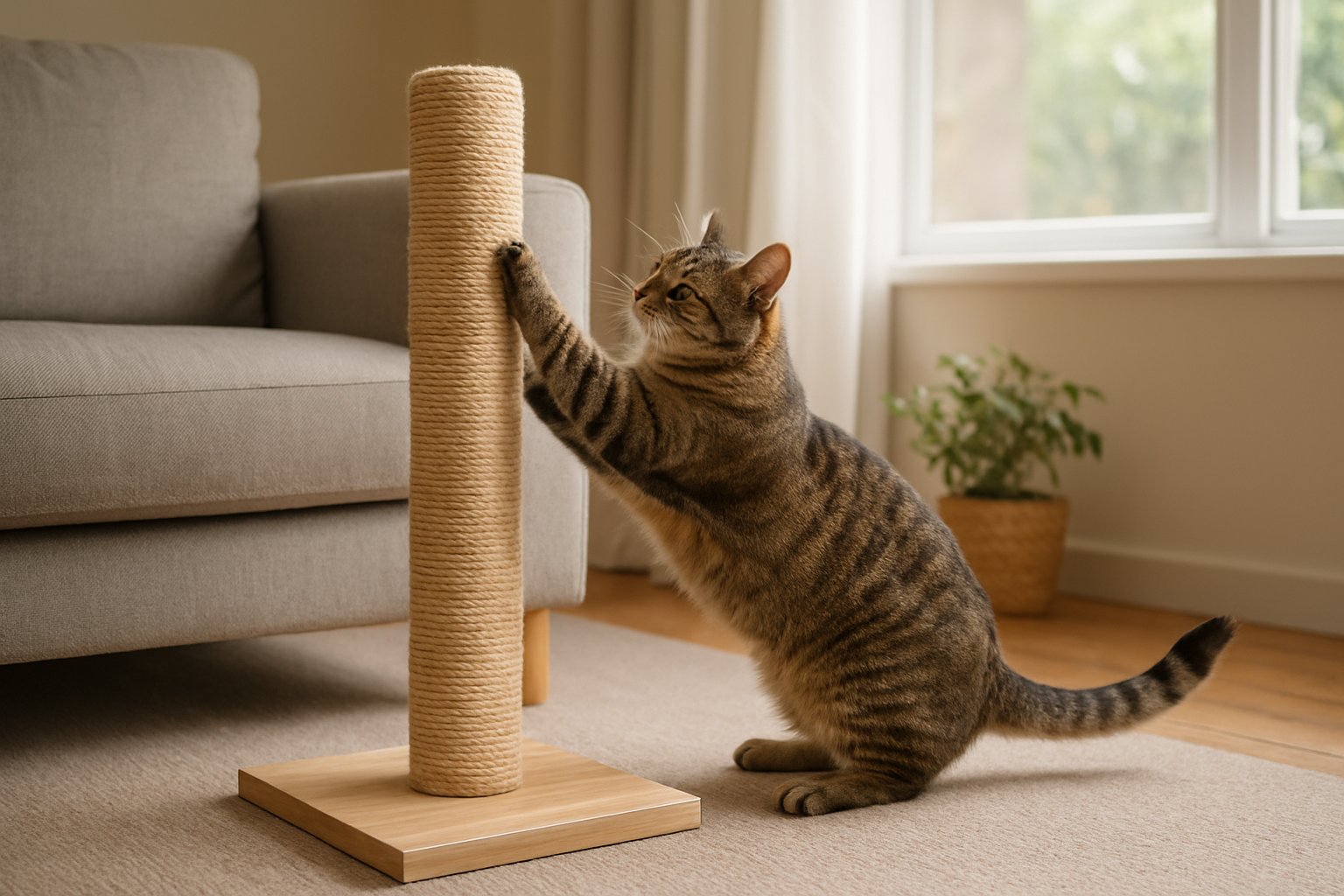
To teach a cat to use a scratching post, place the post beside the furniture your cat already scratches, choose a stable surface that matches the cat’s preferred angle and texture, and reward every voluntary interaction. Do not force your cat’s paws onto the post. The goal is to make the approved scratching area more useful and appealing than the furniture.
Scratching is normal feline behavior. Cats use it to stretch, maintain their claws, leave visual and scent signals, and release energy. This guide will help you identify the right setup, introduce it without pressure, redirect unwanted scratching, and recognize when a behavior change may need veterinary or professional help.
1. Identify what your cat already prefers
Start by observing rather than buying several random posts. For two or three days, note where your cat scratches, whether the surface is vertical or horizontal, and what material is involved. A cat that scratches the side of a sofa may prefer a tall vertical surface, while a cat that works at a rug may prefer a flat or angled scratcher.
Look for the time and situation as well. Many cats scratch after waking, during play, near entrances, or when they want attention. These patterns show you where the first post should go.
- Vertical scratching: Offer a post tall enough for a full-body stretch.
- Horizontal scratching: Try a cardboard pad, flat mat, or low scratcher.
- Angled scratching: Use a sloped board or wedge-shaped scratcher.
- Furniture corner scratching: Add a tall, stable post beside that exact corner.
International Cat Care notes that scratching can serve both claw maintenance and communication, and that some cats may find a tall vertical post uncomfortable if they have mobility or joint problems. In that situation, a horizontal option may be more suitable. Read the International Cat Care home-modification guidance for additional environmental considerations.
2. Choose a post that is easy and safe to use
A scratching post should not wobble, slide, tip over, or collapse when your cat leans into it. If the post moves during the first attempt, your cat may decide that it is unreliable. Choose a base that stays flat on the floor and a height or length that allows your cat to extend comfortably.
Texture is an individual preference. Common choices include sisal, cardboard, carpet, and wood. Avoid assuming that one material suits every cat. If you are unsure, provide two different surfaces for a short trial and watch which one receives more attention.
Use this comparison when selecting the first setup:
| What to look for | Useful choice | Warning sign |
|---|---|---|
| Stability | Wide, weighted base that stays still | Post rocks or tips when touched |
| Shape | Vertical, horizontal, or angled form based on current scratching | Only offering a shape your cat has never used |
| Size | Enough height or length for a full stretch | Cat must crouch or curl tightly |
| Surface | Material similar to the preferred target, plus one alternative | Loose threads, sharp staples, or damaged sections |
| Location | Near a sleeping area, doorway, or current scratching site | Hidden in a room your cat rarely visits |
3. Put the scratching post in the right location
Placement is often more important than appearance. Put the first post directly beside the furniture, rug, or doorway your cat already targets. Once your cat uses it regularly, you can move it a few inches at a time toward a preferred permanent location.
Consider adding posts in more than one area if you have a large home or several cats. A single post in a quiet corner may not compete with a sofa located in the main living area. Place one near a favorite sleeping spot because cats often scratch after waking, and another near a high-traffic area where your cat naturally pauses.
4. Make the post inviting without forcing interaction
Let your cat discover the post voluntarily. Drag a wand toy near it, place a favorite toy on or beside it, or reward your cat for sniffing and touching the surface. If your cat enjoys catnip, a small amount may help attract attention, although not every cat responds to it.
Do not pick up your cat and press its paws against the post. The ASPCA recommends teaching cats where to scratch rather than trying to stop scratching altogether, and specifically warns against forcing a cat’s claws onto a post. Forced handling can create fear and make the post less appealing.
Checkpoint: Your setup is working if your cat voluntarily sniffs, stretches against, pats, climbs, or scratches the post. These small interactions are worth reinforcing even before full scratching begins.
5. Reward the behavior immediately
Timing matters. When your cat scratches the post, give a small treat, calm praise, or a short play session within a few seconds. The reward should follow the behavior, not happen several minutes later when the connection is unclear.
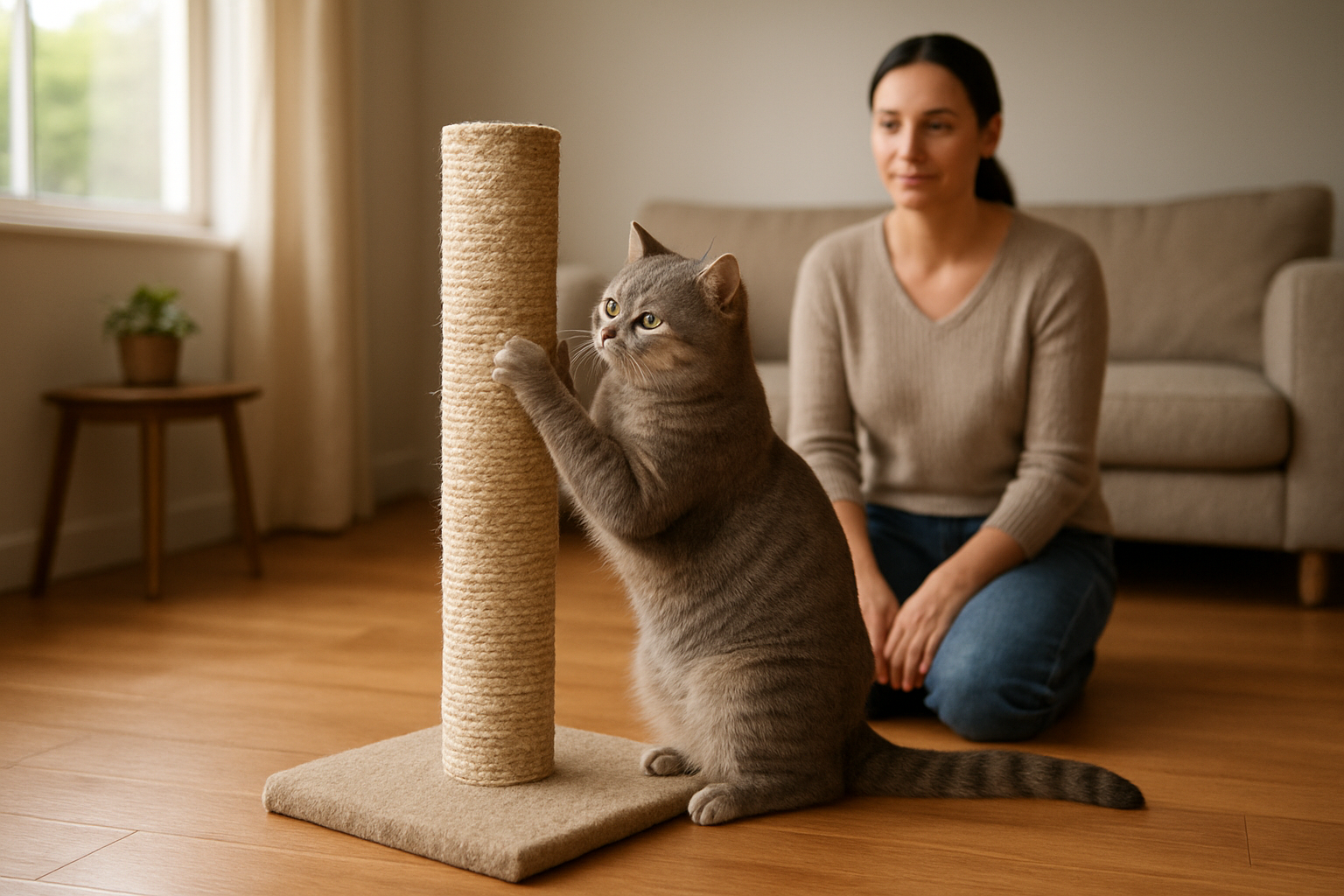
Keep rewards low-pressure. Some cats prefer food, while others respond better to attention or play. Avoid interrupting a focused scratching session with excessive touching, especially if your cat is easily startled.
Repeat the same pattern consistently: the cat uses the post, you mark the moment with quiet praise, and you provide a reward. Over time, the post becomes associated with pleasant outcomes.
6. Redirect furniture scratching calmly
If you catch your cat scratching furniture, avoid yelling, chasing, or grabbing the cat. Calmly place the approved scratcher beside the target or guide attention toward it with a toy. Reward the cat if it switches to the post.
Temporarily make the old target less attractive. You can cover a sofa corner with a protective fabric, move an object in front of it, or use a cat-safe furniture deterrent such as double-sided tape designed for pets. The ASPCA also lists temporary furniture protection as part of managing unwanted scratching.
Do not remove a post simply because it looks worn. Shredded material can be more appealing because it carries familiar scent and gives the claws a good grip. Replace it when it becomes unstable or develops unsafe loose parts.
7. Maintain the habit and adjust the setup
Inspect the post regularly. Tighten loose hardware, remove dangerous fragments, and check that the base remains stable. If your cat suddenly stops using a previously successful post, compare the current setup with the original: has it moved, become unstable, developed an unpleasant odor, or been placed near a stressful appliance or doorway?
Trim nails only if you already know how to do so safely or have been shown by a veterinary professional. Nail trimming can reduce sharp tips, but it does not replace access to appropriate scratching surfaces. Never use declawing as a behavior solution; the ASPCA describes nonsurgical alternatives for managing scratching.
Common mistakes to avoid
- Buying a decorative post that is too short or unstable.
- Placing the post far from the furniture your cat already uses.
- Offering only one texture or direction when your cat’s preference is unknown.
- Using punishment after the scratching has already happened.
- Forcing the cat’s paws onto the post.
- Moving the post too soon after the cat begins using it.
- Ignoring possible pain, stiffness, or sudden behavior changes.
What if your cat still will not use the post?
If your cat sniffs it but does not scratch
Try a different texture or orientation and move the post closer to the usual target. Use play to create movement around the surface, then reward any paw contact. Give the change several consistent sessions rather than replacing the post after one attempt.
If your cat scratches only the sofa
Place the post so it touches or overlaps the sofa’s preferred scratching zone, then protect the sofa temporarily. A tall corner post or a scratcher attached securely to the furniture may work better than a free-standing model across the room.
If scratching begins suddenly or seems excessive
Look for other signs such as limping, stiffness, skin irritation, hair loss, persistent licking, or sensitivity when handled. Abnormal scratching may reflect a medical or skin problem rather than a training issue. The ASPCA advises veterinary attention for persistent or abnormal scratching and related skin changes.
If the behavior includes fear, aggression, or repeated damage despite environmental changes, ask your veterinarian for guidance and consider a qualified feline behavior professional. A customized assessment is more appropriate than escalating punishment.
Practical checklist for the next seven days
- Record where, when, and how your cat currently scratches.
- Choose one stable post that matches the preferred direction.
- Place it directly beside the current scratching target.
- Offer one alternative texture if the preference is uncertain.
- Reward voluntary investigation and scratching immediately.
- Protect the old furniture target without frightening the cat.
- Check stability and safety every few days.
- Move the post only after use becomes reliable.
Next actions
Today, observe your cat’s scratching pattern and move a suitable post beside the most-used target. For the next week, reward voluntary use and record which texture, location, and orientation produce the strongest response. If your cat remains uninterested, change one variable at a time so you can identify the problem instead of replacing everything at once.
Learning how to teach a cat to use a scratching post is mainly an exercise in matching the environment to natural behavior. A stable, well-placed scratcher, calm redirection, and consistent rewards usually give your cat a clear alternative without turning scratching into a conflict.