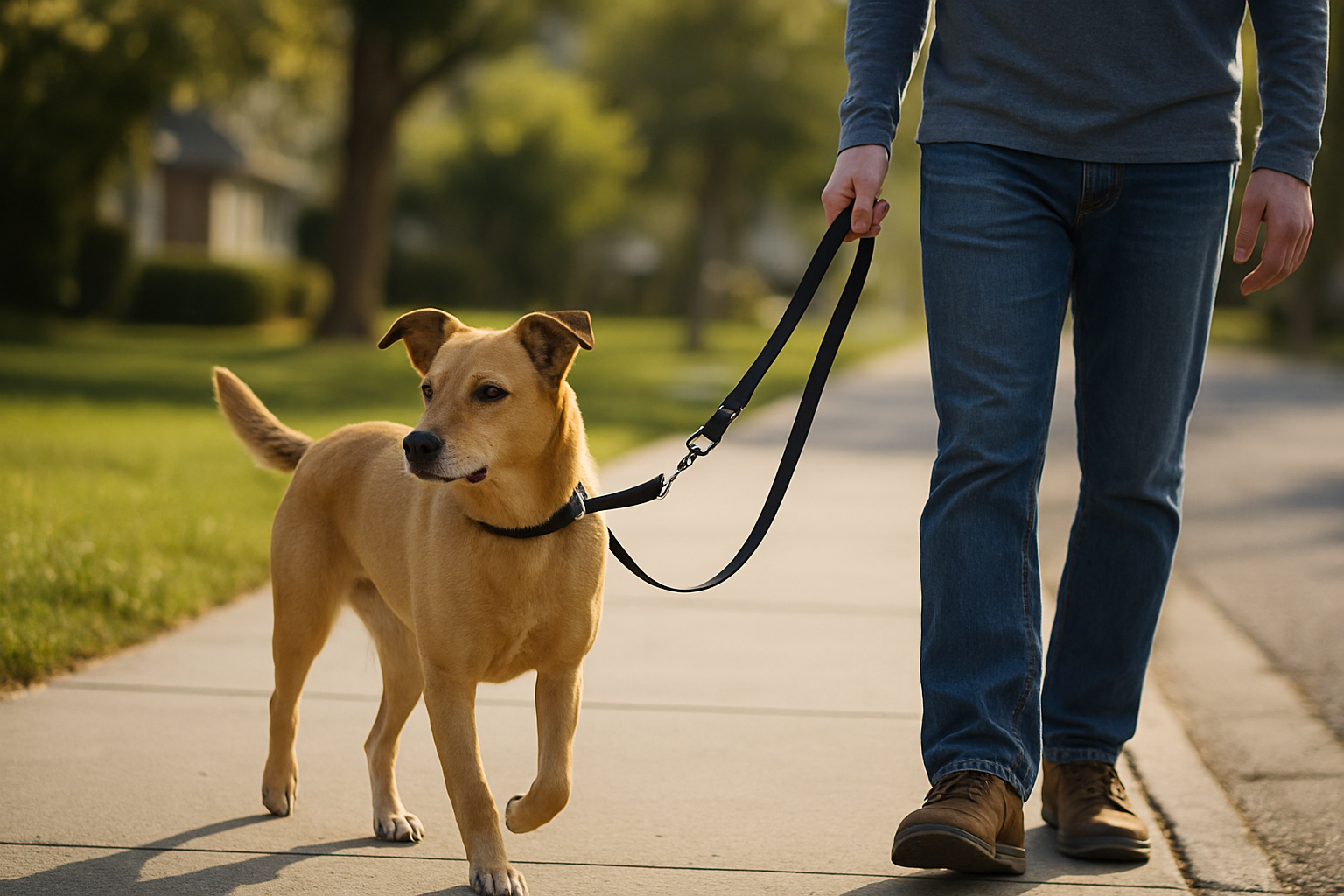
The best dog leash for everyday walking is usually a sturdy 4- to 6-foot flat leash with a secure metal clip and a comfortable handle. Choose a different style only when you have a clear reason, such as walking two dogs, training recall, running, or needing extra control near traffic.
A leash affects how much control you have, how comfortable the walk feels, and how safely your dog can explore. This guide compares the most useful leash styles and explains what to check before buying, so you can choose equipment that matches your dog rather than relying on appearance alone.
1. Decide what your everyday walk actually requires
Before comparing materials or features, consider where you walk and how your dog behaves. A leash for quiet sidewalks may not be suitable for crowded streets, wooded trails, or a dog that pulls suddenly.
- Route: Sidewalks and public paths generally favor a short, manageable leash.
- Dog size: Small dogs need lightweight hardware; large or powerful dogs need stronger webbing and clips.
- Training: Puppies and pullers usually benefit from predictable leash length and consistent handling.
- Walking style: Running, hiking, and walking two dogs may justify a specialized design.
- Visibility: Reflective stitching or high-visibility colors can help during low-light walks, but they do not replace a light or reflective safety gear.
The leash should also match the collar or harness. A properly fitted harness can be a more comfortable choice for some dogs that pull, while a collar may be suitable for dogs that walk calmly. The American Kennel Club’s collar and harness guidance explains why fit and individual behavior matter.
2. Compare the best dog leash types for everyday walking
The following ranking is based on control, ease of use, durability, versatility, and how well each type suits ordinary walking. It is a category comparison rather than a claim that one specific brand is best for every dog.
Use this table as a starting point before looking at individual features.
| Rank | Leash type | Best for | What to look for | Warning sign |
|---|---|---|---|---|
| 1 | Standard flat leash | Most everyday walks | 4–6 feet, strong webbing, comfortable handle, swivel clip | Fraying, weak stitching, or a clip that sticks |
| 2 | Traffic-handle leash | Crowded sidewalks and crossings | Second handle close to the dog, secure clip | Extra handle adds bulk without improving grip |
| 3 | Adjustable leash | Owners wanting several lengths | Reliable adjustment points and easy-to-use clips | Loose hardware or complicated setup |
| 4 | Hands-free leash | Walking or jogging with both hands available | Wide waist belt, emergency release, shock control | Using it with a dog that lunges unpredictably |
| 5 | Long line | Recall practice and open spaces | Light but strong line, comfortable end handle | Using it near roads, cyclists, or crowded paths |
| 6 | Double-dog leash | Two compatible dogs | Rotating coupler and separate attachment points | Dogs move at different speeds or tangle frequently |
| 7 | Retractable leash | Controlled exploration in suitable areas | Visible tape, dependable brake, comfortable grip | Thin cord, crowded surroundings, or poor handler control |
1. Standard flat leash: the best default choice
A standard flat leash is the most practical starting point for most households. A length of about 4 to 6 feet gives your dog room to sniff while keeping the connection easy to shorten when you need closer control.
Look for tightly woven nylon, leather, or another durable material, reinforced stitching, and a metal clip that rotates freely. The AKC’s dog leash guide also recommends checking the clip carefully because leashes are exposed to dirt, moisture, chewing, and repeated pulling.
Best for: Puppies learning leash manners, calm adult dogs, and ordinary neighborhood walks.
2. Traffic-handle leash: best for close control
This style includes a second handle near the dog’s end. You can hold the regular handle for relaxed walking and switch to the shorter handle near crossings, crowded areas, or passing another dog.
It is useful when you need a quick change in distance without wrapping the leash around your hand. However, the extra handle should feel natural rather than creating a bulky grip that gets in the way.
Best for: Urban walking, busy parks, and dogs that need occasional close guidance.
3. Adjustable leash: best for flexibility
An adjustable leash can often be shortened, lengthened, or configured for different handling positions. It may work well for owners who alternate between streets, parks, and training sessions.
More adjustment points mean more hardware to inspect. Before buying, test whether the clips are easy to operate while wearing gloves and whether the leash stays secure when configured at its shortest length.
Best for: Walkers who want one leash for several controlled situations.
4. Hands-free leash: best for suitable runners and active walkers
A hands-free leash attaches around your waist or across your body. It can be convenient when you need both hands for jogging, carrying supplies, or maintaining balance.
It is not automatically safer for every dog. A strong dog that bolts or lunges can pull directly against your body, so use this style only when your dog is reasonably responsive and you have an easy-release option.
Best for: Dogs with reliable walking habits and owners who understand the added force of waist attachment.
5. Long line: best for supervised training
A long line provides more freedom without giving up the connection entirely. It is useful for recall practice in open, low-risk spaces and for allowing a dog to investigate while you retain a way to intervene.
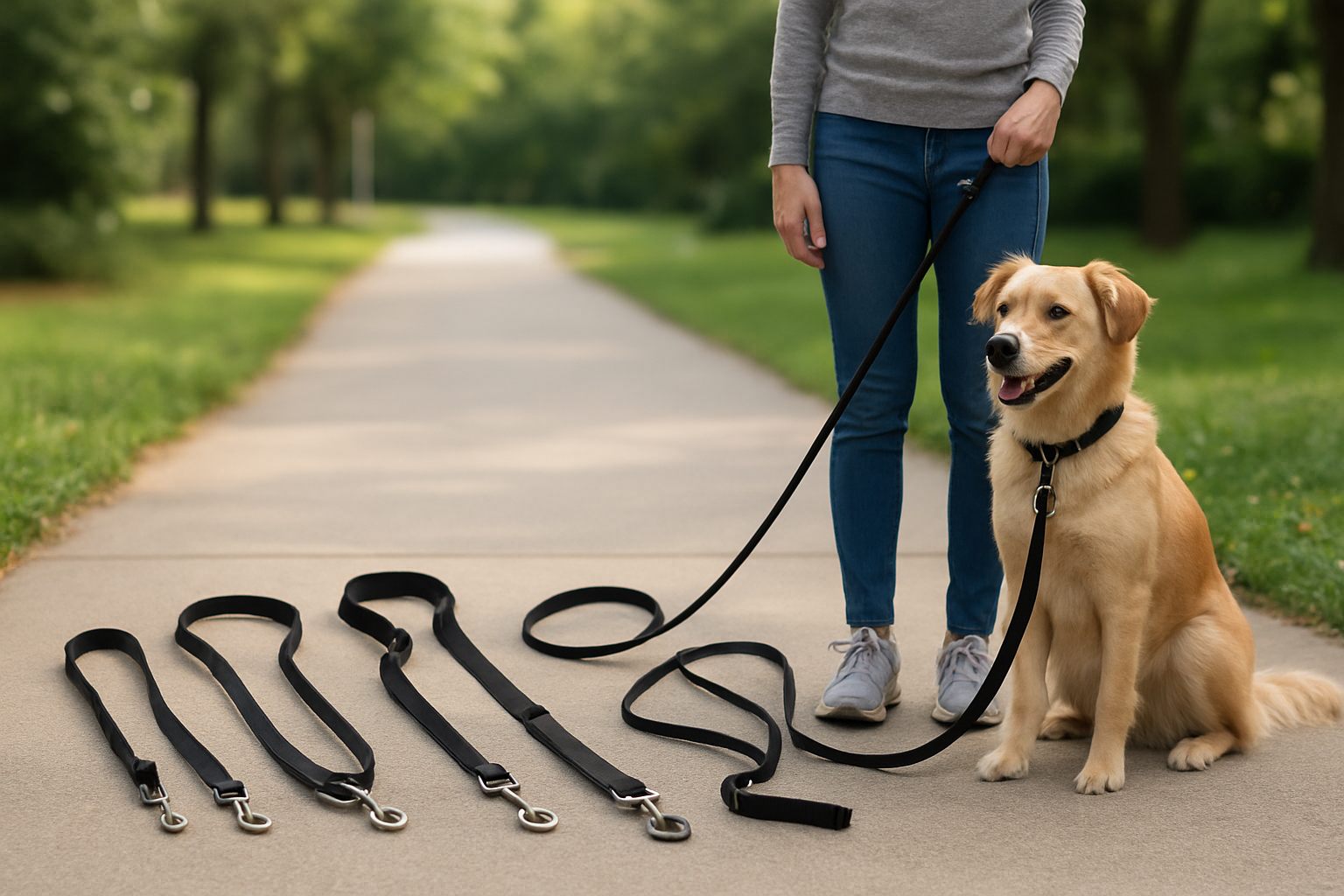
Do not treat a long line as an everyday sidewalk leash. It can wrap around legs, trees, bicycles, or other dogs. Use it with a well-fitted harness and keep sessions away from roads and crowded areas. Blue Cross recall-training advice also recommends a harness when using equipment longer than a normal walking lead.
Best for: Recall training in secure, open environments.
6. Double-dog leash: best for compatible pairs
A coupler or double-dog leash can reduce the need to hold two separate lines. It works best when both dogs walk at similar speeds and do not frequently cross in front of one another.
Try the system in a quiet area first. If one dog pulls or stops often, a double leash may transfer the problem to both dogs and make individual training more difficult.
Best for: Two dogs with similar walking habits.
7. Retractable leash: useful only in the right setting
Retractable leashes offer variable distance, which some dogs and owners find convenient. They can be appropriate for controlled exploration in open spaces when the handler can see hazards and use the brake confidently.
They are less suitable for crowded sidewalks, greetings, road crossings, or dogs still learning not to pull. The thin line or tape can be difficult to see and may cause injuries if grabbed suddenly. A standard leash is usually easier to control in situations that change quickly.
Best for: Calm dogs in open, low-traffic areas—not as a universal replacement for a standard leash.
3. Check construction, fit, and handling before buying
Material and width
Nylon is lightweight, washable, and widely available. Leather may feel comfortable in the hand but needs appropriate care. Chain sections can help with dogs that chew, although they may add weight and noise.
Choose width and hardware according to your dog’s size and strength. A tiny dog does not need a heavy climbing-style leash, while a large dog may quickly damage a narrow, lightly stitched model.
Clip and stitching
Inspect the attachment clip, swivel, stitching, and handle connection. The clip should close fully, rotate without sticking, and suit the size of the collar ring or harness attachment.
Replace a leash when you see deep abrasion, stretched stitching, rust, cracks, or a clip that no longer closes reliably. Regularly check the equipment even if it still appears usable at a glance.
Handle comfort
A padded handle can reduce pressure during longer walks, but a soft grip should not make it difficult to release or shorten the leash. Avoid wrapping the leash around your hand or wrist, especially with a dog that may suddenly pull.
4. Common mistakes when choosing a dog leash
- Buying by color first: Appearance matters less than clip strength, stitching, and suitability for your route.
- Choosing excessive length for sidewalks: More freedom can mean less control around people, vehicles, and other dogs.
- Ignoring the harness connection: A leash must attach securely to equipment that fits your dog properly.
- Using a retractable leash for early training: Variable length can make consistent loose-leash practice harder.
- Waiting until failure to inspect it: Wear often develops near the clip, handle, and adjustment points first.
- Assuming hands-free means risk-free: A lunging dog can affect your balance when attached to your waist.
5. What if your dog pulls, chews, or slips away?
If your dog pulls hard, consider a well-fitted harness and work on loose-leash skills rather than relying on a stronger leash alone. A leash can improve control, but it does not replace training. The AKC’s loose-leash walking advice describes using pauses and direction changes to reward a more manageable walking position.
If your dog chews the leash, supervise closely and address the behavior with appropriate training. A chain section may reduce damage, but it can be heavier and should still have a comfortable, secure handle.
If your dog has escaped equipment before, check fit carefully and consider a properly fitted harness or backup connection. Keep identification current, and use off-leash areas only when they are secure and appropriate for your dog.
6. A simple buying checklist
- Choose the leash type based on your usual route and dog’s behavior.
- Confirm the length is practical for the spaces where you walk.
- Match the leash strength and hardware to your dog’s size.
- Test the clip, swivel, stitching, and handle before regular use.
- Check that the leash works with your collar or harness.
- Look for reflective details if you regularly walk in low light.
- Inspect for wear every few weeks and after exposure to water or chewing.
Final recommendation by walking scenario
For most people, buy a dependable 4- to 6-foot standard flat leash and use it as your everyday option. Choose a traffic-handle version if you regularly walk near crowds or roads, an adjustable leash if you need multiple controlled lengths, and a hands-free leash only for dogs that already walk reliably.
Use a long line for supervised recall practice, not ordinary sidewalks. A retractable leash can suit calm dogs in open spaces, but it should not be your only leash. In short, the best dog leash for everyday walking is the one that gives you predictable control, fits your dog’s equipment securely, and remains comfortable enough for you to use correctly on every walk.