To potty train a puppy in an apartment, take them to the same approved toilet area on a predictable schedule, reward success immediately, and limit unsupervised freedom until the routine is reliable. Apartment training takes more planning than training in a house because every potty trip includes a leash, hallway, elevator, stairs, or shared outdoor space.
The goal is not simply to wait for your puppy to ask. You are building a pattern: wake up, go out; eat, go out; play, go out; succeed, receive a reward. The plan below helps you choose an apartment-friendly setup, prevent accidents, and adjust when progress slows.
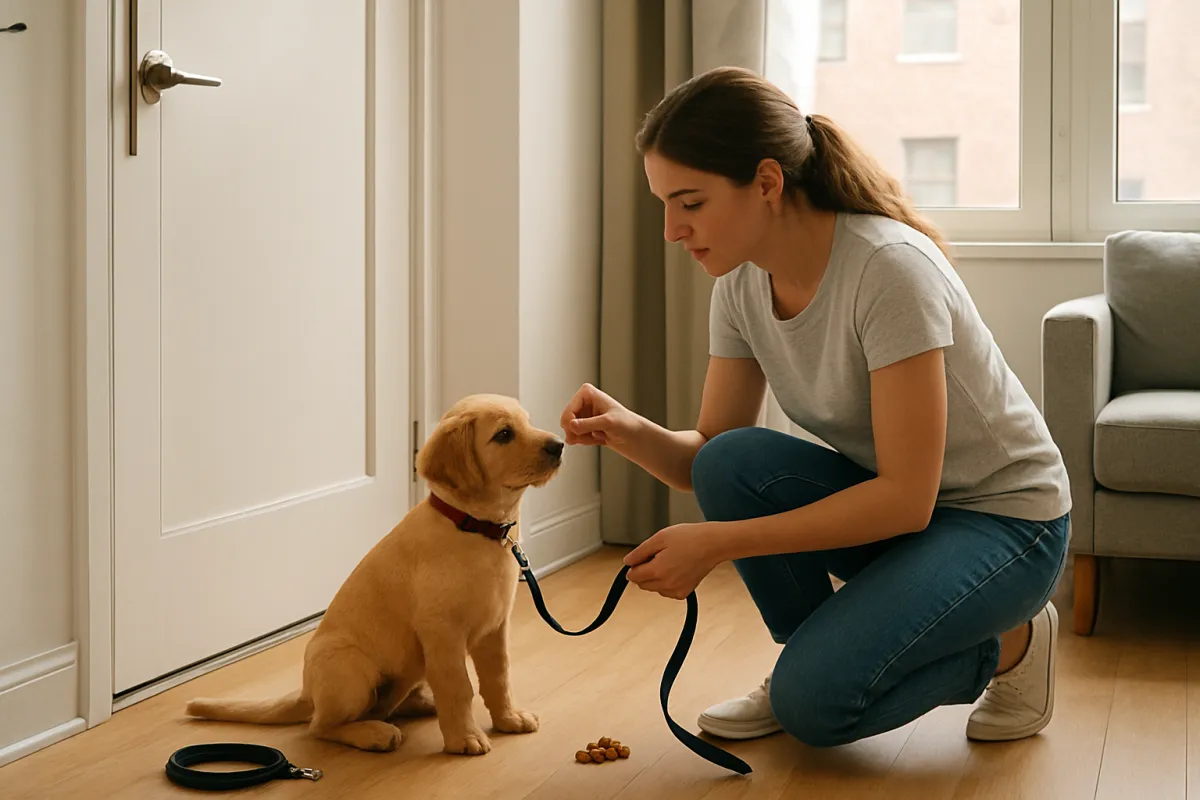
1. Prepare the apartment before your puppy arrives
Good preparation removes the delay between noticing your puppy needs to go and reaching the correct location. Keep the route simple and make supervision easier during the first few weeks.
- Place a leash, waste bags, treats, and shoes near the exit.
- Choose one outdoor toilet area that is easy to reach and permitted by your building.
- Use a washable mat or barrier near the door to protect floors during rushed departures.
- Set up a crate or puppy-safe pen in a quiet part of the apartment.
- Remove rugs, floor cushions, and other absorbent items that may resemble a potty surface.
- Keep an enzymatic cleaner available for accidents.
If your puppy is not fully vaccinated, ask your veterinarian which shared outdoor areas are appropriate. A private, clean surface may be preferable to a heavily trafficked dog-relief area until your veterinarian confirms the safest routine.
2. Choose one potty system and use it consistently
Most apartment puppies can be taught to eliminate outdoors. However, an indoor option may be practical when you live high above ground level, work long shifts, face mobility limitations, or cannot reach the exit quickly enough.
| Potty system | What to look for | Warning sign |
|---|---|---|
| Outdoor training | One repeatable route and a quiet toilet spot | Changing locations every trip or turning the outing into play before elimination |
| Puppy pad | A stable, clearly defined station away from food and bedding | Several pads scattered around the apartment |
| Washable grass or tray | A non-slip surface that is easy to clean | The tray moves, leaks, or is too small for the puppy to use comfortably |
| Hybrid plan | A clear rule for when indoor access is allowed | Expecting the puppy to understand several toilet rules without gradual teaching |
Indoor training can make a later transition to outdoor pottying slower because the puppy learns that eliminating inside is sometimes acceptable. If you use an indoor station, keep it in one permanent location and gradually move it toward the exit before transitioning outside.
3. Build a schedule around predictable potty triggers
Young puppies need frequent opportunities. Exact timing varies with age, size, diet, activity, and individual health, so use a schedule as a starting point rather than a guarantee. Veterinary guidance commonly recommends potty trips after sleeping, eating, drinking, and active play, with additional breaks while the puppy is awake.
For the first several days, take your puppy to the designated spot:
- Immediately after waking in the morning or from a nap.
- After meals and substantial drinks of water.
- After energetic play, training, or excitement.
- Before entering the crate for a longer rest.
- As soon as you see sniffing, circling, sudden restlessness, or a pause in play.
- At regular intervals while awake, with shorter intervals for very young puppies.
Keep a simple log with the time of food, water, sleep, outdoor trips, and accidents. After several days, you may see a pattern that lets you move from guesswork to a more accurate schedule.
4. Make the apartment exit fast and boring
When your puppy needs to go, speed matters. Do not stop to answer messages, prepare a meal, or search for the leash. Carry a small puppy if necessary, especially when the elevator ride is long and the puppy cannot yet hold it during the trip.
Once you reach the toilet area, stand quietly and give your chosen cue, such as “go potty.” Avoid a long walk or exciting greeting until the puppy eliminates. The purpose is to make the correct behavior clear before turning the outing into exercise.
Checkpoint: If your puppy regularly eliminates during the elevator ride, hallway, or lobby, the current departure routine is too slow. Put supplies directly by the door, use a carrier or carry the puppy when appropriate, and take them out earlier in the schedule.
5. Reward the correct behavior immediately
When your puppy finishes eliminating in the right place, reward them within a few seconds. Use a small treat, calm praise, or both. The reward should happen outside, not after returning to the apartment, so your puppy can connect it with the behavior you want.
After the reward, allow a short sniff or gentle walk when practical. This prevents the puppy from learning that eliminating immediately ends every enjoyable part of going outside.
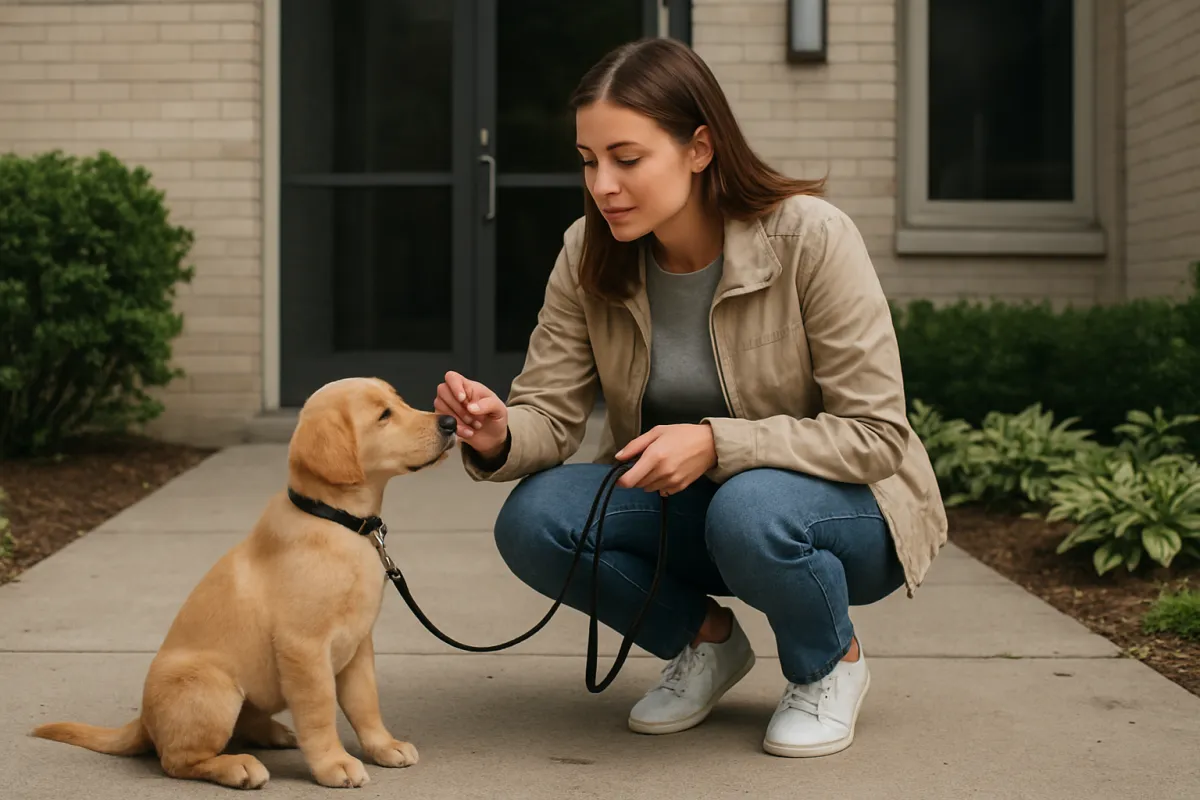
Small, soft treats are convenient for frequent training. For guidance on choosing treats, see how to choose puppy training treats safely.
6. Manage freedom inside the apartment
A puppy that has just eliminated can have a little more supervised freedom. A puppy that has not gone should remain close to you, in a puppy-safe pen, or in a properly introduced crate for a short rest.
A crate should be large enough for the puppy to stand, turn around, and lie down comfortably, but not so large that one end becomes a bathroom. Never use a crate as punishment, and do not leave a puppy confined longer than they can reasonably manage.
Supervision means watching, not simply being in the same apartment. Look for sniffing, circling, wandering behind furniture, sudden quietness, or squatting. Interrupt calmly with a neutral sound, then move quickly to the approved potty area.
7. Handle accidents without creating fear
If you catch your puppy beginning to eliminate, interrupt gently and take them to the correct location. If you discover the accident later, say nothing to the puppy. Clean the area thoroughly with an enzymatic product and review what happened immediately beforehand.
Punishment after the fact does not teach the correct location and may make a puppy hide when they need to eliminate. Repeated odor can also encourage a puppy to reuse the same spot, so cleaning is part of the training process rather than a cosmetic extra.
8. Troubleshoot the most common apartment problems
“My puppy has accidents just before we get outside.”
Shorten the interval between trips and improve the exit routine. For a high-rise apartment, carry the puppy when safe, use the closest approved toilet area, and consider a temporary indoor station while outdoor reliability develops.
“My puppy goes outside but has an accident inside soon afterward.”
The puppy may have been distracted and not fully emptied their bladder. Stay at the potty area a little longer, reward the first success, and offer another quiet opportunity before returning upstairs.
“My puppy uses the pad but misses the edge.”
Use a larger, stable surface and place it away from bedding and food. Clean missed areas completely. Once accuracy improves, reduce the station gradually rather than moving it abruptly.
“Progress stopped after several good days.”
Return to closer supervision and more frequent breaks. Changes in food, schedule, visitors, teething, excitement, or too much freedom can cause setbacks. Treat the setback as information about the routine, not as stubbornness.
9. Know when a veterinarian should help
Contact your veterinarian if a previously reliable puppy suddenly has frequent accidents, strains to urinate, cries while eliminating, produces blood in the urine, drinks unusually large amounts, has persistent diarrhea, or cannot keep food down. Medical problems can resemble training difficulties, and frequent crate soiling also deserves professional attention.
Ask your veterinarian about an appropriate vaccination and parasite-prevention schedule before relying on shared dog areas. For broader puppy care and behavior guidance, review VCA’s house-training guidance and the AKC apartment potty-training overview.
Actionable apartment potty-training checklist
- Choose outdoor, indoor, or hybrid training before the first accident.
- Prepare the exit area with leash, treats, bags, and cleaner.
- Use one potty location and one verbal cue.
- Take the puppy out after sleep, meals, water, play, and excitement.
- Reward immediately after successful elimination.
- Supervise closely or use a safe pen or crate for short periods.
- Clean accidents with an enzymatic cleaner.
- Record timing for at least several days.
Common mistakes to avoid
- Waiting for the puppy to signal before creating a routine.
- Taking too long to reach the exit in a high-rise building.
- Allowing full apartment access too early.
- Using punishment or rubbing the puppy’s nose in an accident.
- Changing between pads, balconies, sidewalks, and grass without a clear transition plan.
- Assuming every accident is a behavior problem.
What to do next
Today, choose the toilet system, set up the route, and write a simple schedule based on your puppy’s waking, feeding, and sleeping times. For the next three days, track every successful trip and accident. Then adjust one variable at a time: shorten the interval, improve the exit speed, reduce indoor freedom, or consult your veterinarian if the pattern suggests a health issue.
Learning how to teach a dog to come when called can make future outdoor trips safer, but recall training should not replace a leash in shared apartment areas. The best answer to how to potty train a puppy in an apartment is a consistent system that makes the right choice fast, rewarding, and easy to repeat.