The best puppy training treats for small breeds are small, soft, quick to eat, and low in calories. Choose a treat your puppy can swallow without stopping the lesson, then count those rewards as part of the day’s food rather than treating them as extras.
This guide is based on veterinary nutrition guidance and established dog-training recommendations from the American Kennel Club, VCA Animal Hospitals, and the World Small Animal Veterinary Association. It will help you compare treat types, avoid common buying mistakes, and build a reward system that works for a small puppy without encouraging overfeeding.
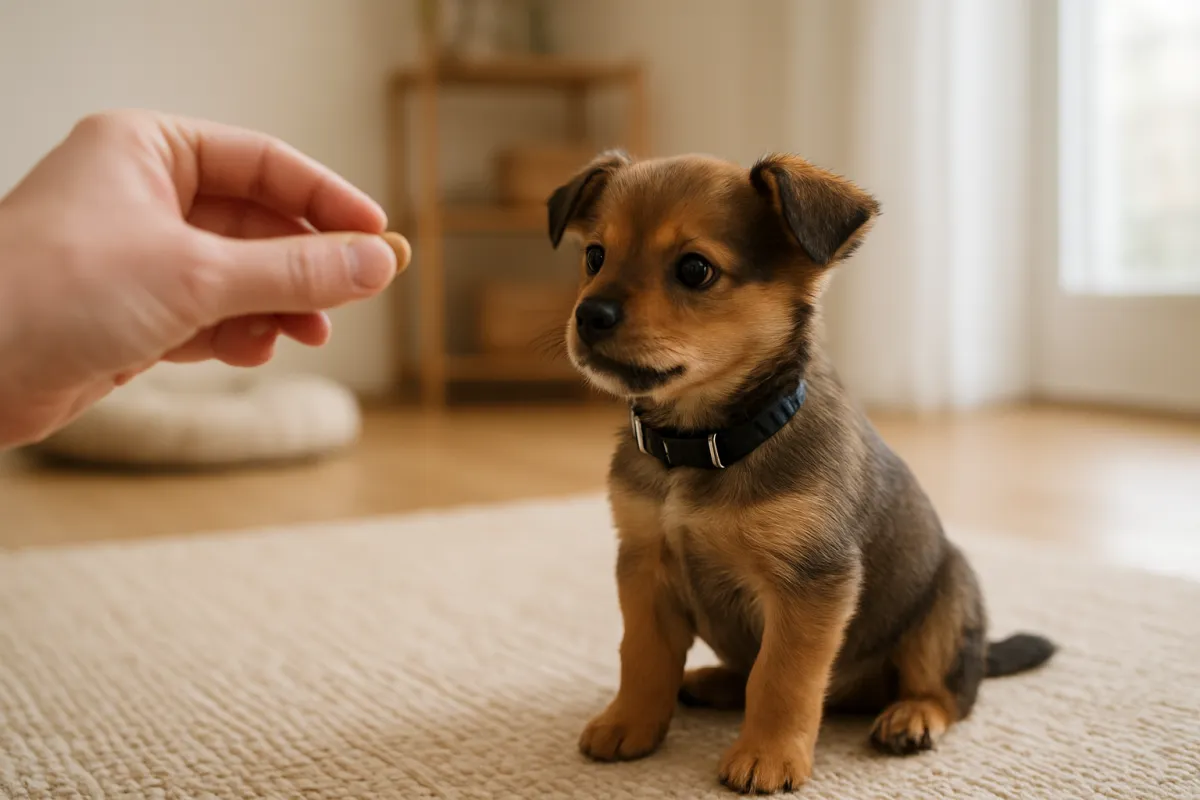
1. Define what a small-breed puppy needs from a training treat
Training treats have a different job from occasional snacks. During house training, name recognition, leash practice, recall, or handling exercises, you may reward many correct responses in a short session. The treat therefore needs to support repetition without making your puppy chew for too long or consume a large amount of energy.
The American Kennel Club recommends small, fast-eating treats for behaviors that require frequent reinforcement. VCA also advises choosing low-calorie rewards and notes that regular kibble can work when a dog enjoys its normal food. The AKC’s training-treat guide and VCA’s treat-selection advice provide useful background.
- Tiny portions: A treat should be no larger than needed to create interest.
- Soft texture: Soft pieces usually disappear faster than hard biscuits.
- Strong but appropriate appeal: A mildly interesting reward may be enough for easy behaviors; save more exciting options for distractions.
- Easy handling: You should be able to reach into the pouch and deliver one piece without crumbs or mess.
- Clear calorie information: This matters especially for toy and miniature breeds with small daily calorie budgets.
2. Compare treat types before choosing a bag
No single formula is best for every puppy. Your choice should match the training environment, your puppy’s chewing habits, and any dietary restrictions recommended by a veterinarian.
Use this comparison as a screening tool rather than a ranking of specific brands.
Practical comparison: what to look for and what to avoid
| Treat type | What to look for | Warning sign | Best use |
|---|---|---|---|
| Soft training bites | Small pieces, easy to split, calorie information on the label | Large pieces that take several chews | Indoor practice and basic cues |
| Freeze-dried meat | Simple ingredient list and pieces that can be crumbled | High calorie density or very large chunks | High-distraction situations |
| Crunchy biscuits | Small size and a texture your puppy handles comfortably | Hard, oversized pieces or excessive crumbs | Occasional rewards, not rapid repetition |
| Regular puppy kibble | Food your puppy already eats and accepts during training | Using so much that meal portions become unclear | Frequent low-value practice |
| Limited-ingredient treats | Clearly identified protein and no unnecessary flavor additives | Vague labeling or ingredients linked to a known sensitivity | Puppies with dietary-management needs, with veterinary guidance |
3. Check calories, ingredients, and feeding safety
Count rewards as part of the daily diet
Veterinary sources commonly use a maximum of approximately 10% of daily calorie intake for treats. VCA explains that exceeding this amount can contribute to excess calories and nutritional imbalance, while WSAVA advises that treats should not replace a complete and balanced puppy diet. Read VCA’s guidance on dog treats and the WSAVA treat guide for the underlying principles.
For training-heavy days, measure the reward allowance in advance. You can remove a small portion of your puppy’s regular meal and use it during practice, or place the day’s treats in one container so that everyone in the household can see how much remains.
Read the label without overvaluing marketing language
Words such as “natural,” “premium,” or “grain-free” do not by themselves tell you whether a reward is suitable for training. More useful questions are: How many calories are in one piece? Can the piece be divided? Is the ingredient list understandable? Does the product fit your puppy’s existing diet and any veterinary recommendations?
Avoid treats containing ingredients known to be dangerous to dogs, including chocolate, grapes or raisins, onions, garlic, macadamia nuts, alcohol, caffeine, and xylitol. If your puppy has vomiting, diarrhea, facial swelling, breathing difficulty, or unusual lethargy after eating a treat, stop using it and contact a veterinarian promptly. For suspected toxin exposure, contact your veterinarian or an appropriate animal poison service immediately.
4. Match the reward to the training situation
A puppy that works happily for kibble in a quiet room may need a more appealing reward outdoors. That does not mean using the richest treat for every behavior. A simple reward system helps you avoid unnecessary calories while keeping the best motivation available when distractions increase.
- Low-distraction practice: Use kibble or a tiny low-calorie treat.
- New or difficult behavior: Use a soft, more appealing reward and deliver it immediately.
- Busy outdoor settings: Use especially small, palatable pieces and reduce the number of repetitions if your puppy is overwhelmed.
- Calm behavior: Reward quietly rather than exciting your puppy with a large or highly aromatic snack.
- Handling and grooming practice: Choose a reward your puppy can eat while remaining comfortable with gentle touch.
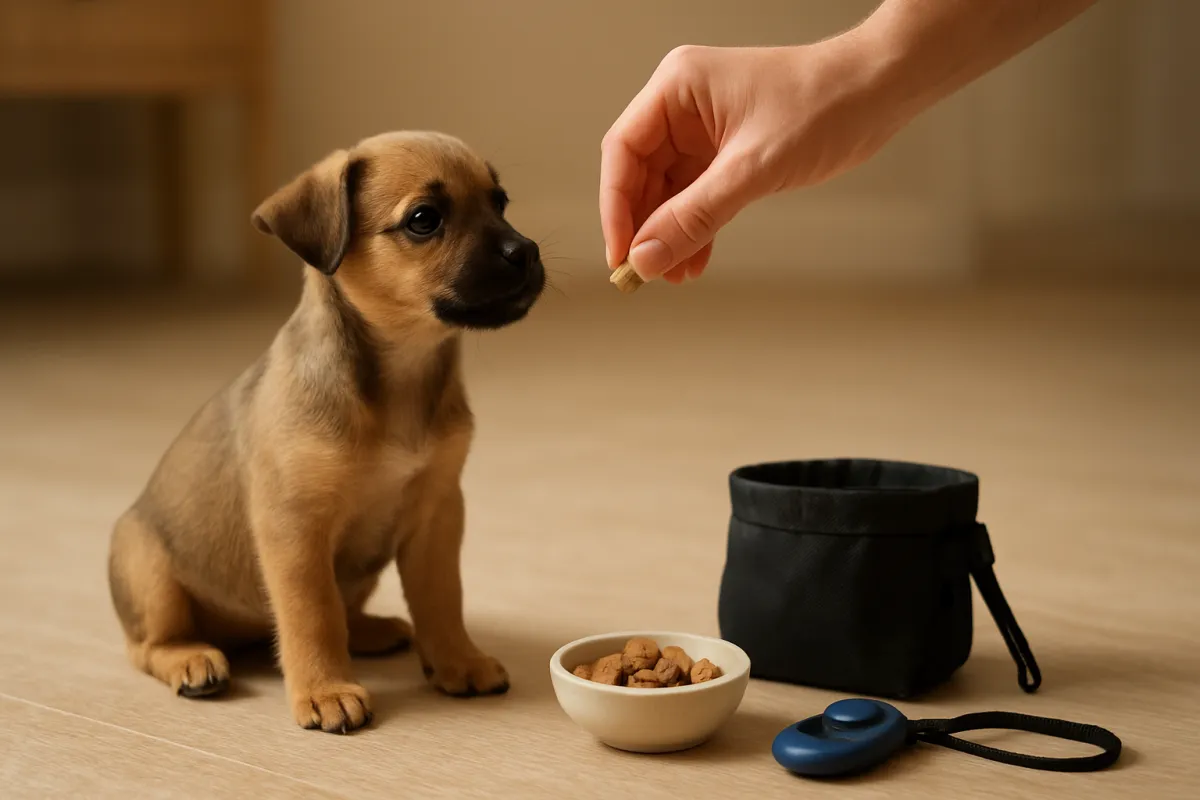
Keep sessions short and stop while your puppy is still engaged. Treats can support learning, but timing, repetition, and a clear cue are equally important.
5. Consider alternatives to commercial treats
Commercial puppy treats are convenient, but they are not the only option. Measured puppy kibble is often the simplest choice because it is already part of a complete diet. Some veterinarians may approve small portions of suitable whole foods, but these should be introduced cautiously and counted within the treat allowance.
Do not assume that a human food is safe because it seems plain. Fatty, salty, seasoned, or sweet foods may be unsuitable, and some common ingredients are toxic to dogs. If your puppy has a medical condition, food allergy, poor growth, or a prescribed diet, ask your veterinarian before adding alternative rewards.
6. Use this buying checklist
Before adding a product to your cart, check the following:
- Is it labeled for dogs or puppies?
- Can each piece be broken into smaller portions?
- Is the calorie content stated per treat, gram, or serving?
- Will the texture be quick for a small puppy to chew and swallow?
- Does the ingredient list avoid anything your puppy cannot eat?
- Can you use it repeatedly without exceeding the daily treat allowance?
- Is the package fresh, sealed, and stored according to its instructions?
- Will the product fit your puppy’s current food plan?
7. Common mistakes when buying puppy training treats
- Choosing by size alone: A treat marketed for small dogs may still be too large for rapid training.
- Ignoring calories per piece: Several “tiny” rewards can add up quickly.
- Using high-value treats for everything: This can make ordinary food less useful and may cause needless overfeeding.
- Changing foods too quickly: Sudden dietary changes can make digestive problems harder to trace.
- Rewarding after the behavior has ended: Deliver the treat promptly so your puppy can connect it with the correct action.
- Letting several people feed freely: Use one daily allotment and tell everyone how much is available.
8. What if your puppy refuses the treat?
Refusing food does not always mean the treat is poor quality. Your puppy may be tired, stressed, too full, distracted, or uncomfortable. Try lowering the difficulty, moving to a quieter area, offering a smaller piece, or using part of the normal meal instead.
If refusal is persistent or occurs with vomiting, diarrhea, pain, marked lethargy, trouble swallowing, or a sudden change in appetite, pause training and consult your veterinarian. Puppies can become dehydrated or unwell more quickly than adult dogs, so ongoing appetite changes deserve attention.
9. Next actions for choosing the right reward
- Check your puppy’s current food and estimate how much training will occur each day.
- Start with measured kibble or a low-calorie soft treat.
- Test whether the piece can be delivered and eaten within a few seconds.
- Reserve a more appealing option for difficult situations rather than every repetition.
- Record any digestive or skin reaction when introducing a new product.
- Review the plan with your veterinarian if your puppy has a special diet or health concern.
For related training guidance, see LaokPet’s step-by-step recall plan. If you are still choosing a dog for a smaller home, you may also find the guide to small breeds for apartment living useful.
FAQ about the best puppy training treats for small breeds
Should puppy training treats be soft?
Usually, soft treats are convenient because puppies can eat them quickly. Crunchy treats can still work when the pieces are small and your puppy handles them comfortably, but they are less practical for very rapid repetition.
Can I use my puppy’s regular food for training?
Yes, measured kibble can be a sensible option if your puppy is motivated by it. Set aside the training portion from the day’s meals so you do not accidentally feed extra calories.
How many treats can a small-breed puppy have?
There is no single number for every puppy. Use the calorie information on the food label, keep treats to roughly 10% or less of daily calories, and ask your veterinarian for a more precise plan when growth, weight, or health conditions are concerns.
Conditional verdict: The best puppy training treats for small breeds are not necessarily the most expensive or most heavily marketed. Choose the smallest practical portion, a texture that supports fast learning, transparent calorie information, and ingredients that fit your puppy’s diet. If you can measure the rewards and match their value to the difficulty of the exercise, you have likely found a better option than simply buying the largest “puppy” treat on the shelf.