The best chew toys for aggressive chewers are usually large, durable rubber toys with some flexibility, rather than extremely hard bones or rigid nylon. For most strong chewers, the KONG Extreme is the best starting point because it can be used for chewing, stuffing, and enrichment.
A powerful dog can destroy an ordinary toy in minutes, but durability is only one part of the decision. The toy must also be large enough, suitable for your dog’s chewing style, and easy to remove when it becomes damaged. This guide compares practical options and explains how to choose without relying on “indestructible” marketing claims.
1. Start with the right safety criteria
“Aggressive chewer” usually describes a dog that bites down hard, strips material quickly, or focuses on destruction rather than gentle play. It does not tell you exactly which toy will be safe. A toy that survives one dog may be shredded by another, so inspect it during every chewing session.
Veterinary guidance commonly warns against extremely hard objects because they can fracture teeth. VCA recommends choosing toys with some give, avoiding toys that can fit entirely in the mouth, and removing products when the dog begins tearing off pieces. Read the veterinary guide to choosing dog chew toys for the basic sizing and inspection rules.
Use these criteria when comparing products:
- Material: Look for durable rubber or another material with controlled flexibility.
- Size: The toy should be too large to swallow and appropriate for your dog’s jaw.
- Shape: Rounded or solid shapes are generally easier to inspect than toys with thin projections.
- Engagement: Stuffable cavities, bouncing, floating, or rolling can reduce the need for constant hard chewing.
- Maintenance: Smooth surfaces and simple designs are easier to wash and check for damage.
The products below are ranked by overall usefulness, design for strong chewers, versatility, and how clearly the manufacturer explains supervision and replacement requirements. They are not ranked by a claim that any toy is indestructible.
2. Compare the best chew toys for aggressive chewers
Use this table as a quick screening tool before reading the detailed assessments.
| Rank | Product | Best for | What to look for | Warning sign |
|---|---|---|---|---|
| 1 | KONG Extreme | Best overall | Durable rubber, stuffing potential, irregular bounce | Deep punctures or torn rubber |
| 2 | West Paw Hurley | Fetch and floating play | Flexible Zogoflex material, simple bone shape | Chewed-off sections or sharp edges |
| 3 | KONG Extreme Tires | Rolling and active dogs | Thick tire walls and treat-stuffing space | Split sidewalls or exposed damage |
| 4 | KONG Extreme Goodie Ribbon | Food-motivated power chewers | Durable rubber with multiple treat cavities | Cracks around the openings |
| 5 | KONG Extreme Ring | Dogs that prefer a ring grip | Simple shape for carrying and chewing | Broken sections or reduced structural strength |
3. The five strongest practical picks
1. KONG Extreme — Best overall
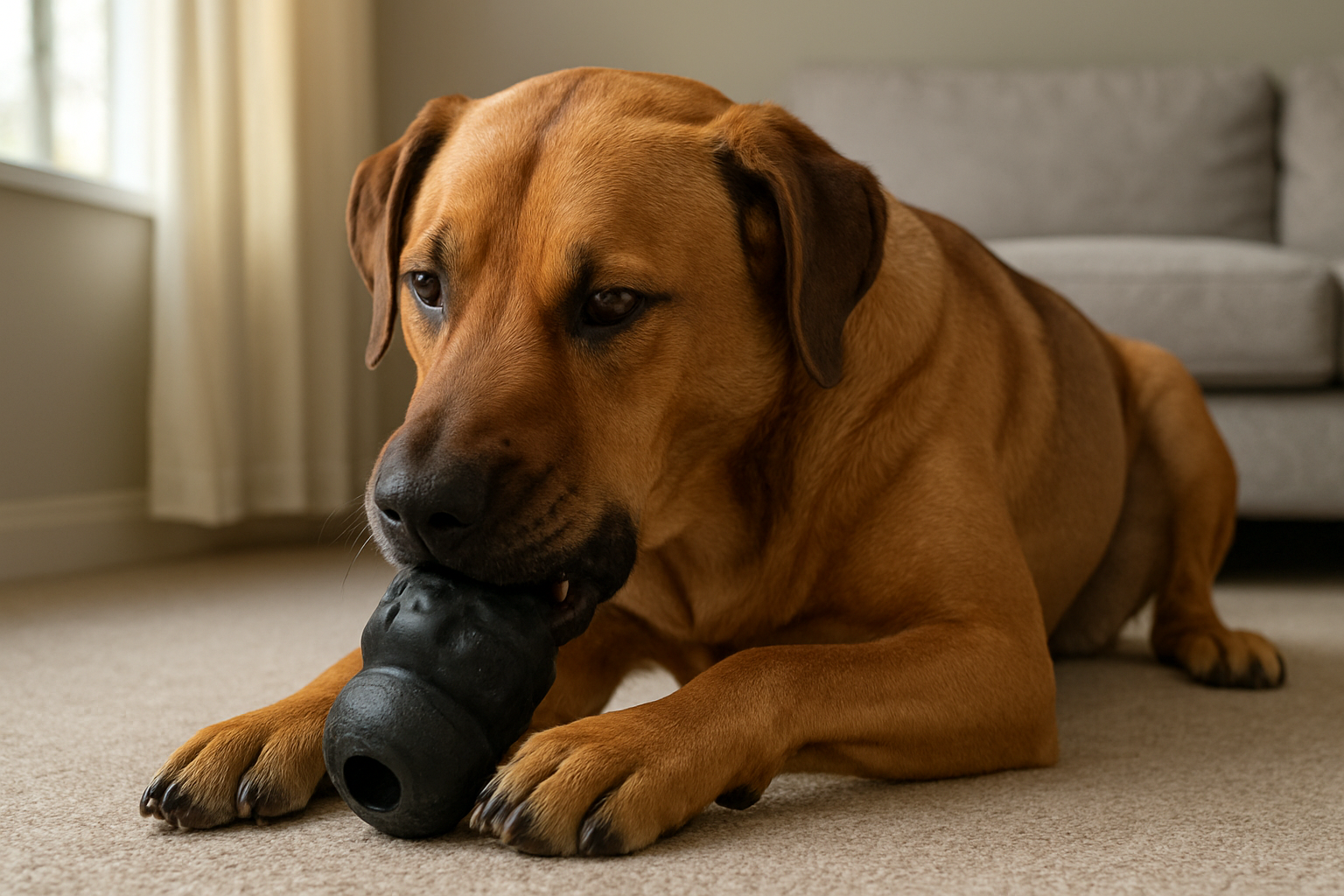
The black KONG Extreme is the most balanced choice for a dog that needs a serious chewing outlet. Its rubber construction is intended for power chewers, while the hollow center lets you add kibble, treats, or a suitable filling to make the dog work for the reward.
This is the best first purchase if you want one toy for supervised chewing, crate enrichment, and short interactive sessions. The main limitation is that its classic shape may not appeal to every dog, and some determined chewers can still puncture or tear it. Choose the size based on your dog’s mouth and weight guidance, and size up when uncertain. See the KONG Extreme range on the manufacturer’s site.
Best for: Most adult power chewers and owners who want a versatile starting point.
2. West Paw Hurley — Best for fetch and water play
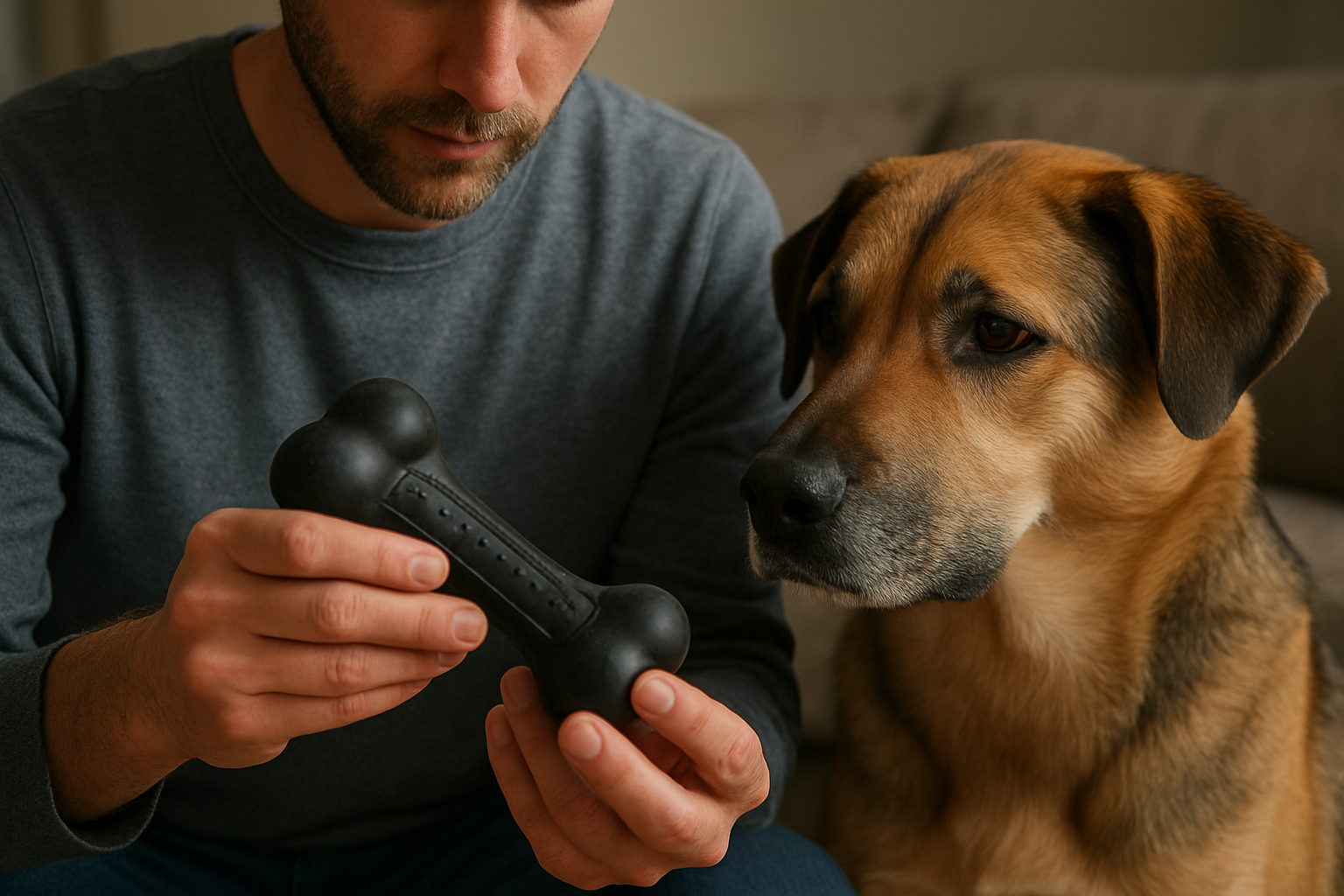
The Hurley is a bone-shaped toy made from West Paw’s Zogoflex material. The simple shape makes it easy to carry, throw, and inspect, and the toy floats for dogs that enjoy water retrieval. West Paw describes it as designed for super chewers and recommends supervision and appropriate sizing.
It is a useful alternative when your dog prefers a bone shape rather than a food-stuffable toy. It is not a reason to leave a strong chewer unattended, however. If your dog removes chunks instead of compressing or gnawing the surface, take it away immediately. Check the official Hurley product details.
Best for: Active dogs that combine chewing with fetch, tug, or swimming.
3. KONG Extreme Tires — Best for rolling and chasing
KONG Extreme Tires use a thick rubber tire design that rolls, bounces, and can be filled with treats. The shape gives dogs another way to interact with the toy, which can be helpful when repetitive chewing is driven by boredom or excess energy.
This option suits dogs that enjoy pushing objects around or chasing a moving toy. It is less convenient for dogs that only want to lie down and gnaw, and the inner wall should be checked regularly for splitting. The manufacturer specifically states that the toy is for supervised use and should be discontinued when damaged.
Best for: Energetic dogs that enjoy active play as much as chewing.
4. KONG Extreme Goodie Ribbon — Best for food enrichment
The Goodie Ribbon combines a tough rubber body with several treat openings. That makes it more mentally demanding than a plain chew toy because the dog must lick, manipulate, and chew to reach the food.
It can be a good choice for dogs that lose interest in a toy once they have tested its surface. The trade-off is that the openings create areas that need close inspection. KONG advises that power chewers may need to size up, so do not choose the smallest version simply because your dog is small if the toy could be swallowed or gripped too deeply.
Best for: Dogs that are strongly motivated by kibble, treats, or frozen fillings.
5. KONG Extreme Ring — Best for a simple grip
The Extreme Ring gives dogs a straightforward shape to carry, gnaw, and use in short games of fetch. Compared with a food puzzle, it has fewer moving parts and no stuffing cavity to clean, which makes it easy to inspect.
Its limitation is engagement: some dogs will enjoy the ring immediately, while others may find a plain rubber shape uninteresting. Use it for supervised chewing and gentle interactive play rather than assuming that a thick ring cannot break under a powerful bite.
Best for: Dogs that prefer carrying and gripping a simple rubber toy.
4. Match the toy to your dog’s chewing pattern
Watch what your dog actually does with toys. A dog that compresses rubber with the back teeth has different needs from one that peels off edges, shakes toys violently, or swallows fragments.
- Steady gnawer: Start with a solid rubber toy and inspect it after each session.
- Destroyer: Avoid thin fins, fabric, squeakers, and removable parts; use only supervised sessions.
- Food-driven chewer: Choose a stuffable design and use part of the normal meal inside it.
- Fetch-focused dog: Select a rounded toy that can be thrown without presenting a hard, rigid surface.
- Senior or dental-sensitive dog: Ask your veterinarian before choosing a tough chew toy, especially if there is gum disease or a history of broken teeth.
For dogs that chew when left alone, a durable toy is only one part of the plan. LaokPet’s guide on preventing separation anxiety in a puppy explains why gradual alone-time training should not be replaced by simply handing over a toy.
5. Common mistakes that shorten toy life
- Choosing by breed reputation instead of watching the individual dog.
- Buying a small toy because it is easier for the dog to hold.
- Assuming a “power chewer” label means unsupervised use is safe.
- Leaving a damaged toy available because the dog still likes it.
- Using bones, antlers, hooves, or rigid nylon as a durability test.
- Giving a new toy during a busy period when nobody can monitor the first session.
Hard chew objects can fracture teeth, while broken pieces can create choking or intestinal obstruction risks. The FDA’s pet safety guidance explains that swallowed chew material may cause delayed signs such as vomiting, diarrhea, reduced activity, or abdominal pain.
6. What to do if the toy is damaged
Remove the toy as soon as you see a crack, sharp edge, missing section, exposed inner layer, or loose fragment. Do not trim away a damaged area and return the toy unless the manufacturer specifically provides a safe repair method.
Contact a veterinarian promptly if your dog is choking, repeatedly vomiting, drooling heavily, pawing at the mouth, refusing food, or showing abdominal pain after chewing. Signs such as chewing on one side, dropping food, or avoiding hard food can also indicate a fractured tooth; VCA’s information on fractured teeth outlines symptoms that deserve veterinary attention.
7. Buyer checklist before you order
- Measure your dog’s mouth and compare the manufacturer’s size guide.
- Choose a shape that cannot be swallowed whole.
- Prefer some flexibility over a toy that feels rock-hard.
- Decide whether stuffing, floating, rolling, or fetch will improve engagement.
- Plan where and when the first supervised session will happen.
- Check the toy after use and retire it at the first meaningful sign of damage.
Final recommendation by scenario
Choose the KONG Extreme if you want the best all-purpose option. Choose the West Paw Hurley for a flexible bone shape and water play, the KONG Extreme Tires for rolling and chasing, the Goodie Ribbon for treat-based enrichment, and the Extreme Ring for a simple grip toy.
The best chew toys for aggressive chewers are not the hardest toys available. They are appropriately sized, durable enough for your individual dog, flexible enough to reduce unnecessary dental risk, and used with active supervision.