Quick verdict: Choose an American Shorthair if you want a predictable, recognized breed with a sturdy build and generally even temperament. Choose a Domestic Shorthair if you care more about the individual cat’s personality, adoption availability, and practical fit than pedigree.
The difference between an American Shorthair and a Domestic Shorthair is easy to misunderstand because the names sound interchangeable. They are both short-haired cats, but one describes a specific established breed while the other is a broad label for mixed-ancestry cats with short coats.
This guide compares the two using the criteria that matter most in daily life: appearance, personality, grooming, activity level, predictability, adoption, and long-term fit. For other practical pet decisions, you can also browse the LaokPet homepage.
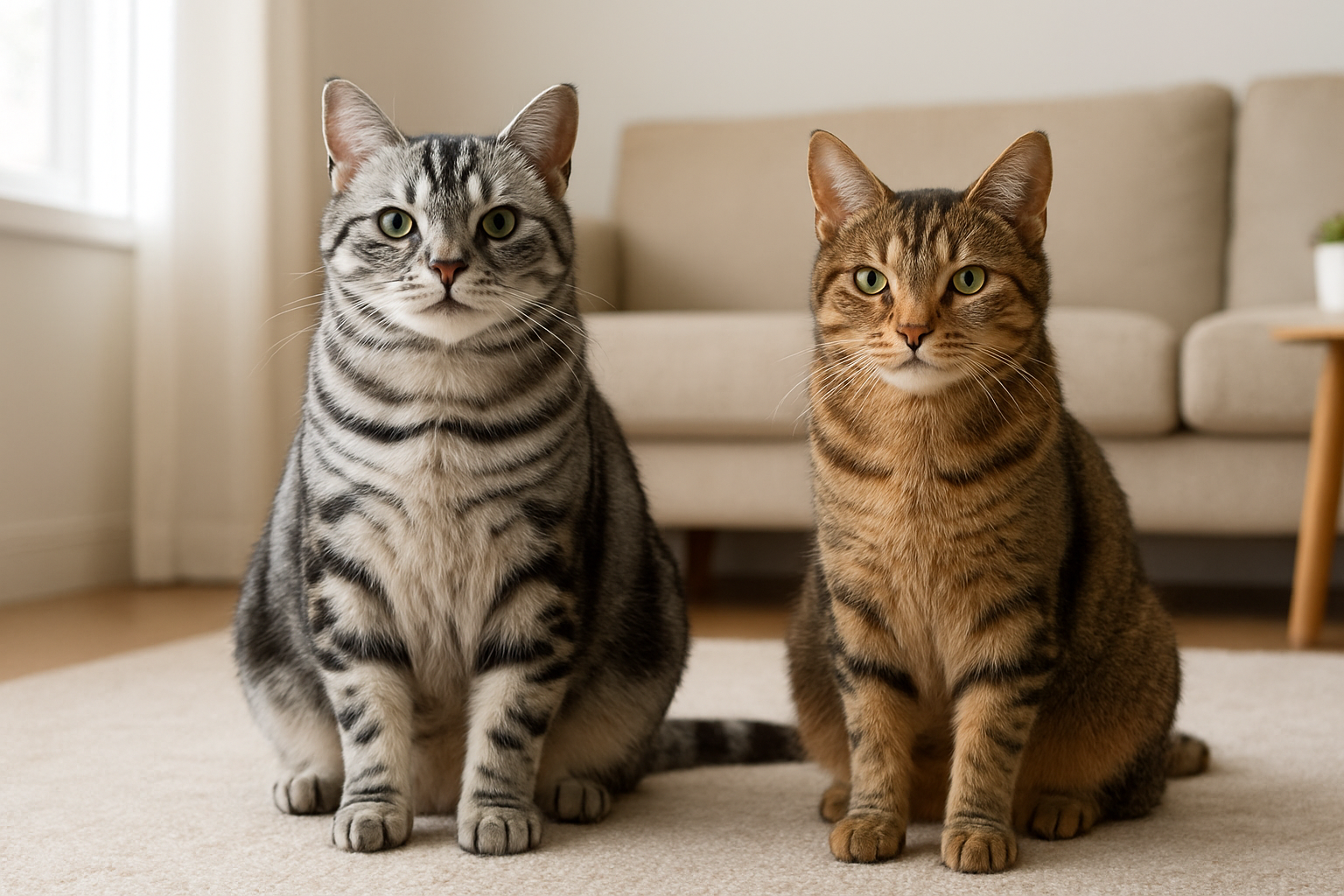
1. Understand what each name means
An American Shorthair is a recognized breed with a defined body type, coat, and breed standard. The Cat Fanciers’ Association describes it as a muscular, balanced working cat with a short, dense coat and an even temperament. The breed is available in many colors and patterns, including the familiar silver tabby. The CFA breed profile provides the formal standard.
A Domestic Shorthair is not one single breed. The term generally refers to a short-coated cat whose ancestry may include several breeds or unknown mixed ancestry. Two Domestic Shorthairs can look and behave very differently, even when they are the same age and color.
This distinction matters because breed gives you some useful expectations, but it does not guarantee a particular personality. A Domestic Shorthair may be affectionate, quiet, playful, shy, or highly social. An American Shorthair also has individual variation, but its physical type is usually more consistent.
2. Compare appearance and size before choosing
| Decision factor | American Shorthair | Domestic Shorthair | What to look for |
|---|---|---|---|
| Body type | Medium to large, muscular, broad, and balanced | Highly variable, from slim and athletic to compact and stocky | Choose a body type that suits your space and handling preferences |
| Face and structure | Usually a rounded head, strong muzzle, and substantial build | May have almost any head shape or proportion | Look for clear eyes, comfortable movement, and healthy body condition |
| Coat | Short, dense, and relatively easy to maintain | Short coat, but texture and thickness vary | Part the coat and check for bald patches, heavy dandruff, or parasites |
| Color and pattern | Many recognized colors and patterns | Almost unlimited combinations | Never use color alone to predict temperament |
| Predictability | More consistent breed type | Less predictable appearance and adult size | Ask about parents or previous history when available |
The American Shorthair standard emphasizes a strong, well-balanced body rather than exaggerated features. The TICA breed overview also describes the breed as adaptable and suitable for different household types.
With a Domestic Shorthair, focus less on labels and more on the cat’s actual condition. A short-haired shelter cat may mature into a slender climber, a solid lap cat, or something in between.
3. Compare temperament and daily interaction
American Shorthair temperament
American Shorthairs are commonly described as calm, intelligent, good-natured, and moderately independent. They often enjoy interactive play but can also entertain themselves while you are working. That makes them appealing for households that want companionship without constant attention.
They are not necessarily passive cats. Their working-cat background is associated with alertness and hunting behavior, so wand toys, puzzle feeders, climbing options, and short play sessions can be useful.
Domestic Shorthair temperament
A Domestic Shorthair’s personality depends more on the individual cat’s genetics, early socialization, age, and previous experiences. You may find one that immediately seeks attention or another that needs several weeks to relax.
This variability can be an advantage. If you meet the cat through a shelter or foster home, you may be able to choose based on observed behavior rather than breed expectations. The ASPCA’s adoption guidance is a useful reminder that an animal’s real personality and care needs should guide the match, not appearance alone.
4. Compare grooming, shedding, and activity needs
Neither option is a low-maintenance pet in the broad sense. Both need regular veterinary care, nail care, dental attention, parasite prevention, play, and a clean litter area.
For grooming, both usually need occasional brushing to remove loose hair. American Shorthairs have a dense coat and may shed more noticeably during seasonal changes. Domestic Shorthairs vary: some have sleek coats that shed lightly, while others have thicker coats that leave more hair on furniture.
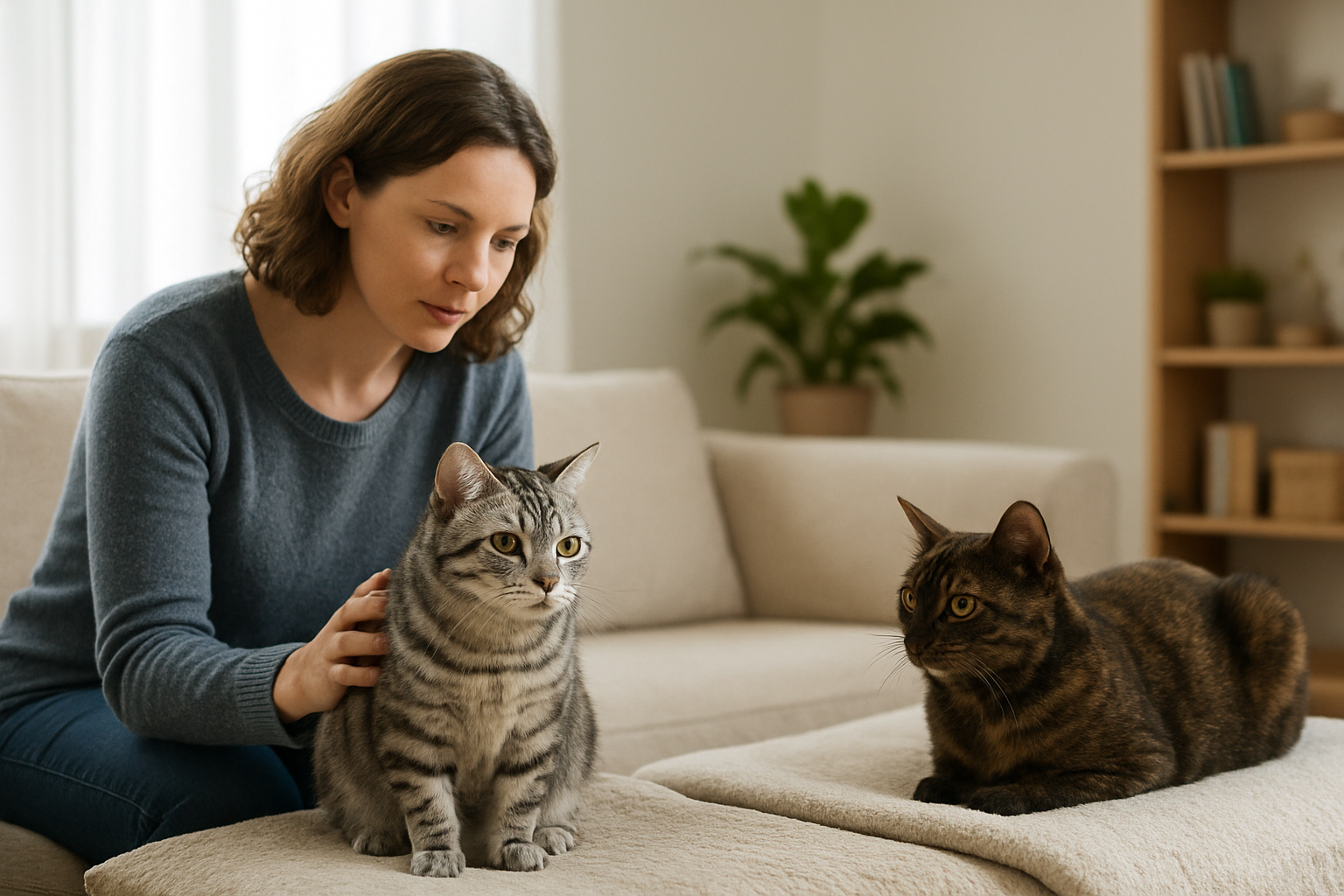
- Brush once or twice weekly if the cat tolerates it, adjusting for shedding.
- Provide daily play even if the cat appears independent.
- Use scratching surfaces and elevated resting places.
- Monitor food portions because sturdy cats can gain excess weight when activity is limited.
For indoor living, the key question is not whether the cat has a pedigree. It is whether you can provide enough movement, safe vertical space, predictable routines, and social interaction. If you are comparing pet choices for a smaller home, our guide to small pets for adults in apartments offers additional planning ideas.
5. Weigh predictability against adoption flexibility
The main practical advantage of an American Shorthair is greater predictability. A reputable breeder can usually explain the parents’ appearance, health history, and expected adult type. That can help if size, structure, or breed documentation matters to you.
The tradeoff is that you need to research breeders carefully and may have fewer immediate choices. Do not assume that any cat advertised as an American Shorthair is registered or responsibly bred. Ask for documentation, health information, and a clear explanation of the kitten’s early care.
Domestic Shorthairs are widely available through shelters, rescues, foster networks, and local adoption groups. Adoption can give you more flexibility to choose an adult cat whose personality is already visible. However, medical and behavioral history may be incomplete, particularly for a stray or recently rescued cat.
6. Match the cat to your household
Choose an American Shorthair when:
- You want a recognized breed with a consistent physical type.
- You prefer a generally steady, adaptable companion.
- You want a cat that can enjoy attention without requiring constant contact.
- You are prepared to research a breeder or locate a breed-specific rescue.
Choose a Domestic Shorthair when:
- You are open to different appearances, body types, and activity levels.
- You want to adopt from a shelter or rescue.
- You would rather judge personality in person than rely on breed tendencies.
- You want to consider adult cats whose behavior and size are easier to assess.
Families with children should prioritize a cat that recovers calmly from normal household activity and has a history of positive handling. A cat’s breed name cannot replace supervised introductions and respectful interaction. If your home already includes a dog, plan gradual introductions and separate resources; our guide on helping a dog adjust to a new home covers the importance of calm routines during transitions.
7. Avoid common decision mistakes
- Assuming every silver tabby is an American Shorthair: color and pattern do not prove breed.
- Choosing from photos alone: photos rarely show confidence, handling tolerance, or energy level.
- Expecting a breed label to guarantee personality: individual temperament still matters.
- Ignoring adult size: a sturdy cat needs appropriately sized carriers, beds, litter boxes, and climbing equipment.
- Overlooking health records: ask what vaccinations, examinations, sterilization, and parasite care have been completed.
- Forgetting the adjustment period: even a friendly cat may hide or eat less during the first days in a new home.
8. What if the choice still feels unclear?
If you cannot decide, make a short household checklist. Write down how many hours the cat will be alone, whether children or other pets are present, how much shedding you can tolerate, and whether you prefer an adult cat or kitten.
Then contact a reputable breeder, shelter, or rescue and describe your routine honestly. Ask for a cat whose observed behavior fits your home rather than asking for the most attractive color or the quietest-looking photo.
If a newly adopted cat stops eating, has breathing difficulty, repeated vomiting, severe diarrhea, or unusual lethargy, contact a veterinarian promptly. For behavior concerns such as persistent hiding, aggression, or litter-box changes, first rule out medical causes before assuming the cat is simply difficult.
9. Final checklist before you choose
- Can you provide daily play, scratching areas, and safe resting places?
- Have you decided whether adoption or a breeder is the better route for you?
- Have you checked the cat’s medical records and current health?
- Have you met the cat or received reliable behavior information from a foster home?
- Do you have a quiet transition room ready?
- Can everyone in the household agree on handling rules and care responsibilities?
American Shorthair vs Domestic Shorthair: the practical choice
American Shorthairs are the better fit when you value a recognizable breed, sturdy proportions, and relatively predictable traits. Domestic Shorthairs are often the better fit when you want adoption flexibility and are willing to choose an individual cat based on its observed personality.
Neither is automatically easier or more affectionate. The right decision depends on whether you value breed predictability or individual matching more. For most households, the best cat is the one whose energy, confidence, health, and social needs fit your daily routine—not simply the one with the most appealing label.