Quick verdict: The Papillon is usually the more active and athletic choice, especially if you want a small dog for training, agility, games, and frequent interaction. The Pomeranian is also energetic, but many Poms are more satisfied with short walks, indoor play, and being close to their people.
Both breeds are small enough for apartments and active enough to keep you involved. The important difference is not simply how fast they move. It is how much daily exercise, training, social contact, and supervision they tend to seek.
This comparison looks at activity level, exercise style, trainability, grooming, noise, and household fit so you can choose the dog that matches your actual routine rather than the breed’s appearance.
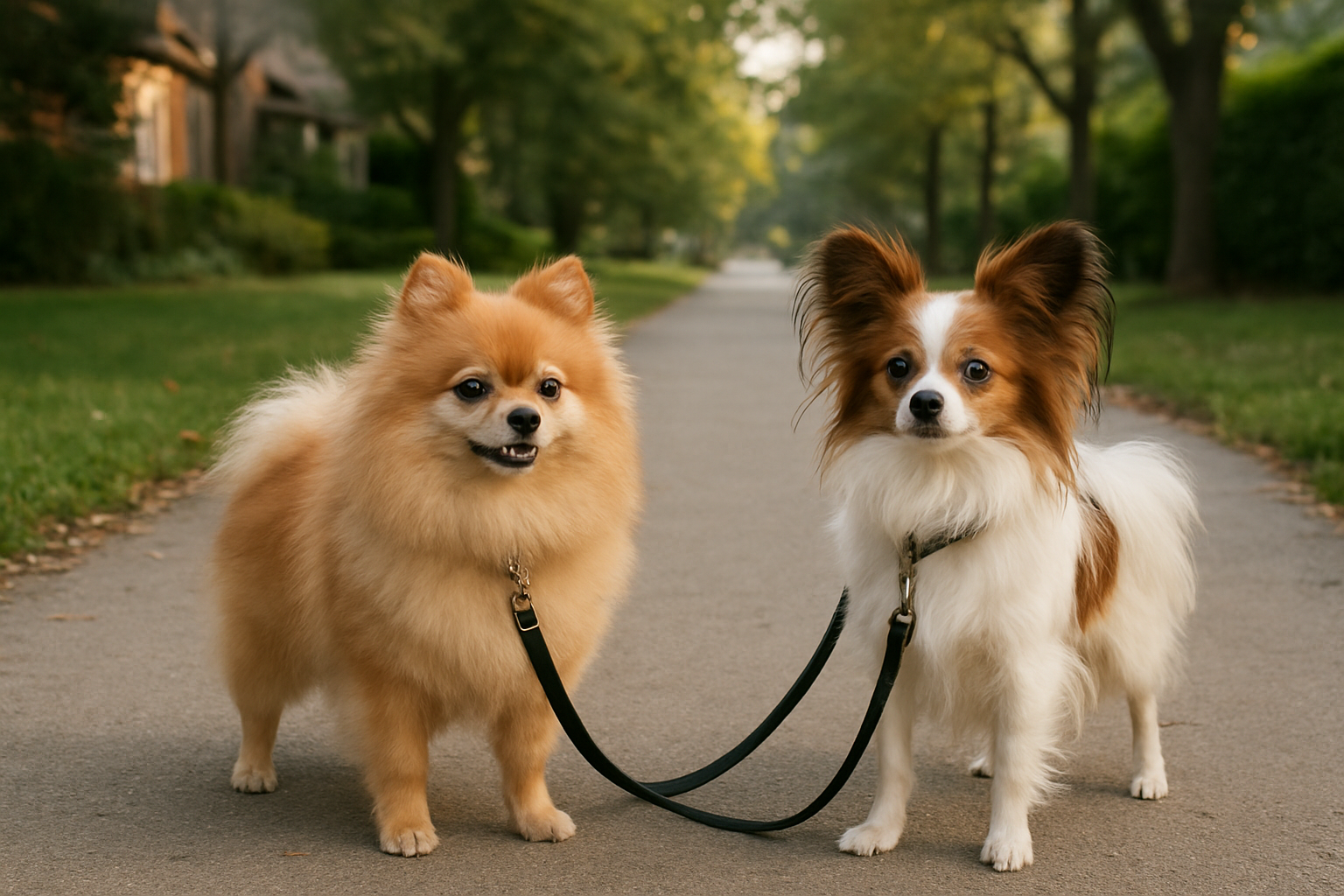
1. Define “active” before comparing the breeds
People use “active” to mean different things. A dog may be physically energetic, mentally demanding, vocal, playful, or simply eager to follow you from room to room. Separating these traits makes the decision more useful.
- Physical activity: walking, running, chasing, jumping, and outdoor play.
- Mental activity: training, puzzle toys, scent games, and learning new behaviors.
- Social activity: seeking attention, interaction, and participation in household routines.
- Practical intensity: barking, grooming, supervision, and difficulty settling.
The American Kennel Club’s Pomeranian profile describes the breed as an active toy dog, while its Papillon profile emphasizes a lively, intelligent companion. Those descriptions support a general comparison, but individual dogs can vary considerably.
2. Pomeranian vs Papillon: activity level side by side
The Papillon usually has the edge in sustained activity and athletic versatility. It was developed as a companion spaniel and is often eager to run, learn, jump, retrieve, and participate in dog sports.
Pomeranians are not low-energy dogs. They can enjoy brisk walks, indoor games, short runs, and training sessions. However, their exercise often comes in quick bursts, followed by rest or relaxed time with their owner.
Use the table below as a starting point, not a guarantee. Age, health, socialization, weather, and the dog’s individual temperament all affect daily needs.
Practical comparison of the two breeds
| Factor | Pomeranian | Papillon | What to look for |
|---|---|---|---|
| Overall activity | Moderate to lively, often in short bursts | Lively to highly active for a toy breed | Whether you can provide activity every day |
| Exercise style | Short walks, play, and brief training | Walks, games, training, agility, and exploration | A dog that matches your preferred activities |
| Mental stimulation | Benefits from training and interactive toys | Often needs frequent learning and problem-solving | Time for several short training sessions |
| Trainability | Intelligent but may be independent or distractible | Typically responsive and eager to work | Patience and reward-based methods |
| Coat maintenance | High; thick double coat needs regular brushing | Moderate; feathered coat needs routine brushing | Your willingness to maintain the coat |
| Common challenge | Barking, alertness, grooming, or housetraining | Boredom, overexcitement, or chasing movement | Which issue fits your household better |
3. Which breed needs more exercise?
Papillon exercise needs
A Papillon is often a strong match for someone who wants a small dog with a big interest in activity. Daily walks should be supplemented with play, basic obedience, trick training, or scent-based games.
Because Papillons are agile, activities such as low-impact agility foundations, rally-style exercises, and controlled fetch can be rewarding. Avoid assuming that a tiny body means the dog can safely cope with unlimited jumping or rough play. Keep sessions age-appropriate and use secure surfaces.
Pomeranian exercise needs
Pomeranians generally benefit from several short activity periods rather than one demanding workout. A walk, indoor play session, and a few minutes of training may be enough for one adult dog, while a puppy or unusually energetic individual may need more structured engagement.
The AKC’s lifestyle guidance for Pomeranians notes that they can enjoy short walks, runs, and outdoor play. It also highlights the importance of patient training and early socialization.
For both breeds, watch the dog rather than following a rigid target. Heavy panting, reluctance to continue, limping, overheating, or unusual fatigue means the session should stop. Ask your veterinarian for individualized advice if your dog has breathing, joint, heart, or weight concerns.
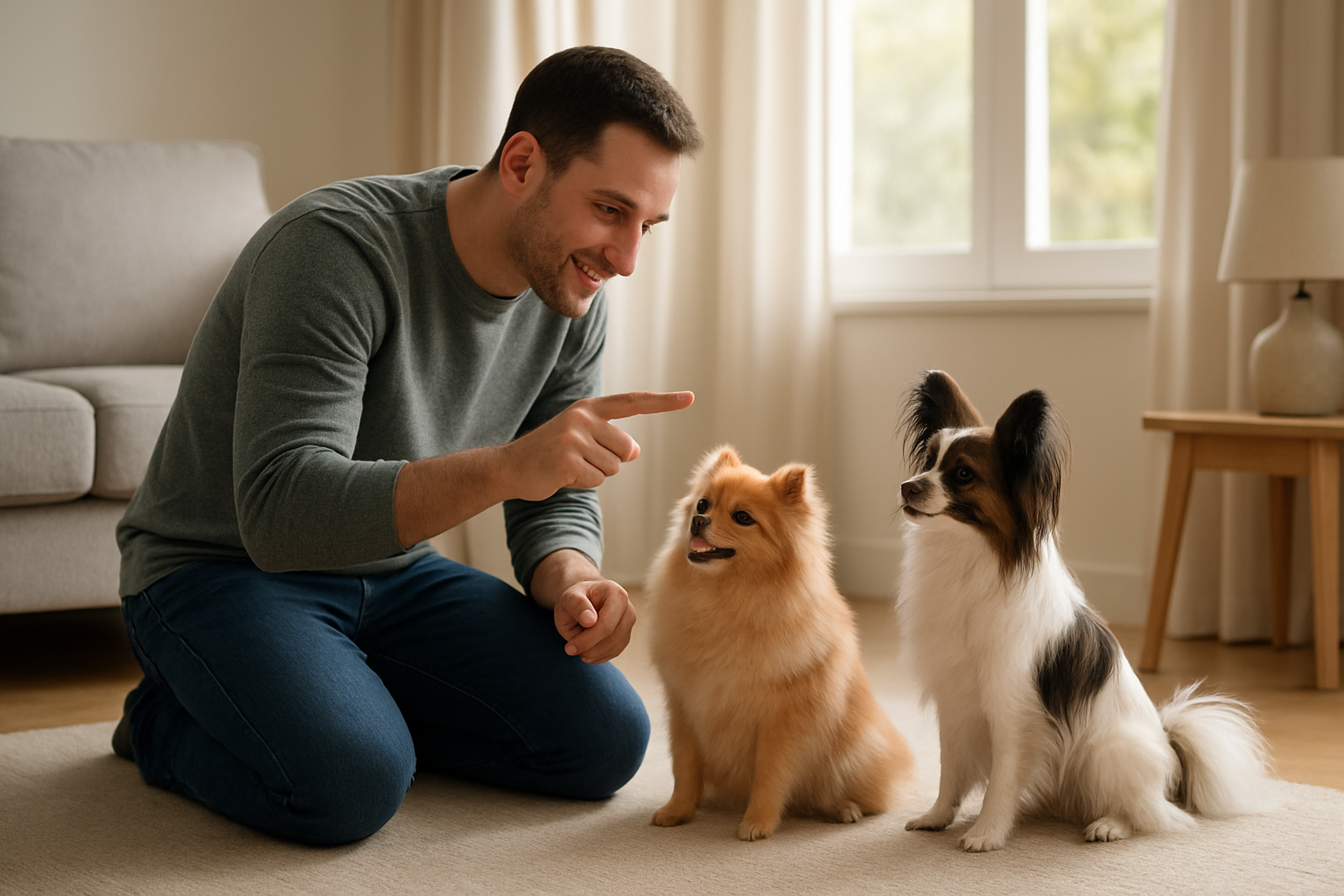
4. Mental stimulation may matter more than distance
A short walk does not automatically meet an active small dog’s needs. Many toy breeds become restless when their bodies are exercised but their brains are ignored.
Useful activities include:
- Two- to five-minute reward-based training sessions.
- Food puzzles that are easy to clean and difficult to break.
- “Find it” games using part of the dog’s normal meal.
- Short retrieve games on a non-slip surface.
- Calm handling practice for paws, ears, brushing, and harnesses.
- Teaching a settle behavior after play.
The Papillon may demand more variety because it can learn quickly and lose interest in repetitive routines. A Pomeranian may also enjoy training, but many owners find that brief, upbeat sessions work better than long drills.
5. Consider the tradeoffs beyond energy
Activity is only one part of daily compatibility. A Pomeranian’s dense coat can require more brushing and careful grooming, particularly around areas prone to tangling. A Papillon’s coat is usually less voluminous, but its ear and leg feathering still need regular attention.
Both breeds can be alert and vocal. Neighbors, shared walls, visitors, and delivery activity should therefore be part of your planning. Reward calm behavior, avoid reinforcing alarm barking, and give the dog a predictable place to rest.
Small size also creates handling risks. Children should be taught not to pick up, chase, squeeze, or disturb either dog while it is eating or sleeping. If your household includes young children, compare this choice with other options in LaokPet’s guide to low-shedding dogs for families, while remembering that low shedding does not automatically mean low maintenance.
6. Which dog is better for your scenario?
Choose a Papillon if you want:
- A small dog for regular training and interactive games.
- An agile companion for beginner dog sports or active outings.
- A dog that is likely to enjoy learning new cues and tricks.
- A companion that can keep up with a busy, engaged owner without needing a large yard.
Choose a Pomeranian if you want:
- A lively toy companion that can exercise in short daily sessions.
- A dog that enjoys both playtime and close indoor companionship.
- A compact breed suited to apartment or city living, provided barking is managed.
- A fluffy coat and you are comfortable with regular grooming.
Neither breed is ideal if you want a completely independent pet or a dog that can be left alone for most of the day without preparation. If you are bringing home a rescue or adult dog, a gradual routine can help; see LaokPet’s guide on helping a dog adjust to a new home.
7. Common decision mistakes
- Choosing by size alone: Small dogs can still need daily training and supervision.
- Assuming a fluffy Pomeranian is calm: Coat volume says little about energy or vocal behavior.
- Using one long walk as the entire routine: Mental work and rest training are also important.
- Ignoring grooming: Coat care becomes a recurring responsibility, not an occasional task.
- Overexercising a puppy: Growing joints and coordination require age-appropriate play.
- Expecting instant obedience: Small breeds still need consistent boundaries and reward-based training.
8. Checklist before you choose
- Can you provide daily walks plus short interactive sessions?
- Will someone be available for toilet breaks and companionship?
- Can your household manage barking and visitor excitement?
- Are children old enough to handle a small dog safely?
- Do you prefer athletic games or shorter bursts of play?
- Will you brush the coat and arrange professional care when needed?
- Can you meet a specific dog and assess its actual behavior rather than relying only on breed averages?
9. What if your dog seems unusually energetic or tired?
If a dog is restless despite exercise, add calm training, scent work, and predictable rest instead of simply increasing physical intensity. If the dog suddenly tires easily, avoids movement, coughs, limps, struggles in heat, or shows a major change in behavior, stop strenuous activity and contact a veterinarian.
Health, age, body condition, and environment can change exercise needs. A puppy, senior dog, or dog with a diagnosed condition should have a routine tailored with professional guidance.
10. Final verdict: which small dog is more active?
In a direct Pomeranian vs Papillon comparison, the Papillon is generally the more active choice because it tends to combine physical agility with a stronger appetite for training and mentally demanding games. The Pomeranian is still lively, but often suits owners who prefer shorter activity bursts, indoor play, and a close companion that can settle after engagement.
Choose the Papillon if you want a small dog to train and actively involve in your day. Choose the Pomeranian if you want a playful, alert companion and are ready for grooming, socialization, and consistent barking management. The better breed is conditional: match the dog’s energy and care requirements to your real schedule, not the number of pounds on the scale.