To prevent separation anxiety in a puppy, teach short, manageable periods of calm independence before extending the time alone. Begin with departures that stay below your puppy’s stress limit, then increase duration gradually while keeping daily routines predictable.
Some puppies protest when a person leaves without developing a serious anxiety disorder. Others show persistent distress, destructive behavior, escape attempts, or toileting accidents when separated. This guide explains how to prepare the environment, build alone-time skills, recognize stress early, and decide when professional help is appropriate.
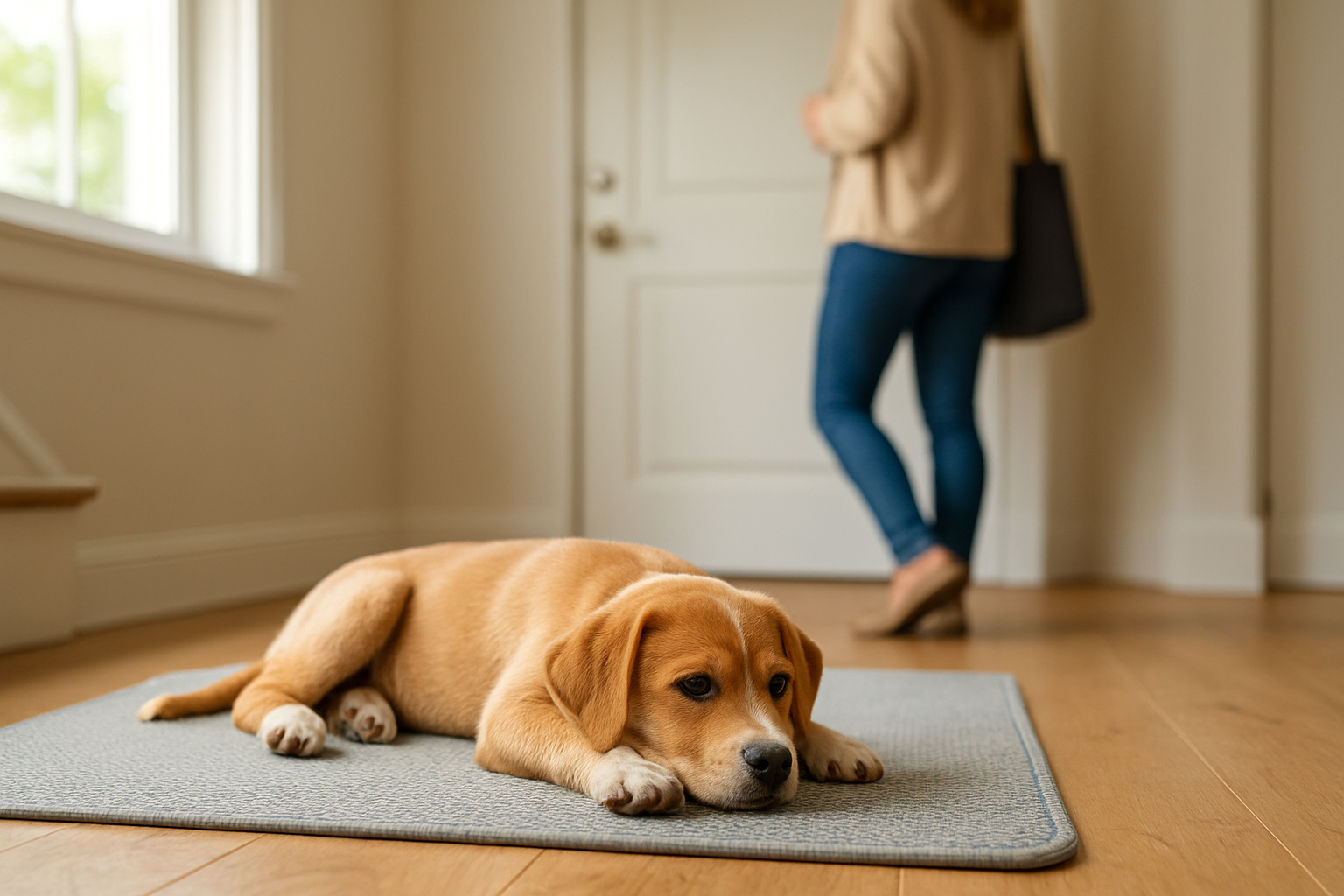
1. Prepare a safe, predictable setup
Before formal training, decide where your puppy will rest when you leave. The area should be comfortable, puppy-proofed, and free from hazards such as electrical cords, toxic plants, loose fabric, and objects that can be swallowed.
A crate may help some puppies settle, but it is not a universal solution. If your puppy panics in the crate, scratches at the door, bites the bars, or cannot relax, use a puppy-proofed room or exercise pen while you build comfort gradually. Never use confinement as punishment.
Gather the basics
- A comfortable bed or washable mat.
- Fresh water in a stable, spill-resistant bowl.
- A safe food puzzle or chew that your puppy already uses appropriately.
- A consistent departure area away from dangerous household traffic.
- A camera if you need to observe behavior after leaving the room; see these pet cameras with two-way audio for features to compare.
Give food toys only when you can confirm they are suitable for your puppy’s age, chewing style, and supervision level. Remove anything that breaks into small pieces or becomes a choking risk.
2. Teach calm independence while you are home
Separation training works better when your puppy learns that relaxation does not always require physical contact. Start during a quiet part of the day, after toileting and age-appropriate play, but before your puppy is overtired.
Place a mat a short distance from you. When your puppy lies down, looks relaxed, or quietly engages with a toy, place a treat on the mat. Avoid repeatedly calling the puppy back if they move away; the aim is to make independent settling rewarding.
Next, stand up, take one step away, and return while your puppy remains calm. Repeat several times. Then try sitting farther away, moving behind a chair, or briefly stepping into an adjoining room. Keep each practice session short and stop after several successful repetitions.
Checkpoint: Your puppy should be able to remain relaxed for the current exercise without constant whining, rushing after you, scratching, or abandoning the activity. If those signs appear, make the next repetition easier.
3. Build alone time in small, measurable steps
Once your puppy can settle while you move around the home, begin planned exits. Open and close the door without leaving, then step outside for a few seconds and return calmly. The correct starting point may feel surprisingly brief.
Change only one difficulty factor at a time. For example, increase the duration while keeping the same door, or use a different door while returning to a shorter duration. Practice at varied times so your puppy does not learn that one specific cue always predicts a long absence.
Use a simple training record with the date, duration, behavior, and recovery time. A practical progression might look like this:
Training comparison: choose the next step based on your puppy’s observable response.
| What to look for | Suggested next action | Warning sign |
|---|---|---|
| Quiet body, relaxed breathing, calmly using a toy | Repeat the same duration, then add a small amount of time | Do not make a large jump just because one repetition went well |
| Brief glance at the door followed by settling | Keep the duration unchanged and reward calm recovery | Repeated pacing or persistent door watching |
| Whining, barking, frantic movement, or scratching | Return to a shorter absence that remains calm | Continuing the exercise may strengthen panic rather than independence |
| Destructive chewing or escape attempts | End unsupervised practice and review safety and supervision | Injury risk, damaged teeth, broken barriers, or swallowed material |
There is no reliable universal timetable. Progress depends on age, temperament, previous experiences, household routine, and whether distress has already become established. A successful shorter session is more useful than a longer session that ends in panic.
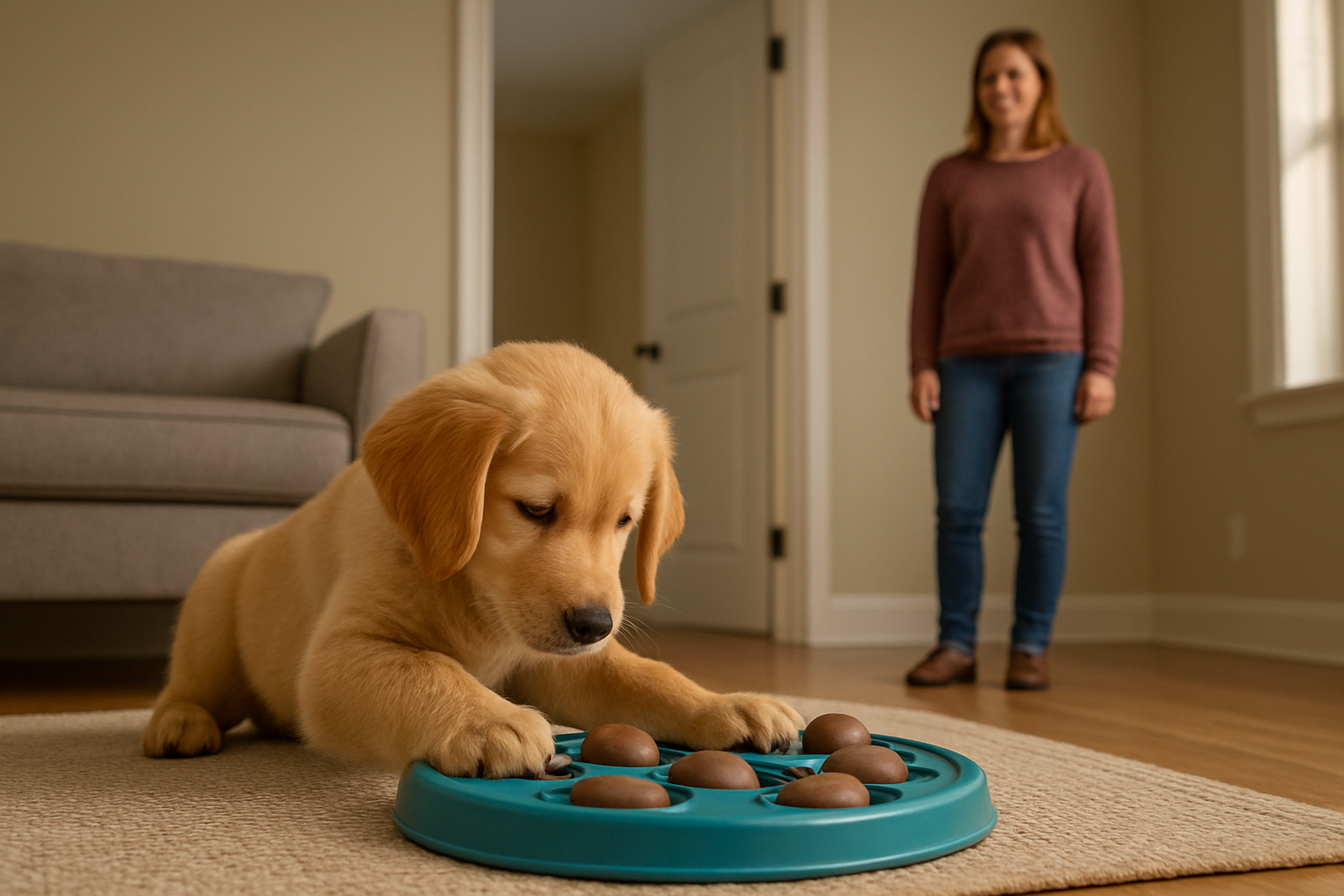
4. Make departures and returns deliberately boring
Long emotional goodbyes can make the doorway more significant, although they are not the sole cause of separation anxiety. Use a calm routine: provide the puppy’s safe activity, check that the area is secure, and leave without repeated reassurance.
When you return, wait for a brief moment of calm before starting an interaction if your puppy is jumping, barking, or frantic. This does not mean ignoring genuine distress or withholding comfort. It means making quiet behavior part of the normal arrival pattern.
Practice departure cues separately. Pick up your keys, put on a coat, or open the door, then remain home. Repeat these exercises without always leaving so those signals become less predictive.
5. Meet physical and mental needs without creating dependence
A puppy is more likely to settle after appropriate toileting, movement, social contact, and rest. However, exhausting a puppy is not a substitute for anxiety training. Overstimulation and sleep deprivation can make settling harder.
- Offer age-appropriate play and short training sessions.
- Allow time for toileting before an absence.
- Provide a calm wind-down period rather than leaving immediately after rough play.
- Keep meals, naps, and departures reasonably predictable.
- Continue gentle socialization so the puppy does not depend on one person for every activity.
Reward your puppy for choosing to rest away from you during ordinary household activities. You can also practice independent activities while you read, work, or prepare food, not only when you are about to leave.
6. Adjust the plan when your puppy struggles
What if the puppy cries as soon as you leave?
First, check whether the starting duration was too difficult. Return to staying behind a baby gate, stepping out of sight for one or two seconds, or touching the door without exiting. If crying continues at every distance, stop extending the exercise and seek guidance from a qualified behavior professional or veterinarian.
What if the puppy ignores the food toy?
Stress can reduce appetite. Do not interpret an untouched treat as stubbornness. Make the absence shorter, use a familiar activity, and confirm that the toy is easy enough to use. If your puppy accepts food when alone but shows other signs of panic, continue to judge the whole body and behavior rather than appetite alone.
What if progress suddenly goes backward?
Temporary setbacks can follow a move, illness, schedule change, frightening event, or an absence that was too long. Reduce the difficulty for several sessions, restore predictable routines, and arrange temporary care if necessary. A camera can help identify the exact point at which distress begins, but two-way audio should not be used to repeatedly call a panicking puppy unless a professional has advised it.
7. Avoid common training mistakes
- Starting with a long absence: Build duration from a level your puppy can handle.
- Waiting for a full meltdown: Early pacing, panting, scanning, and repeated vocalizing are useful warning signals.
- Using the crate as a cure: Confinement can increase fear if the puppy is not already comfortable there.
- Changing several variables at once: Keep notes so you know what caused a setback.
- Relying only on exercise: A tired puppy may still be distressed when alone.
- Punishing damage or accidents: Punishment after the event cannot teach calm separation and may increase fear.
8. Use this separation-training checklist
- Has your puppy toileted and had a suitable chance to move and settle?
- Is the area secure, comfortable, and free from chewable hazards?
- Can your puppy relax while you move around the home?
- What is the longest duration that has remained calm recently?
- Are you increasing time in small steps?
- Have you recorded early signs of stress rather than only barking?
- Do you have a backup caregiver for absences longer than your puppy can currently manage?
9. Know when professional support is needed
Contact a veterinarian if your puppy shows self-injury, repeated escape attempts, heavy drooling, vomiting, severe distress, refusal to eat, or sudden behavior changes. Medical problems can affect behavior, and a veterinarian can help rule out health contributors.
For persistent separation-related distress, choose a qualified force-free trainer or veterinary behavior professional who can create a gradual plan. Until then, avoid repeatedly leaving the puppy beyond their coping ability when you can arrange alternatives such as a trusted sitter, family member, or suitable daycare.
10. Take the next practical steps today
Today, puppy-proof the rest area, identify one safe enrichment option, and observe how long your puppy can settle while you remain nearby. Tomorrow, repeat a calm exercise at the same level rather than testing a dramatic increase.
After several successful sessions, add a very short exit and record the result. If your puppy remains relaxed, continue gradually. If distress appears, reduce the duration immediately. The most effective answer to how to prevent separation anxiety in a puppy is consistent practice below the panic threshold, supported by safe management and professional help when progress stalls.