The best dog nail grinders for nervous dogs are usually quiet, low-vibration models with gradual speed control and a shape you can hold steadily. The right tool can make nail care more manageable, but the grinder itself will not replace calm preparation and slow desensitization.
This guide is based on general canine grooming and handling principles, plus observable grinder features that can be compared before purchase. It does not claim personal testing, clinical validation, or a universal ranking of specific products. Use it to decide which specifications matter for your dog and when professional grooming is the safer choice.
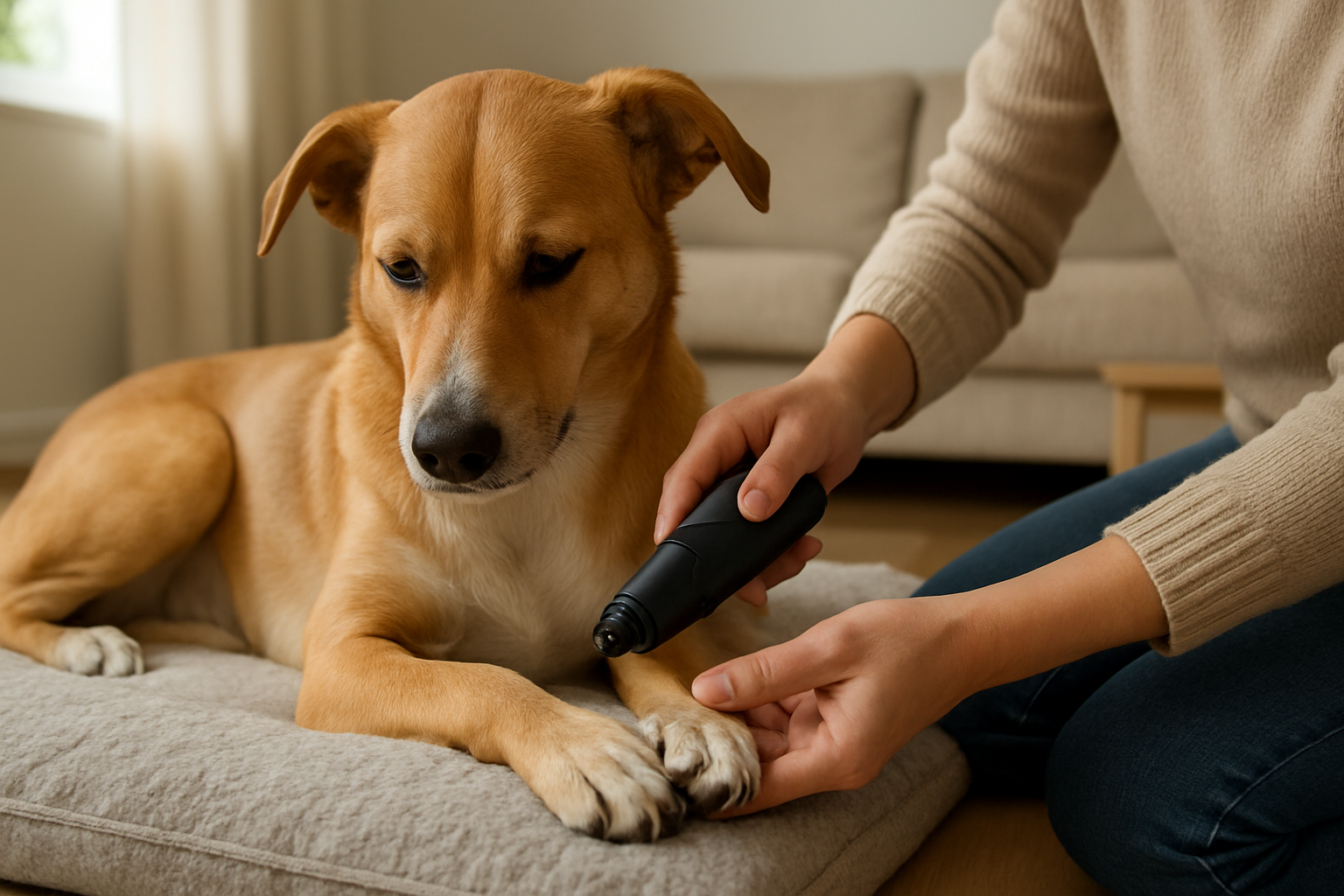
1. Start with your dog’s actual tolerance
“Nervous” can mean several different things. Some dogs dislike the sound of a motor, while others react to paw handling, vibration, restraint, or the sensation of pressure on a nail. Identifying the trigger helps you choose a tool and training plan that fit the problem.
Watch your dog during ordinary paw contact. Turning away, pulling the leg back, lip licking, trembling, hiding, panting, growling, or trying to escape are signs that the process is becoming too difficult. Do not force a session through escalating distress; fear can become more firmly associated with nail care.
Check the nails before choosing a tool
- Very long nails may need an initial trim from a veterinarian or experienced groomer.
- Thick nails often benefit from a grinder that offers controlled power without requiring heavy pressure.
- Dark nails require smaller, more cautious reductions because the quick is harder to see.
- Cracked, bleeding, swollen, or painful nails should be assessed before routine grooming.
Dogs that already struggle with handling may also benefit from broader cooperative-care training. For general behavior practice, you may find our guide on teaching a dog to walk beside you useful for building calm, reward-based responses in other situations.
2. Compare the features that affect nervous dogs
A grinder’s advertised power is less useful than the control it gives you. Look for features that let you make small adjustments, keep the tool stable, and finish a short session before your dog loses confidence.
The table below summarizes practical buying criteria. Manufacturer descriptions may use different terms, so check the manual and return policy where available rather than assuming that one label guarantees quiet operation.
Use these criteria when comparing dog nail grinders:
| What to look for | Why it matters | Warning sign |
|---|---|---|
| Multiple speed settings | Allows a slower start and more controlled contact | Only one fast setting with no clear control |
| Low-noise design | May be less startling during introduction | Sound is described vaguely without operating details |
| Low vibration or balanced body | Helps reduce an unfamiliar sensation in the paw | The tool shifts noticeably when running |
| Non-slip, manageable grip | Supports steady handling and short sessions | Bulky body that makes precise contact difficult |
| Protective guard or opening | Can help limit the amount of nail exposed to the grinding surface | Guard blocks your view or makes positioning awkward |
| Rechargeable battery and simple controls | Reduces cord management during training | Controls are easy to press accidentally |
| Replaceable or cleanable grinding parts | Supports routine maintenance and hygiene | Parts cannot be cleaned according to the instructions |
Noise and vibration deserve separate attention
A quiet motor may help, but “quiet” is not a standardized performance guarantee. A dog can tolerate a low-volume sound poorly if the vibration is strong, while another dog may ignore vibration but react to the motor’s pitch. If possible, review operating demonstrations from reliable retailers, but treat them as indicative rather than proof of performance in your home.
3. Choose control over speed
For a nervous dog, a grinder that removes material quickly is not automatically better. You need to touch the nail briefly, inspect the result, and pause often. A slower setting can make it easier to avoid heat buildup and accidental over-grinding.
Use a narrow contact area and light pressure. Grinding continuously in one spot can create heat, so make short passes and check the nail frequently. Follow the manufacturer’s instructions for the attachment, cleaning, charging, and safe operating time.
Guarded openings can be helpful for beginners, but they are not a substitute for watching the nail. If the guard makes the nail hard to see, use extra caution or choose a design that offers better visibility.
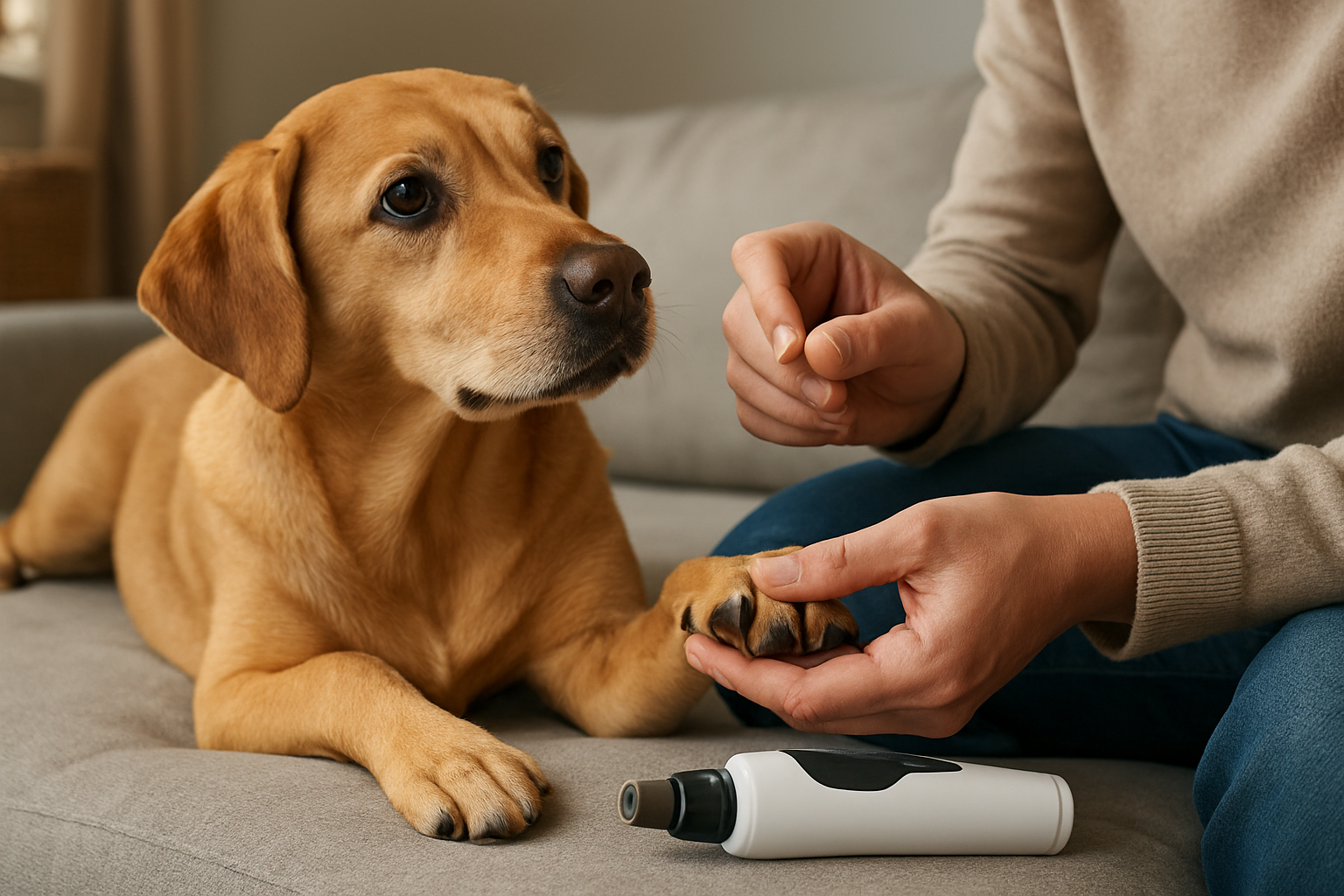
4. Introduce the grinder in small stages
Training is part of selecting the best dog nail grinder for nervous dogs. Begin when your dog is relaxed, preferably away from the usual grooming struggle. Reward calm behavior and end each stage while your dog is still coping well.
- Place the switched-off grinder nearby and reward your dog for looking at it.
- Touch the handle to the shoulder or leg without turning it on, then reward and release.
- Run the grinder several feet away for a moment, followed by a treat or another calm reward.
- Gradually reduce the distance over separate sessions if your dog remains relaxed.
- Touch the running tool briefly to a shoulder or paw area without grinding a nail.
- Grind only a tiny amount from one nail, then stop and reward.
There is no requirement to finish every nail in one session. One nail today may be more useful than ten nails followed by a fearful struggle. If your dog stops accepting treats, freezes, or attempts to flee, return to an easier stage later.
5. Use safe handling and a realistic routine
Choose a stable position that lets your dog move away without becoming trapped. Some dogs do better standing on the floor, while others relax on a mat. Avoid twisting a leg, tightly restraining the body, or holding the paw for longer than necessary.
- Keep the grinder and rewards ready before bringing your dog over.
- Work in bright light so you can inspect each nail.
- Take frequent pauses and offer rewards for stillness, not only for completed nails.
- Keep fur away from moving parts and follow the tool’s safety instructions.
- Stop if the nail becomes hot, the dog shows pain, or the tool behaves abnormally.
Regular small maintenance is generally easier than waiting until nails become very long. The correct interval varies with nail growth, walking surfaces, activity, and the individual dog, so monitor the nails rather than following a rigid calendar.
6. Know when a grinder is not the right answer
A grinder may be unsuitable if your dog panics at the motor, has a painful paw, or cannot remain still even for a brief touch. Some dogs accept quiet clippers more readily; others need professional cooperative-care support before any tool can be used safely.
Contact a veterinarian if there is persistent lameness, bleeding that does not stop with gentle pressure, swelling, discharge, a badly split nail, or clear pain. A qualified groomer can also help with technique, but medical concerns should be handled by a veterinary professional.
Action checklist before you buy
- Identify whether sound, vibration, paw handling, or restraint is the main trigger.
- Prioritize adjustable speed and a stable, non-slip grip.
- Check whether the nail remains visible during use.
- Look for clear cleaning, charging, and attachment instructions.
- Confirm that the design is suitable for your dog’s nail thickness and size.
- Plan several short introduction sessions before attempting a full manicure.
- Check the seller’s returns and replacement-part policies when those details are available.
Common buying mistakes
- Choosing the fastest model: Speed can reduce session length, but it may also reduce your margin for error.
- Trusting “silent” wording: Treat noise claims as comparative marketing unless measurable conditions are provided.
- Ignoring ergonomics: A tool that is difficult for you to hold steadily can make a nervous dog more unsettled.
- Assuming a guard makes the tool risk-free: You still need visibility, light pressure, and frequent checks.
- Starting with a full grooming session: Desensitization usually works better in brief, repeatable steps.
What if your dog still refuses the grinder?
Pause grinder training for a day or more and return to rewarding ordinary paw contact. You can also work on the sound separately by turning the device on in another room, provided your dog remains calm. Do not increase the intensity simply because progress is slow.
If fear includes snapping, intense escape attempts, or inability to recover after the session, ask your veterinarian about a behavior referral. A force-free trainer with experience in cooperative care may help you build a safer plan.
Next actions
First, inspect the nails and identify your dog’s specific trigger. Next, compare grinders for speed control, handling, visibility, noise, and vibration rather than choosing by power alone. Finally, schedule short practice sessions and arrange professional help if the nails are painful, severely overgrown, or impossible to handle safely.
The best dog nail grinders for nervous dogs are conditional choices: a quiet, controllable grinder may suit a dog that dislikes clippers but can learn to tolerate vibration. For a dog whose fear remains high, the best option may be gradual training, a different grooming tool, or professional care rather than a more powerful device.