The best stainless steel cat water fountains are the ones you can clean thoroughly, keep filled safely, and operate quietly enough that your cat will actually use them. Stainless steel can be a practical choice for households concerned about odor, staining, or scratched plastic, but the material alone does not guarantee good hygiene or reliable performance.
This guide uses manufacturer information, veterinary hydration guidance, and current product-category comparisons rather than personal testing. You will learn which features matter, where stainless steel fountains still use plastic, how to compare common designs, and which buying mistakes can make an apparently convenient fountain difficult to maintain.
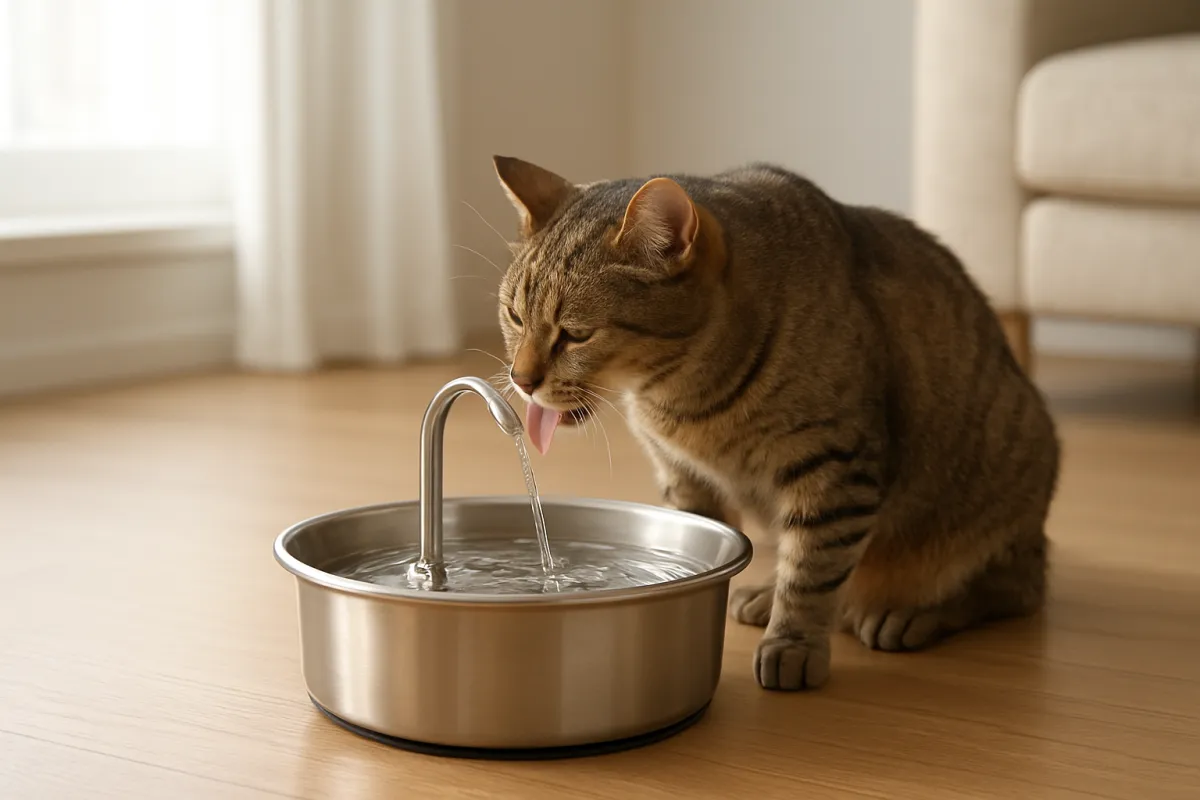
1. Decide whether a fountain is appropriate for your cat
A fountain is an option, not a requirement. Some cats prefer still water in a wide bowl, while others show interest in dripping taps or moving water. Veterinary guidance from VCA Animal Hospitals lists a water fountain as one possible way to encourage drinking, alongside offering clean bowls, wet food, and other safe hydration strategies.
Hydration needs vary with diet, activity, weather, age, and health. Cornell’s feline hydration guidance also notes that wet food and adding water to food can contribute to intake. A fountain should therefore support your cat’s routine, not replace veterinary care or be treated as a solution for a cat that suddenly drinks much more or much less.
- A fountain may fit if your cat prefers running water, ignores ordinary bowls, or you want water circulating between refills.
- A bowl may be better if your cat is frightened by motor noise, knocks over fountains, or you cannot commit to regular pump and filter cleaning.
- Use both if practical. A separate, clean water bowl gives your cat an alternative if the pump stops or the fountain becomes empty.
2. Understand what “stainless steel” really means
Product listings often describe a fountain as stainless steel even when only the upper drinking tray is metal. The reservoir, pump housing, filter holder, lid, or water-level window may still be plastic. That is not automatically a problem, but you should identify which parts touch water and which parts you can remove for cleaning.
A stainless steel drinking surface is useful because it is nonporous and generally easier to scrub than scratched plastic. However, grime can still collect around the pump, beneath the filter tray, inside tubing, and in narrow seams. A metal top cannot compensate for inaccessible internal parts.
Look for clear product documentation that identifies the steel component and explains how the fountain comes apart. If the listing only says “stainless steel” without showing the underside, pump compartment, or filter assembly, treat the claim as incomplete rather than assuming the whole unit is metal.
3. Compare the features that affect everyday use
The most useful comparison is not the number of modes or the appearance of the stream. It is how the design affects refilling, cleaning, noise, filter cost, and your cat’s willingness to drink.
Use the table below as a screening tool. A warning sign does not automatically disqualify a fountain, but it tells you what to investigate before buying.
Practical comparison criteria for stainless steel cat fountains
| What to look for | Why it matters | Warning sign |
|---|---|---|
| Stainless steel drinking tray | Provides a durable, nonporous surface that is straightforward to wash. | The listing uses “steel” only in the product title and does not identify the water-contact parts. |
| Removable pump | Allows hair, slime, and mineral deposits to be cleaned from the pump housing. | The pump is sealed into the base or the cleaning instructions are vague. |
| Accessible filter compartment | Makes filter replacement and rinsing less frustrating. | The filter is difficult to remove or has no clearly stated replacement model. |
| Low-water protection | Reduces the risk of the pump running dry when the level drops. | The manual warns that the pump must remain submerged but offers no visible level guidance. |
| Quiet, adjustable flow | Lets you reduce splashing and noise for cautious cats. | The stream is forceful, fixed, or likely to splash onto the floor. |
| Wide, stable footprint | Helps prevent tipping and gives whiskers more room around the drinking area. | The fountain is tall, narrow, lightweight, or easy to slide. |
| Replacement parts availability | Keeps the fountain usable after filters, pumps, or seals wear out. | Filters are sold only through an unclear seller or are already difficult to find. |
Filtration: useful, but not a substitute for cleaning
Most cat fountains use some combination of a mesh or foam pre-filter and activated carbon. These components can catch hair and larger debris or reduce some odors and tastes, but they do not make stagnant, dirty water safe indefinitely. A filter also needs to be rinsed or replaced according to the manufacturer’s instructions.
Check the recurring maintenance before you compare the initial purchase price. A fountain with inexpensive replacement filters and a pump that can be opened may be more economical over time than a cheaper-looking model with proprietary parts.
Noise and flow
Noise depends on water level, pump condition, placement, and whether the unit is sitting on a hard surface. Even a model advertised as quiet may become louder when water drops too low or mineral deposits affect the impeller.
Adjustable flow is helpful, but more streams are not necessarily better. A timid cat may prefer a calm surface, while another may investigate a gentle bubbling outlet. If your cat is sensitive to sound, place the fountain away from sleeping areas and use a rubber mat to reduce vibration.
4. Match capacity and design to your household
For one cat, a smaller fountain can be easier to lift, wash, and refill. A larger reservoir may reduce refill frequency, but it can also become heavy, occupy more floor space, and encourage you to delay cleaning because it still contains water.
Multi-cat homes need more than a large capacity number. Consider whether several cats can approach without blocking one another, whether the drinking surface is wide enough, and whether you can provide a second water station. A large unit is not a substitute for distributing resources in a busy household.
- Single-cat home: prioritize a compact, stable design that is easy to disassemble.
- Two or more cats: consider a larger basin, multiple access points, and a backup bowl or second fountain.
- Long-haired cats: look for a pre-filter that is easy to remove because loose hair can collect around pumps.
- Messy drinkers: choose a low, wide design with a splash-resistant rim and a washable mat underneath.
- Travel or outdoor use: verify power requirements and weather limitations; many indoor fountains are not designed for outdoor exposure.
5. Plan the cleaning routine before you buy
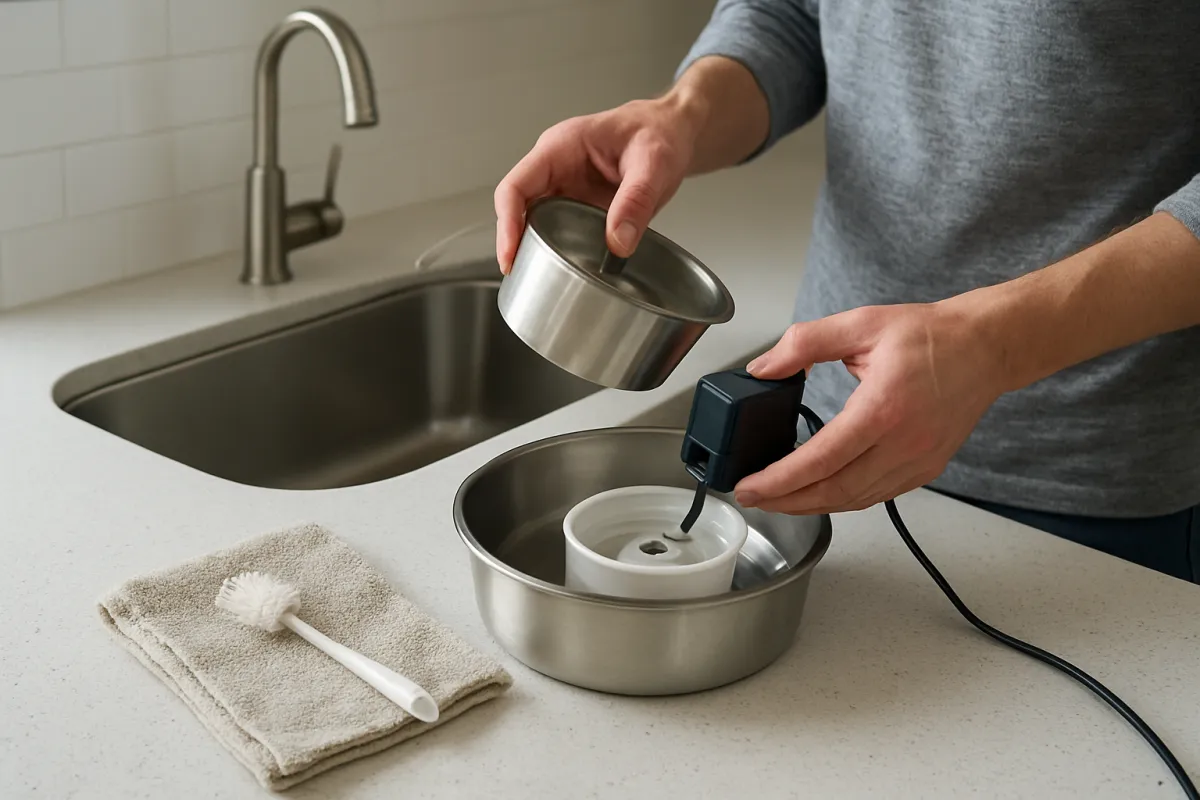
Cleaning effort is the deciding factor for many fountain purchases. If the fountain has narrow channels, hidden tubing, or a pump that cannot be opened, regular maintenance may become inconsistent. That can lead to slimy surfaces, unpleasant odor, reduced flow, and a cat that stops using the unit.
As a practical routine, empty and rinse the fountain frequently, wash the bowl and removable components with mild dish soap, and clean the pump according to the manual. Rinse away soap thoroughly. Replace filters when they are dirty, clogged, or due for replacement, and inspect the cord, seals, and impeller for wear.
Hard-water deposits may require a manufacturer-approved descaling method. Do not assume that every metal component can be soaked in every household cleaner. Avoid fragrances, disinfectants, or chemical residues that could remain in the drinking area.
The International Cat Care drinking guide emphasizes practical access to fresh water and notes that fountains still require proper care. In other words, moving water is not automatically clean water.
6. Compare common fountain styles
Open-basin fountains
These provide a visible pool and are often easy for a cat to understand. They can work well for cats that dislike drinking directly from a jet. The trade-off is that hair, litter dust, and food particles may be more visible and may reach the water more easily.
Free-falling stream fountains
A falling stream can attract cats that enjoy moving water and may offer several drinking positions. Check whether the stream height is adjustable and whether the design splashes. More exposed moving water can also increase the need to wipe the surrounding floor.
Flower or bubbler designs
These often provide gentle flow from a central outlet and may be visually compact. They can suit cats that prefer a low-pressure stream, but decorative parts may create extra crevices. Before purchase, confirm that the flower, nozzle, and pump cover can be removed and washed.
Cordless or sensor-operated fountains
Battery-powered models can be placed away from outlets and may reduce cord-related chewing risks. They introduce new maintenance questions, including charging, battery life, sensor reliability, and whether the pump can operate continuously when needed. Choose cordless operation for a specific placement problem, not simply because it sounds more advanced.
7. Consider alternatives before choosing the best model
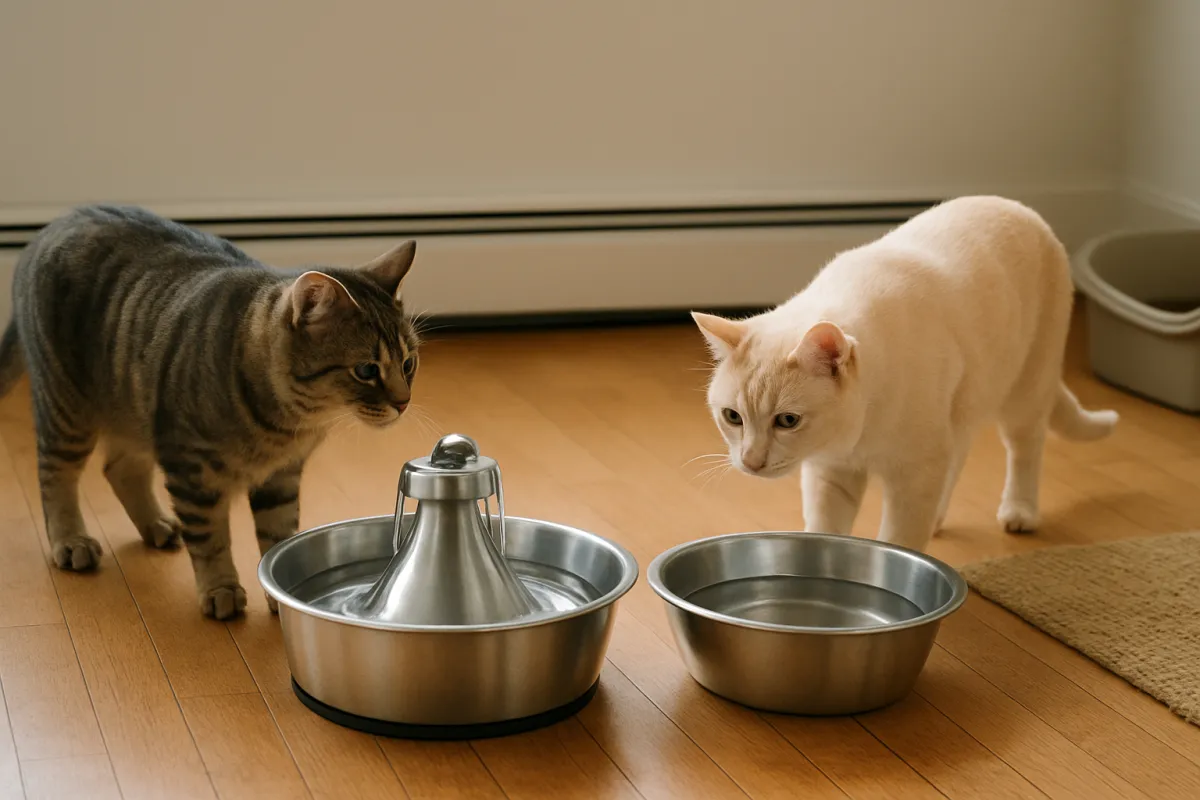
The best stainless steel cat water fountain is not necessarily the best hydration setup for every cat. A wide ceramic bowl may be quieter and simpler. A stainless steel bowl may provide the same material advantages without a pump, filter, or electrical component.
If you want circulating water but do not need a large unit, compare a compact fountain with two or three separate bowls. Multiple bowls can be useful in homes where cats guard resources, where one location is too busy, or where a fountain would be difficult to clean every few days.
For cats with diagnosed kidney disease, urinary disease, diabetes, vomiting, diarrhea, or other conditions affecting hydration, ask your veterinarian for individualized advice. A fountain may be supportive, but changes in drinking or urination should not be explained away as a preference issue.
8. Avoid common buying mistakes
- Buying by capacity alone: A large tank does not tell you how easy it is to clean or whether your cat will use the flow.
- Assuming stainless steel means plastic-free: Inspect the pump, filter holder, lid, and internal water path.
- Ignoring replacement filters: Confirm the correct filter type and whether it is regularly available in your market.
- Choosing the quietest advertised number: Noise claims may depend on water level and operating conditions.
- Placing it next to food or litter: Cats may avoid contaminated or crowded water locations. Use a calm, accessible area instead.
- Leaving a backup bowl empty: Any powered device can stop working, so maintain an alternative source of clean water.
- Overlooking the cord: Position cables safely and check for chewing, fraying, or water exposure.
9. What if your cat refuses the fountain?
Do not remove every familiar bowl immediately. Place the new fountain beside the existing water source while it is switched off, then allow your cat to investigate it without pressure. Once your cat is comfortable, activate the lowest or calmest flow setting.
Try a different location if the fountain is beside a noisy appliance, in a narrow passage, or close to the litter box. You can also test a bowl-shaped stainless steel design if your cat dislikes drinking from a narrow spout.
If your cat begins drinking dramatically more or less, urinates unusually often, strains, vomits, seems weak, or stops eating, contact a veterinarian promptly. A fountain should not delay evaluation of possible illness.
10. A practical buying checklist
- Is the drinking surface clearly identified as stainless steel?
- Can you remove and clean the pump?
- Are the filter holder and water channels accessible?
- Can you buy replacement filters and, if needed, a replacement pump?
- Does the capacity match the number of cats and your refill schedule?
- Is the base stable and wide enough for your cat’s drinking posture?
- Can the flow be reduced if your cat dislikes splashing?
- Does the manual explain low-water operation and cleaning?
- Can you place it safely near an outlet without exposing the cord to water or chewing?
- Will you keep a clean backup bowl available?
Next actions: choose by maintenance, not marketing
Start by observing how your cat drinks from existing bowls or taps. Then measure the available floor space, decide how often you can realistically clean the unit, and compare only fountains with clear instructions for pump access and replacement filters.
For more pet-care decision guides, visit the LaokPet homepage. If long hair is likely to affect the surrounding area, see how to remove pet hair from furniture. Households with several cats may also benefit from reviewing automatic litter box considerations for multi-cat homes.
Final verdict
The best stainless steel cat water fountains are the models that combine a genuinely stainless drinking surface with accessible cleaning, dependable replacement parts, stable placement, and a flow your cat accepts. Stainless steel is a sensible starting point for durability and routine hygiene, but the pump, filter system, and cleaning design matter just as much.
Choose a fountain if it solves a clear problem in your home and you are prepared to maintain it. If your cat prefers still water or you cannot clean a pump regularly, a high-quality stainless steel bowl may be the more reliable choice.