The best dog cooling mat for hot weather depends on where your dog rests and how they use it. For most indoor dogs, a pressure-activated or water-activated mat is the simplest choice. For outdoor use, an elevated cot with breathable fabric usually provides better airflow than a flat mat.
Cooling mats can make a resting area more comfortable, but they do not prevent heatstroke on their own. This guide compares practical options by cooling method, size, cleaning, durability, and placement so you can choose the right type for your dog’s routine.
1. Decide what kind of cooling your dog actually needs
A dog cooling mat is usually a passive heat-transfer product. It may absorb body heat, use water to create a cooler surface, or raise your dog above a warm floor so air can circulate underneath. None of these methods actively refrigerates the surrounding air.
Start with the location. A mat for a tiled kitchen floor has different requirements from one used on a shaded patio, in a travel crate, or at a campsite.
- Indoor naps: A flat gel or water-activated mat is usually easiest.
- Outdoor resting: An elevated cot can reduce contact with hot ground and improve airflow.
- Travel: Look for a lightweight design that folds or rolls without needing a freezer.
- Chewers or scratchers: Favor sturdy fabric, protected seams, and replacement parts over thin gel-filled products.
- Older dogs: Consider entry height and stability before choosing a tall cot.
Dogs at higher risk from heat include puppies, senior dogs, overweight dogs, dogs with health conditions, and short-nosed breeds. The American Kennel Club explains that heatstroke can develop quickly and that heavy panting, drooling, red gums, weakness, vomiting, or collapse require urgent action. See the AKC heatstroke guidance and AAHA’s heatstroke safety advice for warning signs and emergency steps.
2. Compare the best dog cooling mats for hot weather
The ranking below is based on practical design rather than a claimed laboratory performance result. I prioritized a clear cooling mechanism, sensible placement requirements, cleaning needs, portability, and suitability for different dog sizes and habits. Product specifications can change, so check the manufacturer’s current instructions before buying.
Comparison table: cooling method, best use, and main limitation
| Rank | Product | Cooling method | Best for | Warning sign or limitation |
|---|---|---|---|---|
| 1 | Green Pet Shop Cool Pet Pad | Pressure-activated gel | Indoor use without water or electricity | Works best in shade or a temperature-controlled room |
| 2 | K&H Coolin’ Pet Pad | Water-activated cooling layer | Portable indoor or shaded outdoor use | Hand-cleaning required; carpet may reduce effectiveness |
| 3 | K&H Coolin’ Pet Cot | Raised cot with cooling center | Large dogs and airflow-conscious homes | Needs assembly and a level location |
| 4 | Coolaroo Original Elevated Dog Bed | Breathable elevated fabric | Outdoor areas and dogs that dislike soft mats | It is an airflow bed, not a cold gel mat |
| 5 | K&H Cool Bed III | Water-filled cooling bed | Dogs that prefer a cushioned flat bed | Check for leaks and follow filling instructions |
| 6 | K&H Coolin’ Pet Pad | Water-activated pad | Budget-conscious owners needing multiple pads | Does not replace shade or air conditioning |
| 7 | A simple elevated mesh cot | Airflow beneath the dog | Chewers and hot outdoor surfaces | May be less comfortable for dogs wanting soft padding |
3. Green Pet Shop Cool Pet Pad: best overall flat cooling mat
Best for: Indoor dogs that want a ready-to-use cooling surface.
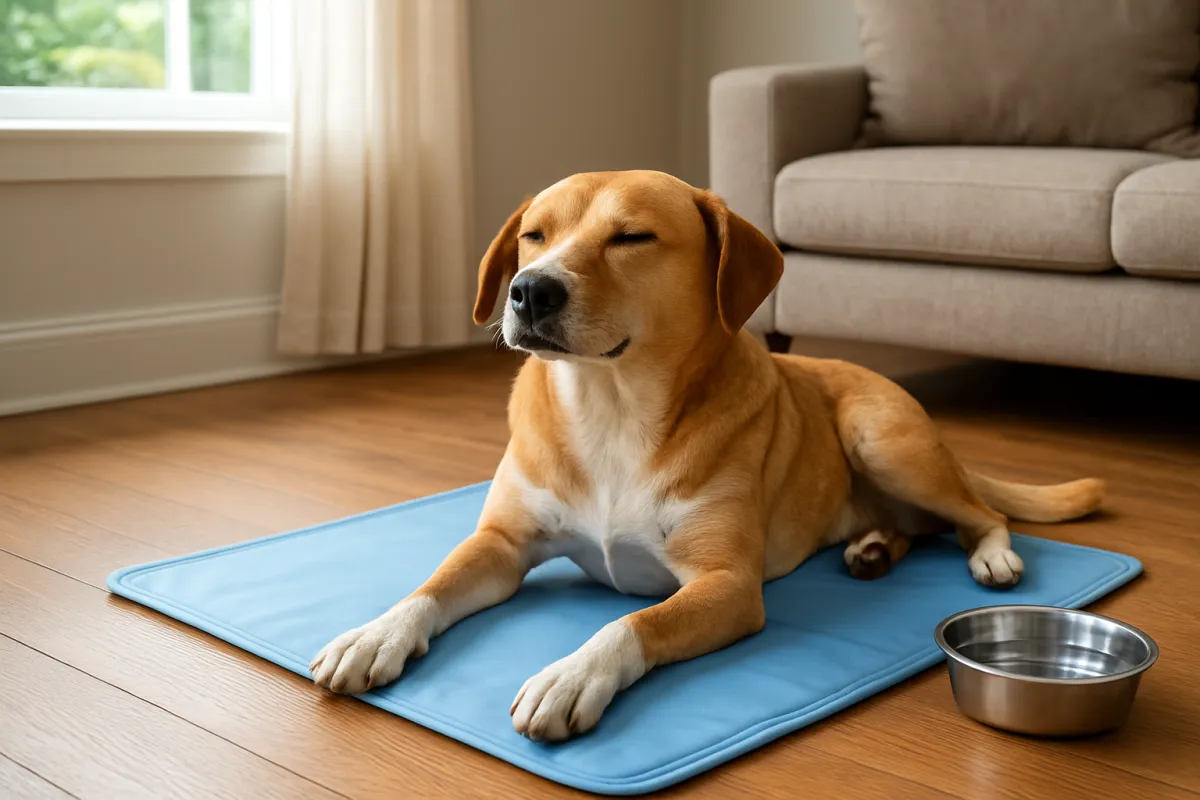
The Green Pet Shop Cool Pet Pad uses pressure-activated cooling, so your dog activates it by lying down. The manufacturer says it does not require water, refrigeration, or electricity. That makes it convenient for a living room, bedroom, crate area, or travel setup where you do not want a damp or heavy mat.
The main qualification is placement. The manufacturer advises against direct sunlight and hot air because the pad works by absorbing heat from the warmer source. In practice, place it on a hard, shaded surface rather than in a sunny yard or on heat-trapping carpet. Review the manufacturer’s Cool Pet Pad details for current sizes and care instructions.
Why it ranks first: It has a simple setup, no freezer dependency, and a familiar flat-mat shape. It is less suitable for determined chewers or dogs that prefer an elevated bed.
4. K&H Coolin’ Pet Pad: best water-activated travel pad
Best for: Owners who want a lightweight pad that can be used indoors, outdoors in shade, or on trips.
The K&H Coolin’ Pet Pad is activated with water and is available in several sizes. It can be placed directly on a hard floor or on top of another bed, which gives you some flexibility when your dog changes resting locations during the day.
K&H specifically notes that carpet can hold heat and make the pad less effective. It also recommends hand-cleaning rather than machine washing. Those details matter if you plan to use it in a crate, on a rug, or during muddy outdoor trips. See the official K&H Coolin’ Pet Pad information before selecting a size.
Limitation: It is not a good reason to leave a dog outside in high heat. Use it only in a shaded, ventilated place with access to water.
5. K&H Coolin’ Pet Cot: best raised cooling option
Best for: Large dogs, warm rooms, patios, and dogs that benefit from airflow below their body.
The Coolin’ Pet Cot combines a raised frame with a cooling center. K&H lists approximately seven inches of ground clearance on this model and describes the frame and cover as suitable for indoor or outdoor use. The raised design can also reduce contact with hot flooring.
This is more furniture-like than a roll-up mat. You need enough space for the frame, a level surface, and a dog willing to step onto a raised bed. It is also important to keep it out of direct sunlight and stay within the manufacturer’s stated weight limit. The official product page provides current dimensions and setup information.
Why choose it: It is a strong fit when a flat mat warms up quickly or when your dog prefers a firm, elevated sleeping surface. It is less convenient than a pad for small apartments or frequent car travel.
6. Coolaroo Original Elevated Dog Bed: best for airflow and outdoor use
Best for: Dogs that rest on patios, porches, camping sites, or warm floors.
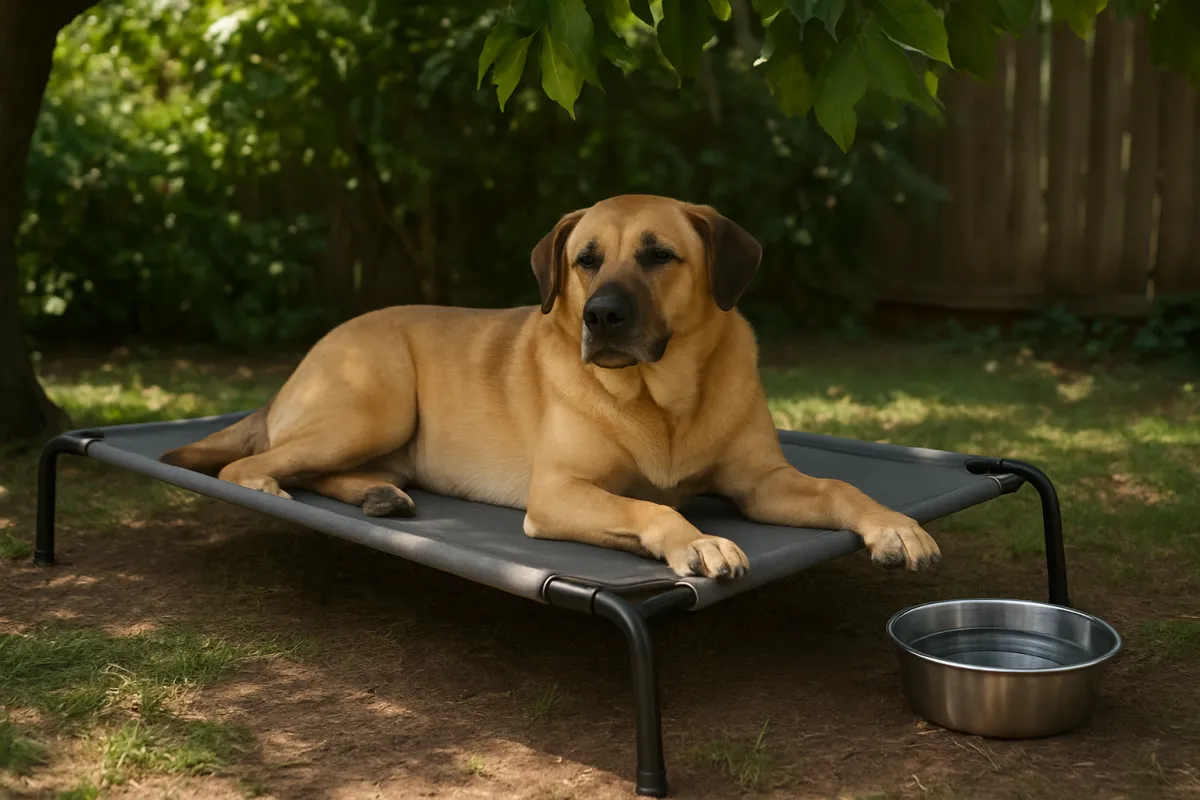
The Coolaroo Original Elevated Dog Bed uses breathable fabric stretched over a raised frame. Coolaroo lists an eight-inch elevation and describes the design as allowing air circulation around the dog. The bed can also keep your dog off hot ground, which is useful when a flat mat would sit directly on concrete or decking.
This is not a chilled surface in the same way as a gel pad. Its cooling advantage comes from airflow and reduced contact with the ground. That may be preferable for dogs that dislike the feel of gel or water-activated materials. Check the current Coolaroo product information for sizes and weight guidance.
Limitation: A raised bed still needs shade. Metal, fabric, and flooring can become hot in direct sun, so placement matters more than the product category alone.
7. Other practical choices: water-filled beds, multi-mat setups, and mesh cots
K&H Cool Bed III
Best for: Dogs that like a cushioned flat bed and owners willing to fill and inspect a water-based product.
Water-filled beds can spread heat through a larger surface and may feel more like a conventional bed than a thin mat. They are worth considering when your dog refuses firmer gel pads. Before use, confirm how the bed is filled, where the cap sits, and how to identify damage.
A second cooling pad
Best for: Homes with more than one dog or dogs that move between rooms.
Two modest mats can be more useful than one oversized mat if your dog rests in different areas. Put one in the coolest indoor room and one in a shaded location, then remove any damaged product promptly.
A basic elevated mesh cot
Best for: Dogs that chew soft materials or need a washable outdoor resting surface.
A mesh cot has fewer cooling claims to evaluate: the dog is raised above the ground and air can move below. It may need a separate blanket or padded cover for comfort, but adding thick fabric can reduce airflow, so use only enough padding for your dog’s needs.
8. How to choose the right size, placement, and material
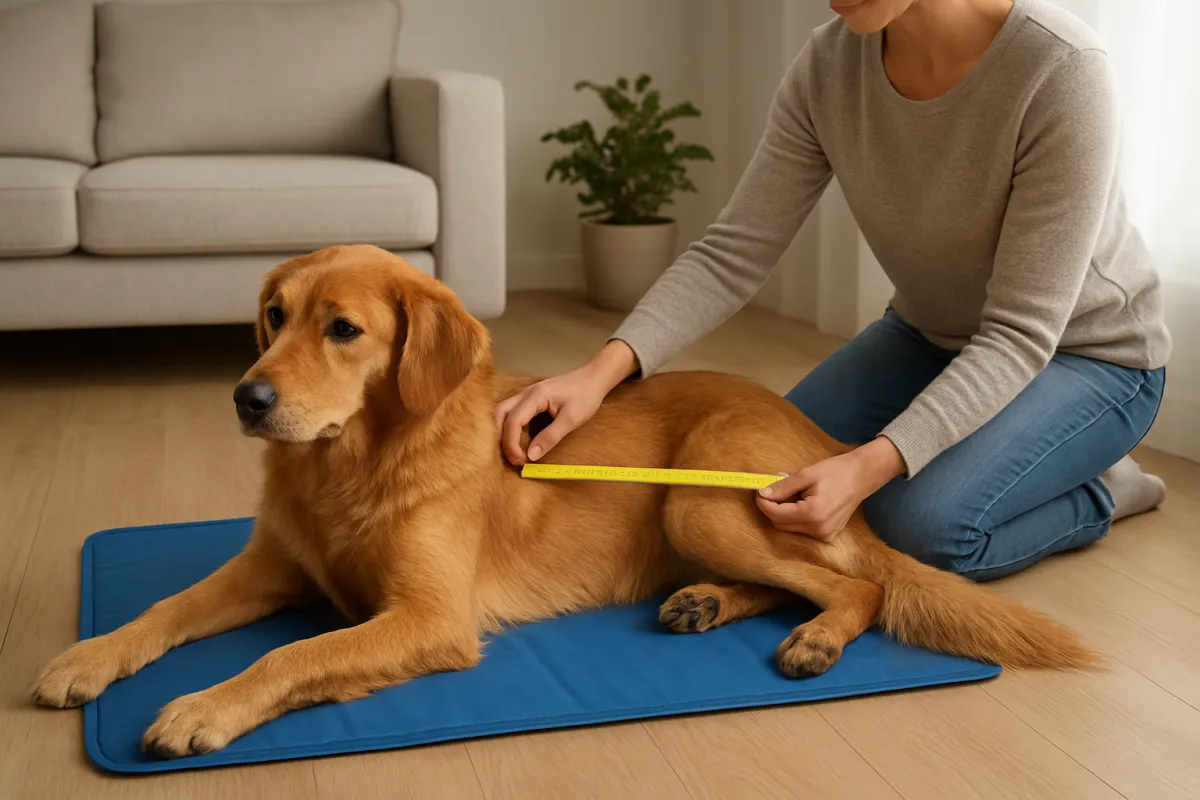
Your dog should be able to lie on their side with most of the body supported. Measure from nose to the base of the tail, then add room for stretching. If your dog changes position frequently, choose the next size up rather than matching the minimum listed dimensions.
- Hard floor: Usually a good base for a flat cooling pad.
- Carpet: May reduce heat transfer for some mats.
- Shade: Essential for outdoor use, even with an elevated bed.
- Ventilation: Use a fan or air conditioning for the surrounding room; do not rely on the mat alone.
- Inspection: Check seams, caps, fabric, and gel or water compartments regularly.
- Access: Keep fresh drinking water nearby and let your dog leave the mat whenever they want.
Do not force a dog onto a cooling mat. Some dogs prefer tile, a damp towel, or a raised mesh bed. The goal is to offer a cooler option, not to make the dog use a particular product.
9. Common mistakes when buying or using a cooling mat
- Choosing by advertised size only: Measure your dog’s stretched sleeping position.
- Putting a flat mat in full sun: Sunlight can heat the surface and shorten its useful cooling effect.
- Assuming “cooling” means cold: Most mats move heat toward the surrounding environment; they are not air conditioners.
- Using a damaged mat: Stop using it if your dog can reach filling material or if seams, caps, or surfaces fail.
- Leaving a dog unattended in extreme heat: A mat cannot make a hot car, shed, or enclosed porch safe.
- Shaving a double-coated dog to compensate: The AKC notes that a double coat can provide insulation, so discuss grooming changes with a qualified professional.
10. What if your dog still seems too hot?
Move your dog to a cool, ventilated or air-conditioned area and stop exercise. Offer room-temperature water if your dog is alert and able to drink. The AKC advises using cool or tepid water rather than extremely cold water while arranging veterinary care when heatstroke is suspected.
Heavy or frantic panting, excessive drooling, bright red or pale gums, weakness, vomiting, unsteadiness, tremors, collapse, or loss of consciousness are warning signs. Heatstroke is an emergency; contact a veterinarian immediately, even if your dog appears to improve after cooling.
11. A simple buying checklist
- Measure your dog while fully stretched out.
- Choose flat, water-activated, gel, or elevated construction based on location.
- Confirm whether the product needs water, refrigeration, assembly, or shade.
- Check cleaning instructions and inspectable failure points.
- Choose a tougher frame or fabric for chewers and scratchers.
- Place the mat near water and away from direct sun.
- Keep a second cooling location available if your dog moves around the home.
- Learn the signs of heatstroke before the hottest days arrive.
Final recommendation by scenario
For a general indoor recommendation, choose the Green Pet Shop Cool Pet Pad if you want a flat mat with no water or electricity. Choose the K&H Coolin’ Pet Pad when portability and water activation matter more. For a large dog or a warm patio, the K&H Coolin’ Pet Cot adds both elevation and a cooling center. For outdoor airflow, durability, and a dog that dislikes gel surfaces, choose the Coolaroo Original Elevated Dog Bed.
The best dog cooling mats for hot weather are helpful comfort tools, not heatstroke treatment. The safest setup combines a correctly sized resting surface with shade, fresh water, ventilation, sensible exercise timing, and prompt veterinary help whenever your dog shows signs of overheating.
For related comfort and safety decisions, you can also visit the LaokPet homepage, read about orthopedic dog beds for senior dogs, or review the guide to helping a dog stay calm during a thunderstorm.
Pingback: Best Dog Shampoos for Sensitive Skin: 7 Gentle Options and How to Choose – LaokPet
Pingback: French Bulldog vs Boston Terrier: Which Dog Is Right for You? – LaokPet