To make a cat carrier more comfortable, add secure padding, familiar smells, good ventilation, and enough room for your cat to sit, turn, and lie down naturally. Then help your cat use the carrier at home before expecting them to tolerate a car ride or veterinary visit.
A carrier can feel like a small safe room, but it can also become associated with noise, restraint, motion sickness, and unfamiliar places. The goal is not to fill it with accessories. It is to create a stable, clean, temperature-appropriate space that your cat recognizes as familiar and secure.
This guide explains how to improve the carrier itself, prepare your cat before travel, secure the carrier safely, and respond if your cat still shows signs of distress.
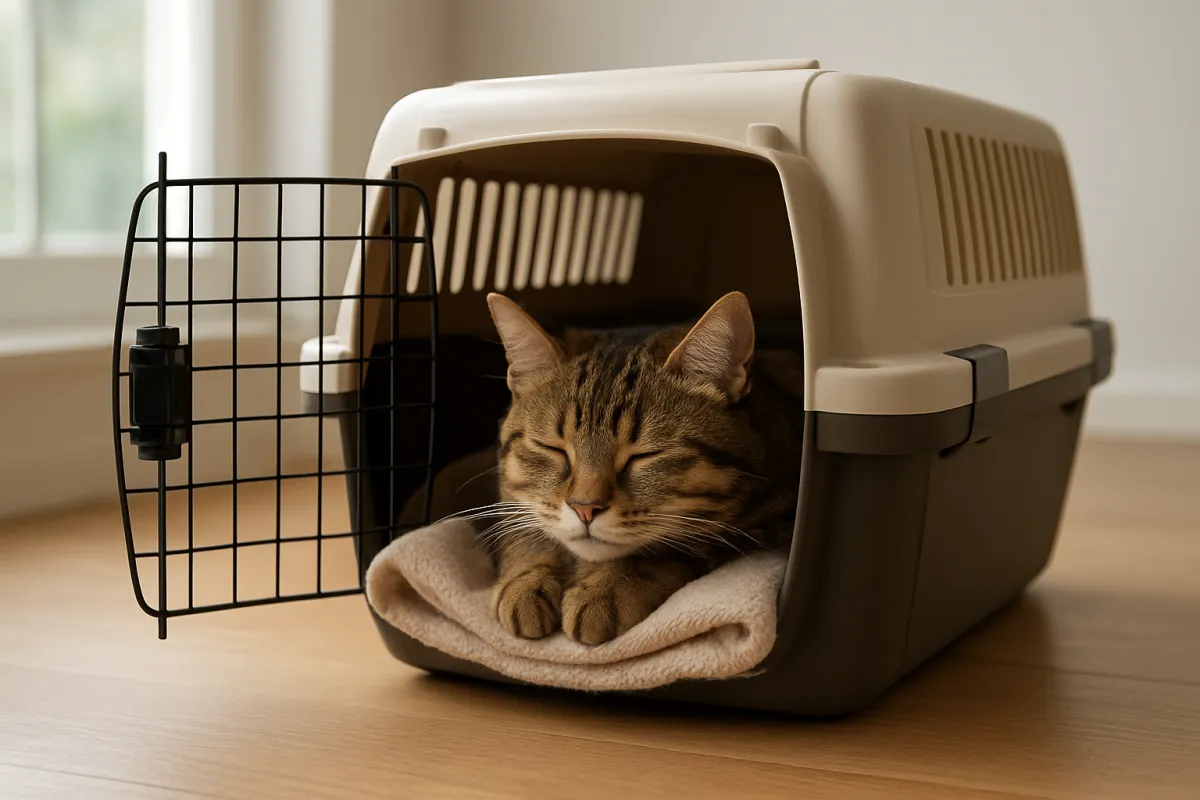
1. Check whether the carrier is suitable before adding comfort items
Soft bedding cannot compensate for a carrier that is unstable, cramped, poorly ventilated, or difficult to clean. Start by examining the carrier itself and decide whether it is appropriate for your cat and the type of journey planned.
Use the correct size
Your cat should be able to stand, sit, turn around, and lie down without being forced into one position. A carrier does not need to be large enough for your cat to walk around, but it should not press against the shoulders or prevent normal posture.
For a short veterinary trip, a compact carrier may be practical. For a longer journey, you may need additional space for water, absorbent bedding, or a small litter option. If you are flying, airline dimensions take priority, so check the current requirements with the airline before buying or modifying the carrier. The AVMA travel guidance also recommends planning around the specific needs of the journey.
Inspect the base, door, and ventilation
- Choose a firm base that does not flex significantly when lifted.
- Check that the door latches securely and cannot be pushed open by your cat.
- Look for ventilation on multiple sides, not just a few small openings at the front.
- Remove sharp edges, loose wires, broken clips, and damaged mesh.
- Confirm that the handle and shoulder strap can support the carrier without twisting.
A hard-sided carrier with a removable top can be useful for nervous cats because a veterinarian may be able to examine the cat in the lower half rather than pulling them out. Soft carriers can be lighter and more flexible, but they must not collapse against the cat or restrict airflow. Individual cats may prefer different designs, so observe whether your cat feels calmer in an enclosed or more open carrier. ([vcahospitals.com](https://vcahospitals.com/know-your-pet/cat-behavior-and-training-crate-training-and-travel?utm_source=openai))
Checkpoint: If the carrier rocks, smells strongly of cleaning chemicals, has damaged fasteners, or leaves your cat unable to change position, replace or repair it before focusing on accessories.
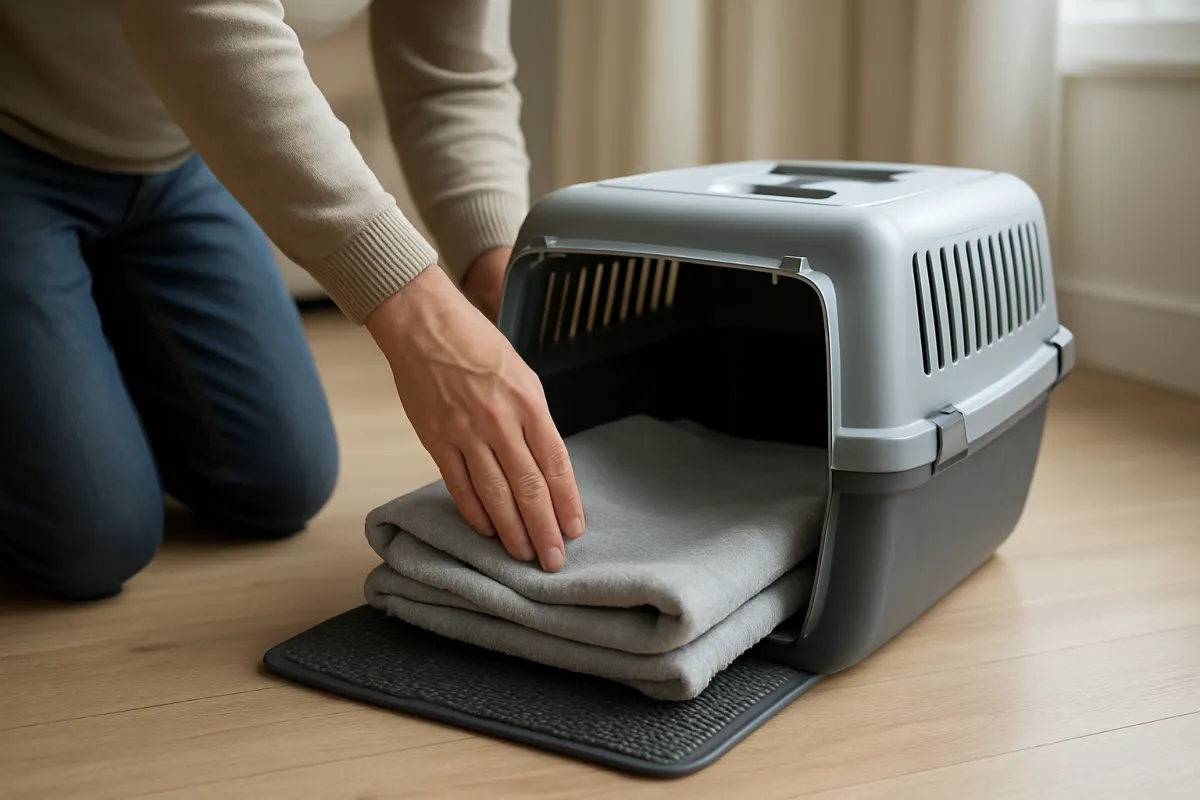
2. Build a comfortable, nonslip base
The base is usually the most important comfort improvement because movement, vibration, and sliding can make a cat feel less secure. Use a thin, washable layer that stays flat instead of a thick cushion that reduces usable space.
Layer the bedding in a practical order
- Place a waterproof liner or absorbent pad on the carrier floor.
- Add a thin nonslip mat or folded towel that fits the full base.
- Put familiar bedding on top, such as a small blanket or towel your cat already uses.
- Pack one spare towel or pad in a sealed bag for accidents.
A familiar item is often more useful than a brand-new plush bed because it carries the scent of home. Avoid loose bedding that bunches under your cat or blocks the door. If your cat is likely to vomit or urinate, prioritize absorbency and easy replacement over softness.
Do not add a collar, harness, dangling toy, or long strap inside the carrier unless your veterinarian has specifically advised it. These items can catch on the door or create a choking or entanglement hazard. A small, sturdy toy may be suitable for some cats, but only if it cannot be torn apart or swallowed.
Checkpoint: Lift the carrier gently and tilt it a little. The bedding should remain in place, and your cat should not slide toward the door. If it moves, add a fitted nonslip layer rather than stuffing in more fabric.
3. Add familiar smells without making the carrier overwhelming
Smell is an important part of a cat’s sense of security. A carrier that smells like home can be less alarming than one that smells like plastic, disinfectant, or another animal.
- Use a blanket, towel, or washable bed that your cat already sleeps on.
- Place the carrier near a familiar resting area before the trip.
- Avoid heavily scented detergents, perfumes, air fresheners, and essential oils.
- Clean accidents promptly, but rinse well so strong chemical odors do not remain.
If you use a synthetic feline pheromone product, follow the product label and allow the carrier or bedding to dry fully before placing your cat inside. Pheromone products may help some cats, but they are not a substitute for safe equipment or gradual acclimation. Veterinary behavior guidance commonly recommends familiar bedding and positive associations as part of carrier preparation. ([vcahospitals.com](https://vcahospitals.com/know-your-pet/cat-behavior-and-training-crate-training-and-travel?utm_source=openai))
4. Adjust privacy, light, and airflow for your individual cat
Some cats relax when they can see their surroundings. Others become more distressed when they watch people, dogs, traffic, or moving scenery. Test the carrier at home before travel and observe which setup produces calmer behavior.
For a cat that hides or startles easily, drape a lightweight towel over part of the carrier. Leave the ventilation openings clear and keep the door area visible enough to monitor breathing and posture. For a curious or social cat, cover less of the carrier but avoid placing it where constant movement will pass directly in front of the door.
| What to look for | Helpful adjustment | Warning sign |
|---|---|---|
| Cat watches everything and remains alert | Cover one or two sides while keeping airflow open | Repeated lunging at the door or frantic scratching |
| Cat hides, crouches, or trembles | Use familiar bedding and more visual privacy | Persistent escape attempts or heavy drooling |
| Cat overheats or pants | Increase airflow and keep the environment cool | Open-mouth breathing or weakness |
| Cat slides during movement | Add a fitted nonslip layer under the bedding | Repeated rolling or impact against the sides |
| Cat soils the carrier | Use an absorbent liner and carry spare bedding | Repeated vomiting, diarrhea, or marked lethargy |
Safety note: Never cover the carrier so completely that ventilation is reduced. Never leave a cat in a parked car, even if the windows are partly open. Heat and poor airflow can become dangerous quickly.
5. Make the carrier familiar before the day of travel
The most effective comfort improvement is often training rather than equipment. If the carrier appears only before a stressful appointment, your cat may learn to avoid it as soon as you bring it out.
- Leave the carrier open in a quiet part of the home.
- Place familiar bedding inside and reward any investigation.
- Put treats, toys, or part of a normal meal near the entrance.
- Move rewards gradually farther inside as your cat becomes willing to enter.
- Once your cat enters comfortably, briefly close the door and reopen it before anxiety begins.
- Progress to lifting the carrier, carrying it around the room, and returning it to the same safe place.
Keep sessions short and stop while your cat is still calm. Do not force your cat into the carrier for training, chase them around the home, or punish resistance. If your cat becomes frightened, return to an easier stage the next day.
Even an adult cat can learn a better association with the carrier. The process may take days or weeks depending on previous experiences, temperament, and whether travel has caused nausea or pain. ([vcahospitals.com](https://vcahospitals.com/pediatric/kitten/behavior-training/tips-for-traveling-with-stressed-cats?utm_source=openai))
Checkpoint: Your cat is ready to progress when they enter voluntarily, take treats or food, and remain relaxed for a short period with the door closed.
6. Secure the carrier and reduce movement during transport
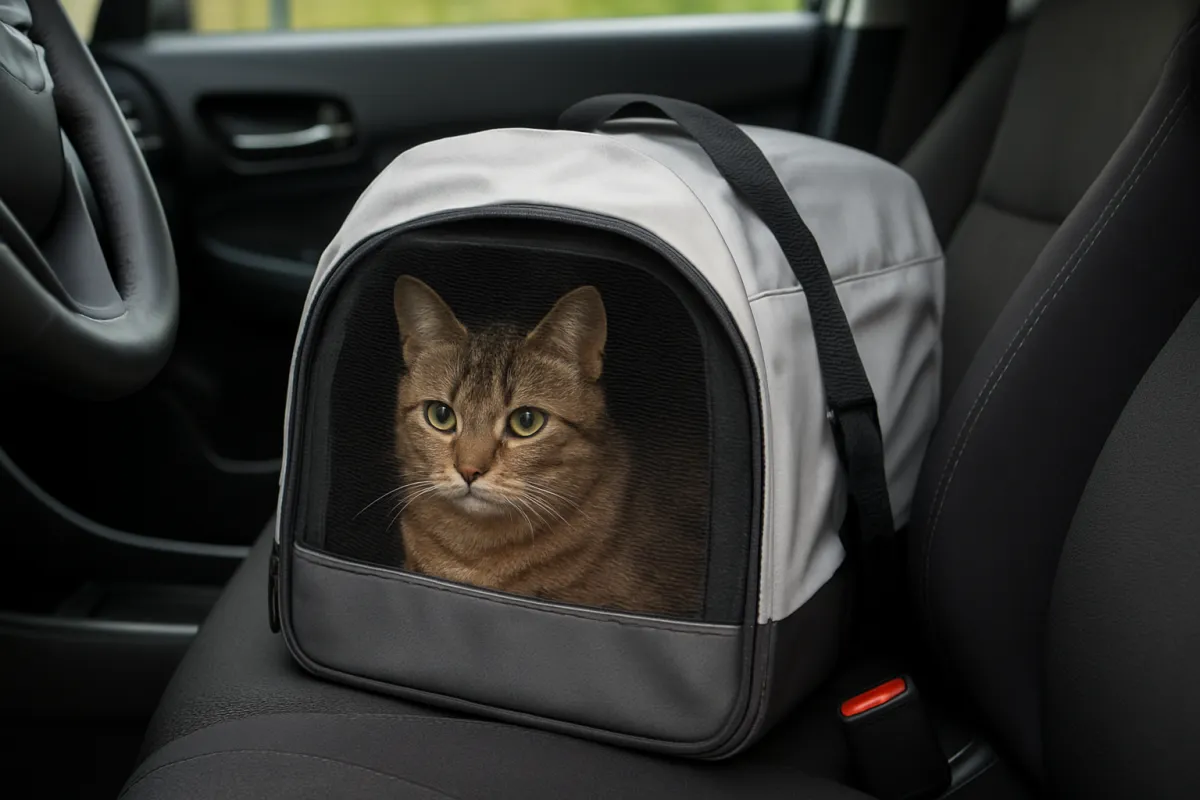
A comfortable carrier should not slide, tip, or swing while you carry or drive. In a vehicle, keep your cat inside the carrier for the entire journey and secure it according to the carrier and vehicle instructions.
- Place the carrier on a stable, level surface.
- Use the vehicle’s seat belt if the carrier is designed for that method of restraint.
- Prevent the carrier from shifting into the footwell or against hard surfaces.
- Keep the temperature moderate and avoid direct sun.
- Drive smoothly and keep music and sudden noise low.
Do not place the carrier in the front passenger seat where an airbag could injure your cat. Do not open the carrier outdoors, in a parking lot, or near traffic unless you are inside a fully secure area. A frightened cat can escape in seconds.
7. Prepare food, water, and cleaning supplies appropriately
For a short trip, your cat may not need food or a litter tray inside the carrier, but you should still carry supplies. Bring water, a small bowl, spare bedding, waste bags, paper towels, and any prescribed medication.
For longer journeys, ask your veterinarian how to manage feeding, hydration, toileting, and motion sickness. Do not make major changes to your cat’s food or withhold food for an extended period without professional advice. Cats with diabetes, kidney disease, urinary problems, pregnancy, or other medical conditions may need a specific travel plan.
If your cat vomits, drools heavily, cries continuously, defecates, or becomes unusually quiet during travel, note the timing and contact your veterinarian. These signs can reflect anxiety, motion sickness, or another medical problem. The International Cat Care transport guide provides additional preparation advice for veterinary visits.
8. Troubleshoot common comfort problems
What if my cat refuses to enter?
Move the carrier to a favorite resting area, remove the door if possible, and reward small steps such as looking inside or placing one paw over the threshold. If the carrier has become strongly associated with fear, a different style may make training easier.
What if my cat cries during the drive?
Check that the carrier is stable, the temperature is comfortable, and visual stimulation is not excessive. Do not release your cat while the vehicle is moving. If the vocalization is prolonged or accompanied by drooling, vomiting, collapse, or frantic escape attempts, stop when safe and seek veterinary advice.
What if my cat gets too hot?
Move the carrier out of direct sunlight, improve airflow, and stop in a safe place. Open-mouth breathing, weakness, confusion, or collapse requires urgent veterinary attention. Do not place ice directly against your cat or pour cold water over them unless a veterinarian tells you how to respond.
What if the bedding keeps sliding?
Use a properly fitted mat or a thin towel folded to the exact dimensions of the base. Avoid large fluffy blankets that shift under the cat. Test the setup by carrying the empty carrier around the home before travel.
Common mistakes that make a cat carrier less comfortable
- Taking the carrier out only when a veterinary appointment is imminent.
- Choosing a carrier that is too small or filling a suitable carrier with too much bedding.
- Using strongly scented cleaners, perfumes, or essential oils.
- Covering every ventilation opening with a thick blanket.
- Putting loose strings, ribbons, or breakable toys inside.
- Carrying an unsecured carrier that swings from side to side.
- Forcing the cat inside after a long chase.
- Giving sedatives or human medication without veterinary instructions.
- Opening the carrier in an unsecured outdoor location.
Practical checklist before you leave
- Carrier is large enough for natural posture and movement.
- Door, clips, seams, handle, and mesh are intact.
- Base has a waterproof layer and fitted nonslip bedding.
- Familiar-smelling bedding is packed inside.
- Partial cover has been tested without reducing ventilation.
- Carrier has been secured and tested for movement.
- Water, spare bedding, cleaning supplies, and records are packed.
- Any medication plan has been confirmed with your veterinarian.
- Your cat is inside before you open an exterior door or enter a vehicle.
Advanced tips for frequent travelers and anxious cats
If your cat travels regularly, keep the carrier available as part of normal home life. You can use it as an occasional nap space, but do not close the door or move it every time your cat enters. Short, calm practice rides can help prevent the carrier from predicting only stressful appointments.
For air travel, confirm the airline’s current carrier dimensions, ventilation rules, documentation requirements, and cabin restrictions before the trip. For a cat with severe fear, repeated vomiting, or a history of panic, arrange a veterinary consultation well in advance. Your veterinarian may recommend a behavior plan or prescribe medication; never test a new medication for the first time immediately before a major journey. ([vcahospitals.com](https://vcahospitals.com/know-your-pet/flying-with-your-cat?lv=true&utm_source=openai))
Older cats, arthritic cats, and cats recovering from illness may need softer but still stable support, easier access, and more frequent breaks on long journeys. Ask your veterinary team how to adapt the setup if your cat has mobility, breathing, urinary, or gastrointestinal problems.
Next actions: improve the carrier today
- Inspect the current carrier and measure whether your cat can change position comfortably.
- Wash or replace bedding, then create a waterproof and nonslip base.
- Place the open carrier in a familiar room with a used blanket inside.
- Offer treats or food near the entrance without pushing your cat inside.
- Practice closing the door for only a few calm seconds, then build duration gradually.
- Before the next journey, test the carrier in the vehicle while parked and then take a very short drive.
- Contact your veterinarian if travel causes repeated vomiting, severe distress, breathing changes, or unusual weakness.
Knowing how to make a cat carrier more comfortable means combining physical comfort with predictable handling. A stable carrier, familiar bedding, controlled airflow, and gradual practice will usually do more than adding bulky accessories. Choose the setup that matches your cat’s behavior, test it before travel, and treat persistent distress as a reason to seek veterinary guidance rather than something your cat must simply endure.
For more practical pet-care guidance, visit the LaokPet homepage. You may also find related planning advice in Best Automatic Cat Feeders for Wet Food and breed-focused guidance in Best Indoor Cat Breeds for Apartment Living.
Pingback: Best Automatic Litter Boxes for Multi-Cat Households: What to Buy and What to Avoid – LaokPet
Pingback: Maine Coon vs Norwegian Forest Cat: Which Is Better for Your Home? – LaokPet
Pingback: How to Remove Pet Hair From Furniture: A Practical Step-by-Step Guide – LaokPet