Quick verdict: For many families, the Shih Tzu is the more forgiving choice because it is typically sturdier, adaptable, and happy with a moderate routine. Choose a Maltese if you prefer a very small, bright companion and can provide careful grooming, gentle handling, and consistent training.
Both breeds are affectionate companion dogs, but “better for families” depends on your children’s ages, daily schedule, grooming habits, and tolerance for barking or indoor accidents. This comparison focuses on the practical differences that matter after the puppy stage: how each dog fits into family routines, what care it requires, and where each breed may be challenging.
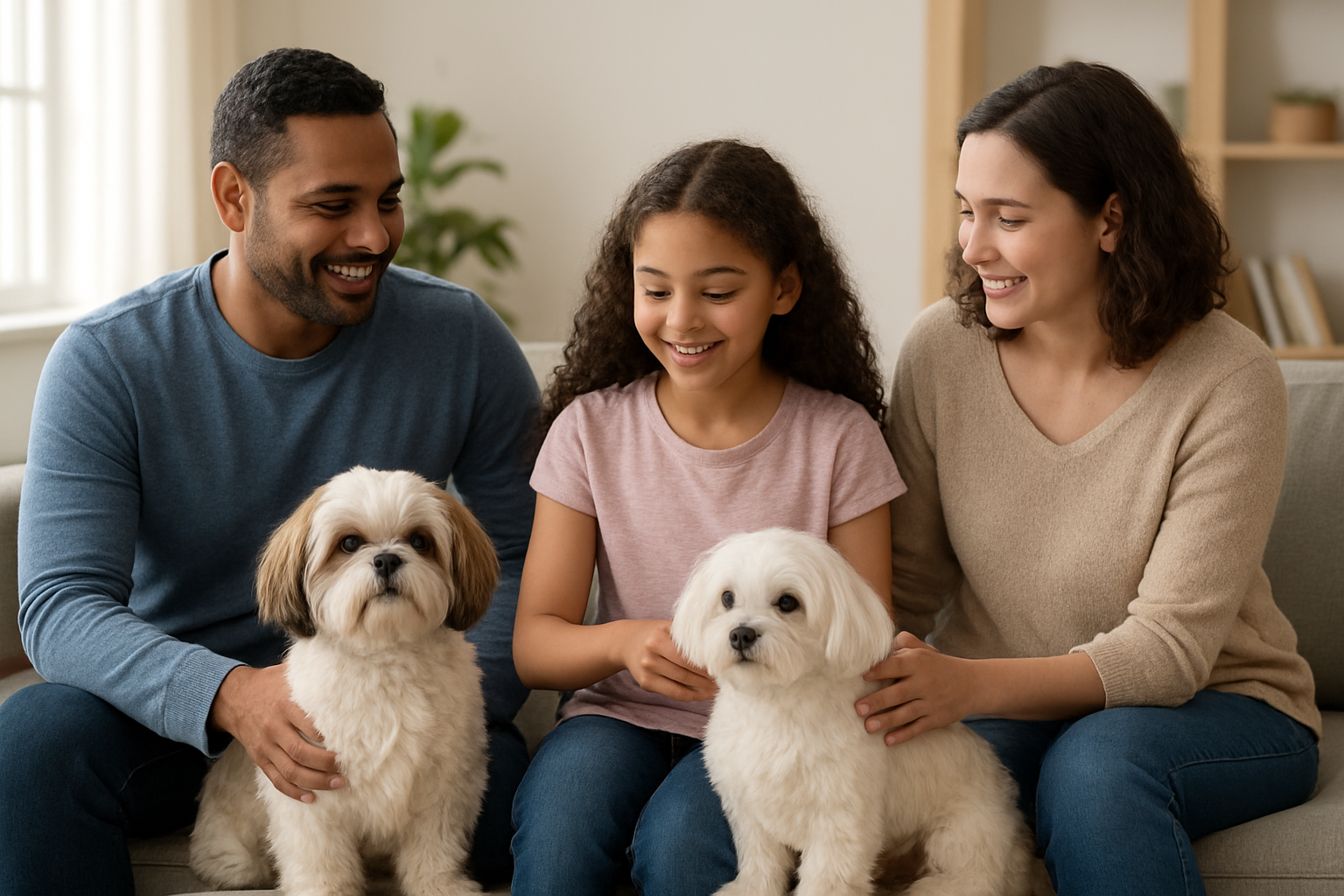
1. Start with the family’s actual routine
Before comparing personalities, list what your household can reliably provide. A small dog still needs daily exercise, training, grooming, veterinary care, supervision, and time with people.
- Children’s ages: Toddlers can accidentally drop, squeeze, or frighten a toy-sized dog.
- Adult supervision: Young children should not be left alone with either breed.
- Grooming time: Both coats can mat without regular brushing and professional care.
- Noise tolerance: Both may alert-bark, especially when bored, under-socialized, or left alone.
- Daily availability: Neither breed is a good match for a home that expects a dog to entertain itself all day.
For broader family-preparation advice, see LaokPet’s guide on preparing a dog for a baby. Breed choice helps, but management and teaching matter just as much.
2. Compare size, temperament, and family fit
The Shih Tzu is generally the heavier and more solidly built of the two. The American Kennel Club lists Shih Tzus at roughly 9–16 pounds, while Maltese are much smaller; exact adult size varies with individual genetics and breeding. You can review the AKC Shih Tzu profile and AKC Maltese profile for breed-standard information.
Shih Tzus are often content to stay close to their people and may adapt well to apartment living or a quieter household. Maltese are also devoted companions, but their small size can make them more physically vulnerable, while their alert and lively nature may require more deliberate socialization and barking management.
Neither description predicts every individual dog. Early socialization, responsible breeding, previous experiences, and the way children interact with the dog can change the outcome substantially.
Here is the practical difference at a glance:
| Family consideration | Shih Tzu | Maltese | Warning sign |
|---|---|---|---|
| Build and handling | Usually somewhat sturdier and easier for careful children to handle safely | Very small and delicate; requires extra protection around toddlers | Children carry, chase, hug, or disturb the dog while eating |
| Personality | Affectionate, companionable, and often relaxed indoors | Bright, affectionate, lively, and sometimes reserved with strangers | Choosing based only on appearance or puppy behavior |
| Exercise | Moderate walks and play are usually sufficient | Short walks and indoor play can work, with mental stimulation | No daily routine for movement and training |
| Training | Can be willing but may lose interest if sessions are repetitive | Intelligent and responsive, but can develop nuisance habits without consistency | Using punishment for barking or house-training accidents |
| Coat care | Daily brushing if kept long; regular trimming is common | Daily gentle brushing is important to reduce tangles and mats | Assuming a low-shedding coat means low maintenance |
| Busy family life | Often a better fit for a calm, predictable household | Can fit well when adults have time for training and close supervision | Long periods alone with little enrichment |
3. Evaluate grooming before choosing
Both breeds have coats that can become tangled and uncomfortable. A short “pet trim” may make home care easier, but it does not remove the need for brushing, ear checks, nail care, bathing, and dental hygiene.
Shih Tzu grooming
A Shih Tzu with a long coat typically needs frequent, often daily, brushing. The hair around the face may require careful cleaning, and the short facial structure means you should discuss breathing, eye, and dental concerns with your veterinarian rather than assuming every dog has the same needs. The AKC’s Shih Tzu lifestyle guide gives an overview of the breed’s coat-maintenance demands.
Maltese grooming
The Maltese coat also needs daily attention when kept long. Fine hair can form mats quickly, particularly behind the ears, under the legs, and around the collar. The breed’s small size makes gentle handling essential during brushing, bathing, and nail trimming.
If your family cannot commit to daily coat checks, budgeted professional grooming, or a practical short trim, neither breed is an easy-care choice. A washable indoor-training setup may also help during puppyhood; LaokPet explains what to look for in washable dog pee pads.
4. Match exercise and training needs to your household
Neither dog requires the workload of a sporting or working breed, but both need more than occasional cuddling. Plan for short walks, play, basic obedience, gentle handling practice, and gradual exposure to household sounds and visitors.
Shih Tzus may suit families that want a companion for relaxed walks and indoor time. They can be independent or selective about training, so short reward-based sessions are usually more productive than long drills.
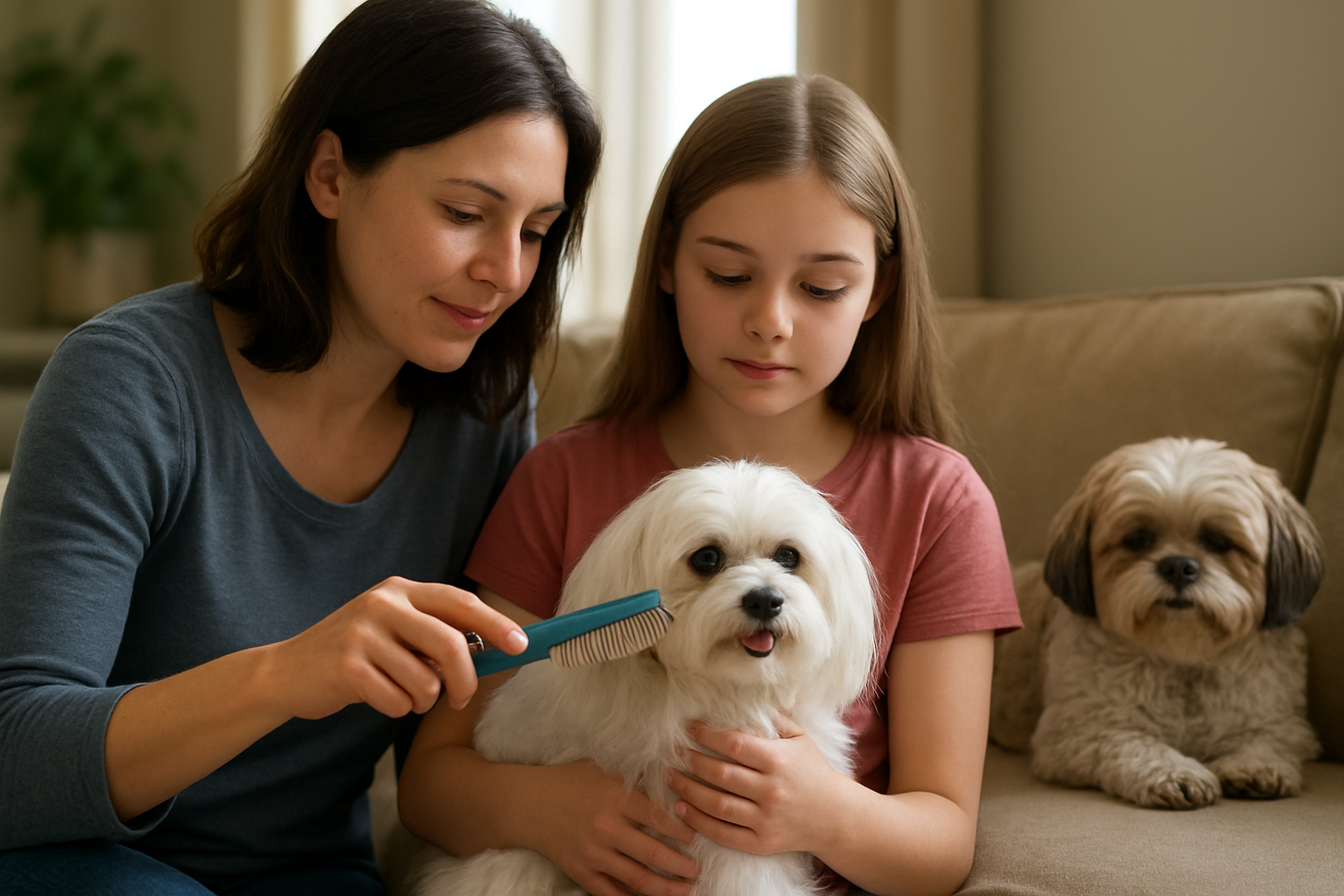
Maltese are small but not passive. Their alertness and intelligence can become barking, clinginess, or difficult house-training if the family gives inconsistent signals. Reward quiet behavior, teach a calm place to settle, and avoid allowing children to turn every interaction into a high-energy game.
For households especially concerned about barking, compare your expectations with LaokPet’s list of quiet dog breeds for apartment living. Neither Shih Tzu nor Maltese should be treated as guaranteed silent breeds.
5. Choose according to your children and home environment
Best fit for families with toddlers
Neither breed is automatically ideal for rough toddler interaction. If you choose one, the Shih Tzu’s generally more substantial build may offer a little more physical margin, but supervision remains non-negotiable. Create a child-free resting area and teach children to pet gently, leave the dog alone while eating, and stop when the dog moves away.
Best fit for families with older children
Older children who can follow rules may enjoy either breed. A Maltese can be an engaging training partner, while a Shih Tzu may appeal to children who want a calmer companion for reading, gentle play, or short walks.
Best fit for apartments
Both can live in an apartment when exercise, toilet training, enrichment, and barking are managed. The deciding issue is usually not floor space; it is whether the family can provide a predictable routine and prevent separation-related habits.
6. Understand health and lifestyle tradeoffs
Small purebred dogs can have inherited health risks, and no breed comparison can predict an individual dog’s future. Ask breeders or rescues for available veterinary records, health-testing information, vaccination history, and details about the parents or previous home.
Shih Tzus may require particular attention to eyes, teeth, skin, and breathing. Maltese commonly need careful dental care, and their tiny size makes injury prevention especially important. A veterinarian should assess persistent coughing, breathing difficulty, chronic skin irritation, repeated vomiting, lameness, or sudden behavior changes.
Responsible ownership also includes planning for routine veterinary visits, parasite prevention, dental care, grooming, and emergency expenses. If your family is not ready for those ongoing commitments, delay adoption rather than choosing the smaller dog because it seems easier.
7. Best choice by family scenario
- Choose a Shih Tzu if: you want a slightly sturdier companion, prefer a calmer indoor rhythm, and can maintain regular grooming.
- Choose a Maltese if: you want a tiny, energetic companion and adults can provide daily brushing, patient training, and careful supervision.
- Consider another breed if: your children are too young to follow safety rules, everyone is away most of the day, or you want a dog that needs little grooming.
- For active outdoor families: compare small companion breeds with dogs selected for longer walks and adventures; LaokPet’s guide to dogs for hiking explains why activity needs should be matched carefully.
8. Common decision mistakes
- Choosing by coat color, size, or a cute puppy face instead of adult behavior and care needs.
- Assuming a small dog is automatically safe for young children.
- Underestimating daily grooming because both breeds are often described as low-shedding.
- Expecting a companion dog to tolerate being carried, dressed, or handled constantly.
- Ignoring barking, separation, dental care, and toilet-training plans until problems appear.
- Buying from a seller who cannot explain health history, socialization, or how the puppies were raised.
9. Action checklist before you decide
- Watch each dog interact calmly with adults and children, without forcing contact.
- Ask who will brush, walk, train, feed, and supervise the dog each day.
- Prepare a quiet retreat that children cannot enter without permission.
- Plan reward-based training for barking, handling, recall, and house training.
- Speak with a veterinarian about breed-related risks and preventive care.
- Choose the individual dog whose confidence and energy match your household.
10. What if the match is not going smoothly?
If the dog hides, growls, snaps, panics when alone, or becomes difficult to handle, do not punish or force interaction. Separate the dog from children, reduce the trigger, and contact a veterinarian or qualified reward-based behavior professional, especially after any bite or sudden personality change.
For ordinary issues such as accidents, barking, or overexcitement, return to a simple routine: predictable meals and toilet breaks, brief training sessions, supervised play, adequate rest, and rewards for the behavior you want. Problems that persist despite consistent management deserve professional assessment.
Final verdict: Shih Tzu or Maltese for families?
The better family dog is the one whose care requirements your household can meet every day. In a home with young children or a preference for a more easygoing companion, the Shih Tzu is often the safer practical lean. In a quieter home with older children, attentive adults, and a genuine willingness to manage coat care and training, the Maltese can be an excellent fit.
So, Shih Tzu vs Maltese is not a universal winner. Choose the Shih Tzu for sturdiness and a relaxed companion lifestyle; choose the Maltese for a tiny, lively dog when careful supervision and daily grooming are realistic.
Explore more practical pet-care guidance on the LaokPet homepage.