To prepare a dog for a baby, start several weeks before the birth by introducing routine changes gradually, practicing calm behavior around baby equipment and sounds, and creating safe spaces where your dog can rest undisturbed. The goal is not to make your dog interact with the baby constantly. It is to help both of them share the home safely and predictably.
A new baby can change your dog’s schedule, access to rooms, exercise pattern, and the amount of attention available each day. This guide explains what to practice before the baby arrives, how to manage the first meeting, and what to do if your dog shows stress or unsafe behavior.
1. Assess Your Dog Before Making Changes
Start by observing how your dog responds to handling, sudden movement, unusual sounds, visitors, and changes in access to resources. Note whether your dog guards food, toys, resting places, or people. Also consider reactions to children, strollers, crying, and unpredictable movement.
Arrange a veterinary appointment if your dog has not had a recent health check. Pain, hearing loss, skin problems, or other medical issues can make a dog less tolerant of handling or disruption. Confirm that vaccinations, parasite prevention, identification, and grooming needs are current; the American Veterinary Medical Association’s vaccination guidance is a useful starting point.
When to get professional help
If your dog has snapped, bitten, chased children, shown serious resource guarding, or repeatedly reacted aggressively, do not wait for the baby to arrive. Ask your veterinarian for a referral to a qualified veterinary behaviorist or reward-based behavior professional. Do not punish growling; it is an early warning signal that should be handled safely.
2. Adjust the Daily Routine Gradually
Many families wait until the baby arrives to change everything at once. A better approach is to rehearse the likely changes beforehand. If walks, meals, bedtime, or access to furniture will change, move them gradually over several days or weeks.
- Shift meal times in small increments rather than suddenly.
- Practice shorter but more frequent play sessions.
- Arrange help for walks before you need it.
- Teach your dog that quiet time with a chew or food puzzle is rewarding.
- Keep at least one predictable daily activity, such as a calm walk or training session.
This does not mean your dog must receive less care. It means the pattern of care becomes more realistic before the household is tired and busy.
3. Teach the Skills You Will Need Most
Focus on behaviors that make daily life easier and reduce the need for physical correction. Train in short sessions using treats, praise, toys, or another reward your dog values.
- Go to bed: Send your dog to a mat or bed and reward staying there.
- Leave it: Practice moving away from an item without grabbing it.
- Drop it: Exchange a toy or object for a better reward.
- Wait: Use this at doors, gates, and before meals.
- Loose-leash walking: Useful when you are handling a stroller.
- Come when called: Practice indoors first, then in secure outdoor areas.
Build duration slowly. A checkpoint is reached when your dog can perform each behavior in a quiet room, around mild distractions, and while you carry an empty basket or bag.
4. Introduce Baby Sounds, Smells, and Equipment
Play recordings of crying, cooing, and other baby sounds at a low volume while your dog is relaxed. Pair the sound with treats or a calm activity. Stop or reduce the volume if your dog hides, pants, trembles, barks, or cannot take food.
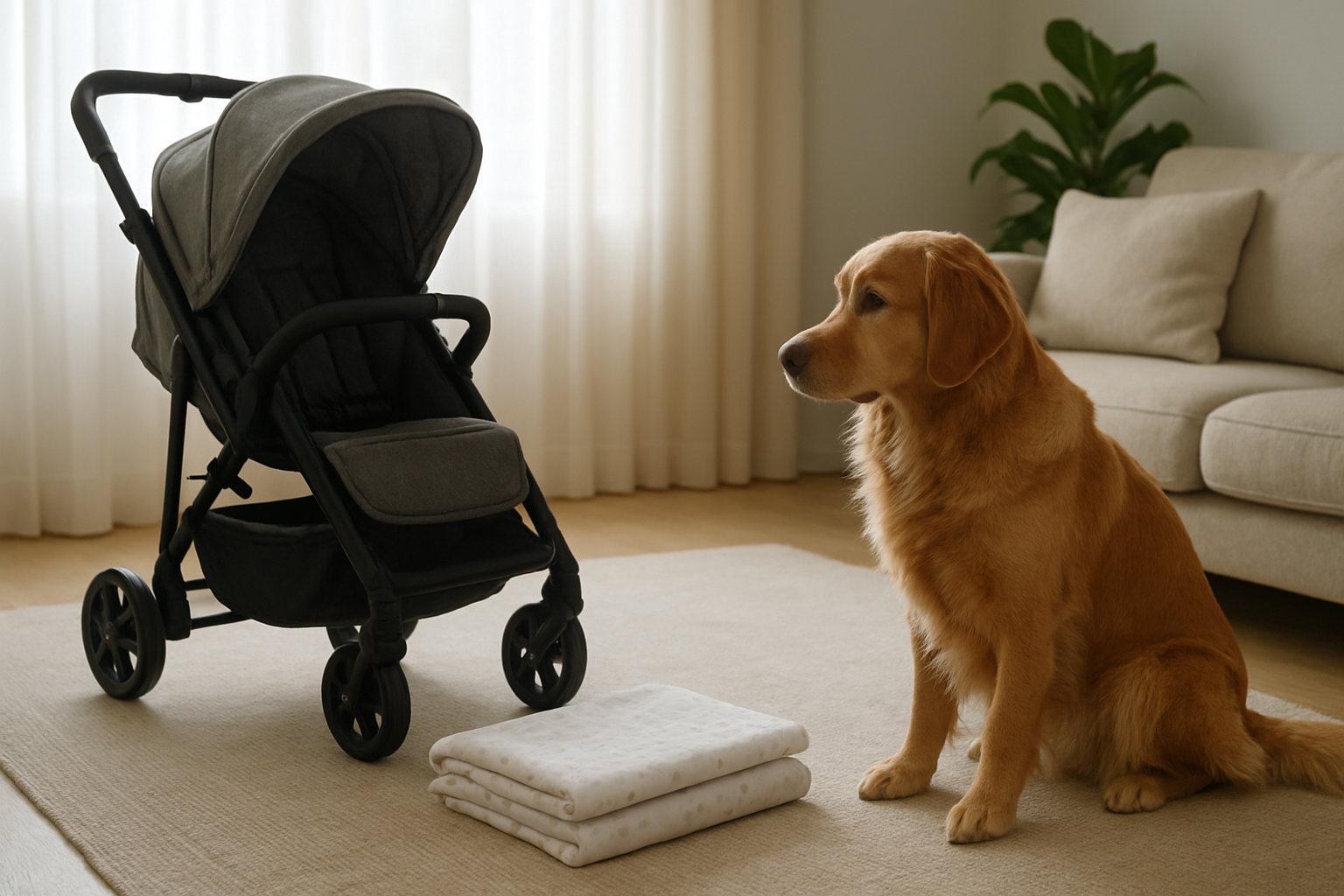
Let your dog investigate a stroller, crib, changing table, baby carrier, and other equipment at their own pace. Reward calm observation, but do not force your dog to approach. The ASPCA’s dog-and-baby guidance also recommends preparing for the unfamiliar sights, smells, sounds, and schedule changes that accompany a newborn.
You can bring home a blanket or item of clothing carrying the baby’s scent before the first meeting. Allow brief sniffing while your dog remains calm, then put the item away. It should be an optional, controlled introduction rather than something your dog can chew or guard.
5. Create Safe Zones and Physical Boundaries
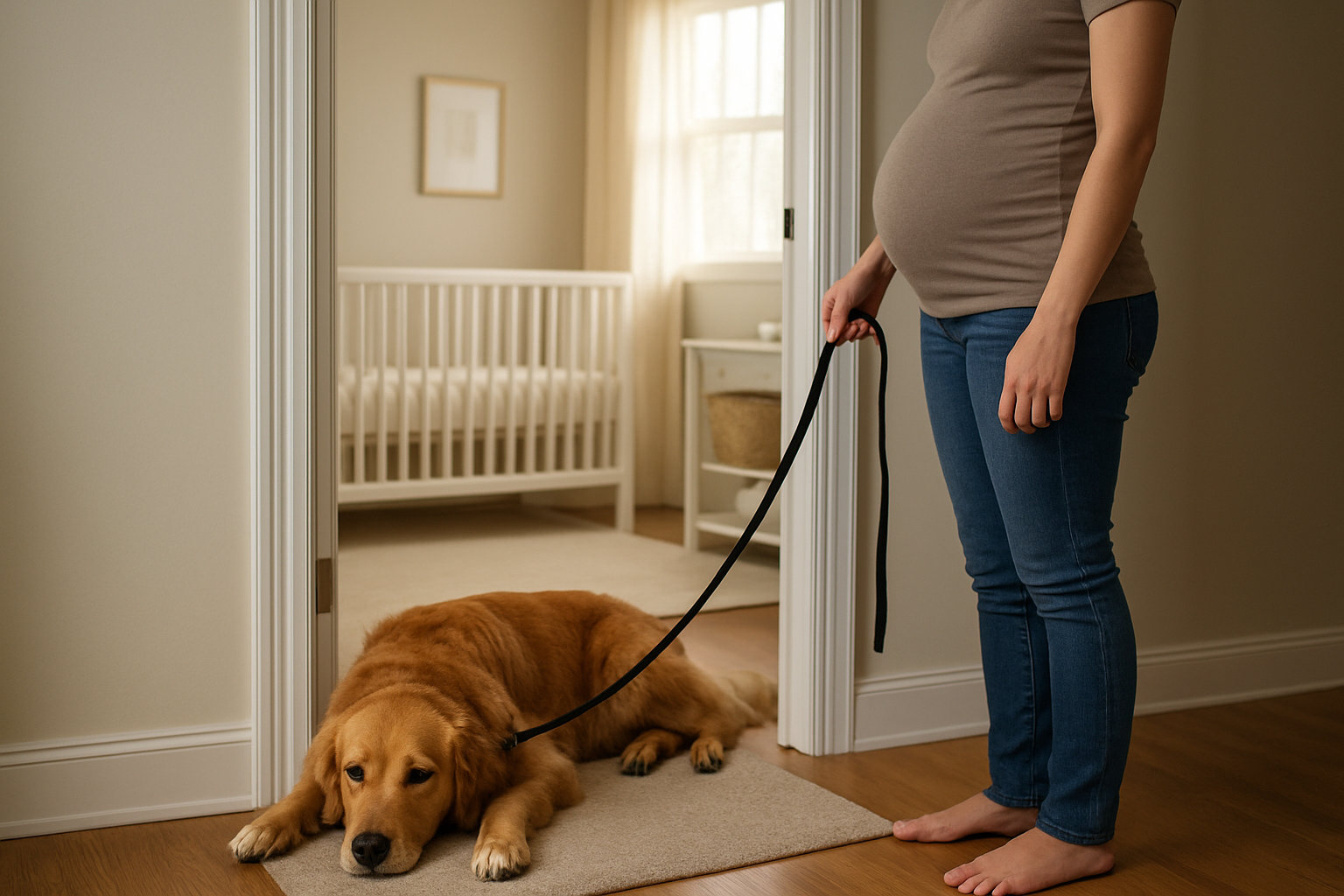
Set up a comfortable retreat where your dog can sleep, chew, and relax without being approached. This might be a bed behind a baby gate, a crate if your dog already enjoys using one, or a quiet room with water and familiar bedding.
Use gates, closed doors, a playpen, or a leash when necessary. These tools are not substitutes for supervision, but they make safe management easier when you need both hands for the baby or when your dog is overtired.
Keep dog food, chews, medications, litter, and small toys away from the baby’s future reach. As the child becomes mobile, review the setup again because crawling and grabbing create new risks.
Use this comparison to identify the areas that need attention:
| Situation | What to look for | Warning sign | Practical response |
|---|---|---|---|
| Baby crying | Dog can remain relaxed and accept treats | Pacing, hiding, barking, or frantic attention-seeking | Lower the sound, add distance, and end the session |
| Handling | Dog accepts gentle touch on paws, ears, and collar | Freezing, lip licking, growling, or snapping | Stop; arrange veterinary or behavior advice |
| Food and chews | Dog eats without being disturbed | Stiff posture, hovering, staring, or guarding | Use barriers and obtain professional guidance |
| Baby equipment | Dog can walk past calmly | Chasing wheels, jumping, or persistent fixation | Practice at a distance with rewards |
6. Plan the First Meeting Carefully
Before entering the home, allow your dog to exercise and toilet without exhausting them. An adult should greet the dog calmly while another adult manages the baby. If possible, let the dog settle before bringing the baby into the room.
Keep the first interaction brief. Let your dog approach only if relaxed, and reward calm behavior from a comfortable distance. Do not place the baby directly in front of the dog, force sniffing, or allow face licking, jumping, pawing, or crowding.
Have a leash, treats, and a barrier available. A loose leash is useful for guidance, but avoid holding your dog tightly while they are frightened. If the dog becomes tense or overexcited, calmly increase distance and try again later.
7. Manage the First Weeks at Home
Supervision means an adult is close enough to intervene immediately and is actively watching both dog and baby. It does not mean relying on a sleeping adult, a camera, or the dog’s previous good behavior.
- Separate the dog and baby during feeding, diaper changes, and naps if attention is divided.
- Reward your dog for settling near you without demanding contact.
- Keep the dog’s walks, meals, and rest periods as consistent as possible.
- Give the dog daily access to exercise, sniffing, training, and quiet recovery time.
- Do not allow the dog into the baby’s sleep space, even briefly.
Watch for stress signals such as repeated yawning, lip licking, avoidance, tucked posture, stiffening, panting unrelated to heat, or sudden changes in appetite. Treat these as information, not disobedience.
Actionable Preparation Checklist
- Book a veterinary checkup and update essential preventive care.
- Identify a dog-only resting area and install gates before the birth.
- Practice “go to bed,” “leave it,” “drop it,” “wait,” and recall.
- Rehearse the new walking and feeding schedule.
- Introduce baby sounds, smells, and equipment gradually.
- Arrange backup help for walks, feeding, or pet care.
- Write down your veterinarian, emergency clinic, and behavior professional’s contact details.
Common Mistakes That Make the Transition Harder
- Making sudden changes: Abruptly banning rooms or ending attention can create frustration.
- Forcing contact: A dog should be allowed to observe and retreat.
- Using punishment around the baby: This can make the baby predict unpleasant experiences.
- Ignoring resource guarding: Guarding should be assessed before the baby arrives.
- Expecting exercise to solve everything: A tired dog may still be anxious or uncomfortable.
- Leaving them together because the dog seems gentle: Familiarity does not remove the need for supervision.
What If Your Dog Struggles?
If your dog barks at crying, move away from the sound and reward calm behavior at a lower intensity. If your dog avoids the baby, provide space and maintain normal routines rather than repeatedly bringing the baby closer.
If there is growling, lunging, snapping, chasing, guarding, or any bite, separate the dog and baby immediately and contact your veterinarian or a qualified behavior professional. For a bite involving a child, seek medical advice promptly; the American Academy of Pediatrics’ dog-bite prevention guidance provides additional safety information.
Advanced Tips for Busy or High-Energy Dogs
Prepare several independent activities that can be offered while you feed or settle the baby: stuffed food toys, scatter feeding, sniffing games, and brief training exercises. If your dog eats too quickly, a suitable slow feeder can add structure to mealtimes; see LaokPet’s guide to the best slow feeder bowls for dogs that eat too fast.
For dogs with substantial exercise needs, arrange predictable support rather than depending on last-minute help. Breed tendencies matter less than the individual dog’s behavior, health, and ability to settle, although owners of active breeds may find LaokPet’s guide to dog breeds for hiking and outdoor adventures useful when planning future family activities.
Next Actions
Today, write down three changes the baby will bring to your dog’s routine and begin practicing the easiest one. This week, install a barrier, teach a settling behavior, and schedule the veterinary checkup. Before the birth, rehearse the first meeting with two adults, a stroller or carrier, treats, and a clear separation plan.
Learning how to prepare a dog for a baby is mainly a matter of gradual practice and careful management. Aim for calm coexistence, reliable boundaries, and safe supervision—not a forced friendship on a fixed timetable.