To stop a dog from barking at the door, prevent repeated rehearsals, teach your dog to go to a designated spot, and reward calm behavior whenever someone approaches. The goal is not to eliminate all barking, but to replace frantic door reactions with a predictable response you can manage.
Door barking may come from excitement, territorial behavior, fear, frustration, or a learned habit. This guide will help you identify the likely cause, prepare your training setup, and build a calmer routine for deliveries, visitors, and the doorbell.
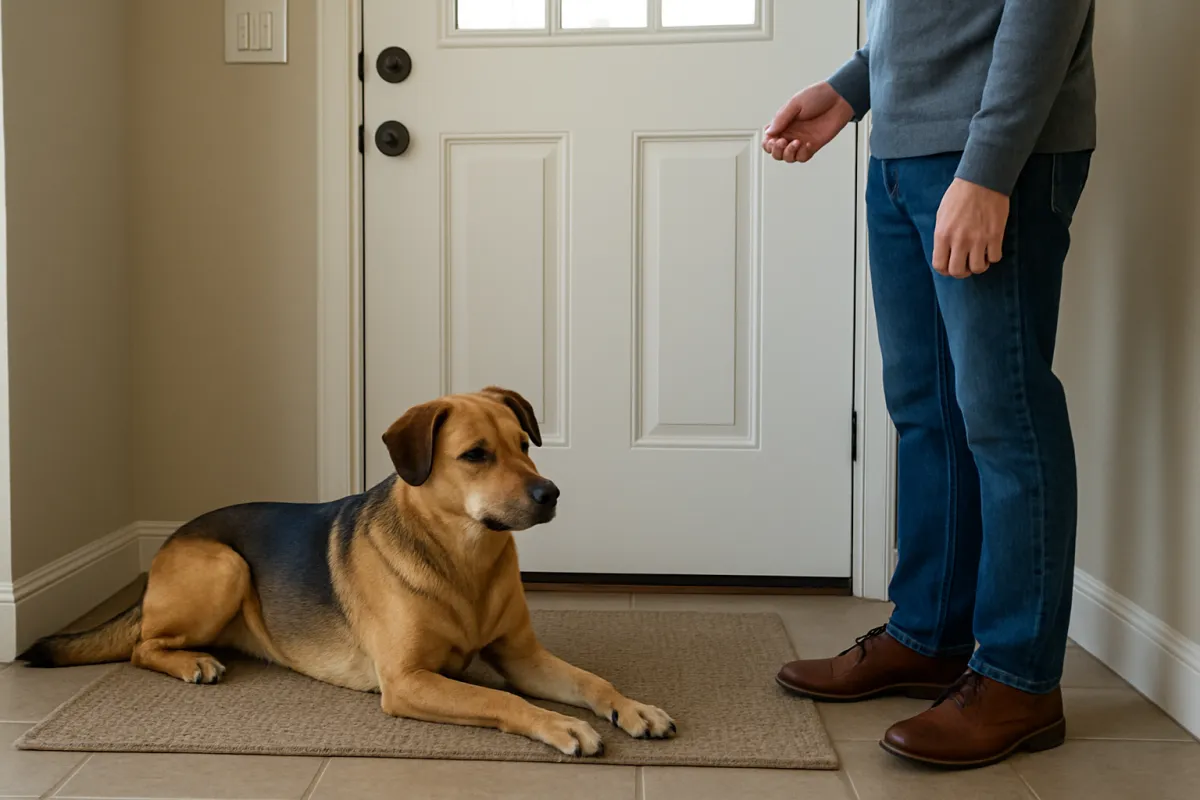
1. Identify what triggers the barking
Begin by observing the pattern for several days. Note whether your dog reacts to the doorbell, knocking, footsteps, voices outside, the mail carrier, a delivery being left, or the door opening. Also record what your dog does with its body: loose excitement, stiff posture, hiding, lunging, growling, or repeated movement toward the entrance.
Barking is normal canine communication, so the same sound can have different causes. A dog that races toward guests with a loose, wiggly body may need impulse-control training, while a dog that stiffens, growls, or snaps needs a more cautious behavior plan. The ASPCA’s barking guidance is a useful reference for separating normal vocal communication from excessive or distress-related barking.
- Excitement: Your dog expects greetings, play, or attention.
- Alerting: Your dog reacts to an unfamiliar sound or person.
- Fear or anxiety: The dog tries to create distance from the visitor.
- Frustration: Your dog can see or hear people but cannot reach them.
- Habit: Barking has repeatedly made the sound or visitor go away.
Checkpoint: Before formal training, you should be able to name the main trigger and estimate the distance or sound level at which your dog can still eat treats and respond to you.
2. Prepare the doorway and training supplies
Training is easier when you do not rely on the dog to make good decisions during a real delivery. Set up management first so your dog has fewer opportunities to charge the door and practice barking.
- Place a mat or bed several feet away from the entrance.
- Keep small, high-value treats in a sealed container near the door.
- Use a baby gate, exercise pen, leash, or closed interior door when necessary.
- Silence or reduce the doorbell temporarily if its sound causes an immediate explosion.
- Ask household members to follow the same cue and reward routine.
Management is not a substitute for training, but it protects your progress. A leash or barrier is especially important if your dog might run outside, knock over visitors, or make contact with someone at the door. For additional doorway-safety ideas, review this American Kennel Club guide to preventing door darting.
Use this comparison table to match the response to the likely problem:
| What you observe | What to teach first | Warning sign |
|---|---|---|
| Loose body, jumping, rapid tail wagging | Go to mat and wait for release | Dog cannot take food or disengage |
| Stiff body, hard stare, low growl | Distance and calm disengagement | Lunging, snapping, or attempted biting |
| Barking at every hallway sound | Sound desensitization and quiet rewards | Reaction spreads to many household noises |
| Barking only when left alone | Separation-related assessment | Destruction, panic, escape attempts |
3. Teach a reliable “go to mat” behavior
Choose a mat that is easy for your dog to recognize. Start in a quiet room, away from the door. Lure your dog onto the mat, mark the moment all four paws are on it with a word such as “yes,” and give a treat. Repeat until your dog moves toward the mat willingly.
Next, reward your dog for staying there for one or two seconds. Gradually add duration, then take one step away, then two. Use a release word such as “free” so your dog learns when the exercise is finished.
- Guide your dog onto the mat.
- Mark and reward four paws on the mat.
- Wait briefly, then reward stillness.
- Increase distance and duration separately.
- Practice walking toward the door without opening it.
Keep sessions short and stop before your dog becomes frustrated. If your dog leaves the mat repeatedly, reduce the difficulty rather than repeating the cue more loudly.
Checkpoint: Move to door practice only when your dog can remain on the mat for about 20 to 30 seconds while you take several steps away in a quiet setting.
4. Pair door sounds with rewards
Begin with a very quiet knock or a low-volume recording of your doorbell. The instant your dog notices the sound, feed several treats in a row. You are not waiting for perfect silence at first; you are changing the dog’s prediction from “sound means alarm” to “sound means check in with my person.”
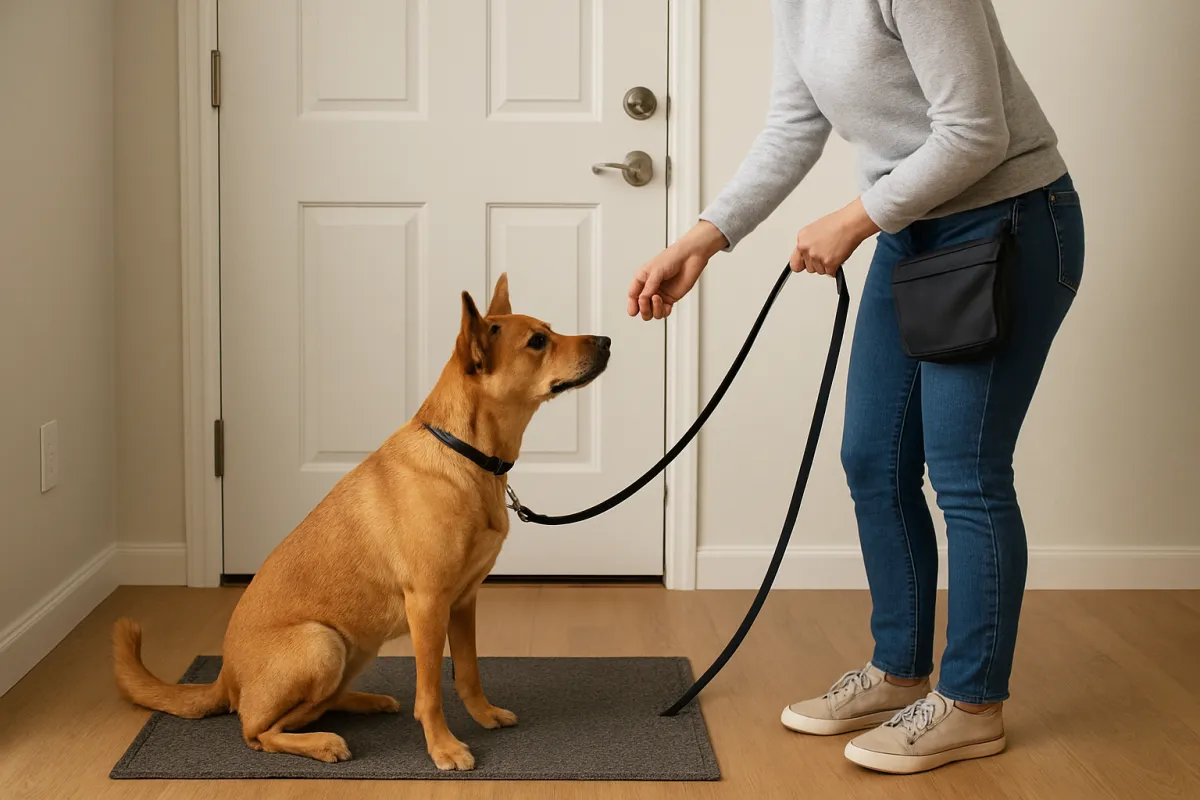
After several repetitions, pause and see whether your dog looks toward you when the sound occurs. Reward that choice, then guide your dog to the mat. Increase volume, distance, or realism one variable at a time.
Do not ring the bell repeatedly while your dog is barking intensely. That can make the sound more exciting and push your dog over its coping threshold. The AKC’s doorbell-training guidance also recommends gradual desensitization and teaching a specific place behavior.
5. Practice a complete visitor routine
Recruit a calm helper who can follow instructions. Begin with the helper standing far from the entrance. Ask for the sound or knock, reward your dog for orienting toward you, and send the dog to the mat. The helper should enter only while your dog is behind a barrier or is settled enough to remain safe.
At first, the visitor should ignore the dog. Reward your dog for staying on the mat, looking away from the guest, or remaining quiet. Release the dog to greet only if the dog is relaxed and greeting is appropriate. If your dog becomes overexcited, calmly guide it back behind the barrier and reduce the difficulty.
Practice different scenarios separately: a delivery sound, a familiar guest, a stranger, someone carrying a package, and a person leaving. Real arrivals should remain simple and boring while the skill is developing.
6. Troubleshoot setbacks without escalating
What if my dog starts barking immediately?
You are probably working above your dog’s threshold. Move farther from the door, lower the sound volume, use a visual barrier, or return to mat practice without a trigger. Reward any brief pause, head turn, or step away from the doorway.
What if treats do not work?
Stress can suppress appetite. Increase distance and use a reward your dog values, such as a small portion of its normal food, soft training treats, or a favorite toy if food is not motivating. If your dog still cannot eat or respond, end the session and seek professional guidance if the pattern continues.
What if my dog barks after the visitor enters?
Keep the dog separated while the person comes inside, then reward calm behavior at a distance. Ask the guest not to stare at, reach for, or crowd the dog. Some dogs need repeated short visits before they can safely interact.
Common mistakes that keep door barking going
- Shouting “quiet,” which may add attention and excitement.
- Opening the door while the dog is lunging or barking heavily.
- Practicing only during real emergencies and deliveries.
- Advancing from a quiet knock to a full visitor too quickly.
- Rewarding the dog inconsistently from one arrival to the next.
- Using punishment, intimidation, or aversive equipment without addressing fear.
Reward-based training is the safer default for this problem. The American Veterinary Society of Animal Behavior’s humane training position recommends reward-based methods and warns about welfare and behavior risks associated with aversive techniques.
Safety notes and when to get help
Do not force a fearful dog to approach visitors. If your dog has attempted to bite, has made contact with a person, or shows intense lunging and stiff posture, keep visitors separated and contact your veterinarian or a qualified behavior professional. The ASPCA behavior-help resource explains when professional assistance may be appropriate.
A sudden increase in barking, especially in an older dog, may also justify a veterinary check. Pain, hearing changes, cognitive changes, or other medical issues can affect behavior.
Your door-training checklist
- Identify the exact sound, person, or event that starts the barking.
- Set up a mat, treats, barrier, and leash before practicing.
- Teach “go to mat” away from the doorway.
- Pair quiet versions of door sounds with immediate rewards.
- Add movement, door opening, and visitors one step at a time.
- Use barriers during real arrivals until the behavior is dependable.
- Record which step causes barking and make that step easier next time.
Next actions for the next seven days
Today, choose the mat location and practice five short repetitions of stepping onto it. Tomorrow, add a brief stay while you walk toward the door. Over the next few days, use a helper or quiet recording to practice the sound-response routine, ending each session while your dog is still successful.
Once your dog can hear the door sound, move to the mat, and remain settled, begin adding realistic visitors. If your dog cannot stay under threshold despite careful adjustments, pause do-it-yourself practice and arrange help from your veterinarian or a reward-based behavior professional.
The most effective way to stop a dog from barking at the door is to combine prevention with a clear alternative behavior. Control the doorway, build the mat response gradually, and reward calm choices before barking becomes intense.