The best cat litter for odor control in a small apartment is usually an unscented, clumping litter that forms firm clumps and is easy to scoop daily. However, no litter can compensate for an undersized box, poor ventilation, or infrequent cleaning. The right choice balances odor management with your cat’s comfort and your available storage space.
This guide explains how to compare litter materials, choose a practical setup, reduce odor at the source, and avoid common mistakes that can cause cats to reject their boxes.
1. Define what “odor control” needs to solve
Apartment odor usually comes from three sources: fresh waste, urine that has not been removed completely, and residue absorbed into the litter box or nearby floor. A litter’s deodorizing additives may reduce the smell you notice, but routine maintenance is usually more important than choosing the strongest fragrance.
Before buying, consider how many cats use the box, where the box will sit, how often you can scoop, and whether anyone in the household has allergies or respiratory sensitivity. A product that performs well in one apartment may be unsuitable if it creates excessive dust or if your cat avoids the box.
The ASPCA’s litter-box guidance notes that many cats prefer clumping, unscented litter and that boxes should be scooped regularly. It also recommends checking for medical causes if a cat suddenly stops using the box.
2. Compare litter types for a small living space
There is no universal winner. The most useful comparison is how each material handles moisture, waste removal, dust, tracking, storage, and your cat’s acceptance.
Use this table as a starting point rather than a guarantee. Individual cats can strongly prefer one texture or material over another.
| Litter type | What to look for | Strength | Warning sign |
|---|---|---|---|
| Clumping clay | Fine texture, firm clumps, low-dust formula | Easy daily removal and generally strong moisture control | Heavy bags, dust, or tracking across the apartment |
| Silica crystal | Consistent crystal size and clear change instructions | Absorbs moisture and can reduce the frequency of full changes | Your cat dislikes the hard feel or crystals become saturated |
| Wood or pine | Low-dust pellets or clumping granules | Often lighter and less perfume-focused | Weak clumping or a texture your cat refuses |
| Corn or wheat | Reliable clumping and sealed storage | Can be lighter than clay and convenient to scoop | Moisture, mold, or insect problems if stored poorly |
| Recycled paper | Low-dust pellets and absorbent material | Useful for cats sensitive to dust or after some procedures | Less convenient for removing urine unless changed frequently |
Veterinary guidance from VCA Animal Hospitals’ litter comparison describes clay as absorbent and effective for odor control, while also noting that different materials involve trade-offs such as dust, weight, texture, and environmental impact.
3. Prioritize cat acceptance over aggressive fragrance
Strongly scented litter can make an apartment smell cleaner to you while making the box unpleasant for your cat. Many cats are sensitive to perfume and deodorizing agents, so an unscented product is the safer first choice.
Look for:
- Fine or medium-fine texture that is comfortable to walk on.
- Unscented or lightly formulated odor control.
- Low-dust performance when poured and scooped.
- Clumps that remain intact instead of breaking apart.
- Clear instructions for changing and disposing of the litter.
If you are changing products, do not replace the old litter abruptly unless there is a safety reason. Mix a small amount of the new litter into the existing litter, increase it gradually, and monitor whether your cat continues using the box normally.
4. Match the litter to the box and apartment layout
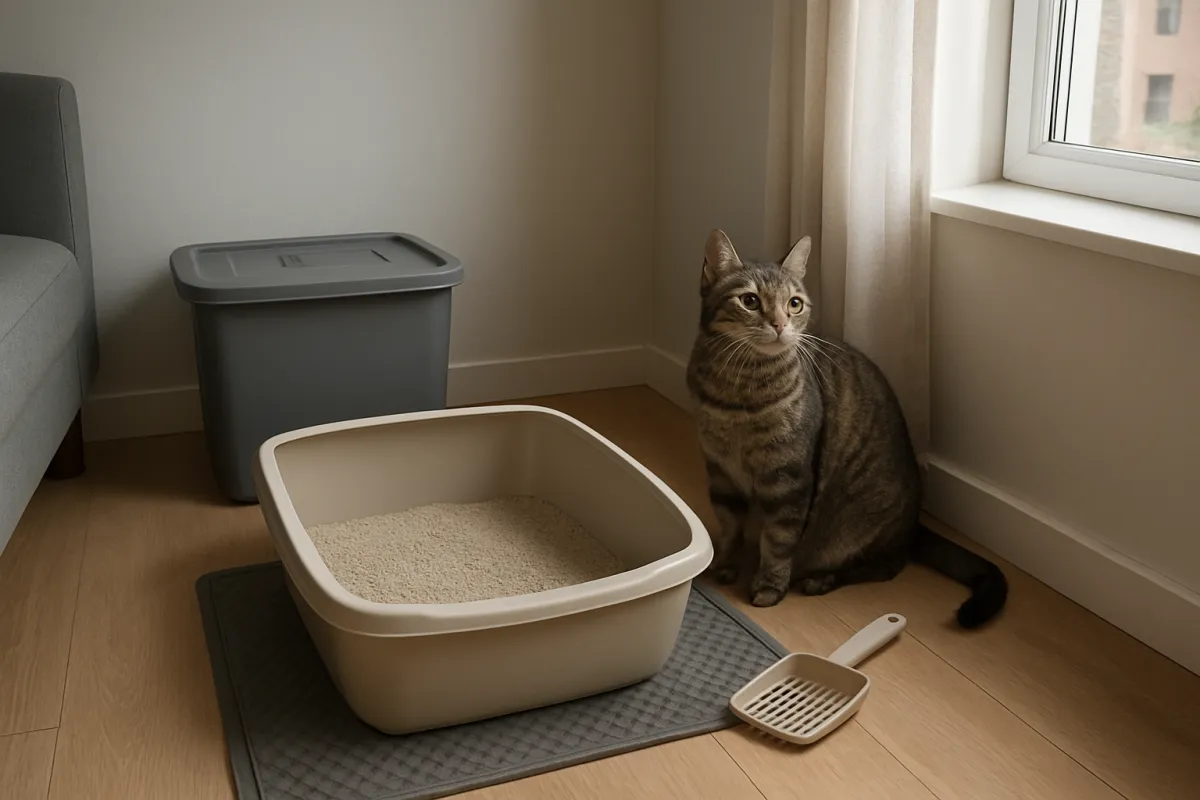
Even the best cat litter for odor control in small apartments will perform poorly in a box that is too small or placed in an unsuitable location. Your cat should be able to enter, turn around, dig, and leave without feeling trapped.
Choose a practical box location
- Use a quiet but accessible area with some ventilation.
- Keep the box away from food and water bowls.
- Avoid placing it beside a washer, dryer, furnace, or other startling appliance.
- Do not hide it so deeply in a closet or corner that your cat has only one uncomfortable exit.
- Use a washable mat underneath to catch tracking.
A covered box may contain some visible litter and waste, but it can also trap odors inside and may be rejected by cats that prefer an open box. If odor is the concern, improve scooping and ventilation before assuming a hood is the solution.
5. Build a maintenance routine that actually controls odor
Daily removal is the most dependable odor-control step. Scoop urine clumps and stool at least once each day, and more often if several cats share the box or the apartment has limited airflow.
Keep the litter at the depth recommended by the manufacturer, while avoiding an excessively deep layer. Remove broken clumps rather than leaving damp fragments behind. Once the box develops a persistent smell even after scooping, empty it and wash it with warm water and mild, unscented soap.
The ASPCA’s general cat-care recommendations caution against ammonia, deodorants, and heavily scented cleaners around litter boxes. These smells may irritate cats or discourage box use.
Store unused litter in a dry, sealed container. Do not leave an open bag beside the box, where it can absorb moisture or spread dust whenever the bag is moved.
6. Use a simple test when your cat is picky
If your cat avoids a new litter, do not assume the product is defective. The issue may be fragrance, texture, dust, box size, location, or a change that happened too quickly.
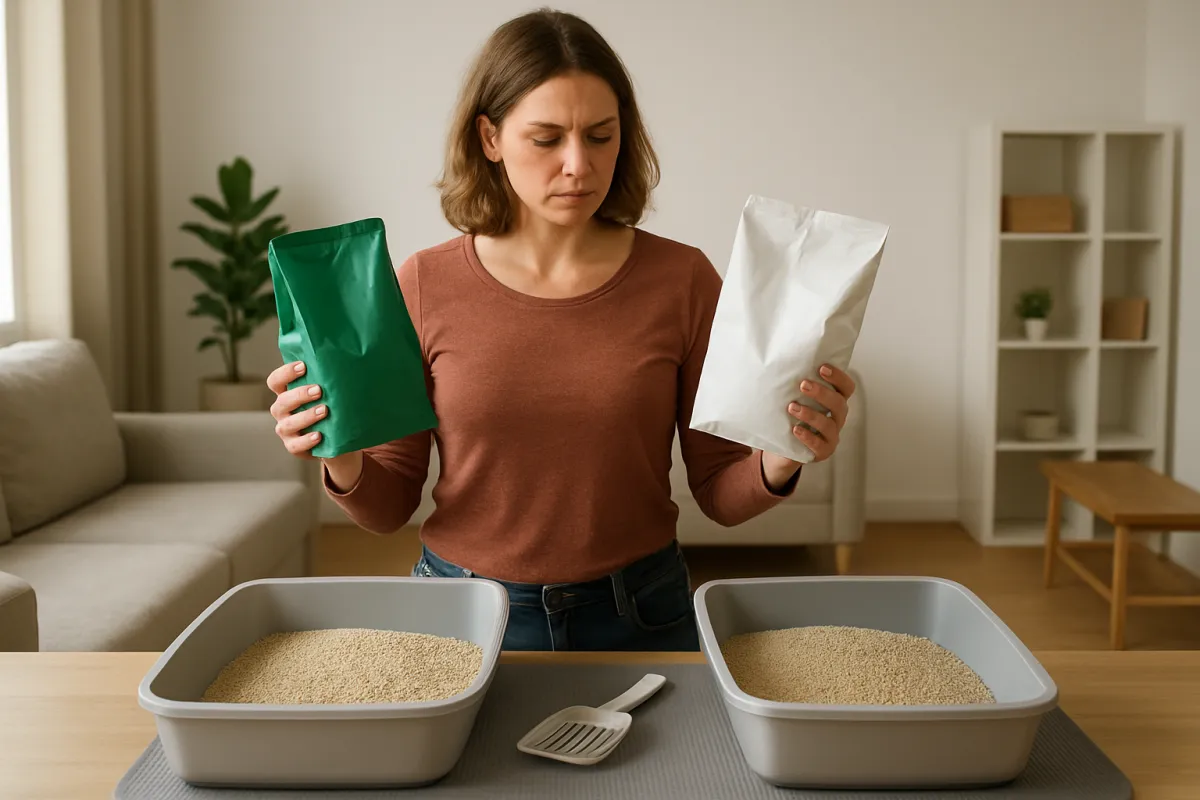
When space allows, place two similar boxes side by side with different litter types. Change only one variable at a time, such as unscented clumping clay versus a low-dust plant-based litter. Observe which box your cat uses more consistently over several days.
VCA describes this approach as a “litter box cafeteria,” where cats can show their preference through their normal behavior. If your cat stops using the box entirely, returns to the old litter, or begins eliminating elsewhere, restore the previously accepted setup and investigate the cause.
7. Avoid these common buying mistakes
- Choosing fragrance instead of absorption: Perfume masks odor temporarily but does not remove urine or stool.
- Buying the lightest litter without checking tracking: Lightweight formulas may travel farther on paws or become airborne when poured.
- Ignoring the box: An old plastic box can retain odor even after cleaning.
- Switching too quickly: Sudden texture or scent changes can trigger litter-box avoidance.
- Using one tiny box for multiple cats: Odor accumulates faster and some cats may avoid sharing.
- Relying on a deodorizing powder: Extra additives can introduce dust or smells your cat dislikes.
- Flushing clumping litter: Follow local disposal guidance and the product label instead.
8. What if odor remains?
If the box smells soon after cleaning, first check whether urine is reaching the sides or floor. A larger box, a washable liner-free setup, or a different box shape may help more than a new litter formula.
Clean surrounding accidents with an enzymatic pet-odor cleaner, not an ammonia-based cleaner. If the smell is unusually strong, your cat urinates frequently, strains, cries, produces little urine, or repeatedly eliminates outside the box, contact a veterinarian promptly. Persistent house-soiling can have medical or behavioral causes, and simply adding stronger deodorizer may delay proper treatment. VCA also advises veterinary evaluation for ongoing elimination outside the litter box.
9. A small-apartment litter checklist
- Choose unscented litter first.
- Prefer firm clumps if you want easy daily waste removal.
- Check dust and tracking before buying a large supply.
- Use the largest practical box for your cat.
- Place it in a quiet, accessible, ventilated area.
- Scoop at least once daily.
- Wash the box with warm water and mild, unscented soap.
- Keep spare litter sealed and dry.
- Introduce a new litter gradually.
- Watch for changes in box use or urination.
10. Best-fit choices by household
- For the easiest daily cleanup: Try unscented clumping litter with firm clumps.
- For a dust-sensitive household: Compare a low-dust plant-based or paper option, while confirming that your cat accepts the texture.
- For limited storage: Consider a litter that is sold in manageable bags and store it in a sealed container.
- For multiple cats: Focus on enough boxes, frequent scooping, and separate accessible locations before changing litter.
- For a cat that rejects scented products: Use plain unscented litter and avoid fragranced cleaners nearby.
For additional cat-care guidance, the International Cat Care kitten-care resource is a useful reference for litter-tray setup and general feline needs.
Next actions
Start by measuring your current box, checking its location, and noting how often you scoop. Then choose one unscented, low-dust litter with reliable clumping or absorption, buy the smallest practical quantity, and introduce it gradually.
Conditional verdict: For most small apartments, unscented clumping litter is the best starting point because it supports frequent waste removal without depending on heavy fragrance. If your cat dislikes it, or if dust, tracking, allergies, or disposal are major concerns, a low-dust crystal, wood, paper, corn, or wheat litter may be better—but only if your cat uses it consistently and you maintain the box carefully.