To help a dog stay calm during a thunderstorm, give them a familiar safe place, reduce noise and flashes, prevent escape attempts, and stay calm yourself. For severe panic, work with your veterinarian before the next storm rather than trying untested medication or supplements during an emergency.
Thunderstorm fear can appear as shaking, panting, pacing, barking, drooling, hiding, destructive behavior, or attempts to escape. The best response combines immediate comfort during a storm with gradual preparation between storms. This guide shows you what to set up, what to do as weather approaches, how to train for future storms, and when professional help is appropriate.
1. Prepare a Storm Plan Before You Need It
Preparation is easier when your dog is relaxed. Choose the room, supplies, and routine in advance so you are not searching for treats or moving furniture while thunder is already frightening your dog.
Choose a suitable safe area
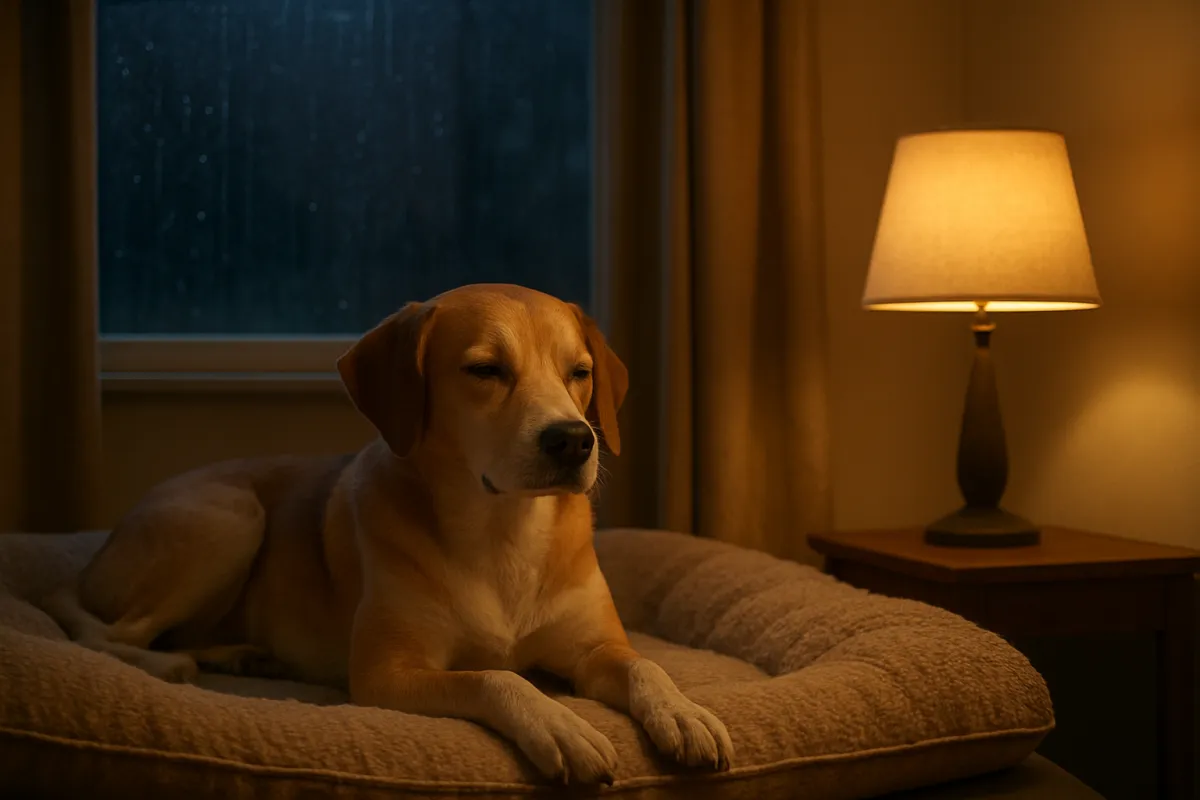
Select an interior room away from windows, such as a hallway, bathroom, closet area, or room with heavy curtains. The space should be familiar, ventilated, free of hazards, and large enough for your dog to stand, turn around, lie down, and leave if they want to.
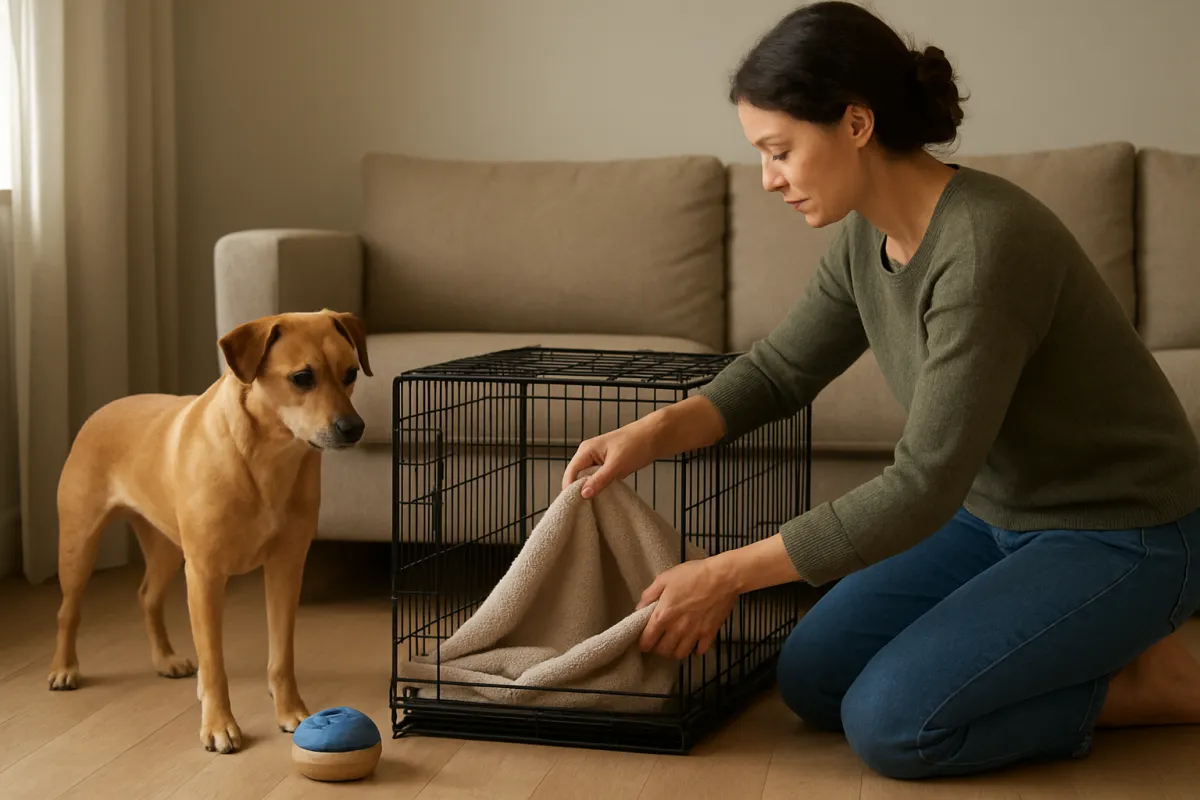
A crate can be useful if your dog already views it as a comfortable resting place. Do not introduce a closed crate for the first time during a severe storm. Some dogs panic when confined and may injure themselves while trying to escape, so observe your dog’s response carefully.
Assemble a small storm kit
- Comfortable bedding or a familiar blanket
- High-value treats or a stuffed food toy
- Fresh water
- A leash and properly fitted collar or harness
- Current identification tags and updated microchip information
- White-noise, fan, or music options
- Any veterinarian-prescribed medication, stored according to instructions
For broader home and travel preparation, see LaokPet’s dog-friendly first-aid kit checklist.
2. Notice the Early Signs of Storm Anxiety
Many dogs react before the loudest thunder arrives. They may notice changes in wind, light, air pressure, or household activity. Watch for restlessness, repeated following, lip licking, yawning, trembling, panting, hiding, barking, or refusing food.
Early signs matter because a dog that can still eat and respond to you may be easier to support than a dog already in full panic. Keep a brief note after each storm: what happened, how intense the reaction was, and which actions seemed to help or worsen it.
Avoid assuming that every unusual behavior is fear. Sudden anxiety, especially in an older dog, can also occur with pain, hearing or vision changes, or another health problem. If the behavior is new, unusually intense, or continues after the storm, arrange a veterinary examination.
3. Make the House Safer as the Storm Approaches
When a forecast suggests thunderstorms, complete basic safety steps before the first thunderclap. Take your dog outside for a bathroom break and exercise while conditions are still safe. Never leave a frightened dog loose in an unfenced yard or near an open door.
Close windows, doors, and curtains. Reduce visual flashes with blinds or blackout curtains, and use a fan, television, white-noise machine, or calm music to soften sudden sounds. These measures may not eliminate fear, but they can make the environment less startling. The ASPCA’s storm-safety guidance also recommends reducing noise and visual stimulation and taking precautions against escape.
Check gates, screens, and door latches. Keep your dog’s collar or harness on if it is safe and comfortable indoors, particularly if your dog has a history of bolting. Do not attach a leash and leave it dragging unattended, since it may catch on furniture.
Use this quick comparison when deciding how to set up your dog’s retreat.
| What to look for | Helpful choice | Warning sign |
|---|---|---|
| Location | Interior, familiar, and away from windows | Near an exit, glass door, or unsecured gate |
| Resting area | Soft bedding your dog already uses | New equipment introduced during panic |
| Noise control | Fan, steady music, or white noise | Loud or unpredictable sounds added suddenly |
| Food enrichment | Safe chew or stuffed toy your dog knows | Small items that can be swallowed |
| Confinement | Open retreat when your dog prefers choice | Closed crate if your dog scratches, crashes, or panics |
4. Support Your Dog Without Adding Pressure
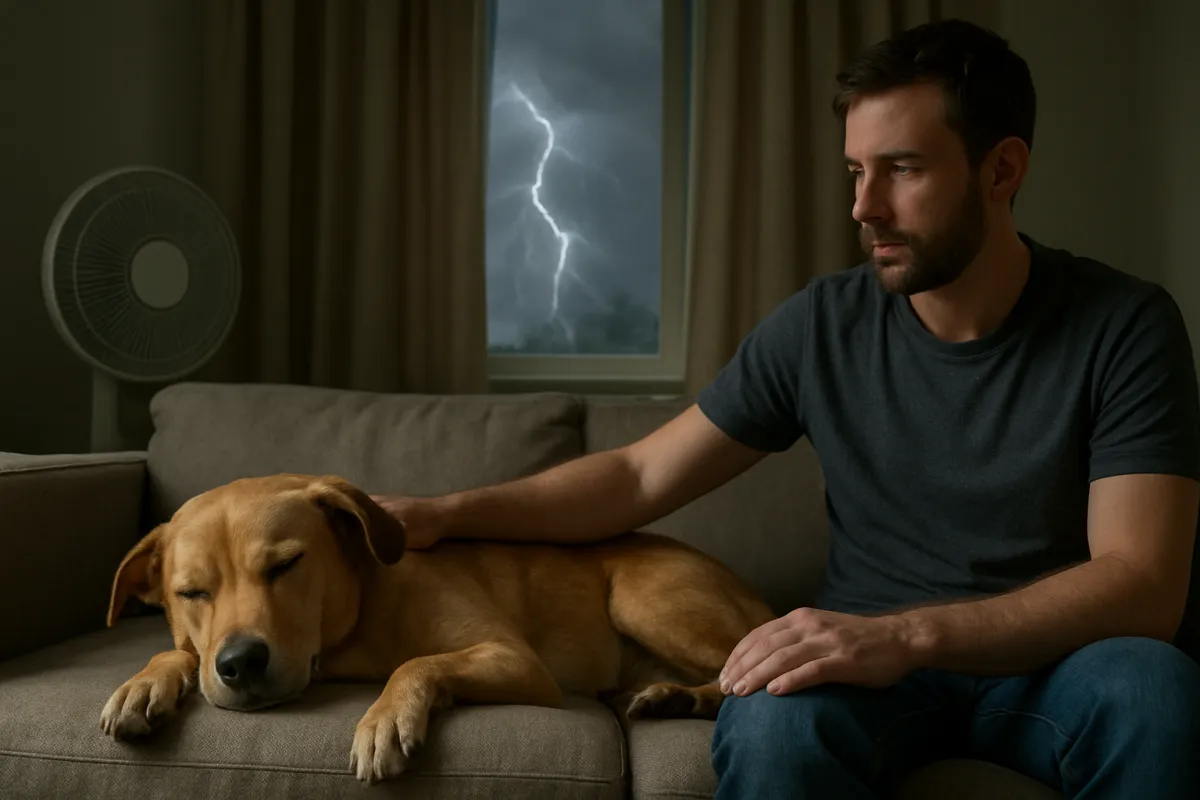
Let your dog decide whether to hide, rest near you, or move between safe areas. Sit nearby, speak normally, and offer gentle contact only if your dog seeks it. Some dogs want quiet company; others become more distressed when touched or approached.
You do not need to ignore your dog to avoid “rewarding fear.” Calm reassurance and food rewards do not create the thunderstorm. The practical goal is to help your dog feel safer while rewarding relaxed choices such as lying down, looking at you, or entering the retreat.
Offer a long-lasting food toy if your dog is willing to eat. If your dog refuses treats, do not force them. Refusal usually means the anxiety level is too high for food-based training at that moment.
What to avoid during the storm
- Do not punish barking, trembling, accidents, or destructive behavior caused by panic.
- Do not drag your dog out of a hiding place.
- Do not force a tight-fitting garment, crate, or room if it increases distress.
- Do not make sudden dramatic changes to the room or household routine.
- Do not give human medication, alcohol, cannabis products, or leftover pet medication without veterinary direction.
5. Build Calm Behavior Between Storms
Immediate management helps your dog get through the event, but long-term improvement usually requires practice when there is no storm. Teach your dog to settle on a mat or in the chosen retreat, then reward relaxed behavior during ordinary household sounds.
For sound training, use a reliable thunderstorm recording at a barely audible volume. Play it briefly while your dog is relaxed and pair it with treats, a food toy, or calm play. Stop or lower the volume if your dog shows fear. Gradually increase intensity only when your dog remains comfortable.
This is a form of gradual desensitization and counterconditioning. Veterinary behavior guidance from VCA Animal Hospitals emphasizes starting before storm or fireworks season and using positive reinforcement while the dog remains below their fear threshold.
Keep sessions short and repeat them regularly. A few calm minutes are more useful than a long session that ends in panic. If your dog reacts even at the lowest recording volume, stop the exercise and ask a qualified behavior professional for a more individualized plan.
6. Consider Veterinary Help for Severe Anxiety
Contact your veterinarian if your dog tries to break through doors or windows, injures themselves, cannot settle for hours, repeatedly escapes, becomes aggressive from fear, or shows severe panting, drooling, vomiting, or collapse. A veterinary team can check for medical contributors and discuss behavior treatment.
Medication may be appropriate for some dogs, but it should be selected and timed by a veterinarian. The right plan may involve a medication given before the storm, a longer-term anxiety treatment, behavior modification, or a combination. Ask about a trial on a calm day so you know how your dog responds before the next severe weather event.
Do not wait until the storm is overhead if your dog has a predictable pattern of panic. Bring your storm notes, including the forecast timing, symptoms, duration, escape attempts, and anything you tried. The VCA’s treatment overview explains that behavior modification and medication are commonly considered for significant storm and noise fears.
7. Use This Storm-Day Checklist
- Check the weather and prepare before thunder begins.
- Give your dog a safe bathroom break while conditions are suitable.
- Close windows, curtains, and exterior doors.
- Confirm that tags, microchip details, gates, and exits are secure.
- Open the familiar retreat and add bedding, water, and a safe food toy.
- Turn on steady background noise.
- Stay calm and offer attention according to your dog’s preference.
- Reward relaxed behavior without forcing food or contact.
- Monitor for escape attempts, injury, overheating, or severe distress.
- After the storm, record what happened and update your plan.
Common Mistakes That Can Make Storm Fear Worse
Waiting until the thunder starts
Last-minute preparation leaves fewer options. Set up the retreat, test the background sound, and locate medication well before storm conditions develop.
Assuming every dog wants a hug
Some dogs relax with close contact, while others need space. Watch body language and allow your dog to approach or leave.
Using a crate automatically
A crate is not calming for every dog. It is appropriate only when your dog already associates it with safety and does not show dangerous escape behavior.
Turning sound training up too quickly
Training should remain below the level that causes fear. If your dog reacts, reduce the volume or end the session instead of trying to make them “get used to it.”
Trying an untested product during a crisis
Pressure garments, pheromone products, supplements, and medications may help some dogs, but responses vary. Introduce products gradually and discuss supplements or medication with your veterinarian.
What If Your Dog Hides, Refuses Food, or Tries to Escape?
If your dog hides
Leave the hiding place accessible, remove hazards around it, and sit nearby if your presence appears helpful. Do not pull your dog out unless there is an immediate safety problem.
If your dog refuses food
Stop offering repeated treats and focus on reducing stimulation. Food training works best before panic becomes intense. Contact your veterinarian if refusal continues after the storm or occurs with other illness signs.
If your dog tries to escape
Secure doors and windows without cornering your dog. Keep children and other pets away if your dog is frantic, and use a leash only when you can hold and manage it safely. Repeated escape attempts warrant professional help because injuries can occur quickly.
If the storm becomes dangerous for people
Your safety comes first. Follow local emergency guidance, move to an appropriate shelter, and include your dog in your household disaster plan. Do not remain in an unsafe location solely to supervise your pet.
Next Actions for a Calmer Storm Routine
- Choose one familiar interior retreat today.
- Place bedding, water, identification information, and a safe food toy nearby.
- Write down your dog’s early warning signs and strongest reactions.
- Practice settling on a mat or in the retreat during quiet weather.
- Ask your veterinarian whether your dog’s anxiety warrants a prevention plan.
- Start low-volume sound training only when your dog is relaxed.
- Review and improve the plan after every storm.
The most effective way to help a dog stay calm during a thunderstorm is to combine a predictable safe environment with patient, low-pressure support. If your dog’s fear includes dangerous escape attempts or extreme panic, home adjustments are useful but may not be enough; early veterinary and behavior guidance can make the next storm safer for everyone.
Pingback: Best Orthopedic Dog Beds for Senior Dogs: 7 Supportive Choices for Aging Pets – LaokPet
Pingback: Best GPS Trackers for Dogs Without Monthly Fees: What Actually Works – LaokPet