The best GPS trackers for dogs without monthly fees are usually Garmin’s handheld-and-collar systems for serious off-grid tracking, while Petfon is a more affordable local-range option. Apple AirTag can help locate a dog in populated areas, but it is not a true GPS tracker and should not be your only safety device.
The phrase “no monthly fee” sounds straightforward, but it describes several different technologies. Some devices use satellites and a dedicated handheld receiver, some communicate through a proprietary local radio system, and others rely on nearby smartphones. Those approaches behave very differently when a dog runs into woods, farmland, or an area with weak cellular coverage.
This guide explains what to compare, which products fit different situations, and which buying mistakes can leave you with a tracker that is inexpensive to own but unreliable when you need it most.
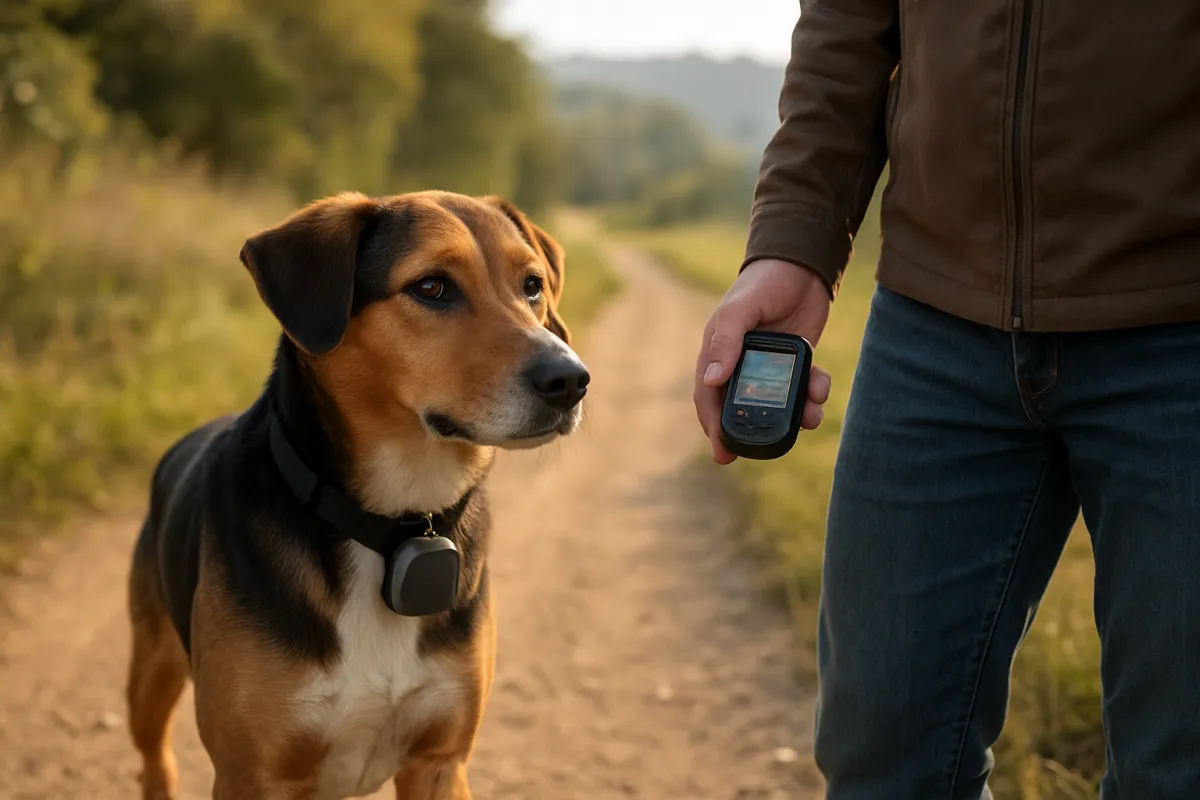
1. Decide what “GPS tracking” must mean for your dog
A true GPS tracker determines its position from satellite signals, but it still needs a way to send that position back to you. Subscription-based collars normally use cellular networks for this communication. No-subscription systems avoid cellular service by transmitting to a dedicated handheld receiver, a nearby base unit, or a crowdsourced smartphone network.
Before comparing models, answer three practical questions:
- Will your dog be outside cellular coverage?
- Do you need a live direction and distance display, or is a last-known location enough?
- Are you willing to carry a receiver or keep a base unit nearby?
If your dog escapes in a suburban neighborhood, a network-based tag may provide a useful lead. If your dog hunts, hikes, or runs on rural property, a dedicated radio-linked GPS system is generally the more appropriate category.
2. Compare the main no-subscription tracker types
The following table separates the technologies that are often grouped together in search results.
| Tracker type | What to look for | Warning sign | Best fit |
|---|---|---|---|
| Handheld GPS and collar | Dedicated receiver, long-range radio link, replaceable or rechargeable collar battery | High purchase cost or bulky equipment | Hunting, hiking, farms, remote areas |
| Local-network GPS | Base station range, terrain limits, waterproofing, realistic battery duration | Short battery life or vague range claims | Homes, yards, and nearby outdoor areas |
| Bluetooth or crowdsourced tag | Nearby-device coverage, phone compatibility, separation alerts | No live GPS position or sparse updates in rural areas | Urban recovery backup |
| Cellular GPS collar | Coverage map, subscription terms, update frequency, battery-saving modes | Assuming the device works without an active service plan | Everyday nationwide tracking where coverage is available |
There is no universal winner because removing the monthly fee usually means accepting one of two trade-offs: a much higher upfront price or a smaller operating range.
3. Garmin Astro and Alpha: the strongest off-grid choice
Why Garmin is different
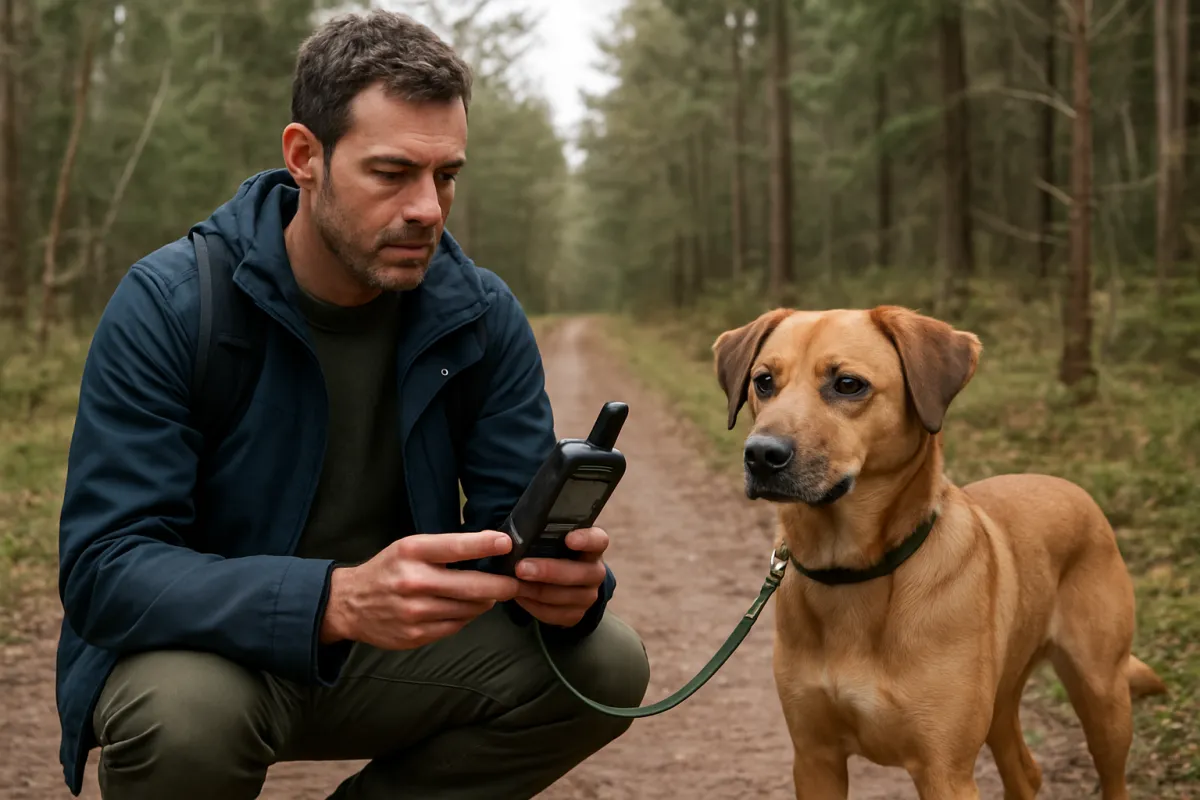
Garmin Astro systems pair a handheld device with a compatible dog collar. The collar sends location information directly to the handheld through a proprietary radio link, so the system does not depend on a cellular subscription. Garmin lists the Astro 430 as supporting up to 20 dogs, with an advertised range of up to 9 miles under suitable conditions and location updates as often as every 2.5 seconds with compatible equipment. Verify compatibility before mixing older handhelds and collars because Garmin has discontinued some legacy combinations.
Garmin Alpha models add features aimed at sporting and working dogs, including dog tracking, mapping, and—in compatible configurations—training functions. The Alpha 200i and related systems are designed for users who need a more advanced field tool rather than a small everyday tag.
Strengths
- No recurring cellular service fee.
- Useful in places where mobile coverage is absent.
- Real-time direction, distance, and track information on the handheld.
- Suitable for tracking more than one compatible dog.
- Better suited to active searches than an item-finder tag.
Limitations
- The initial equipment cost can be substantial, especially for multiple dogs.
- You must carry and maintain the handheld receiver.
- Range depends on terrain, vegetation, buildings, antenna position, and local conditions.
- The collar may be heavier and more specialized than a basic identification tag.
Review the official Garmin Astro specifications and the relevant Alpha product page before buying. Product bundles, included collars, maps, and compatibility can differ, so comparing only the handheld price can produce an unrealistic total.
4. Petfon: a lower-cost local-range alternative
Petfon markets its PETFON2 as a GPS pet tracker with no monthly or service fee. Its system combines the tracker with a dedicated base or controller and uses GPS, Wi-Fi, Bluetooth, and long-distance wireless communication rather than a cellular subscription. The manufacturer states that range can reach about 0.65 miles in dense urban conditions and up to 3.5 miles in open environments, while also noting that surroundings affect performance.
That makes Petfon more comparable to a local tracking system than to a nationwide GPS collar. It may suit a dog that wanders around a property, campground, or familiar walking area, provided you understand that the controller must remain within a workable range.
What to verify before ordering
- Whether the current model is available in your country.
- Whether the advertised battery duration matches your intended use.
- Whether “rainproof” is sufficient for your dog’s swimming habits.
- Whether replacement hardware, chargers, and support are easy to obtain.
Petfon’s product information describes battery life of approximately 8–16 hours and says the device is rainproof but not intended for swimming. Those limitations matter: a tracker that needs charging every day is less useful if you routinely forget to charge it or if your dog spends long periods outdoors.
See the manufacturer’s PETFON2 details for the current specifications, included equipment, and operating claims.
5. Apple AirTag: useful backup, not a true GPS tracker
AirTag is often included in lists of no-monthly-fee dog trackers because it has no cellular subscription. However, Apple describes AirTag as sending a secure Bluetooth signal that can be detected by nearby devices in the Find My network. The tag itself does not provide independent live GPS tracking.
In a busy neighborhood, an AirTag may report a recent location when passing iPhones detect it. In a sparsely populated rural area, there may be no nearby device to relay its position. Updates can therefore be delayed or absent, particularly if your dog is moving through woods, private land, or an area with few participating devices.
When an AirTag makes sense
- You use an iPhone and want a low-cost secondary recovery aid.
- Your dog normally stays in an urban or suburban environment.
- You understand that it provides proximity or network-based location rather than a continuous trail.
- You attach it securely and still use a collar ID tag and microchip.
When it is the wrong tool
- Your dog regularly hikes outside cellular and population centers.
- You need a live map, direction arrow, or distance-to-dog reading.
- Your dog is an escape risk and may travel quickly over a large area.
- You need dependable tracking during hunting, search, or working-dog activities.
Apple’s official AirTag explanation is useful because it clearly describes the Bluetooth and Find My network model. Treat AirTag as an additional layer of identification, not as a substitute for a dedicated dog-tracking system.
6. Evaluate range, battery, fit, and recovery features
Range is not a single number
Manufacturers commonly quote an open-air maximum. Buildings, hills, dense forest, wet vegetation, and the dog’s position can reduce practical range. Ask whether the stated distance is line-of-sight, whether the receiver needs to be elevated, and whether the product gives you an alert before the connection is lost.
Battery life affects safety
Compare normal-use battery life rather than a best-case standby claim. Check charging time, low-battery notifications, spare batteries, and whether high-frequency tracking sharply reduces runtime. A shorter battery may be acceptable for a two-hour hike but unsuitable for overnight outdoor work.
Fit and durability matter
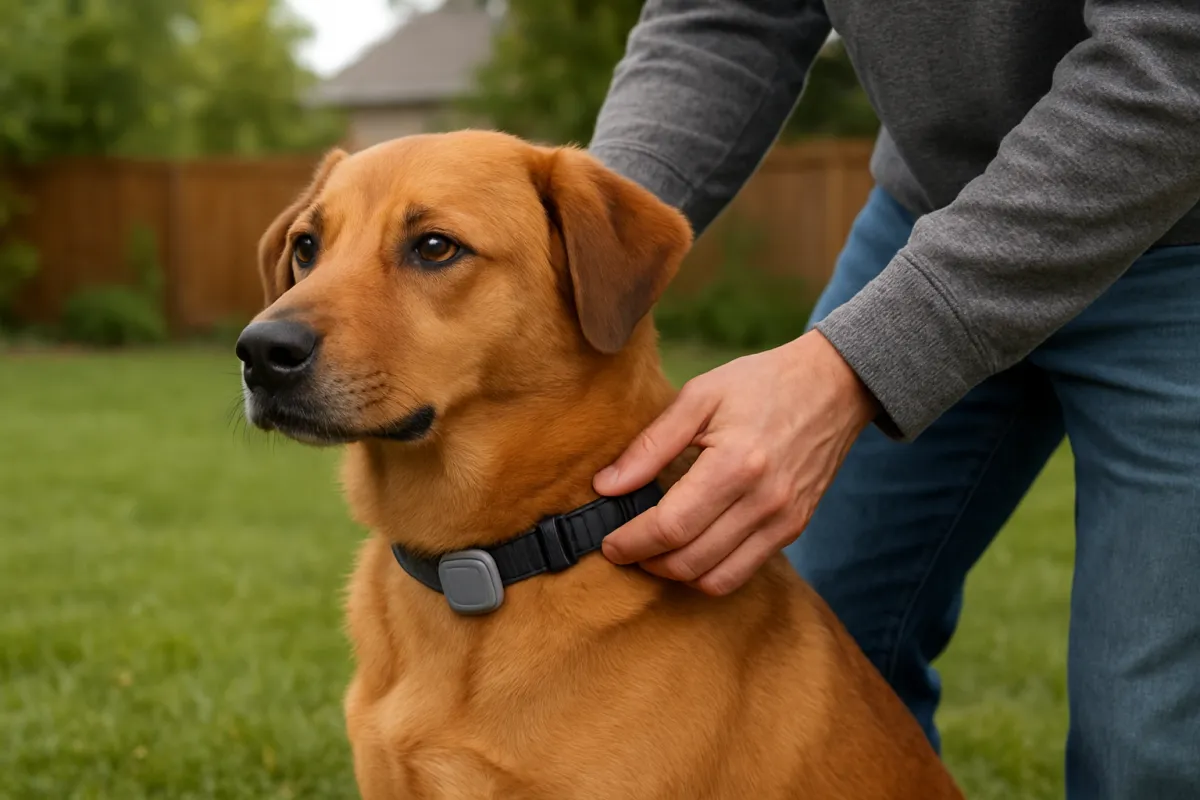
The tracker should not interfere with breathing, movement, or a properly fitted collar. Check the device weight against your dog’s size, examine how it attaches, and confirm the water-resistance rating. If your dog swims, rolls in mud, or chews equipment, do not treat “rainproof” as equivalent to waterproof.
Recovery features are secondary but useful
Look for a direction display, sound or light activation, location history, geofencing, and a visible identifier. These features can reduce search time, but none replaces a secure collar, current contact details, and a registered microchip.
7. Common buying mistakes with no-fee dog trackers
- Confusing GPS with Bluetooth. A Bluetooth tag may help locate a nearby object or use a phone network, but it does not create an independent GPS trail.
- Ignoring the receiver. A local or radio tracker is only useful if you carry or position its receiver correctly.
- Buying from an outdated listing. Older Petfon and Garmin pages may describe discontinued models, accessories, or compatibility combinations.
- Using maximum range as a guarantee. Terrain and obstructions can reduce the working distance considerably.
- Forgetting total cost. Include the collar, handheld, charging accessories, replacement parts, maps, and protective mounts.
- Skipping a real-world setup check. Test the tracker around your home, route, or property before relying on it during an emergency.
- Relying on one recovery method. Use a microchip, visible ID, secure collar, and an appropriate tracking device together.
8. What if the tracker stops updating?
If the device shows an old location
Check battery status, collar attachment, receiver range, and whether the dog has entered an area blocked by terrain or buildings. For a network tag, move toward the last known location and look for nearby-device updates; do not assume the displayed location is current.
If the signal disappears during a hike
Return to the last reliable point, gain elevation if safe, and follow the manufacturer’s search procedure. With Garmin equipment, the handheld’s track history and direction information may help you retrace the route. Avoid separating from your group or entering hazardous terrain simply to improve a signal.
If your dog swims or gets soaked
Remove the device when safe, inspect the manufacturer’s water-resistance guidance, and do not charge visibly wet equipment. If the tracker is essential for outdoor work, choose a model whose protection rating matches the actual conditions rather than occasional light rain.
9. A practical buying checklist
- ☐ Confirm whether the device is true GPS, local radio, or Bluetooth/network-based.
- ☐ Confirm that no subscription is required for the features you need.
- ☐ Check realistic range for your terrain, not only the advertised maximum.
- ☐ Compare normal battery life and charging requirements.
- ☐ Check weight, collar attachment, and water resistance.
- ☐ Confirm phone, handheld, map, and collar compatibility.
- ☐ Calculate the complete upfront cost.
- ☐ Test the device before an off-leash trip.
- ☐ Keep your dog’s microchip registration and ID details current.
10. Which no-monthly-fee tracker is best for you?
Choose Garmin Astro or Alpha if your priority is dependable off-grid tracking, you travel with a dog in remote areas, or you need to follow multiple working or sporting dogs. The trade-off is a larger, more expensive system that requires a handheld receiver.
Choose Petfon if you want a dedicated local-range system without a recurring fee and your dog generally stays within the practical range of its controller. Confirm availability, battery expectations, and water protection before purchase.
Choose AirTag only as a backup if you live in an area with many nearby Apple devices and mainly want an inexpensive way to improve the odds of recovering a lost collar. It is not the right primary tracker for rural escapes, fast-moving dogs, or live off-grid searches.
The best GPS trackers for dogs without monthly fees are not necessarily the cheapest devices. They are the ones whose communication method matches where your dog may go. For serious remote tracking, invest in a dedicated receiver-based system; for everyday identification, add a network tag only as a second layer rather than treating it as a complete safety plan.
For broader prevention and preparedness advice, you may also find LaokPet’s guides on building a dog-friendly first-aid kit and helping a dog stay calm during a thunderstorm useful.