If your cat rarely seems to visit the water bowl, start with small changes rather than trying to make them drink on demand. The most useful answer to how to encourage a cat to drink more water is to make fresh water easy to find, pleasant to use, and available in several forms. You can try wider bowls, different locations, wet food, a drinking fountain, or a little water mixed into meals. Introduce one change at a time and watch what your cat naturally prefers.
Cats can be particular about water, and some receive much of their fluid from wet food. A cat that appears to drink very little may still be taking in water through meals. However, a clear change in drinking, urination, appetite, energy, or behavior deserves attention. Hydration habits are helpful, but they are not a substitute for veterinary care when a cat seems unwell.
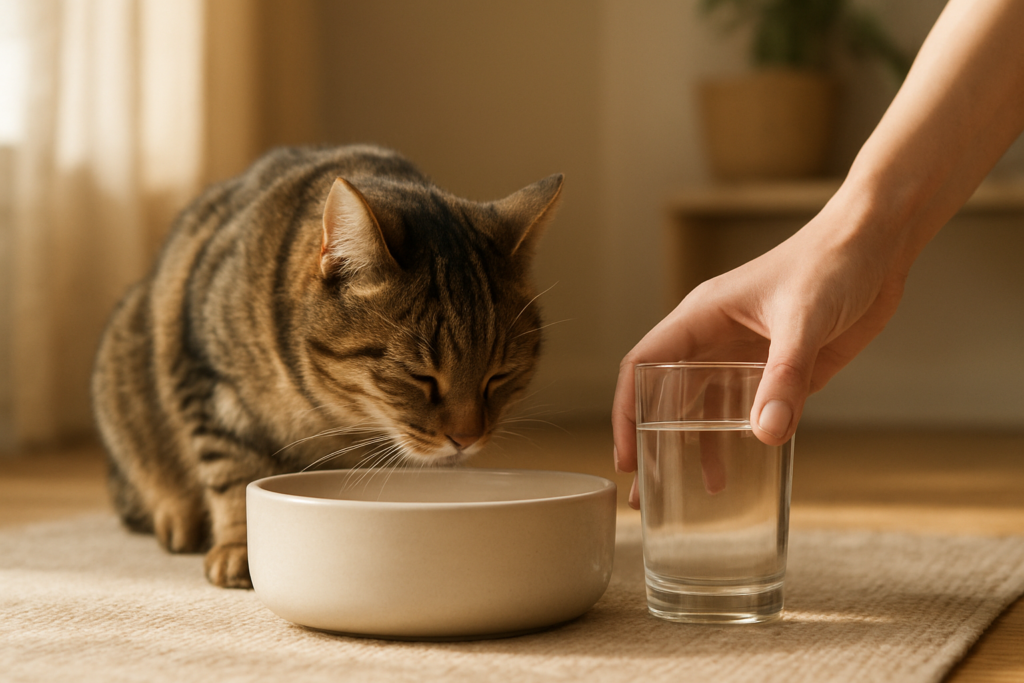
Before you begin: understand your cat’s normal routine
Before changing the setup, spend a day or two noticing what is normal for your cat. Look at whether they eat dry food, wet food, or a mixture; where they usually rest; when they visit the kitchen; and whether they prefer still or moving water. Also notice their litter-box routine without trying to measure every visit precisely.
This baseline helps you judge whether a new idea is useful. A cat that already eats moist meals may not visibly drink often. On the other hand, a cat that suddenly seeks water, urinates much more, vomits, loses interest in food, or becomes tired should not be managed with home hydration tricks alone.
Prepare a low-pressure hydration setup
- Use clean, fresh water and wash bowls regularly.
- Keep at least one water station in a quiet place where your cat feels safe.
- Place water away from litter trays and, if possible, away from food if your cat dislikes the two being close.
- Have a second bowl available so you can test a different shape or location.
- Make changes gradually and keep the familiar option during the trial.
- Choose plain water and cat-safe foods only; avoid flavored drinks, milk, stock, or salty liquids.
1. Offer more than one water station
One bowl may be easy for you to see but inconvenient for your cat. A busy hallway, a corner beside a noisy appliance, or a spot where another pet can block access may discourage drinking. Put bowls in calm, familiar areas where your cat already spends time.
In a multi-cat home, provide several stations rather than expecting every cat to share one bowl. Keep a clear route to each station. This is especially important if one cat guards food, water, doorways, or favorite resting places.
Checkpoint
After several days, ask whether your cat approaches a bowl but walks away, drinks only when the room is quiet, or prefers one location. These clues can point to a problem with access or surroundings rather than with water itself.
2. Test the bowl’s shape and material
Some cats dislike deep or narrow bowls because their whiskers touch the sides. Try a broad, shallow dish with enough room for your cat to drink without pressing the face into the rim. Other cats prefer a deeper container, so let your cat’s behavior guide the choice.
Offer two clean bowls side by side for a short trial. Keep the water level similar and change only the bowl type. This makes it easier to see whether shape matters. A smooth, easy-to-clean surface is practical because old food residue, dust, and slimy buildup can make water less appealing.
Do not assume that an expensive or decorative bowl is better. Comfort, cleanliness, stability, and easy access matter more than appearance. A bowl that slides while your cat drinks can also be unpleasant, so choose a steady base or place it on a non-slip mat.
3. Keep water fresh and easy to notice
Refresh the water regularly, especially if it contains hair, litter dust, food crumbs, or debris. Wash the bowl rather than simply topping it up. Rinse away soap carefully, since a strong smell may put some cats off.
Fill the bowl to a comfortable level. Some cats prefer a fuller bowl, while others dislike water touching their whiskers when the level is high. Watch how your cat approaches the dish and adjust it slightly.
If your cat likes to investigate taps, you can offer a brief, supervised drink from a gentle stream. Do not leave a tap running unattended, and do not treat this as the only water source. A quiet bowl should always remain available.
4. Try moving water carefully
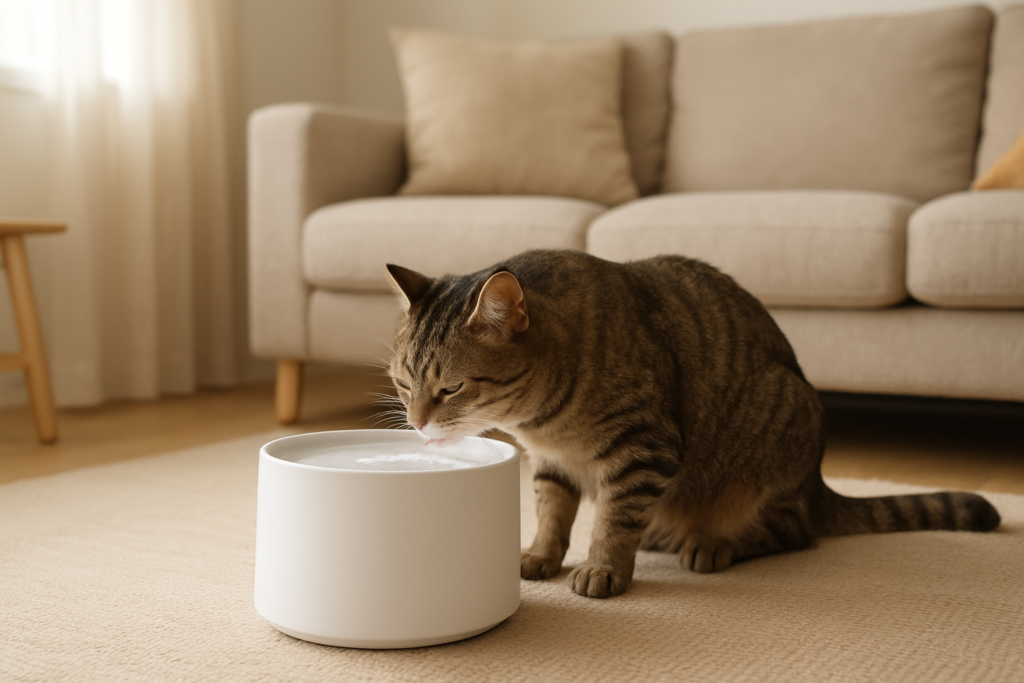
A fountain may interest a cat that prefers moving water. If you introduce one, place it beside the familiar bowl first. Let your cat inspect it while it is switched off, then turn it on at a quiet setting. Keep the original bowl until you know your cat accepts the new option.
Fountains need regular cleaning and fresh water. Follow the care instructions for the particular design, and check hidden areas where residue can collect. A fountain that is noisy, placed in a busy area, or allowed to become dirty may reduce interest rather than increase it.

5. Increase moisture through food
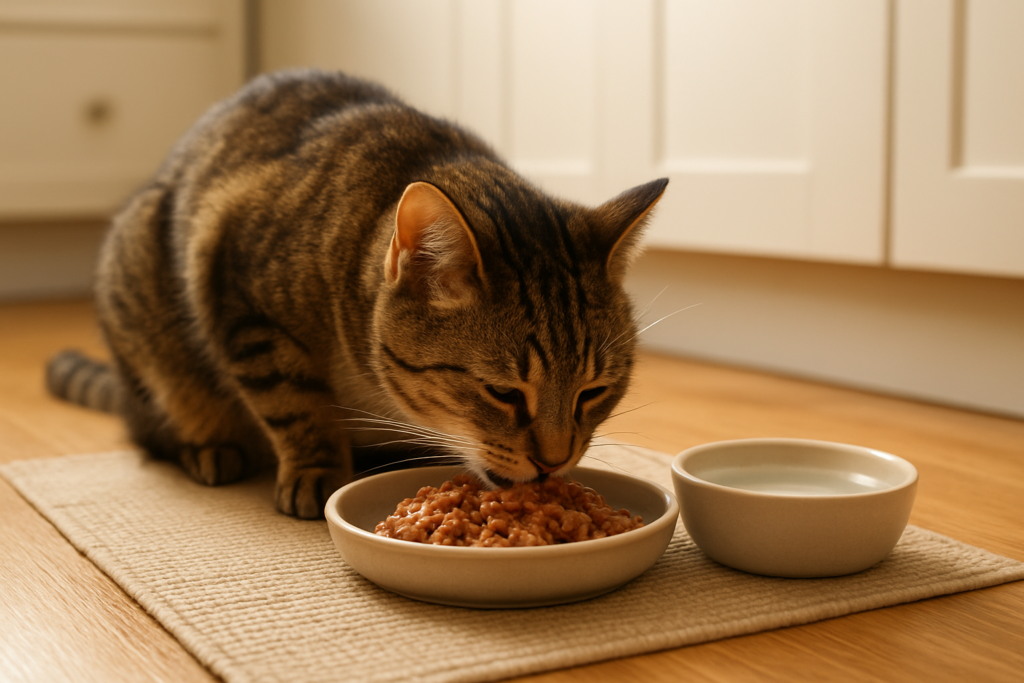
Food is often the gentlest way to add moisture. If your cat already eats wet food, continue offering it as part of a balanced feeding routine. If they eat dry food, ask your veterinarian before making a major diet change, especially if your cat has a medical condition or needs a specific diet.
You can ask your cat whether they accept a little plain water mixed into their usual wet food. Start with a small amount so the smell and texture do not change dramatically. If your cat refuses the meal, return to the familiar version and try a slower approach later. A cat needs to keep eating, so do not sacrifice food intake in an attempt to add water.
Offer food and water in separate dishes unless your cat clearly prefers otherwise. Some cats like water mixed into food, while others strongly reject it. There is no single correct method; the best method is one your cat accepts consistently.
6. Make water part of a calm daily routine
Place a water station near a favorite resting area, but not so close that your cat feels watched or interrupted. Many cats drink when the home is quiet. Avoid hovering, pointing, praising loudly, or repeatedly carrying your cat to the bowl.
After play, provide access to fresh water and allow your cat to settle. Keep water available overnight and during warm periods. In a hot home, improve comfort with shade, ventilation, and access to cool areas rather than relying on water alone.
Reward interest indirectly by keeping the area calm and predictable. If your cat walks toward the bowl, let them decide whether to drink. Low pressure builds trust and makes it easier to notice genuine preferences.
7. Use a simple one-change-at-a-time trial
Trying five new ideas at once can confuse your cat and make the result impossible to interpret. Instead, choose one change and keep everything else familiar for several days. You might begin with a second shallow bowl in a quiet location. If that does not help, test a different bowl or a small amount of water in wet food.
Write down the change and your observations in simple language. For example: “New wide bowl in bedroom; cat sniffed it and drank once in the evening.” You do not need perfect measurements. The goal is to identify patterns without turning drinking into a stressful event.
| What you notice | Low-pressure next step |
|---|---|
| Cat ignores one bowl but drinks elsewhere | Copy the preferred bowl or location and keep both available. |
| Cat drinks from taps or puddles | Offer a clean supervised stream or a quiet fountain, while keeping bowls available. |
| Cat dislikes water added to food | Stop that trial and focus on fresh bowls, locations, or accepted moist food. |
| Several cats share one station | Add separate stations with clear access and observe for blocking. |
| Drinking changes suddenly | Contact a veterinarian for advice instead of relying only on home changes. |
A quick hydration checklist
- Fresh water is available every day.
- At least one bowl is in a quiet, safe location.
- The bowl is comfortable, stable, and easy to clean.
- Water is kept away from litter contamination.
- Multiple cats have enough access to avoid competition.
- Any fountain is cleaned regularly and introduced gradually.
- Moist food or a small amount of water in food is offered only if accepted.
- Your cat is never forced to drink.
- You know the warning signs that require professional advice.
Common mistakes that can reduce drinking
Moving the only familiar bowl
A sudden replacement can remove the option your cat trusts. Add the new setup beside the old one, then remove the old bowl only if your cat clearly accepts the change.
Keeping water beside the litter tray
Even when the area looks clean, nearby smells and tracked litter may make water less attractive. Move the bowl to a separate, peaceful area.
Adding unsuitable liquids
Milk, salty broth, sugary drinks, and flavored human beverages are not reliable hydration choices for cats. Use plain water unless a veterinary professional recommends another option.
Changing food too quickly
A sudden diet change can cause refusal or digestive upset. Introduce any food adjustment slowly and follow professional advice when your cat has dietary needs.
Watching too closely
Calling your cat, touching them, or praising them every time they approach water can make the activity feel like a test. Give them privacy and observe from a distance.
Troubleshooting when your cat still drinks very little
First, check whether your cat eats wet food and whether they may be drinking in another place. Look for dampness around a fountain or a preferred outdoor area, but do not allow unsafe outdoor water to become the main source.
Next, return to the simplest setup: a clean, shallow bowl of plain water in a quiet location. Offer a second bowl elsewhere and avoid making further changes for a short period. If your cat is eating, alert, and behaving normally, continue observing while arranging routine professional guidance if the concern persists.
If your cat refuses food, cannot keep water down, seems weak, has trouble breathing, has very dry or sticky gums, strains to urinate, produces little or no urine, or shows a sudden major change in drinking or urination, contact a veterinarian promptly. Urinary difficulty, in particular, can be an emergency, especially in male cats. Do not wait for a bowl experiment to solve a potentially serious problem.
For broader guidance on recognizing changes in a cat’s wellbeing, visit LaokPet’s pet health and wellness resources. For everyday routines and practical home care, explore the pet care guides.
Advanced practical tips for multi-cat and sensitive homes
In a multi-cat home, map the areas where each cat feels comfortable. Put stations in different rooms or along separate routes, rather than lining them up together. This reduces the chance that one confident cat will control access.
For a nervous cat, begin with water near a familiar hiding or resting place, provided the spot is clean and safe. Avoid placing a bowl beside a loud washer, a busy doorway, or a food dish used by another animal. If visitors or household changes have disrupted drinking, restore a predictable quiet zone before testing new equipment.
For cats that play with water, use a heavy, stable bowl and a washable mat. Clean spills promptly so the area does not become slippery or attract litter. For cats that prefer a particular cup, dish, or room, copy the useful features with a safe, dedicated water container.
When to ask a veterinarian
Professional advice is appropriate whenever drinking or urination changes noticeably, when a cat seems ill, or when you are worried despite normal-looking behavior. Increased drinking can also matter; the goal is not simply to make a cat drink as much as possible. A veterinarian can help decide whether the pattern needs examination and whether diet or fluid support should be adjusted.
Bring useful observations: when the change began, whether appetite and energy changed, what food your cat eats, any vomiting or diarrhea, and whether urination looks different. A short record can help the veterinary team understand the situation. Do not give human medicines or attempt home fluid treatment without instructions.
Useful next actions
Today, wash the current bowl, fill it with fresh plain water, and place a second comfortable bowl in a quiet location. Keep your cat’s usual food and routine unchanged. Over the next few days, observe without pressure and test only one additional idea if needed.
The right hydration habit may be simple: a better bowl, a safer location, fresher water, accepted wet food, or more than one choice. Follow your cat’s preferences, protect food intake, and treat sudden health changes as a reason to seek veterinary guidance rather than as a training problem.