The best cat brush for a long-haired cat is usually a gentle slicker brush or pin brush for routine grooming, paired with a metal comb for checking tangles close to the skin. The right choice depends on your cat’s coat density, sensitivity, and tendency to form mats—not simply on the number of pins or the product’s appearance.
Regular brushing can help remove loose hair, identify developing tangles, and make grooming more manageable. This guide is based on established grooming principles and observable tool features rather than personal product testing, current laboratory comparisons, or verified retailer pricing. Use it to compare brush types, choose a sensible routine, and recognize when a professional groomer or veterinarian should help.
1. Start with the coat and the cat, not the product label
Long-haired cats do not all need the same brush. A fine, silky coat may tangle easily but require a light touch, while a thick double coat may need repeated passes through several layers. Curly, plush, or heavily feathered coats can also hide knots beneath a smooth surface.
Your cat’s behavior matters just as much. A brush that works well in theory is a poor choice if it causes fear, scratching, or prolonged restraint. Begin with short sessions when your cat is calm, and reward cooperation with a familiar treat or another positive routine.
Questions to answer before buying
- Does the coat form small tangles, dense mats, or mostly loose hair?
- Is your cat comfortable with firm contact, or does it prefer a very soft touch?
- Do you need a tool for daily maintenance, occasional detangling, or both?
- Can you see and reach the skin clearly while brushing?
- Are there areas your cat cannot tolerate, such as the belly or hind legs?
2. Compare the main brush types for long-haired cats
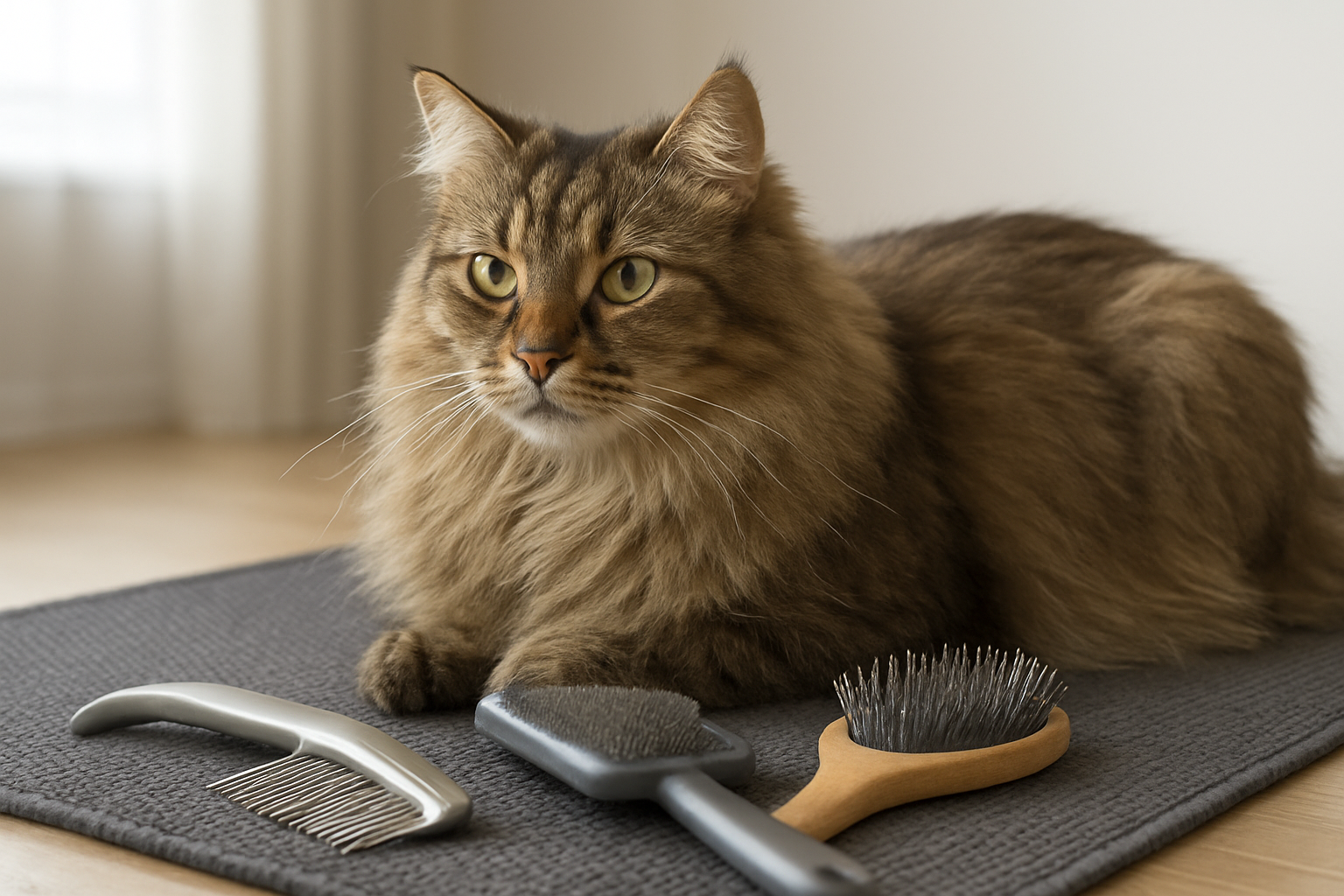
Brushes have different jobs. A practical grooming setup often includes one tool for surface hair and another for inspection rather than expecting a single brush to handle every problem.
The table below summarizes the most useful categories and their limitations.
| Tool type | What to look for | Best use | Warning sign |
|---|---|---|---|
| Slicker brush | Fine, evenly spaced wires with flexible tips and a comfortable handle | Removing loose hair and working through light tangles in a dense coat | Rigid or sharp tips that scratch the skin or cause your cat to flinch |
| Pin brush | Smooth rounded pins with enough spacing for the coat to pass through | Gentle surface grooming and longer, flowing coats | Pins that snag, bend easily, or stop before reaching the undercoat |
| Metal comb | Rounded teeth with both wider and narrower spacing | Checking for hidden tangles and finishing difficult areas | Teeth that are rough, pointed, or too close together for the coat |
| Undercoat rake | Limited-length teeth suited to a thick undercoat | Occasional loose-undercoat removal when used carefully | Excessive hair removal, repeated passes, or pressure against the skin |
| Dematting tool | A design intended for small, loose knots and controlled use | Only minor tangles that are not tight against the skin | Using it on large mats, sensitive skin, or a struggling cat |
3. Choose a gentle slicker or pin brush for regular sessions
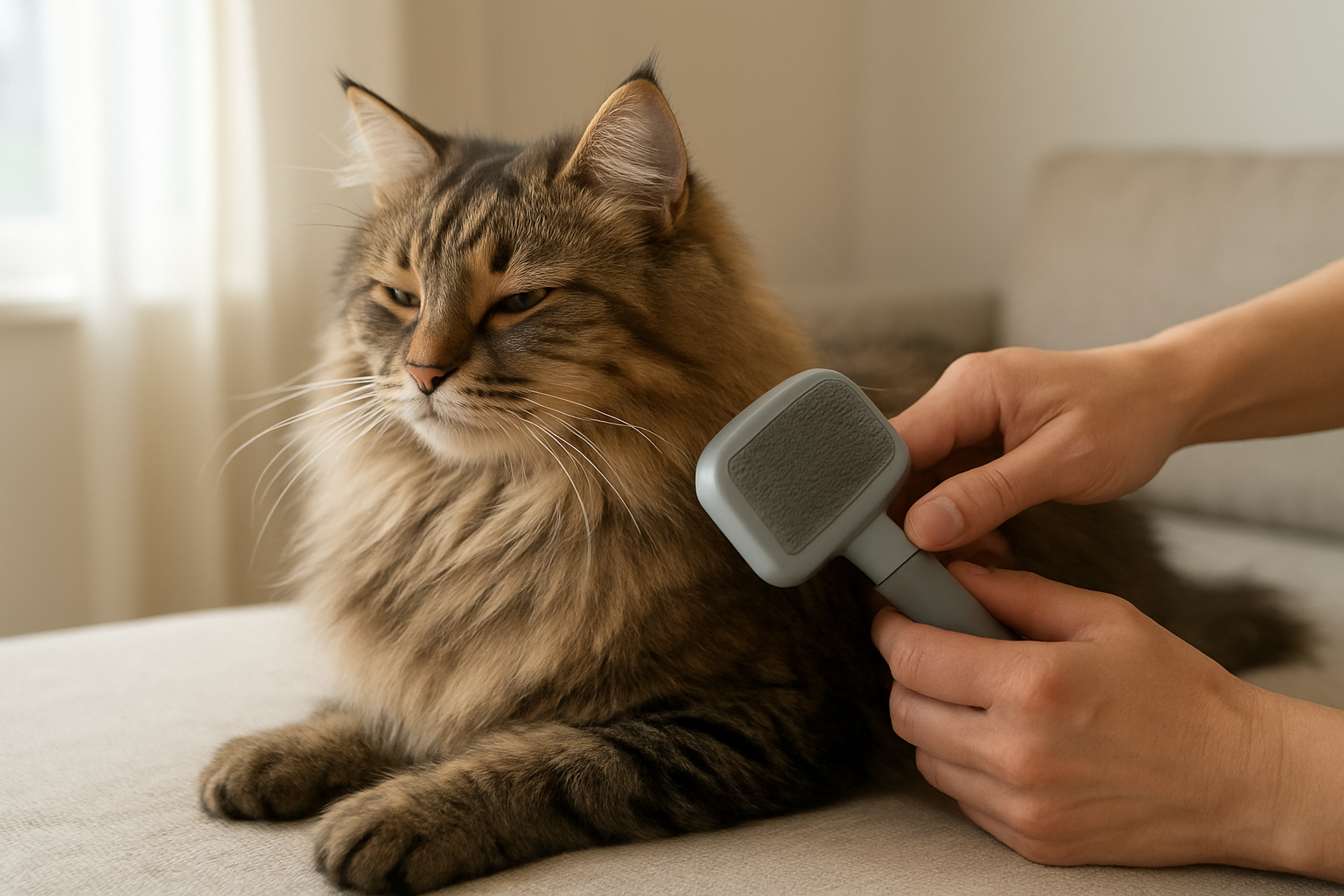
For many long-haired cats, a slicker brush is a useful starting point because its fine pins can separate loose hair and light tangles. The pins should flex slightly under gentle pressure. A very firm brush can remove hair efficiently while still irritating the skin if used aggressively.
A pin brush may be a better fit for cats with a relatively smooth, silky coat or those that dislike the sensation of fine wires. Rounded pin ends can feel less intense, but they still need to reach through the coat rather than skim only the top.
Whichever style you choose, test it on your own forearm with light pressure. This does not prove how it will feel on a cat, but it can reveal obvious sharpness, rough edges, or excessive stiffness before the first grooming session.
4. Keep a metal comb for inspection and finishing
A brush can make the surface look tidy while leaving a knot underneath. A metal comb helps you check whether the teeth can pass from the skin outward through areas that commonly tangle, including behind the ears, beneath the front legs, around the hindquarters, and at the base of the tail.
Wide teeth are useful for the first pass through a fuller coat. Narrower teeth can help identify small remaining tangles, but they should not be forced through resistance. Work in small sections and support the hair near the skin so you are not pulling directly on your cat’s body.
Comb teeth should be smooth and rounded enough not to scratch. Clean the comb and brush after each session so removed hair does not reduce their effectiveness or hide damage to the tool.
5. Match the grooming method to safety and comfort
Brush in the direction the hair naturally lies, using short strokes and frequent pauses. Start at the ends of the hair and gradually work toward the roots rather than dragging a tool from the skin through a large section all at once.
- Begin with a calm area such as the shoulders or back.
- Use your fingers to separate a small section before brushing it.
- Stop when your cat shows escalating stress, pain, or repeated attempts to escape.
- Check the skin for redness, scabs, swelling, parasites, or sore patches.
- Never use scissors close to the skin to cut out a mat; cat skin can be pulled into the knot and cut easily.
For more on routine care, see how to build a daily routine for a senior cat. Older cats may need shorter sessions, more support, and closer observation of skin and joint comfort.
6. Build a simple routine instead of waiting for visible mats
Short, frequent grooming sessions are generally easier to manage than an occasional attempt to remove a large amount of shed hair. The appropriate frequency varies with coat type and season, so use the comb as a practical check rather than following a fixed schedule blindly.
A basic session can follow this order:
- Let your cat sniff the tools and settle in a comfortable position.
- Brush a small area with light strokes.
- Pause and reward calm behavior.
- Use the comb to check the roots and common problem areas.
- Stop before your cat becomes distressed, even if the session is incomplete.
Some cats accept grooming better on a stable mat or non-slip surface. Avoid holding a cat down for a long session unless a trained professional is managing a genuine safety need.
7. Avoid common buying and grooming mistakes
- Choosing the strongest-looking tool: More aggressive teeth do not automatically mean better grooming. They may increase discomfort and break fragile hair.
- Buying only a brush: A comb is often needed to confirm that the undercoat is actually clear.
- Ignoring handle design: A slippery or awkward handle can lead to uneven pressure and accidental pulling.
- Assuming shedding means matting: A shedding tool may remove loose hair but may not solve knots near the skin.
- Continuing through resistance: Repeated painful sessions can make future grooming harder.
- Using human or dog products without checking: Grooming tools and topical products should be appropriate for cats. Never apply a flea or tick product unless its label specifically permits feline use.
If parasite concerns are part of the problem, consult this safety guide to flea and tick prevention for indoor cats. Brushing can help you notice changes, but it does not replace appropriate parasite control.
8. What if the coat is already matted?
Small, loose tangles may sometimes be separated with your fingers and a comb, working slowly from the outer edge. Do not yank, rake repeatedly over one spot, or use a dematting blade on a cat that is moving unpredictably.
Contact a professional groomer or veterinarian when mats are widespread, tight to the skin, damp, foul-smelling, bleeding, or associated with pain. Veterinary advice is also appropriate if you find inflamed skin, open wounds, unexplained hair loss, or a sudden change in grooming tolerance.
9. A practical buying checklist
- Choose a tool designed for cats, with smooth construction and no exposed sharp edges.
- Match pin or tooth spacing to the density and length of the coat.
- Prefer a handle that remains secure in your hand during small, controlled strokes.
- Look for easy cleaning and replacement availability, but do not treat marketing claims as proof of performance.
- Plan for both routine brushing and comb-based inspection if your cat mats easily.
- Check retailer return terms and current price separately, since availability and pricing change.
10. Which setup is best for your cat?
For a long-haired cat with a manageable coat, a gentle slicker or pin brush plus a rounded metal comb is a sensible starting combination. A thick-coated cat may also benefit from careful undercoat work, while a cat with recurring mats may need a groomer rather than a more aggressive home tool.
Breed can provide clues but should not determine the purchase by itself. For example, the grooming demands of Persian cats and Exotic Shorthairs differ in important ways; the comparison of Persian cats and Exotic Shorthairs can help put coat maintenance in context.
Next actions before you buy
- Inspect your cat’s coat in daylight, including the roots and hidden areas.
- Decide whether your main task is loose-hair removal, light detangling, or mat prevention.
- Choose the gentlest suitable brush and add a comb for checking the undercoat.
- Test the tool’s edges and flexibility before using it on your cat.
- Introduce it in brief sessions and track which areas cause discomfort.
Final verdict on the best cat brushes for long-haired cats
The best cat brushes for long-haired cats are not necessarily the most powerful or heavily marketed. A comfortable slicker or pin brush, combined with a smooth metal comb and a patient routine, covers the needs of many cats with manageable coats. If your cat has painful or extensive mats, recurring skin problems, or cannot tolerate brushing, professional help is the safer choice than escalating to a harsher tool.