The best daily routine for a senior cat is predictable, gentle, and easy to adjust. Keep meals, medication, litter-box care, rest, grooming, and quiet interaction at roughly consistent times while watching for changes in appetite, mobility, toileting, and behavior.
Older cats often benefit from fewer surprises and easier access to their basic needs. A routine also gives you a simple way to notice small changes before they become serious problems. This guide will help you build a schedule that fits your cat’s age, health, personality, and home environment.
1. Prepare the home before setting the schedule
Begin by making the routine physically comfortable. A senior cat may still want to climb, explore, and play, but stiffness, reduced vision, dental disease, or other age-related problems can make familiar tasks more difficult.
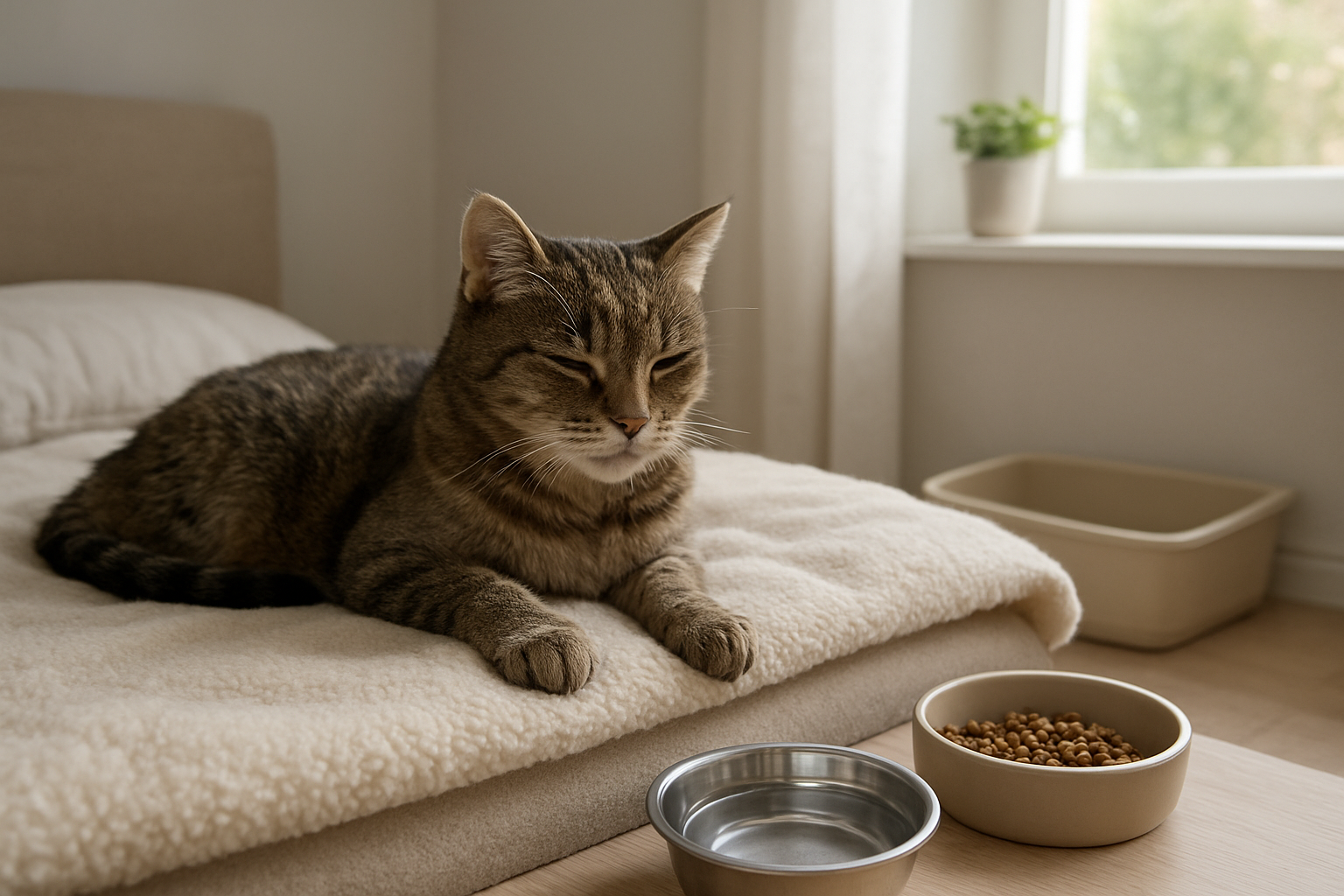
- Put food and water on the same floor as your cat’s main resting area.
- Use a low-entry litter box if stepping over a high rim seems difficult.
- Provide a warm, stable bed away from drafts, heaters, and busy walkways.
- Add a nonslip mat near bowls, litter boxes, ramps, or favorite jumping points.
- Keep essential items in predictable places rather than moving them frequently.
Do not make the room excessively hot. Your cat should be able to move away from any heat source easily, and heated beds should be used only according to the manufacturer’s safety instructions.
Choose realistic routine anchors
Pick activities that already happen every day, such as your morning coffee, leaving for work, or preparing dinner. Attach cat care to those anchors so the schedule is easier for you to maintain.
A useful starting plan is one morning check, one evening check, and short care tasks placed around meals. The exact clock time matters less than consistency and your cat’s comfort.
2. Set consistent meal and medication times
Feed according to your veterinarian’s advice and the instructions for the specific food. Senior cats do not all need the same diet: calorie needs, dental comfort, kidney health, thyroid disease, diabetes, and other conditions can affect what and how much they should eat.
Measure portions rather than estimating by eye, especially if your cat is gaining or losing weight. If your cat receives medication, give it at the prescribed interval and ask the veterinary team what to do if a dose is missed or vomited.
Keep a simple record for one week:
- Time and amount of food offered
- Whether the meal was finished
- Water intake if it can be observed reliably
- Medication given and any unusual reaction
- Vomiting, diarrhea, coughing, or changes in appetite
Fresh water should be available throughout the day. Some cats prefer wide, shallow bowls, while others drink more from a fountain; introduce changes gradually rather than replacing every bowl at once.
For general senior-cat guidance, review the Cornell Feline Health Center’s senior-cat recommendations and discuss diet changes with your veterinarian.
3. Add gentle movement without forcing exercise
Daily movement can support normal behavior and help you observe mobility, but it should be low-impact. Offer one or two short play sessions using a toy that can be moved slowly along the floor. Let your cat decide whether to participate.
- Use wand toys at floor level instead of encouraging high jumps.
- Place a scratcher horizontally or at a comfortable angle if vertical scratching is difficult.
- Use ramps or stable steps to reach a favorite low platform.
- Stop if your cat pants, hides, limps, vocalizes in discomfort, or seems distressed.
Less activity is not always normal aging. Difficulty rising, avoiding stairs, hiding, or stopping normal grooming may indicate pain or illness. Arrange a veterinary assessment instead of trying to exercise through these signs.
The Cornell guide to slowing down in cats explains why reduced mobility deserves attention rather than automatic dismissal as old age.
4. Schedule grooming, litter-box care, and quiet contact
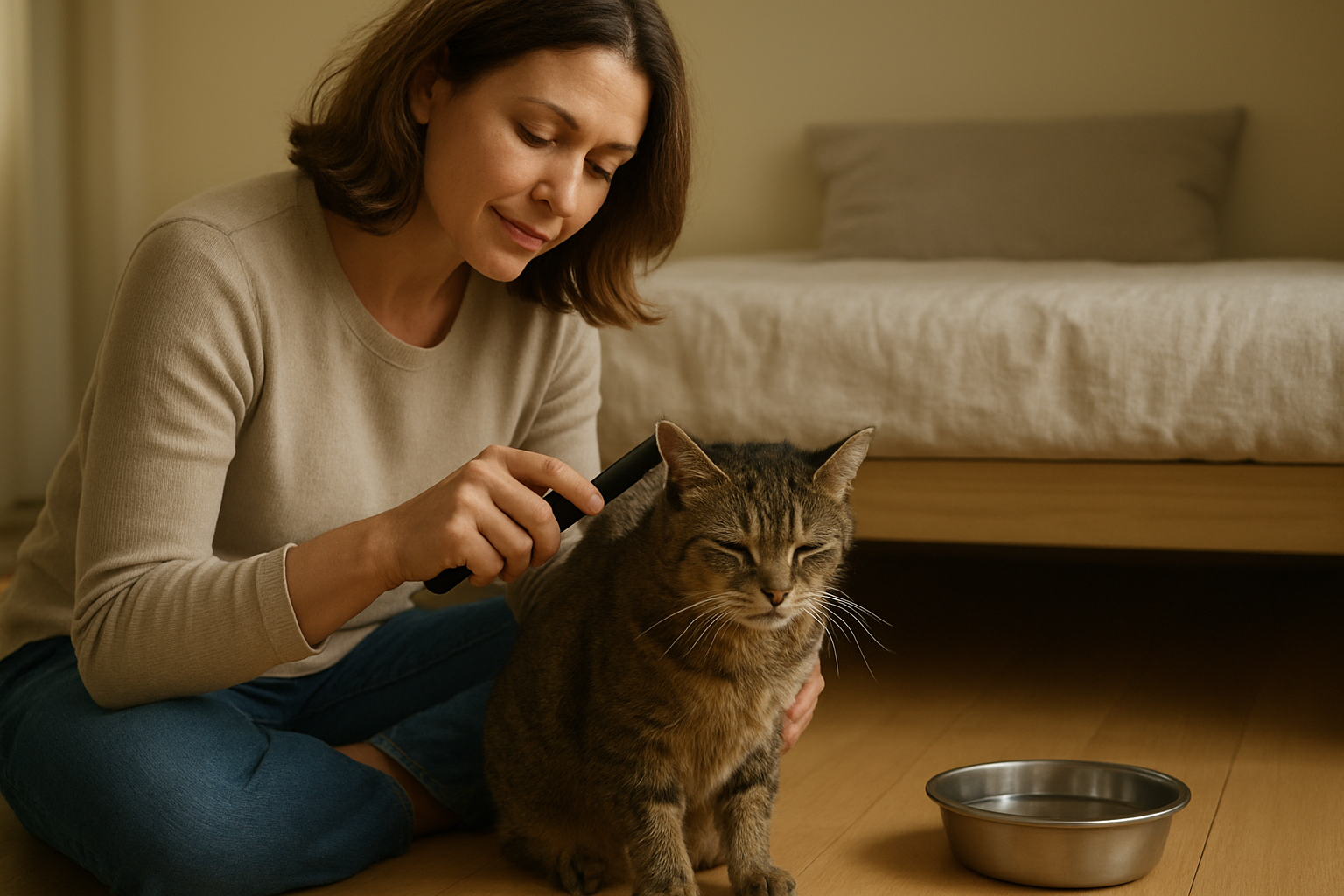
Use calm handling and keep care sessions brief. Many senior cats appreciate gentle brushing, but sensitive skin, arthritis, dental pain, or a hidden medical problem can make handling uncomfortable.
Check the coat during a relaxed interaction rather than restraining your cat for a long inspection. Look for mats, dandruff, bald patches, parasites, strong odor, or areas your cat repeatedly licks or avoids.
Clean litter boxes at least daily and observe more than the amount of waste. Note changes in frequency, urine volume, stool consistency, accidents, straining, or a sudden refusal to use the box.
Build quiet companionship into the routine, but let your cat choose the level of contact. Some older cats want more lap time; others prefer sitting nearby without being picked up.
5. Monitor the routine with a simple comparison checklist
Write down your cat’s normal pattern before you need to interpret a change. The goal is not to diagnose illness at home; it is to provide useful information to your veterinarian.
Use this table during your morning or evening check:
| Area to check | What to look for | Warning sign | What to do |
|---|---|---|---|
| Appetite | Normal interest and usual portion eaten | Refuses food or eats much less | Call your veterinarian, especially if the change is sudden |
| Movement | Walks, rises, and reaches the litter box normally | Stiffness, limping, hiding, or difficulty jumping | Arrange an examination; do not give human pain medicine |
| Grooming | Coat remains reasonably clean and comfortable | Mats, greasy coat, bald areas, or reduced grooming | Book veterinary advice and groom gently |
| Bathroom habits | Usual urine and stool pattern | Straining, blood, repeated accidents, or no urine | Seek prompt veterinary guidance; inability to urinate is urgent |
| Behavior | Normal sleep, vocalization, and social habits | Sudden confusion, persistent crying, or withdrawal | Contact your veterinarian rather than assuming it is aging |
6. Review the routine every week
Once a week, review weight if your veterinarian has recommended home weighing, medication compliance, litter-box observations, and any changes in sleep or activity. A short video of unusual walking, breathing, or behavior can help your veterinary team understand what happens at home.
Senior cats may need more frequent examinations than younger adults. Ask your veterinarian how often your cat should be seen and which monitoring tests are appropriate for its age and medical history. The Feline Veterinary Medical Association senior-care guideline provides additional background for discussing ongoing care.
Practical daily checklist
- Offer food and prescribed medication on schedule.
- Refresh water and check that bowls are easy to reach.
- Scoop the litter box and note unusual urine or stool.
- Watch your cat walk, rise, and settle down.
- Provide a short, optional play or enrichment session.
- Check the coat, eyes, breathing, and general attitude without prolonged restraint.
- Record anything that differs from your cat’s normal pattern.
Common mistakes to avoid
- Changing everything at once: New food, litter, furniture, and medication routines can make it hard to identify what caused a problem.
- Assuming reduced activity is harmless: Pain and illness can look like laziness or sleepiness.
- Restricting food without guidance: Weight management should account for your cat’s medical needs and appetite.
- Using human medicines: Many common human drugs are dangerous for cats.
- Making the cat climb for essentials: Food, water, rest, and litter access should not depend on stairs or high jumps.
What if the routine stops working?
If your cat resists one part of the schedule, first check whether the task has become uncomfortable. Lower the litter-box entry, move a bowl closer, shorten grooming, or switch to floor-level play. Make one change and observe for several days.
Contact a veterinarian promptly for sudden appetite loss, repeated vomiting, breathing difficulty, collapse, severe weakness, straining to urinate, or an inability to pass urine. For gradual changes such as weight loss, increased thirst, nighttime vocalization, or worsening stiffness, schedule an appointment and bring your written observations.
Next actions for building the routine
- List your cat’s current meal, medication, sleep, litter-box, and play times.
- Move essential resources to comfortable, easily accessible locations.
- Choose two daily check-in times and set reminders for one week.
- Record appetite, movement, grooming, and bathroom changes without trying to diagnose them.
- Share the record with your veterinarian and adjust the plan based on professional advice.
To build a daily routine for a senior cat successfully, aim for predictability rather than rigidity. Keep necessary care consistent, make the home easier to navigate, and treat any meaningful change from your cat’s normal behavior as information worth checking.