The safest way to trim a cat’s nails is to go slowly, cut only the sharp hooked tip, and stop before your cat becomes frightened. You do not need to finish every paw in one sitting. A few successful cuts followed by a reward can build a calmer routine than trying to complete the whole job while your cat struggles.
Choose a quiet, familiar place, prepare suitable cat nail clippers, and work when your cat is relaxed. Support the paw gently, press the toe to extend the claw, identify the quick, and remove only a small amount. If your cat becomes highly distressed, pause and try again later or ask a veterinary professional for help.
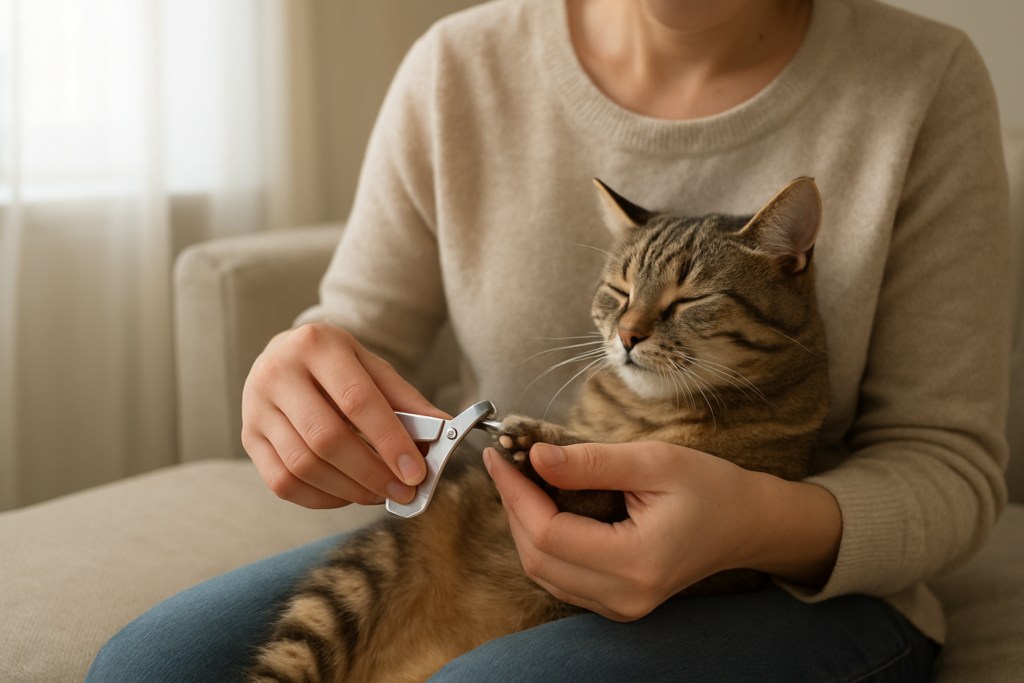
Why regular nail care matters
A cat’s claws are useful for climbing, stretching, play, and self-protection. Indoor cats may naturally wear their nails less than cats that spend time outdoors, so the tips can become very sharp or overgrown. Long claws may catch in fabric, make walking uncomfortable, or curve toward the paw pad.
Nail trimming is not a contest and it is not a test of obedience. The goal is simply to keep the sharp ends manageable while protecting your cat’s trust. Some cats need only occasional attention; others benefit from brief checks more often. Your cat’s age, activity, claw growth, and comfort with handling all make a difference.
Prepare before you touch the clippers
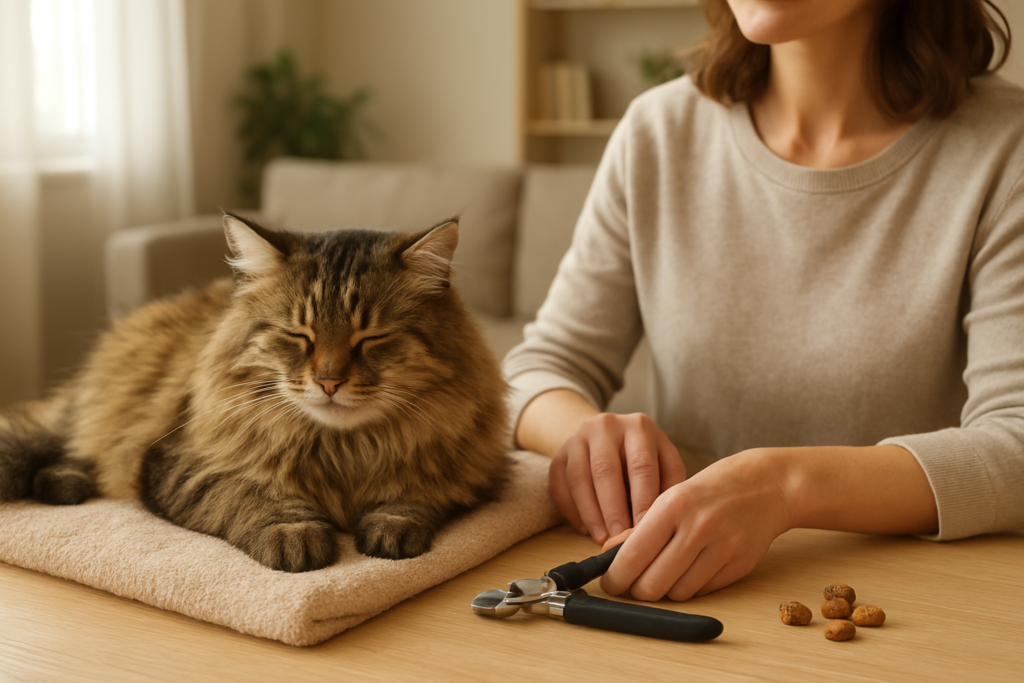
Preparation helps keep the session short and prevents you from searching for supplies while holding a nervous cat. Set everything within reach before inviting your cat over.
- Cat nail clippers: Use clean clippers designed for small animal nails and make sure they open and close smoothly.
- A calm location: Choose a quiet room with stable seating and good light. Avoid busy doorways, loud appliances, and sudden interruptions.
- A comfortable surface: A towel, lap, or non-slip blanket can help your cat feel secure. Do not wrap tightly or restrict breathing.
- Small rewards: Prepare treats, a favorite food, gentle play, or quiet praise. Use what your cat already enjoys.
- Styptic powder or suitable clotting aid: Keep a pet-safe option available in case the quick is nicked. Follow its label directions.
Do not trim immediately after a stressful event, during rough play, or when your cat is actively trying to leave. A sleepy period after a meal may be easier, but do not wake or restrain a deeply sleeping cat to begin.
Teach paw handling first
If your cat pulls away as soon as you touch a paw, begin with training rather than trimming. Sit beside your cat and briefly touch a shoulder, leg, or paw. Release your hand, then offer a reward. Repeat only while your cat remains comfortable.
Over several short sessions, gently hold the paw for a second or two. Press the toe pad very lightly so the claw extends, reward, and let go. Next, show the closed clippers without bringing them to the nail. The sound and sight should become ordinary before you make a cut.
Watch for early signs of stress: a stiff body, flattened ears, tail lashing, repeated paw withdrawal, growling, hissing, or attempts to hide. These are signals to stop or reduce the difficulty. Do not punish, scold, chase, or force the process. A calm ending is more valuable than one extra nail.
How to trim a cat’s nails safely: numbered steps
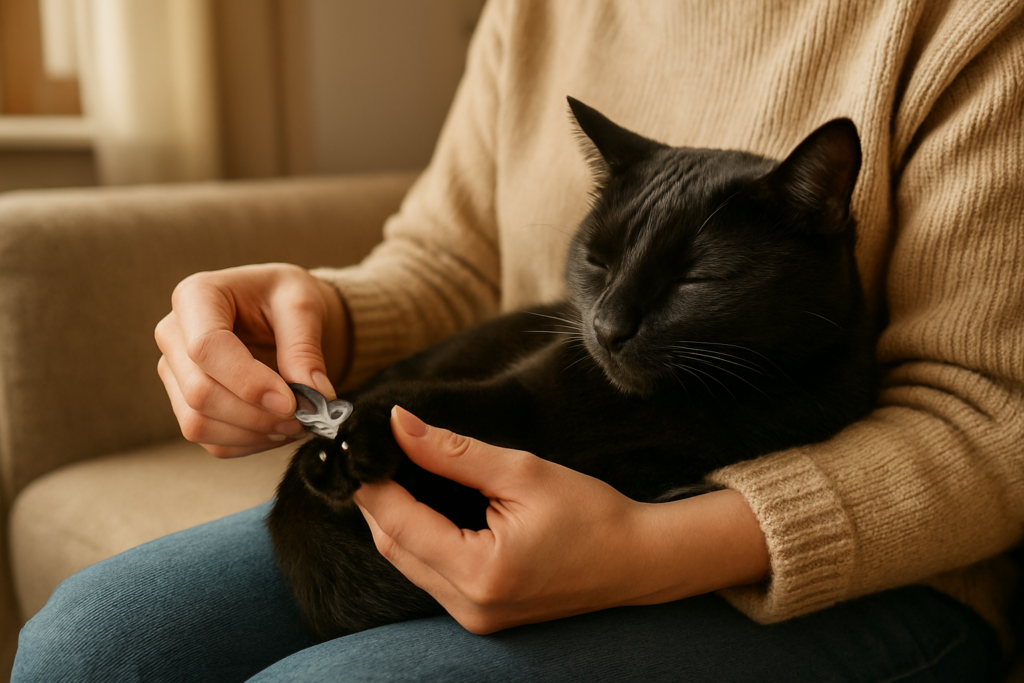
1. Settle your cat and choose a workable position
Invite your cat to sit on your lap, beside you, or on a stable surface. Some cats are comfortable facing away from you, while others prefer to sit facing you. Keep your body relaxed and support the chest or shoulder without squeezing.
If your cat will not settle, do not turn the session into a wrestling match. Offer a reward for sitting nearby and try again later. You can also trim one nail during a naturally calm moment and end there.
2. Hold one paw gently
Use one hand to support the paw and the other to hold the clippers. Keep the leg in a natural position. Avoid bending a joint sharply, pulling a toe, or gripping the paw so tightly that your cat feels trapped.
Touch the paw briefly before extending the claw. This small pause gives your cat a chance to remain aware of what is happening and allows you to notice tension early.
3. Extend the claw and identify the quick
Press gently on the top of the toe and the pad underneath. The claw should extend without force. In light-colored claws, the quick often appears as a pink or darker area inside the nail. Leave a clear margin between the cutting point and the quick.
Dark claws can make the quick difficult to see. In that case, remove only the very end, then inspect the freshly cut surface. Stop if the center begins to look darker, moist, or different from the surrounding outer nail. It is safer to make several tiny trims over time than one deep cut.
4. Cut only the sharp tip
Place the clippers across the narrow hooked end, not close to the base. Take a small, clean snip. Many people find it helpful to cut at a slight angle that follows the natural curve of the claw, but the key safety point is the amount removed: take the minimum needed to blunt the tip.
After each cut, release the toe and offer calm praise or a reward. You can stop after one claw, especially during early sessions. If your cat remains relaxed, continue with another nail, keeping the pace slow and predictable.
5. Remember the front dewclaws
The higher claw on the inside of each front leg is often called the dewclaw. Because it may not contact the ground in the same way as the other claws, it can become long and curved. Check it carefully, but do not assume every claw needs the same amount removed.
6. Finish before your cat reaches the limit
End the session while your cat is still coping well. Give a final reward and allow your cat to leave. Record mentally or on a simple note which claws you trimmed so the next session can begin where you stopped.
Quick nail-trimming checklist
- ☐ Quiet room, good light, and a stable comfortable surface
- ☐ Clean cat nail clippers that work smoothly
- ☐ Rewards ready before handling the paw
- ☐ Pet-safe clotting aid available
- ☐ Claw extended gently, without pulling the toe
- ☐ Only the sharp tip removed
- ☐ Dewclaws checked
- ☐ Session stopped at the first clear signs of distress
What to do if you nick the quick
A small nick can cause sudden pain and bleeding, so stay calm and stop trimming. Apply gentle, steady pressure with clean gauze or a soft cloth. If you have a pet-safe clotting product, use it according to the product instructions. Keep your cat quiet and prevent licking if possible without creating more panic.
Seek veterinary guidance if the bleeding continues, the cut appears deep, your cat is in significant pain, the toe becomes swollen, or you are unsure whether the injury is serious. Do not apply household chemicals or improvised substances to an injured nail.
Common mistakes that make nail trimming harder
| Common mistake | Why it causes trouble | Calmer alternative |
|---|---|---|
| Trying to finish all claws immediately | The session becomes long and stressful. | Trim one or two claws and build gradually. |
| Cutting close to the base | You may hit the quick and cause pain. | Remove only the pointed tip. |
| Holding the paw too tightly | Your cat may feel trapped and resist more strongly. | Support lightly and release often. |
| Chasing a cat that leaves | It can make handling and clippers frightening. | End the session and restart with a reward later. |
| Ignoring dark claws | The quick is harder to judge visually. | Make tiny cuts and inspect after each one. |
Troubleshooting a difficult session
My cat keeps pulling the paw away
Return to paw-touch training without clippers. Reward a brief touch, then release. Try a different position, such as sitting beside your cat rather than lifting the cat onto your lap. Some cats tolerate handling better when all four paws remain supported.
My cat bites or scratches
Stop and give space. Do not continue while your cat is actively defensive. A second person should not pin the cat down simply to make trimming possible. If nail care remains unsafe, ask a veterinarian or qualified veterinary team about handling options.
My cat accepts one paw but not the other
That is common. Work on the easier paw first and use the successful experience to build confidence. You may need different sessions for front and back paws. Keep each attempt brief.
The claws are already very long
Do not try to restore them to a short length in one session. The quick may have extended along with the nail, so taking off too much can cause pain. Trim small amounts and ask a veterinarian to examine claws that are curling toward the pad, splitting, or causing limping.
Advanced tips for a smoother routine
Use a consistent cue. A quiet phrase such as “paw time” can help your cat predict what will happen. Say it before a brief touch and reward calm behavior. Keep the cue associated with gentle handling, not restraint.
Separate practice from cutting. On some days, practice touching paws and hearing the clippers without cutting. This keeps every interaction from ending with a snip and can make the equipment less alarming.
Use natural breaks. A cat that is calmly grooming, resting beside you, or enjoying quiet attention may accept one quick trim. Do not interrupt a tense or highly alert moment.
Keep the motion efficient. Once the claw is extended and you have identified the safe tip, make one clean cut. Repeatedly repositioning the clippers can increase uncertainty for both of you.
Check rather than assume. Look at the claws regularly, especially the front dewclaws. A claw that catches on blankets, appears tightly curved, or seems to affect walking deserves attention.
For more everyday guidance, explore LaokPet’s cat care articles and the broader pet-care guides.
When professional help is the safest choice
Ask a veterinarian or veterinary team for help if your cat cannot be handled without intense fear or aggression, if the claws are embedded or badly overgrown, or if there is bleeding, swelling, discharge, a broken nail, or a noticeable change in walking. A professional can assess the paw and discuss a safe handling plan.
Professional support is also sensible for cats with painful conditions, very fragile nails, or a history of severe reactions to handling. Never give a sedative or human medicine to make nail trimming easier unless a veterinarian specifically directs you to do so.
Next steps for a calm nail-care habit
Start with a short practice session today: touch a paw, offer a reward, and stop. When your cat is comfortable with that step, extend one claw and reward again. On a later session, trim one sharp tip. Progress is measured by calm cooperation, not by the number of nails completed.
Keep the clippers clean and stored safely, check the claws during ordinary handling, and finish each session with something your cat enjoys. With patience, small steps, and careful attention to the quick, nail care can become a quiet part of your cat’s normal routine.