To transition a cat to new food safely, change the food gradually over about seven to ten days, watch your cat’s appetite and litter box, and slow down if digestive problems appear. Some cats need longer, especially if they are cautious eaters, have a sensitive stomach, or are moving from one food texture to another.
A careful transition is more than mixing two foods. Your cat must continue eating enough, accept the new taste and texture, and remain comfortable while the change takes place. The method below gives you a calm plan that can be adjusted to your cat’s response.
Why a gradual food transition matters
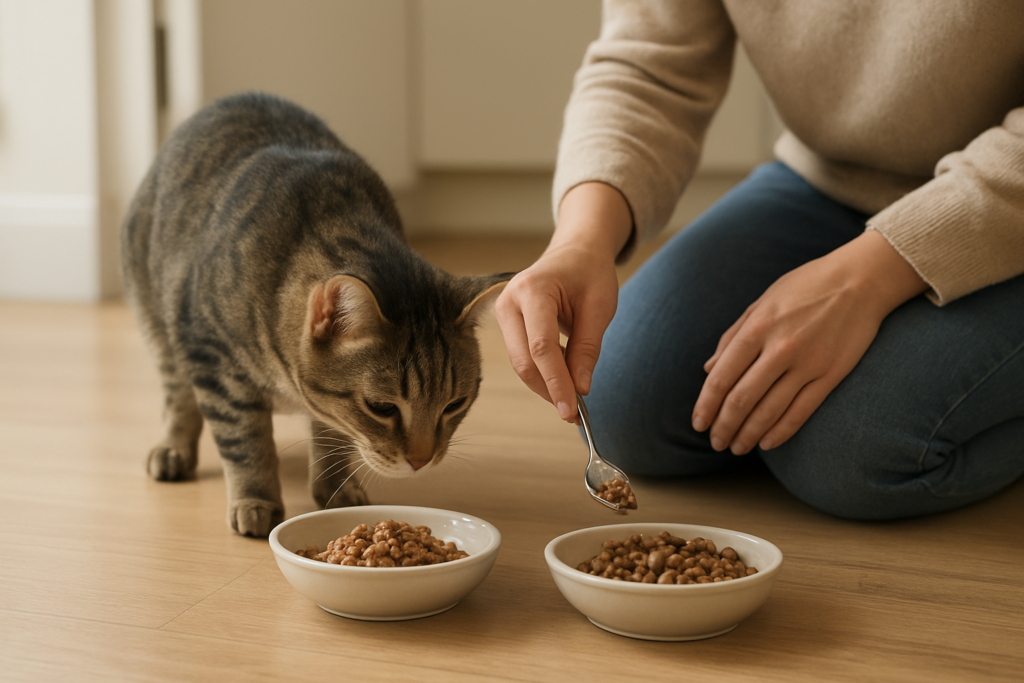
Cats can be very sensitive to changes in smell, flavor, shape, and texture. A new food may also have a different moisture level or nutritional composition. Introducing it suddenly can lead to refusal, loose stools, vomiting, or stress around mealtimes.
A gradual change gives your cat time to become familiar with the new food and allows you to notice how they respond. It also makes it easier to identify the cause if a problem develops. If both foods are changed at once, it is harder to tell whether the issue is the recipe, the texture, the feeding routine, or something unrelated.
There is no single schedule that suits every cat. The percentages below are a starting point, not a rule that must be followed if your cat is struggling. A slower transition is usually more sensible than pushing ahead.
Prepare before you begin
Confirm that the new food is appropriate
Check the feeding information on the package and make sure the food is intended for your cat’s life stage. Kittens, adults, and senior cats may have different nutritional needs. If the new food is being used because of a medical concern, follow the plan provided by your veterinarian rather than making independent substitutions.
When changing from wet to dry food, dry to wet food, or one texture to another, expect your cat to need extra patience. For some cats, texture is more important than flavor. A pâté, mousse, chunks in gravy, and dry kibble can feel like entirely different foods to them.
Keep the first days predictable
Choose a period when your cat’s routine is fairly stable. Avoid starting during a move, house guests, a major schedule change, or another stressful event if you can. Feed in a quiet location away from litter boxes, noisy appliances, busy walkways, and other animals that may cause competition.
Measure the food and observe the baseline
Know roughly how much your cat currently eats and how often they use the litter box. Measuring portions helps you avoid accidentally overfeeding when combining foods. It also gives you a useful reference if appetite or stool quality changes.
Keep fresh water available at all times. Wash bowls regularly, and use a clean bowl for each meal if food dries or becomes unappealing. Some cats prefer a wide, shallow dish that does not press against their whiskers.
How to transition a cat to new food safely: the step-by-step plan
Step 1: Offer a very small amount of the new food
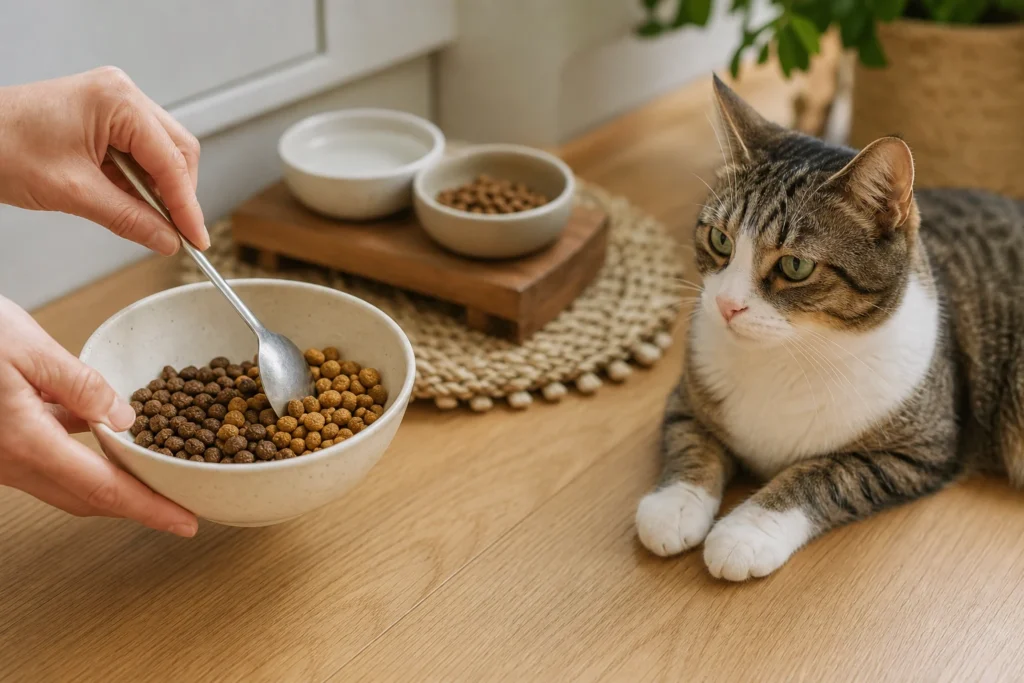
Begin with a small portion of the new food mixed into the familiar food. A common starting point is about 10% new food and 90% current food. If your cat is especially cautious, place a tiny amount beside the familiar food at first rather than mixing it through. This lets your cat investigate without making the whole meal smell different.
Keep the total meal size appropriate for your cat. The new food replaces part of the old food; it is not normally added on top of a full serving. If the package gives different calorie guidance, follow the relevant instructions and ask a veterinary professional if you are unsure.
Step 2: Hold the ratio until your cat is comfortable
Continue at the starting ratio for two or three days if your cat eats normally and has no concerning digestive changes. Look for ordinary interest in food, normal energy, and stools that are close to your cat’s usual pattern.
Do not judge success only by whether your cat takes a few bites. A cat may sample a new food and then eat too little overall. Check the amount consumed across the whole day, especially if your cat normally grazes.
Step 3: Increase the new food in small stages
If the first stage goes well, move to approximately 25% new food and 75% old food. Hold that ratio for a few days. Next, try about 50% of each food, then 75% new food and 25% old food. Finish with 100% new food only when your cat is eating willingly and remaining well.
| Transition stage | New food | Current food | What to check |
|---|---|---|---|
| Starting stage | About 10% | About 90% | Interest in the meal, food intake, stool changes |
| Early increase | About 25% | About 75% | Comfort with smell and texture; no worsening symptoms |
| Middle stage | About 50% | About 50% | Normal appetite, energy, and litter box pattern |
| Late stage | About 75% | About 25% | Willing eating and stable digestion |
| Completion | 100% | 0% | Continue monitoring after the change |
These percentages are practical estimates. You can stay at any stage for longer, use smaller increases, or return to the last well-tolerated ratio. A transition may take longer than ten days and still be completely appropriate.
Step 4: Keep portions and mealtimes consistent
Try to keep the number of meals and the general timing familiar. Sudden changes to both food and routine can make it difficult to know what your cat dislikes. If you need to adjust meal frequency, make that a separate, gradual change when possible.
For wet food, offer fresh portions and remove uneaten food according to safe household food-handling practices. For dry food, protect it from moisture and keep it in a clean, sealed container. Avoid using treats to compensate for a meal that your cat refuses, because this can reduce appetite for the main food and make the transition less clear.
Step 5: Complete the change only after a stable period
Once your cat is eating the new food well, move to the full new-food portion. Continue observing for several days. A delayed reaction is possible, and some cats simply need time to settle into a new routine.
Record useful details such as the date of each ratio change, how much your cat ate, stool consistency, vomiting, and unusual behavior. A simple note on your phone can help you explain the timeline to a veterinarian if needed.
Signs that you should slow down
Pause at the current ratio or return to the last comfortable stage if you notice mild changes such as softer stools, less enthusiasm, or occasional hesitation. Give your cat time to settle before trying a smaller increase.
Do not keep advancing because a calendar says it is time. Your cat’s response is more important than completing the transition on a fixed schedule. If the same problem returns each time you add the new food, stop the transition and ask a veterinarian for guidance.
When to contact a veterinarian
Contact a veterinary professional if your cat refuses food, eats much less than usual, vomits repeatedly, develops persistent or severe diarrhea, appears painful, becomes unusually quiet or weak, or shows signs of dehydration. Blood in vomit or stool, breathing difficulty, collapse, or a rapidly worsening condition requires urgent attention.
Cats should not be deliberately starved to make them accept a new diet. A prolonged lack of food can become dangerous, particularly for cats that are overweight or already unwell. If your cat will not eat the new food, offer the familiar food while seeking advice rather than relying on hunger to force acceptance.
Speak with your veterinarian before changing food for a cat with a diagnosed condition, a history of urinary problems, kidney disease, diabetes, food reactions, digestive disease, or another ongoing health issue. A therapeutic diet may need to be introduced in a specific way, and not every general-purpose food is a suitable substitute.
Common mistakes to avoid
Changing everything at once
Changing food, bowl, location, feeding time, and treats together can overwhelm a cautious cat. Keep as many familiar details as possible while the food changes.
Moving ahead too quickly
A cat that accepts one meal may not be ready for a large increase the next day. Hold each ratio long enough to see a pattern, not just a single successful meal.
Adding food without adjusting the total
Mixing a full portion of new food into a full portion of old food can unintentionally increase calories. Replace part of the old food unless a professional has given you different instructions.
Serving food that has lost its appeal
Strong smells, stale dry food, very cold wet food, or a dirty bowl can make a cat reject a meal. Serve food in a clean dish and follow sensible storage guidance. Some cats accept wet food more readily when it is close to room temperature, but avoid heating it until it is hot.
Using too many extras
Table scraps, treats, toppers, and flavored supplements can change the taste of the meal and may upset digestion. Keep extras limited during the transition so you can identify what your cat is responding to.
Troubleshooting a reluctant eater
If your cat sniffs the food but walks away
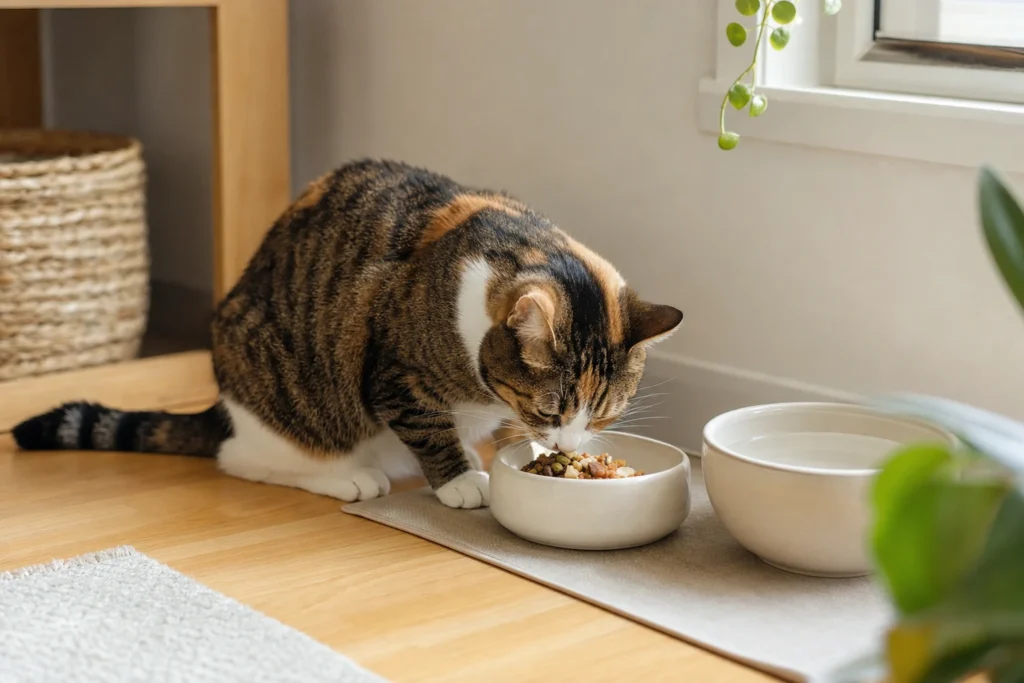
Return to a smaller amount of the new food. Try placing it beside the old food for a short period, then mix it once your cat accepts its presence. Use a quiet feeding area and remove distractions. Do not chase, restrain, or pressure your cat into eating.
If your cat accepts the taste but dislikes the texture
Ask whether the texture is the main change. A cat may accept the same general type of food in a different shape, moisture level, or consistency. Make only one adjustment at a time, and keep the familiar food available while you learn what your cat prefers.
If stools become soft
Stop increasing the new-food proportion and monitor your cat. If stools do not return to normal, become frequent or watery, or occur with vomiting, poor appetite, pain, or low energy, contact a veterinarian. Do not give human medicines unless a veterinary professional specifically directs you to do so.
If your cat vomits
One isolated episode may have many possible causes, but vomiting during a food change should not be ignored if it repeats or affects appetite. Return to the last tolerated stage only if your cat is otherwise well and a professional has not advised differently. Seek veterinary advice when vomiting continues or your cat seems unwell.
Practical tips for a smoother transition
- Use familiar feeding equipment. A familiar bowl can make the change feel less disruptive.
- Keep multiple cats separate if needed. Feed them in different spaces so you can see who is eating what.
- Measure rather than guess. Consistent portions make the transition easier to assess.
- Introduce one major change at a time. This makes troubleshooting more useful.
- Protect mealtime from stress. Keep dogs, children, and other cats from crowding the bowl.
- Respect your cat’s normal pattern. Some cats prefer several small meals, while others eat at set times.
- Keep a backup of the familiar food. This is useful if your cat suddenly refuses the new food or you need to pause.
- Watch the whole cat, not only the bowl. Appetite, energy, water intake, litter box habits, and body condition all provide context.
For more everyday guidance, browse LaokPet’s pet care guides. You can also explore the pet nutrition section for related feeding topics.
One concise transition checklist
- Confirm that the new food suits your cat’s life stage and situation.
- Keep fresh water, clean bowls, and a quiet feeding area available.
- Start with about 10% new food and 90% familiar food.
- Hold each stage for several days, or longer if your cat needs it.
- Monitor appetite, energy, stools, vomiting, and litter box habits.
- Slow down or return to the last tolerated ratio if problems appear.
- Do not force the change or deliberately withhold food.
- Contact a veterinarian for poor appetite, repeated vomiting, severe diarrhea, weakness, pain, or other concerning signs.
After the transition is complete
Continue checking that your cat eats willingly and maintains their usual energy and body condition. Keep portions aligned with the food’s feeding guidance and your veterinarian’s advice. If your cat is gaining or losing weight unexpectedly, becoming unusually thirsty, or showing a lasting change in appetite, arrange a veterinary assessment rather than making repeated food changes at home.
The safest transition is one that protects regular food intake, minimizes stress, and leaves room to adjust. Move at your cat’s pace, make changes easy to observe, and ask for professional help whenever your cat’s health or eating behavior concerns you.