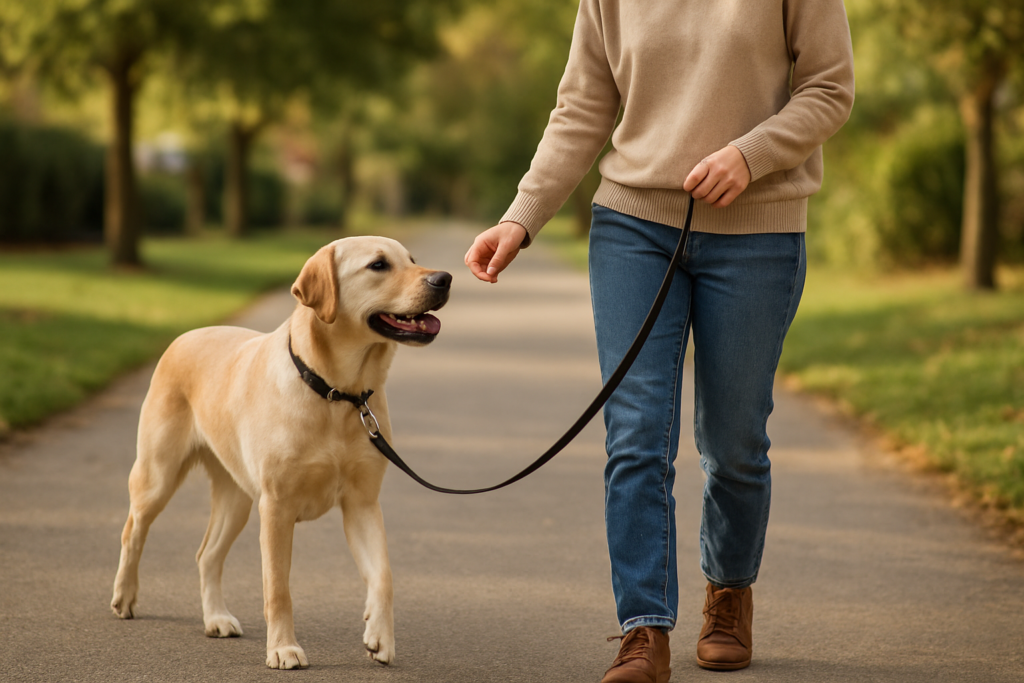
The kindest way to stop a dog from pulling on the leash is to teach that a loose leash makes good things happen. Start in a quiet place, reward your dog whenever the leash stays slack, and pause or calmly change direction when your dog pulls. With short, regular practice, your dog can learn that moving with you is more rewarding than dragging you toward the next smell, person, or dog.
Loose-leash walking is not the same as making your dog walk rigidly beside your leg. Your dog may sniff, look around, and walk a little ahead while the leash remains loose. The goal is a safer, more comfortable walk for both of you.
Why dogs pull on the leash
Pulling is usually not a sign that a dog is trying to control you. Dogs pull because the environment is interesting, because moving forward has worked before, or because they have not yet learned what leash pressure means. A dog may also pull when excited, worried, eager to greet someone, or full of unused energy.
Every time pulling successfully takes your dog closer to a smell, park, person, or another dog, pulling can become stronger. This does not mean you have failed. It simply shows why training needs to make loose-leash walking clear and worthwhile.
Some dogs also find collars uncomfortable, have trouble seeing where they are going, or feel pain when they move. If pulling begins suddenly, becomes intense, or appears with limping, coughing, reluctance to walk, unusual tiredness, or other changes, pause training and speak with a veterinarian. A qualified reward-based trainer can also help when fear, lunging, or safety concerns are involved.
Prepare for successful leash training
Choose comfortable, suitable equipment
Use a well-fitting collar or harness and a strong leash that gives you secure control without creating unnecessary pressure. Check the fit regularly, especially for puppies or dogs whose body shape is changing. You should be able to place fingers comfortably between the equipment and your dog, while still making sure it cannot slip over the head.
A standard leash is often easier for early practice than a retractable leash, because it helps you notice changes in tension and keeps the training response consistent. Carry treats in a pouch or pocket, and choose rewards your dog can eat quickly without stopping the lesson.
Avoid equipment intended to cause pain or fear, including devices that choke, pinch, or deliver shocks. Punishment may suppress behavior in the moment, but it can increase stress and may make people, dogs, or places seem threatening. Reward-based training gives your dog a clear behavior to repeat.
Pick the right starting location
Begin where your dog can think. A hallway, garden, quiet path, or calm part of a familiar area may work better than a crowded street. If your dog is pulling from the first second outside, the environment is probably too difficult for the first lesson.
Train when your dog has had a chance to toilet and settle, but is not exhausted or frantic. Keep sessions short. Several calm minutes can teach more than one long walk filled with repeated pulling.
Decide what you will reward
Reward the behaviors that make walking easier: looking toward you, choosing to stay near you, responding to their name, walking with a slack leash, and checking in without being asked. You do not need to wait for a perfect heel. Frequent reinforcement for small improvements helps your dog understand the lesson.
How to stop a dog from pulling on the leash: step-by-step
1. Teach attention before adding movement
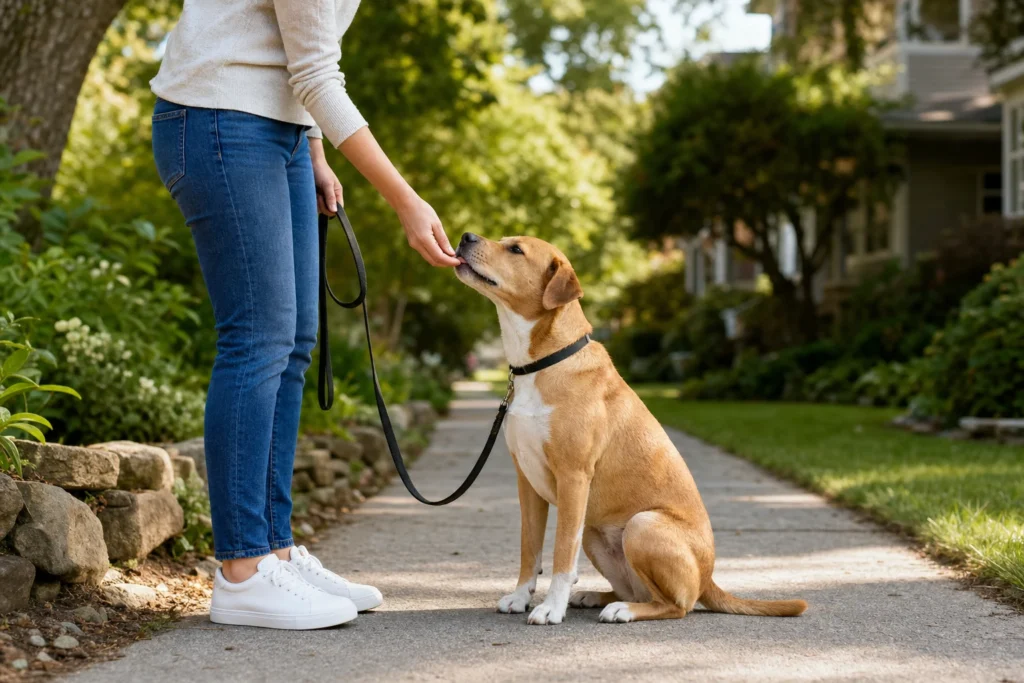
Stand near your dog in a quiet area. Say their name once in a pleasant voice. When they look toward you, mark the moment with a calm word such as “yes” and give a treat near your leg. You can also reward your dog for voluntarily looking at you.
Repeat a few times, then pause. The aim is not to make your dog stare at you constantly. You are building a simple habit: noticing you can lead to something pleasant. Keep your voice relaxed and avoid repeating the name if your dog is not responding.
2. Reward a loose leash while standing still
Attach the leash and wait. If the leash hangs in a gentle curve, offer a treat beside you. If your dog looks at you or steps closer, reward that too. If your dog moves away and creates tension, do not pull back. Wait quietly for the leash to loosen, or take one small step away to invite your dog back.
This teaches an important foundation: slack brings rewards, while tension does not make the walk continue. Be patient. At first, your dog may need several chances to discover the pattern.
3. Take one or two steps
When your dog can remain near you while standing, take one or two slow steps. Reward while the leash is still loose, ideally before your dog reaches the end of it. Deliver the treat near your chosen walking position so your dog does not have to jump or cross in front of you to receive it.
Then pause and repeat. Gradually build from two steps to four, six, and more. Change direction gently and reward your dog for following. Early practice should feel like a simple game, not a test of endurance.
4. Stop when the leash becomes tight
The instant you feel tension, stop your feet. Keep your hands steady and avoid jerking the leash. Wait for your dog to create slack, turn back toward you, or respond to a gentle invitation. Mark and reward the moment the leash relaxes, then continue.
If your dog remains fixed on something, take a few calm steps away or use a previously taught attention cue. Do not drag your dog toward the distraction or argue through the leash. The goal is to make the correct choice easier.
5. Use calm direction changes
Before the leash becomes tight, turn and walk in another direction. Use a friendly cue, move smoothly, and reward your dog for coming with you. This gives your dog a reason to notice your movement rather than relying on leash pressure.
Practice turns in a quiet place first. Avoid sudden movements that could frighten or unbalance your dog. Direction changes should guide, not punish.
6. Add sniffing as a reward
Sniffing is a normal and valuable part of a walk. You can use it to support training rather than treating it as the enemy. Walk a few steps with a loose leash, then say a consistent release cue such as “go sniff” and allow your dog to investigate a safe area.
This teaches your dog that cooperating with you can lead to access to interesting places. Keep the leash loose while your dog sniffs, and move on before either of you becomes frustrated.
7. Increase distractions slowly
When your dog can walk comfortably in a quiet location, add one challenge at a time. You might move to a slightly busier path, practice near distant people, or work around mild sounds. Keep enough distance that your dog can still eat, respond, and make choices.
If pulling returns, do not assume the training has disappeared. The new environment may simply be too difficult. Move farther from the distraction, shorten the session, or return to an easier location.
A simple training progression
| Stage | Practice goal | Move forward when |
|---|---|---|
| Quiet indoor area | Attention, slack leash, and a few steps | Your dog can respond without constant prompting |
| Calm outdoor area | Short stretches with gentle turns | Your dog can recover quickly after mild distractions |
| Familiar walking route | Loose-leash walking with sniff breaks | Pulling is occasional rather than continuous |
| Busier environment | Managing people, sounds, and movement | Your dog can stay under their comfort threshold |
Common mistakes that slow progress
Walking on while the leash is tight
If your dog can reach exciting places by pulling, the behavior is being rewarded. Stop or change direction when tension appears. You may sometimes need to reach a destination, but make training choices where you have time to be consistent.
Expecting a full walk too soon
A dog that can walk nicely for five minutes may not be ready for a long, busy outing. Treat training walks and exercise walks as separate when possible. A short lesson can focus on skills, while another safe activity can meet your dog’s need for movement and exploration.
Repeating cues
Saying “come,” “heel,” or your dog’s name many times can make the words easier to ignore. Say a cue once, give your dog a moment, and then make the situation easier if needed. Reward the response you want.
Using rewards too late
Timing matters. Deliver the reward while the leash is loose or immediately after your dog checks in. If you wait until your dog has pulled again, they may not understand which behavior earned the treat.
Training only when the dog is already overexcited
A dog that cannot eat, look away, or respond is having a hard time learning. Lower the distraction, increase distance, or take a quiet pause. Training should challenge your dog without overwhelming them.
Troubleshooting difficult situations
My dog pulls toward other dogs
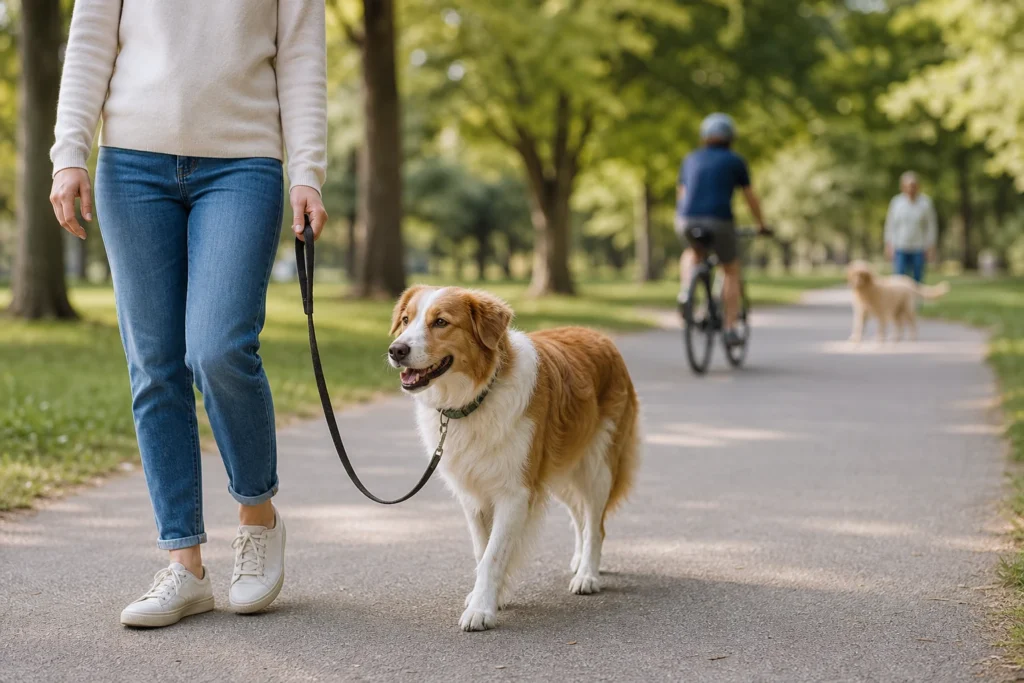
Do not force close greetings. Create distance before the leash becomes tight, reward your dog for looking at you, and walk in an arc or turn away. If your dog barks, lunges, or cannot recover, seek help from a qualified reward-based trainer. Keep both dogs safe and avoid allowing leash tension to become a repeated greeting routine.
My dog pulls toward people
Ask people to wait rather than calling your dog closer. Reward your dog for staying with you, then offer a greeting only if your dog is calm and the other person agrees. A greeting can be a reward, but it should not require your dog to drag you there.
My dog pulls toward smells
Use planned sniff breaks. Reward a few loose-leash steps, release your dog to sniff, and calmly continue when the break is over. If a smell is especially compelling, increase distance or guide your dog away before tension begins.
My dog pulls the moment we leave home
Practice near the doorway. Reward calm standing, looking at you, and walking a few steps indoors. Open the door only when your dog can remain reasonably settled. If excitement rises, close the door and wait for a calmer moment without scolding.
My dog is too strong for me to hold safely
Safety comes first. Do not continue a walk that you cannot physically manage. Check the equipment fit, choose a quieter route, and ask a veterinarian or qualified trainer for individualized help. Children should not be responsible for handling a dog who can pull them over or escape.
Practical tips for faster, kinder learning
- Use a consistent rule: loose leash makes movement continue; tight leash pauses movement.
- Reward often at the beginning, then gradually vary the timing as your dog becomes reliable.
- Keep treats small and easy to swallow so training does not interrupt the walk.
- Walk at a pace that lets your dog notice you. Rushing can increase pulling.
- Give your dog safe opportunities to sniff, explore, and move in suitable spaces.
- End practice after a calm success rather than waiting for frustration.
- Notice progress in small details, such as faster check-ins or quicker recovery after a distraction.
- Ask everyone who walks your dog to use the same calm response to pulling.
Loose-leash training checklist
- Comfortable, secure collar or harness and a standard leash
- Small, easy-to-eat rewards
- A quiet starting area
- A clear cue for attention and a separate release cue for sniffing
- Rewarding slack before taking more steps
- Stopping calmly when the leash becomes tight
- Adding distractions one at a time
- Keeping sessions short and ending positively
- Seeking help if safety, fear, pain, or lunging is involved
When to seek professional or veterinary help
Leash pulling is common, but some situations need more support than a general training plan can provide. Contact a veterinarian if the behavior starts suddenly, your dog seems painful, coughs when walking, resists equipment, or shows a change in movement or energy. A veterinarian can help assess physical concerns without assuming the cause.
Consider a qualified reward-based behavior professional if your dog lunges, snaps, panics, escapes equipment, guards you, or cannot remain calm enough to learn. Ask for humane methods and avoid anyone who recommends intimidation, pain, or fear as the main training tool. Until you have help, choose low-distraction routes, maintain distance from triggers, and prioritize secure handling.
What to do next
For your next practice session, choose a quiet location and plan only five to ten minutes of focused work. Start by rewarding attention and a slack leash, then take a few steps. Stop whenever tension appears, wait for a calmer choice, and reward before continuing. Finish with a safe sniff break or another enjoyable activity.
Keep a simple note after each session: where you practiced, what distracted your dog, and what helped. This makes it easier to choose the right difficulty next time. For more practical guidance, explore LaokPet’s dog care articles and pet-care guides.
With patience and consistency, walks can become a shared conversation rather than a contest of strength. Your dog does not need to be perfect. They need clear information, manageable practice, and repeated chances to discover that staying connected with you makes the walk more rewarding.