The safest way to trim a dog’s nails with clippers is to remove only small amounts at a time, stay below the quick, and stop before your dog becomes frightened or difficult to handle. With the right preparation, calm handling, and a clear view of each nail, many owners can manage routine trims at home.
This guide explains how to choose clippers, prepare your dog, find a safe cutting point, respond if a nail bleeds, and decide when veterinary or professional grooming help is the better option.
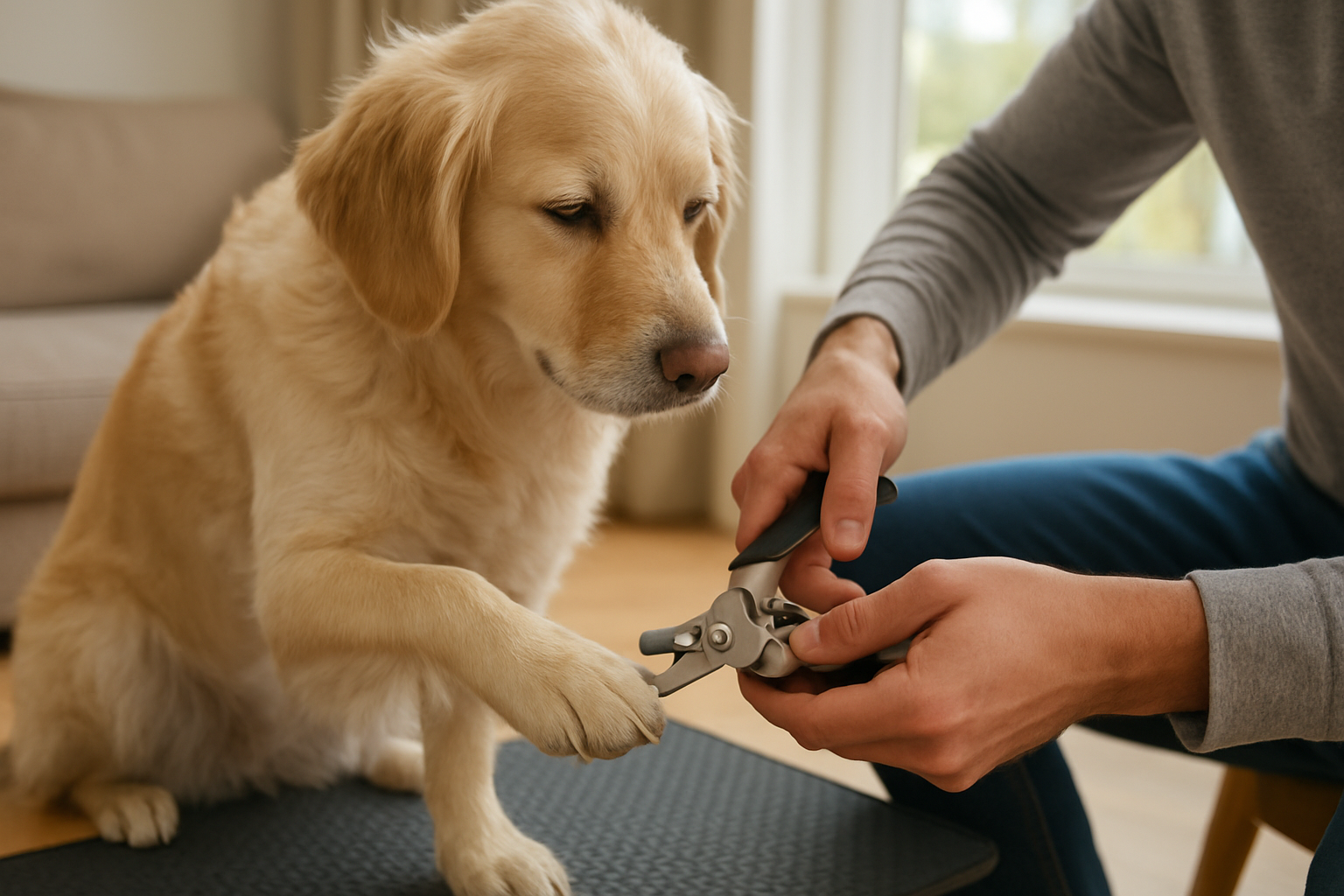
1. Prepare the tools and the trimming area
Choose a quiet, well-lit place where your dog can stand or lie comfortably. A non-slip mat can help prevent sliding, especially for older dogs or dogs with weak joints. Avoid attempting the first trim when your dog is highly excited, overtired, or trying to escape.
You will need:
- Sharp, dog-specific nail clippers sized for your dog
- Styptic powder or another pet-safe clotting product
- Small treats that your dog values
- A towel or non-slip mat if extra stability is needed
- A torch or bright lamp if the nails are dark
Scissor-style clippers are often easier to control for medium and large dogs, while smaller scissor clippers may suit toy breeds. Guillotine-style clippers are another option, but a damaged or blunt blade can crush rather than cleanly cut the nail. If your clippers feel stiff, rusty, or dull, replace them instead of applying more force. VCA recommends using a series of small cuts and taking only the tip when the quick cannot be seen. Read VCA’s detailed nail-trimming guidance for additional anatomy and handling advice. ([vcahospitals.com](https://vcahospitals.com/know-your-pet/how-to-trim-a-dogs-nails?utm_source=openai))
2. Check the nails and locate the quick
The quick is the inner part of the nail that contains blood vessels and nerves. Cutting it can cause pain and bleeding, so your goal is to remove the overgrown outer section without reaching it.
Light-coloured nails
On pale nails, the quick often appears as a pink or reddish area inside the nail. Position the clippers a few millimetres in front of that area rather than cutting directly beside it. Leave a little extra length if you are uncertain.
Dark nails
Dark nails require more caution because the quick may not be visible from the outside. Trim only the curved tip first, then inspect the fresh cut. As you approach the centre of the nail, the texture and colour may change. Stop immediately if your dog pulls away, if the cut surface looks moist, or if you are no longer confident about the remaining distance.
Do not forget the dewclaws, which sit higher on the inside of some front legs and sometimes rear legs. Because they may not touch the ground, they can grow longer than the other nails and curl toward the skin. ([vcahospitals.com](https://vcahospitals.com/know-your-pet/how-to-trim-a-dogs-nails?utm_source=openai))
Use this quick comparison before you begin:
| Nail situation | What to look for | Safe action | Warning sign |
|---|---|---|---|
| Light nail | Pink quick is visible inside | Cut a few millimetres in front of it | You cannot judge the gap clearly |
| Dark nail | Quick is difficult or impossible to see | Remove only the sharp tip in small cuts | Dark centre, moist surface, or sudden resistance |
| Very long nail | Quick may have grown farther down the nail | Shorten gradually over multiple sessions | Trying to reach the final length in one trim |
| Curled dewclaw | Nail approaches or touches the skin | Ask a groomer or veterinarian for help if close to the pad | Redness, swelling, discharge, or embedded nail |
3. Help your dog accept the clippers
Do not begin by grabbing a paw and cutting several nails. If your dog is unfamiliar with nail care, introduce the process in short stages. Let your dog sniff the clippers, reward calm behaviour, then touch the closed clippers to a paw without cutting.
On another short session, hold the paw for a few seconds and reward your dog. You can also squeeze the clippers near the paw so your dog hears the sound. Once your dog remains relaxed, clip the very end of one nail and finish with praise and a treat.
Some dogs need several days or weeks of gradual practice. The American Kennel Club recommends pairing handling and equipment exposure with rewards rather than forcing a frightened dog through the procedure. ([akc.org](https://www.akc.org/expert-advice/health/how-to-trim-dogs-nails-safely/?utm_source=openai))
4. Trim one nail at a time
Choose a position that gives you control without twisting your dog’s leg. For a standing dog, support the paw and work from the side. For a small dog, you may find it easier to hold the dog securely on your lap with the paw facing away from the body. Never bend a leg sharply or restrain the dog so tightly that breathing or circulation could be affected.
- Separate the toes. Move fur away from the nail so you can see the cutting point.
- Hold the paw gently but firmly. Press the toe pad slightly so the nail extends.
- Angle the clippers carefully. Follow the natural angle of the nail rather than cutting straight across without looking.
- Remove a very small section. For dark nails, begin with the pointed end and take off only 1–2 mm.
- Inspect the cut. Continue only if the cut surface remains dry and you can still identify a safe margin.
- Reward your dog. A treat after each nail can help maintain cooperation.
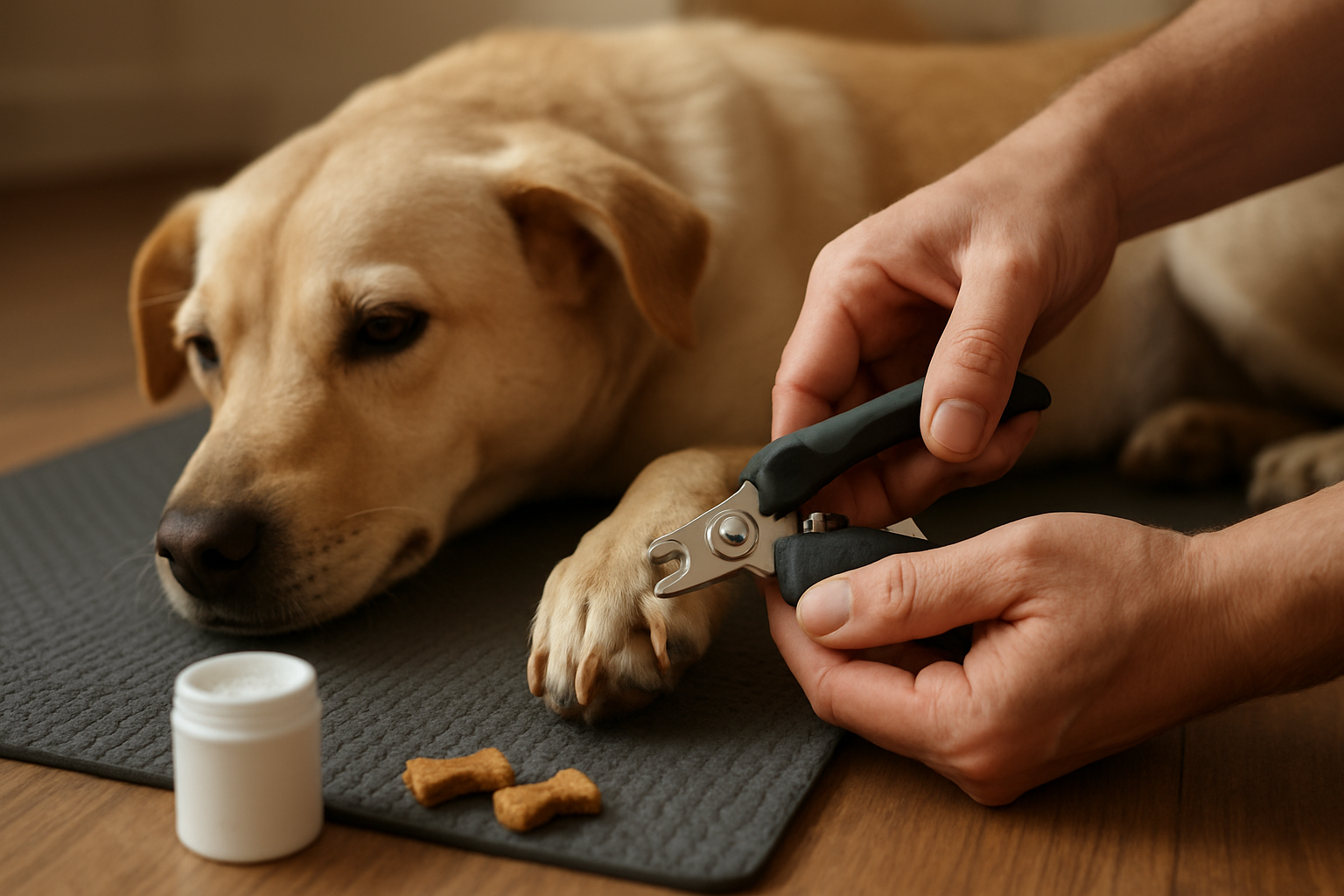
You do not need to finish every nail in one sitting. Completing two or three nails calmly is usually more useful than forcing all four paws and creating a lasting fear of clippers.
5. Finish the edges and check the paws
After clipping, feel the nail edges with your fingertip without pressing into the paw. If a point remains sharp, you can lightly smooth it with a dog nail file. Avoid repeatedly cutting the same nail to make it look perfectly even; each extra cut increases the chance of reaching the quick.
Look between the toes for hair, dirt, redness, swelling, or a nail that is pressing into the pad. If your dog is licking one foot persistently, limping, or resisting touch after the trim, stop and inspect the area rather than assuming the behaviour is simply nervousness.
6. Know what to do if you cut the quick
If a nail begins to bleed, stay calm and keep your dog from running around. Apply a small amount of styptic powder to the nail tip and hold gentle pressure for several minutes. A minor cut often stops bleeding after a short period, but your dog may still be sore.
Contact a veterinarian if bleeding continues, the nail is split or badly damaged, your dog appears significantly painful, or the nail was already infected or embedded. The AKC also advises keeping a clotting product accessible before starting a trim. ([akc.org](https://www.akc.org/expert-advice/health/dog-grooming-at-home/?utm_source=openai))
7. Set a routine that keeps trimming easier
Many dogs need nail care roughly every three to four weeks, but the correct interval depends on growth rate, activity, and the surfaces your dog walks on. Check the nails regularly instead of waiting until they curl, click loudly on hard floors, or affect your dog’s gait.
A useful routine is to inspect the paws once a week and schedule a short trim whenever the tips are becoming long. Regular, small trims may also make it easier to avoid the quick because you are not trying to remove a large amount at once.
Practical checklist before you start
- My clippers are sharp, clean, and suitable for my dog’s size.
- I have bright lighting and a stable, non-slip surface.
- I can identify the quick on light nails or know to take only tiny cuts on dark nails.
- Styptic powder and treats are within reach.
- My dog is calm enough to handle one paw safely.
- I am prepared to stop after one or two nails.
Common mistakes to avoid
- Cutting too much at once: Long nails often need several gradual sessions.
- Using human nail clippers: They may not provide the leverage or shape needed for dog nails.
- Ignoring dewclaws: These nails can become overgrown even when the others look manageable.
- Holding the paw too tightly: Excessive restraint can increase fear and make sudden movement more likely.
- Continuing after your dog becomes distressed: Stop before panic, struggling, or snapping begins.
- Trimming for appearance alone: A slightly longer nail is safer than an injured quick.
What if your dog will not let you trim the nails?
Return to handling practice without clipping. Touch the shoulder, leg, paw, and toe in separate short sessions, rewarding relaxation at each stage. If your dog growls, snaps, thrashes violently, or has previously bitten during nail care, do not attempt to overpower the dog.
Ask your veterinarian or a qualified groomer to demonstrate a safe approach. A professional can also assess whether pain, arthritis, an old nail injury, or fear is contributing to the resistance. If you are unsure about the technique, Blue Cross likewise recommends asking a vet for advice before trimming. ([bluecross.org.uk](https://www.bluecross.org.uk/advice/dog/wellbeing-and-care/how-to-cut-your-dogs-nails?utm_source=openai))
Advanced tips for difficult nails and senior dogs
For very long nails, aim for a small reduction every several days or weeks rather than trying to reach the desired length immediately. The quick may have extended into the overgrown portion, so gradual trimming gives it time to recede naturally.
Senior dogs may need extra support because standing can be uncomfortable. Use a padded surface, work while the dog is already relaxed, and consider having a second calm adult provide treats rather than holding the dog down. If the paws are painful, joints are stiff, or nails are deformed, arrange a veterinary examination before starting.
Next actions
- Inspect every nail, including the dewclaws, in good light.
- Buy or replace the correct dog nail clippers and keep styptic powder nearby.
- Practice touching the paws and showing the clippers before making a cut.
- Trim only one or two nail tips during the first calm session.
- Record the date and check the nails weekly so future trims remain small and predictable.
Learning how to safely trim a dog’s nails with clippers is mainly about controlling the amount removed and protecting your dog’s confidence. Take tiny cuts, reward cooperation, and choose professional help whenever the quick, the paw, or your dog’s behaviour makes home trimming unsafe.
For more practical pet-care guidance, visit the LaokPet homepage or explore related advice on choosing a dog leash for everyday walks and finding a secure puppy harness.