Quick verdict: For most active families, the Golden Retriever is the more adaptable choice. Choose a Bernese Mountain Dog instead if you specifically want a calmer, very large companion and can manage heavier grooming, more space, and a shorter expected lifespan.
Both breeds are affectionate, intelligent, and generally well suited to family life. The better choice depends less on appearance than on how much exercise, training, coat care, indoor space, and daily companionship you can consistently provide.
This guide compares the Golden Retriever and Bernese Mountain Dog using practical criteria: temperament, activity level, size, grooming, training, family compatibility, health considerations, and everyday management.
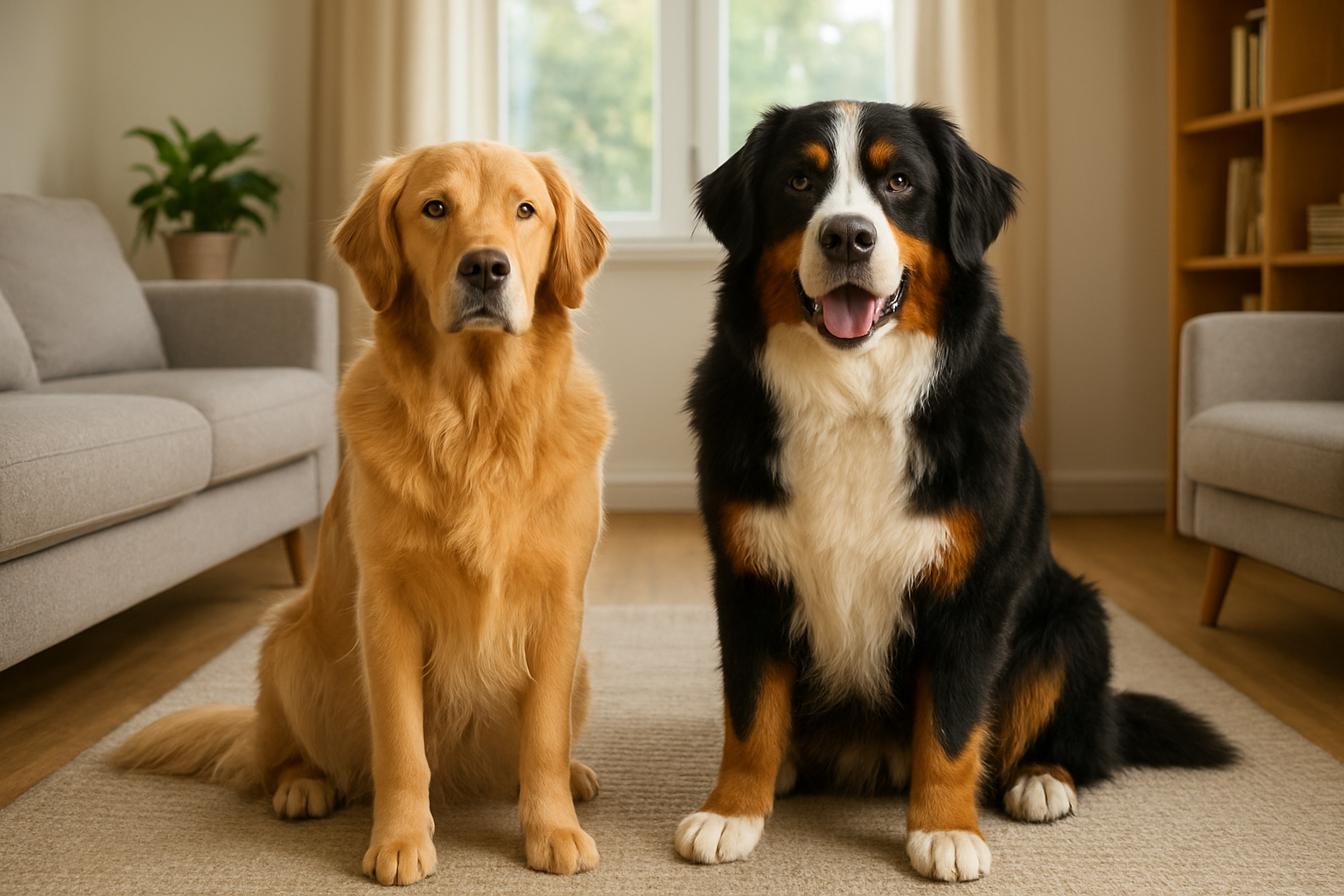
1. Start with the daily routine you can actually maintain
Before comparing breed personalities, look at your normal week. A Golden Retriever usually needs more purposeful daily activity and mental engagement, while a Bernese Mountain Dog often fits better with moderate exercise and plenty of family contact.
Neither breed is a low-maintenance choice. Both shed, need early socialization, benefit from reward-based training, and can develop unwanted behavior when bored or left alone for long periods.
- How much time can you devote to walks, play, and training every day?
- Will the dog spend most of the day with people or alone?
- Can your home comfortably accommodate a large dog, including turning space and resting areas?
- Are you prepared for regular brushing, muddy paws, shedding, and veterinary expenses?
- Do you prefer an energetic activity partner or a calmer household companion?
2. Compare the main differences at a glance
The following table summarizes the most useful decision points. Individual dogs vary, so treat these as breed tendencies rather than guarantees.
| Decision factor | Golden Retriever | Bernese Mountain Dog | What to consider |
|---|---|---|---|
| Typical build | Medium-large, athletic, usually easier to manage physically | Very large, heavy-boned, and powerful | Large size affects transport, housing, equipment, and handling. |
| Energy level | High; enjoys retrieving, swimming, hiking, and dog sports | Moderate; enjoys walks and outdoor time but is often less intense | Choose the Golden if daily exercise is a central part of your lifestyle. |
| Temperament | Outgoing, eager to please, and usually socially open | Affectionate, calm, family-focused, and sometimes reserved with strangers | Both need socialization and supervision around children. |
| Training style | Usually highly responsive and motivated by activity or food | Intelligent and willing, but sensitive to harsh correction | Positive, consistent training suits both breeds. |
| Coat care | Regular brushing; heavier seasonal shedding | Weekly brushing, often more during shedding seasons | Neither is suitable for a low-shed household. |
| Expected lifespan | Often around 10–12 years | Often around 7–10 years | Ask breeders or rescues for health information and plan for long-term care. |
3. Golden Retriever vs Bernese Mountain Dog temperament
Golden Retriever personality
Golden Retrievers are commonly described as friendly, reliable, eager to please, and highly adaptable. They often enjoy meeting people, learning behaviors, carrying objects, and joining family activities. Their sociable nature can make them easier for households that regularly have visitors.
That friendliness does not mean they are automatically easy puppies. Young Goldens can be excitable, mouthy, and physically demanding. Without enough exercise and training, they may jump, chew, steal objects, or invent their own entertainment. The American Kennel Club describes the breed as active and trainable, with daily exercise important for behavior as well as fitness: Golden Retriever care guidance.
Bernese Mountain Dog personality
Bernese Mountain Dogs are often affectionate, gentle, and strongly attached to their families. Many are calmer indoors than a young Golden, but their large bodies can still create accidental knocks, crowded hallways, and difficult leash situations if manners are not taught early.
Berners may be more reserved with unfamiliar people and can be sensitive to rough handling or harsh training. They generally do best when included in family life rather than left outside or isolated for long periods. See the AKC’s Bernese Mountain Dog lifestyle overview for additional breed-specific considerations.
4. Match exercise needs to your household
The Golden Retriever is usually the stronger choice for families that want a dog to accompany regular hikes, long walks, swimming sessions, retrieving games, or organized training. Physical activity should be combined with mental work, such as scent games, obedience practice, food puzzles, and controlled retrieving.
A Bernese Mountain Dog still needs daily movement, but many adults are satisfied with moderate walks and family outings rather than constant high-intensity activity. Their heavy build and growth rate make sensible puppy exercise especially important. Avoid forcing a young Berner into long runs, repetitive jumping, or strenuous workouts.
For either breed, hot weather requires extra caution. Thick-coated dogs can overheat, so schedule activity during cooler hours, provide water and shade, and stop when your dog shows signs of fatigue or overheating.
5. Consider grooming, size, and home management
Both breeds have double coats and shed. Golden Retrievers typically need brushing once or twice a week, with more frequent sessions during heavier shedding. Bernese Mountain Dogs also need regular brushing, and their longer coat can collect debris and form tangles more easily.
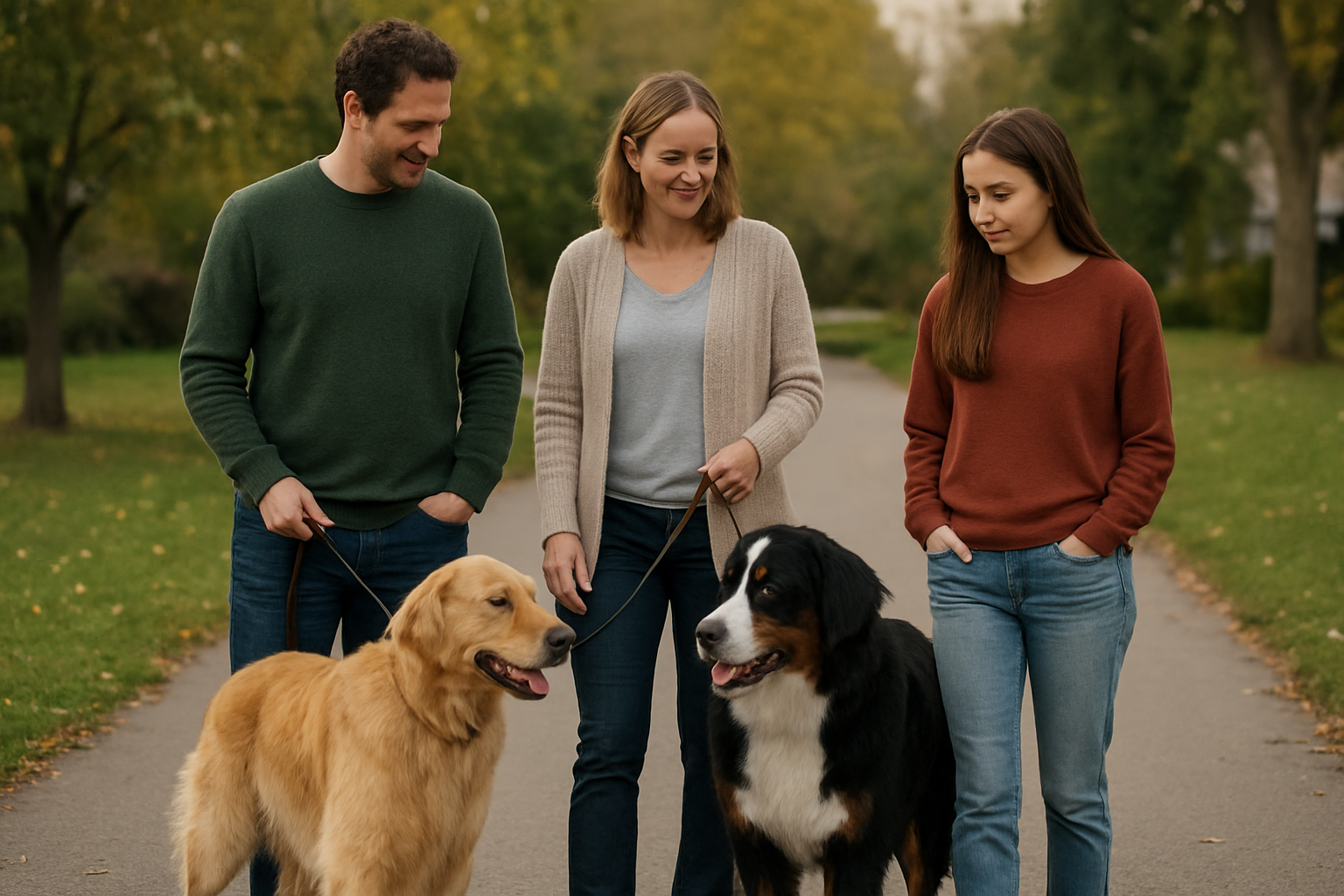
The Bernese is the more demanding choice for physical management. A full-grown dog may require a larger vehicle, stronger walking equipment, more floor space, and careful planning around stairs or slippery surfaces. A Golden is still a substantial dog, but is generally easier for many households to lift, transport, and control.
Use a properly fitted collar, harness, or leash system and teach loose-leash walking before the dog reaches full size. LaokPet’s guides to everyday dog leashes and secure puppy harnesses can help you plan the equipment side of ownership.
6. Weigh training, children, and other pets
Both breeds can be good family dogs when carefully socialized and supervised. A Golden Retriever may suit a busy family that wants an enthusiastic participant in games and training. A Berner may suit a family looking for a gentler, less frenetic presence, provided everyone respects the dog’s size and need for personal space.
Children should never be expected to manage either breed alone. Teach children not to climb on, chase, disturb, or take food from the dog. Supervise interactions, especially around meals, toys, resting places, and very young children.
Both breeds can live successfully with other pets, but introductions should be gradual and controlled. A dog’s individual history, socialization, prey interest, and behavior around resources matter more than breed labels alone.
7. Include health and lifetime-care realities
Responsible breeders should provide relevant health-screening information and discuss the health history of their lines. The AKC lists recommended screening areas for Golden Retrievers including hips, elbows, heart, eyes, and certain genetic conditions. For Bernese Mountain Dogs, recommended evaluations include hips, elbows, cardiac health, eyes, and breed-relevant genetic testing. These are starting points for questions, not guarantees of future health.
The Bernese Mountain Dog’s shorter typical lifespan is an important emotional and financial consideration. Large dogs can also face risks such as orthopedic problems and bloat. Ask a veterinarian about preventive care, weight management, safe exercise, dental care, and warning signs that require urgent attention.
For breed-standard context, you can also review the Golden Retriever Club of America breed standard and the AKC’s Bernese Mountain Dog profile.
8. Choose by household scenario
Choose a Golden Retriever if:
- You want an active dog for walks, games, swimming, hiking, or training.
- You value broad social confidence and a highly cooperative training style.
- You can provide daily exercise and do not mind regular shedding.
- You want a large dog but prefer a somewhat more manageable physical size.
Choose a Bernese Mountain Dog if:
- You want a calm, affectionate companion that stays closely connected to the family.
- You have room for a very large dog and can manage heavy coat care.
- You prefer moderate activity rather than an intense daily exercise routine.
- You understand and accept the breed’s shorter typical lifespan and potential health costs.
9. Avoid these common decision mistakes
- Choosing by appearance alone: A beautiful coat does not tell you whether the breed fits your schedule.
- Underestimating puppy behavior: Both puppies can be energetic, destructive, and in need of consistent supervision.
- Assuming “family friendly” means effortless: Temperament still depends on breeding, socialization, training, and management.
- Buying equipment for the puppy’s current size only: Plan for rapid growth, especially with a Bernese Mountain Dog.
- Ignoring alone-time needs: Both breeds are people-oriented and may struggle with prolonged isolation.
- Skipping breeder or rescue questions: Ask about health records, behavior history, exercise needs, and return policies before committing.
10. Final checklist before you decide
- Measure where the dog will sleep, eat, rest, and move through the home.
- Write down your realistic weekday exercise plan.
- Budget for food, grooming tools, training, insurance or veterinary care, and boarding.
- Decide who will handle walks, training, feeding, and cleanup.
- Meet adult dogs from the breed when possible, not only puppies.
- Discuss health testing and temperament openly with a responsible breeder or rescue.
What if neither breed fits?
If your schedule is unpredictable, your home is small, or you want a lower-shedding dog, neither breed may be ideal. A smaller adult rescue dog with a known temperament could be easier to match to your routine. If you are still comparing family pets, the LaokPet pet care guides offer additional planning resources.
Final verdict: Golden Retriever or Bernese Mountain Dog?
The Golden Retriever is usually the better all-around family choice when you want trainability, social openness, and an active companion for everyday adventures. The Bernese Mountain Dog can be the better match when your priority is a devoted, calmer giant breed and you are ready for its size, coat, companionship needs, and shorter expected lifespan.
Choose the dog whose daily requirements match your real routine—not the breed that simply looks most appealing in photographs.