The best puppy harnesses for escape artists are usually adjustable designs with multiple points of contact, secure buckles, and a fit that stays snug without restricting movement. A harness can reduce the chance of a puppy backing out during a walk, but no harness replaces supervision, identification, recall training, or careful leash handling.
This guide explains how to compare escape-resistant harnesses, measure your puppy, check the fit, and avoid common buying mistakes. The recommendations are based on published fitting and safety guidance from the American Kennel Club and veterinary-focused resources, rather than personal product testing.
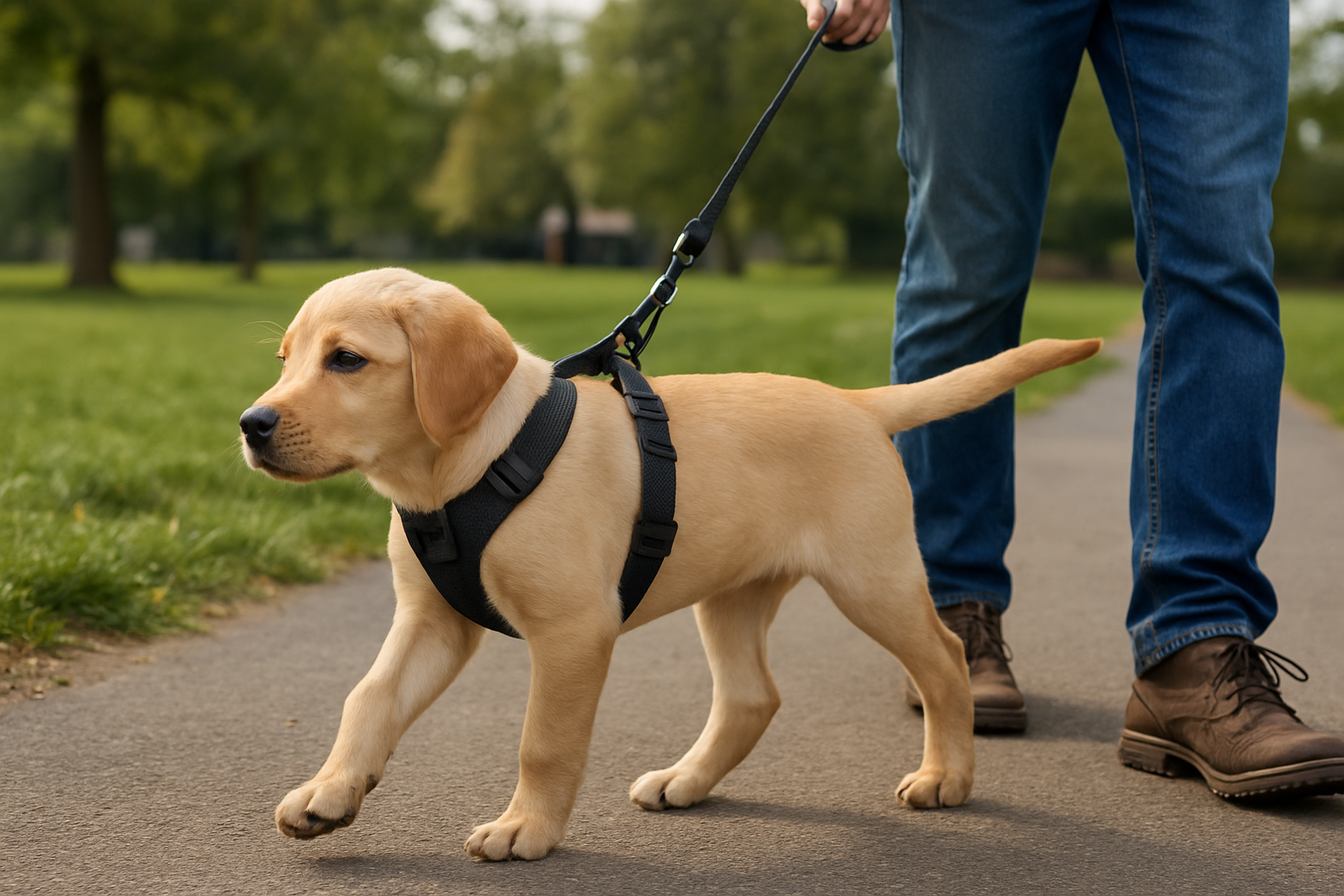
1. Start with the reason your puppy escapes
Puppies can slip out of harnesses for different reasons. Some reverse out when startled, while others twist, paw, or pull forward when they see another dog. A narrow head, broad chest, loose straps, or an incorrect harness shape can make the problem worse.
Before shopping, observe the escape pattern. This helps you choose a design for the actual risk instead of assuming that a heavily padded or tightly fastened vest will automatically be safer.
- Backs out of the harness: prioritize a third strap around the waist or a design that keeps the neck opening stable.
- Twists and rolls: look for several adjustment points and straps that remain centered when your puppy changes direction.
- Pulls toward distractions: consider a dual-clip design for training, provided the front attachment does not alter your puppy’s gait.
- Dislikes handling: consider a step-in style or a harness with a neck buckle rather than forcing it over the head.
The American Kennel Club identifies three-point harnesses, including designs with a chest, neck, and belly strap, as useful for dogs that are prone to escaping. ([akc.org](https://www.akc.org/expert-advice/lifestyle/the-importance-of-a-well-fitting-harness/?utm_source=openai))
2. Compare harness designs before choosing
There is no single best puppy harness for every escape-prone dog. The most secure option is the one that matches your puppy’s body shape, behavior, and tolerance for putting gear on.
Use this comparison to narrow the field.
| Harness type or feature | What to look for | Warning sign |
|---|---|---|
| Three-point harness | Separate neck, chest, and belly contact with useful adjustment range | The third strap sits too far back or can slide over the ribs |
| Step-in harness | Clear left-and-right leg placement and secure back closure | Your puppy can pull a front leg backward through an opening |
| Neck adjustment | Enough adjustment to sit near the upper chest without pressing the throat | The neck opening is fixed and loose around the head |
| Dual leash clips | Front and back attachment points for controlled training | The front clip pulls the harness sideways or limits shoulder movement |
| Multiple buckles | Closures that are easy to inspect and remain locked during movement | Cracked plastic, weak stitching, or a buckle that opens under light pressure |
| Reflective details | Visible trim for low-light walks | Assuming visibility features prevent escape |
Three-point harnesses
A third strap can make it harder for a puppy to reverse out of the harness because the equipment remains connected around more of the body. This design is especially worth considering for puppies with a narrow head or those that repeatedly back away from leash pressure.
However, the extra strap must be positioned correctly. It should not cut into the abdomen, sit directly behind the front legs, or interfere with normal walking.
Step-in harnesses
Step-in harnesses avoid pulling a large neck opening over your puppy’s head and can be practical for dogs that dislike handling around the ears or face. Properly fitted step-in styles may also be difficult for escape artists to remove, but the leg openings still need careful checking. ([akc.org](https://www.akc.org/expert-advice/training/choosing-the-right-dog-harness/?utm_source=openai))
3. Measure your puppy and allow for growth
Do not choose a size based only on breed, age, or weight. Measure the areas listed by the manufacturer, usually the lower neck and the widest part of the chest behind the front legs. Use a soft tape measure and repeat the measurement if your puppy is wiggly.
- Measure while your puppy is standing naturally.
- Keep the tape level rather than angling it around the ribs.
- Record the measurement in the unit used by the size chart.
- Check whether the product allows adjustment as your puppy grows.
- Recheck the fit after weight changes, grooming, or rapid growth.
A puppy harness should not be purchased several sizes too large “to grow into.” Extra room can create exactly the gap an escape artist needs. At the same time, avoid tightening a small harness beyond its intended range, because this can cause rubbing and restrict movement.
4. Check the fit before the first outdoor walk
Put the harness on indoors, where a mistake is less likely to become an escape. Follow the manufacturer’s instructions, then check the following points while your puppy stands, sits, walks, and turns.
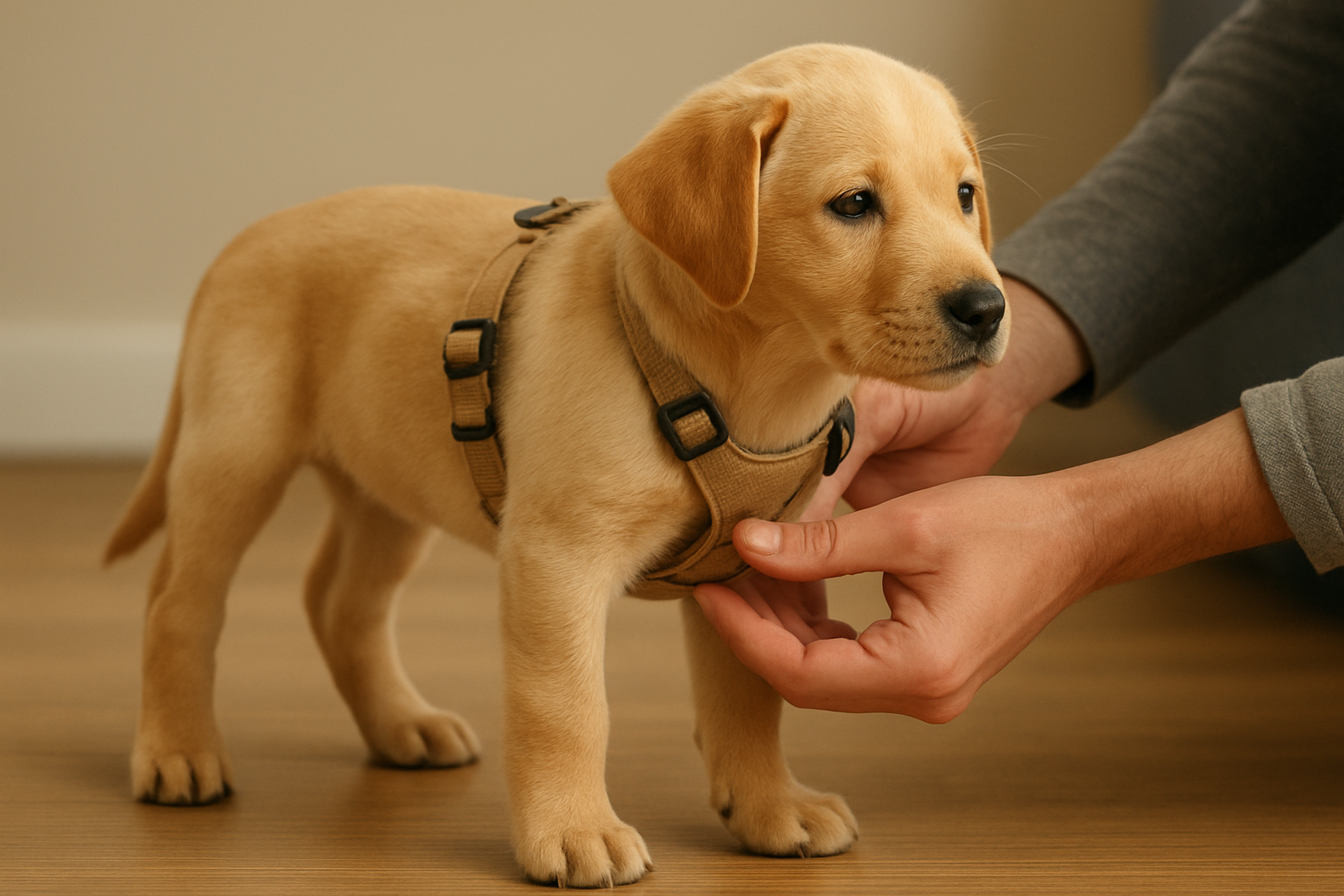
- You should be able to place roughly two fingers beneath the straps, but the harness should not move freely around the body.
- The neck section should rest near the upper chest rather than pressing against the throat.
- The girth strap should remain behind the ribs without digging into the elbows or armpits.
- Your puppy should be able to extend the front legs and turn the shoulders naturally.
- No strap should cross the windpipe, rub bare skin, or bunch under the front legs.
Gently test the harness by moving backward against it while holding the leash close to the attachment point. Then check whether the neck opening can slide over your puppy’s head or whether a leg can pull through. The AKC also recommends watching for rubbing, testing movement, and checking the harness after changes in weight or grooming. ([akc.org](https://www.akc.org/expert-advice/training/choosing-the-right-dog-harness/?utm_source=openai))
5. Match the leash attachment to your training needs
A back clip is simple for everyday walking and may be suitable for a puppy that already walks calmly. A front clip can provide more steering control during training, but it should not be treated as a substitute for teaching loose-leash skills.
For a puppy that lunges or spins, a dual-clip harness can offer flexibility. Use it only as directed, and observe whether the leash causes the harness to twist or pull unevenly. If your puppy shows limping, shortened steps, repeated scratching, or reluctance to walk, stop and reassess the fit.
For additional guidance, see the AKC’s guide to well-fitting dog harnesses and its overview of how to choose the right harness style. A veterinary-focused explanation from Preventive Vet also emphasizes that poor fit can interfere with normal movement.
6. Use a harness as one part of escape prevention
Even the best puppy harness for an escape artist can fail if a buckle is damaged, the leash is clipped incorrectly, or the puppy is left unsupervised near traffic. Use a properly attached leash and inspect the harness before each walk.
For puppies with a serious history of bolting, ask a qualified trainer or veterinarian about a double-connection system. The AKC describes using an escape-resistant harness alongside an additional secure attachment as one possible precaution for dogs that run away. ([akc.org](https://www.akc.org/expert-advice/training/why-do-dogs-run-away/?utm_source=openai))
Also keep identification current. A collar with an identification tag and a registered microchip provide important backup if your puppy gets loose. A GPS tracker may add another layer of preparation, but it does not physically prevent an escape or replace supervision.
7. Common buying mistakes
- Buying by weight alone: body proportions vary too much for weight to guarantee a secure fit.
- Choosing the tightest possible setting: security should come from the harness shape and adjustment, not painful compression.
- Ignoring the third strap: on a three-point harness, the belly strap must be correctly positioned to provide meaningful escape resistance.
- Assuming padding equals safety: soft material may improve comfort but cannot compensate for a loose neck opening.
- Skipping a movement test: a harness can look secure while restricting the shoulders or rubbing the armpits.
- Using one size for months: puppies grow quickly, so fit checks should be routine.
- Testing outdoors first: begin inside and use a secure area before walking near roads or other hazards.
8. What if your puppy still slips out?
If the puppy backs out
Stop using the harness outdoors until you identify the cause. Check whether the neck strap is too loose, the belly strap is too far back, or the design simply does not suit your puppy’s body. A three-point harness or a different step-in shape may be more appropriate.
If the puppy resists wearing it
Introduce the harness gradually. Let your puppy sniff it, reward calm behavior, touch the body with it, and fasten it briefly indoors before asking for a walk. Do not force a nervous puppy’s head through a tight opening.
If the harness causes rubbing
Remove it and inspect the contact areas, especially behind the front legs. A different strap width, adjustment range, or harness shape may be needed. Persistent skin irritation, limping, or pain warrants veterinary advice.
9. A practical buying checklist
- Measure the neck and chest according to the manufacturer’s chart.
- Prefer a secure three-point or suitable step-in design for repeat escape attempts.
- Look for adjustable straps, durable stitching, and closures you can inspect.
- Confirm that the leash attachment matches your training plan.
- Check shoulder movement, neck clearance, and leg openings indoors.
- Apply gentle backward pressure before the first outdoor use.
- Recheck the fit after growth, grooming, or weight change.
- Pair the harness with identification, recall training, and supervision.
10. Next actions and conditional verdict
Start by measuring your puppy and writing down the escape behavior you need to address. Compare three-point and step-in designs, then choose the model with the most useful adjustment range rather than the most elaborate appearance. Test it indoors, inspect it before every walk, and replace it if the hardware, stitching, or fit changes.
The best puppy harnesses for escape artists are not defined by a single brand or feature. A properly fitted three-point harness is often the strongest starting point for a puppy that backs out, while a well-adjusted step-in model may suit a puppy that dislikes head handling. If your puppy continues to escape despite correct fitting, use professional behavior guidance and a backup safety system instead of relying on a tighter harness alone.