For most apartments, a Dachshund is the more practical choice, but a Basset Hound may suit you better if you want a calmer, heavier companion and can manage stairs, lifting, and drool. Neither breed is automatically easy in a small home: daily exercise, noise control, weight management, and safe movement matter more than floor area alone.
This comparison looks at the factors that affect apartment living rather than relying on breed stereotypes. You will see where each dog has an advantage, what tradeoffs to expect, and how to choose based on your building, schedule, mobility, and training plans.
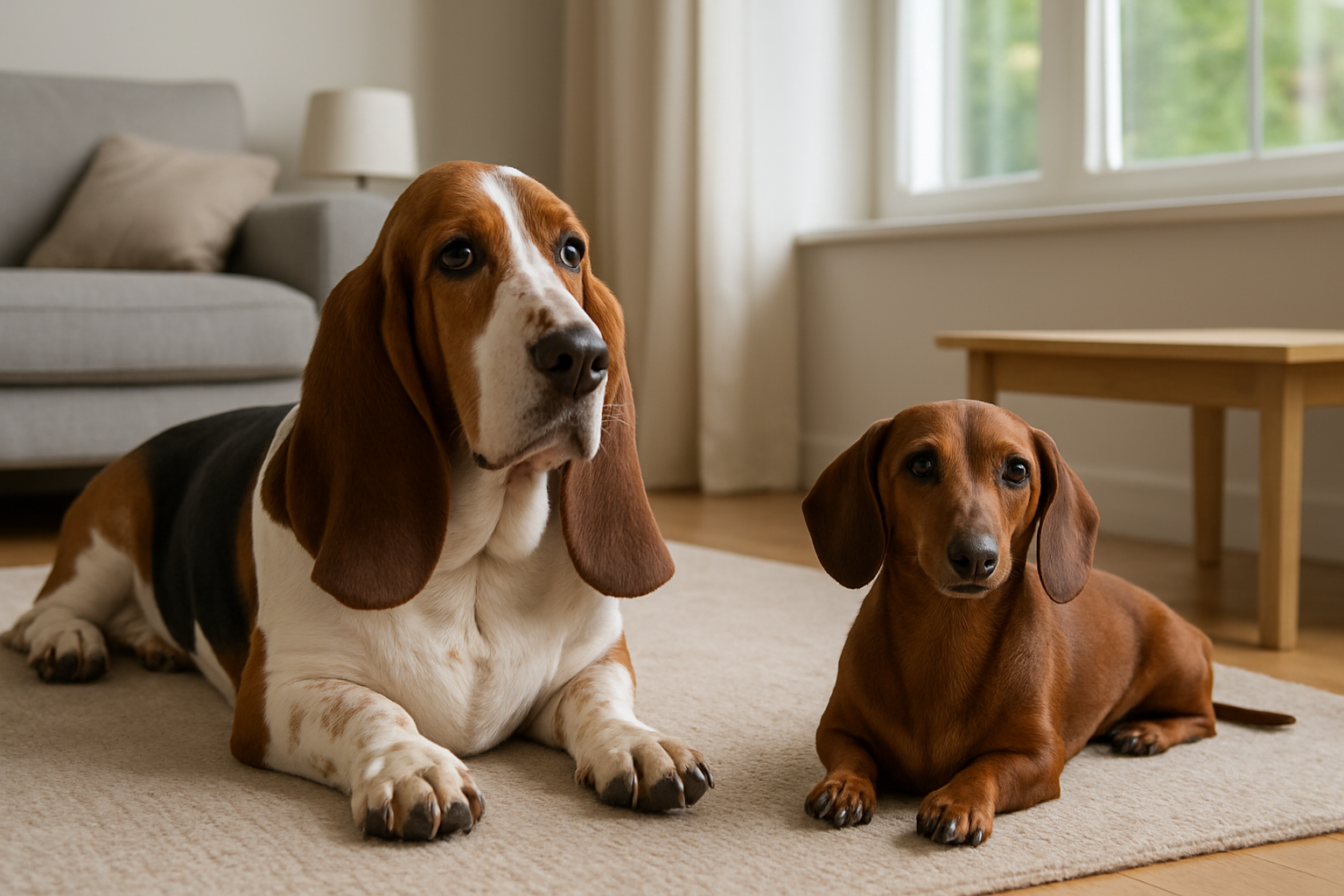
1. Start with your apartment and daily routine
Before comparing the breeds, assess the conditions your dog will experience every day. An apartment can work well when the dog receives regular outdoor time and has a predictable place to rest. A larger home does not solve problems caused by boredom, isolation, uncontrolled barking, or unsafe stairs.
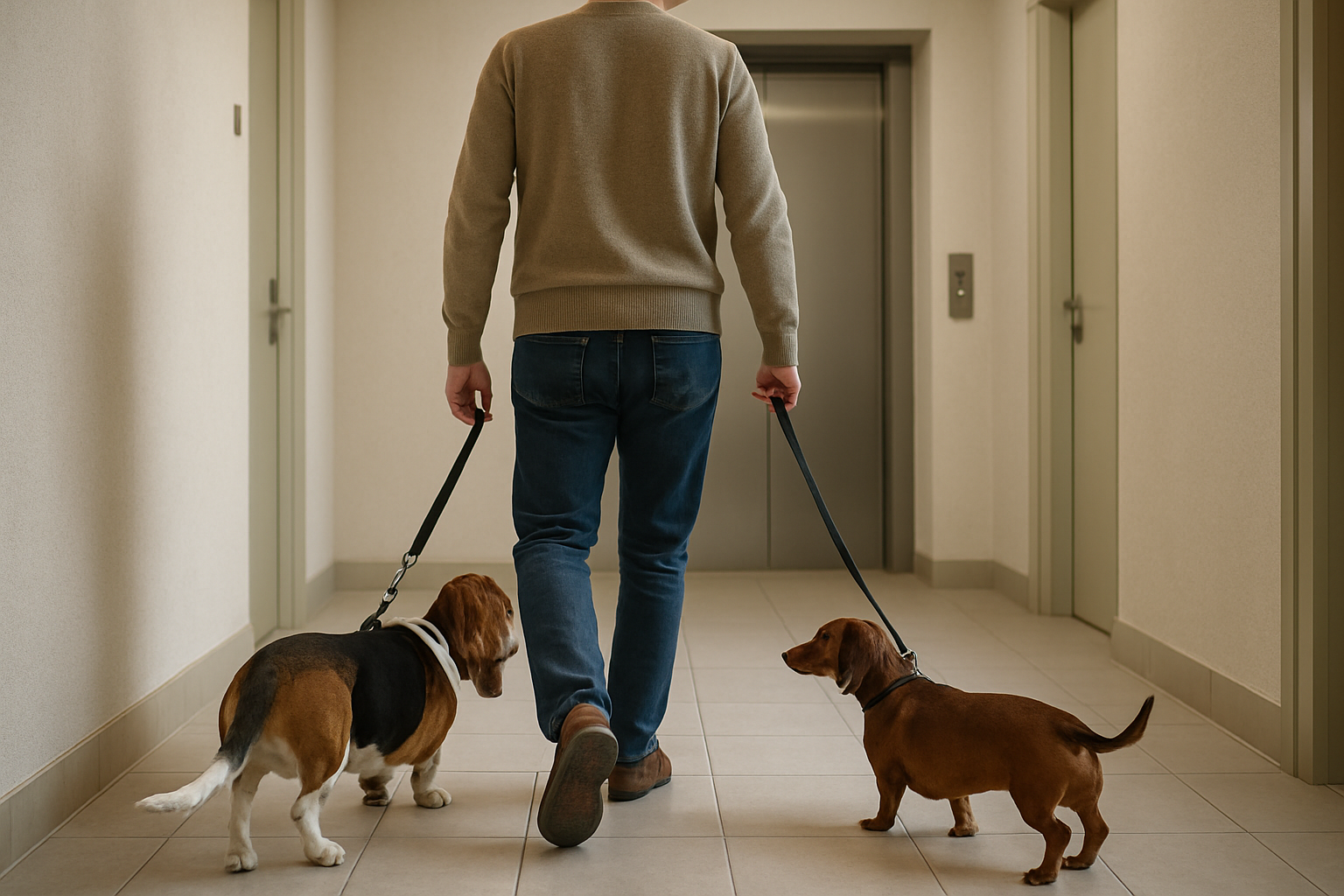
- Stairs and lifts: Count the steps from the entrance and consider what happens if the lift is unavailable.
- Noise: Check how close your neighbours are and whether hallway sounds, doors, or other dogs trigger barking.
- Time alone: Plan for toilet breaks, exercise, training, and companionship rather than measuring only the room size.
- Flooring: Slippery floors can make movement harder for long-backed dogs and dogs with heavy bodies.
- Building rules: Confirm pet limits, weight restrictions, outdoor access, and any breed or insurance conditions before choosing.
If you are preparing for a puppy, remember that the first months require more frequent toilet trips and supervision than an adult dog. A calm adult may fit your schedule better than a puppy of either breed.
2. Compare size, mobility, and space requirements
A Dachshund generally occupies less physical space and is easier to lift, transport, and guide through narrow hallways. Its compact body can be convenient in an apartment, but its long back needs sensible handling and protection from repeated jumping or poorly managed stairs.
A Basset Hound is usually more substantial and lower to the ground. It may spend much of the day resting, but its body is not necessarily easier to manage: moving an unwilling adult dog, fitting a comfortable bed, or navigating a small lift can be more demanding.
For both breeds, provide a supportive sleeping area away from busy doorways. Use non-slip runners where floors are smooth, and avoid encouraging repeated jumping on and off furniture. A veterinarian can advise you about an individual dog’s body condition, joints, and movement needs.
The table below summarizes the practical points that matter most in a flat or apartment.
| Factor | Basset Hound | Dachshund | What to look for | Warning sign |
|---|---|---|---|---|
| Space | Needs room for a larger body and bed | Usually easier to accommodate in compact rooms | Clear walking paths and a quiet rest area | Furniture leaves no safe route around the home |
| Stairs | Heavy, low body can make carrying difficult | Long back makes repeated stairs and jumping a concern | Lift access, ramps, or a safe carrying plan | You cannot safely manage the dog during an emergency |
| Exercise | Steady walks and scent-based activity suit many individuals | Walks plus games and training help prevent boredom | A routine you can maintain every day | Exercise is limited to brief toilet trips |
| Noise | May vocalize and carry sound through a building | May bark or alert at hallway and outdoor sounds | Early sound desensitization and quiet rewards | Frequent unaddressed barking complaints |
| Grooming | Short coat is manageable, but ears, skin folds, and drool need attention | Coat-care needs vary by coat type; ears also need checks | Regular inspection and cleaning routine | Redness, odour, persistent scratching, or discharge |
3. Match exercise and enrichment to apartment life
Both breeds need more than an occasional trip outside. The exact amount depends on age, health, temperament, and the individual dog, so use behaviour and recovery as feedback rather than following a rigid distance target.
Basset Hound activity
Basset Hounds are often suited to unhurried walks that allow sniffing. Scent games, food puzzles, and short training sessions can add mental activity without requiring constant high-impact play. Their motivation may be selective, so reward-based training and realistic expectations are important.
Dachshund activity
Dachshunds can be lively and persistent despite their small size. Several manageable activities may work better than one exhausting outing: a controlled walk, a short recall or focus session, and supervised indoor games. Avoid turning stairs, furniture, or repeated jumping into the main source of exercise.
To build reliable walking habits, see How to Teach a Dog to Walk Beside You. Training is especially useful in apartment hallways, lifts, and shared outdoor spaces.
4. Consider barking, independence, and training
Apartment suitability depends heavily on sound and self-control. Both breeds can be vocal, and no breed label can guarantee a quiet dog. Genetics, early socialization, previous experiences, and your response to barking all influence the result.
Reward calm behaviour before barking starts, introduce hallway and lift sounds gradually, and avoid shouting over a noisy dog. If barking appears suddenly, becomes intense, or is linked to distress when alone, discuss the pattern with a veterinarian or qualified behaviour professional.
Dachshunds can be confident, curious, and determined. Consistent boundaries are more effective than harsh corrections, particularly when teaching toilet habits, door manners, and quiet behaviour. Basset Hounds may appear laid-back but can also be independent; training still needs short, repeated sessions and useful rewards.
A camera can help you identify whether a dog is sleeping, pacing, barking, or reacting to sounds while you are away. Use one as an observation tool, not as a replacement for exercise or professional help. LaokPet’s guide to pet cameras with two-way audio explains practical features to compare.
5. Weigh grooming, cleaning, and health responsibilities
Neither breed is maintenance-free. Basset Hounds may create more cleaning work because of drool, ear care, skin folds, and their larger body. Check ears and skin routinely, keep bedding clean, and seek veterinary advice for persistent odour, redness, discharge, or discomfort.
Dachshunds are often easier to brush and clean because of their smaller size, although coat type changes the routine. Long-haired and wire-haired individuals need more grooming than smooth-coated ones. Their long backs also make safe handling and weight control particularly important; ask your veterinarian for individual guidance rather than relying on appearance alone.
For either breed, keep nails at a manageable length, use a suitable harness or collar according to professional advice, and maintain a healthy body condition. Pain, reluctance to climb, unusual stiffness, repeated coughing, or a sudden behaviour change warrants veterinary assessment.
6. Choose the better fit for your scenario
- Choose a Dachshund if: your apartment is compact, you need a dog that is easier to carry, and you are prepared to manage barking, training, and back-safe movement.
- Choose a Basset Hound if: you prefer a slower companion, have enough room for a larger bed, and can manage its weight, ears, drool, and stair or lift logistics.
- Consider an adult dog if: your workday is structured and you need a clearer idea of the dog’s established energy level and behaviour.
- Think carefully before choosing either if: you work long hours away from home, cannot provide daily walks, or have no safe plan for stairs and emergency evacuation.
7. Use this apartment-readiness checklist
Before committing, answer these questions honestly:
- Can you provide daily outdoor exercise in bad weather as well as good weather?
- Can you manage toilet breaks during puppyhood or arrange reliable help?
- Is there a safe way to handle stairs, lifts, slippery floors, and emergency exits?
- Can you tolerate possible barking and work on it patiently?
- Have you budgeted for routine care, training, grooming supplies, and unexpected veterinary treatment?
- Will the dog have a quiet place to rest without being disturbed?
8. Common mistakes to avoid
- Choosing by size alone: A small dog can be noisy and energetic, while a larger dog can still need substantial care.
- Assuming a tired dog is always a healthy dog: Excessive exercise or forced stair use is not a substitute for balanced activity.
- Ignoring body structure: Plan for safe lifting, non-slip surfaces, and controlled furniture access.
- Waiting for barking to become a complaint: Start calm-sound training as soon as the dog arrives.
- Underestimating cleaning: Ears, bedding, drool, shedding, and muddy walks all affect apartment upkeep.
9. What if your first plan is not working?
If the dog is restless, first check whether it is receiving enough appropriate movement, sniffing, training, and sleep. If barking occurs mainly at the door or window, reduce visual triggers and reward quiet observation. If the dog struggles with stairs, jumping, or walking, stop forcing the activity and consult a veterinarian.
Persistent separation distress, aggression, house-soiling, or pain-related behaviour deserves individualized help. A veterinarian can rule out medical causes, while a qualified reward-based trainer or behaviour professional can create a plan suited to your home.
10. Take the next practical steps
- Measure your usable floor space and identify the safest sleeping and feeding areas.
- Map the route to outdoor toilet and exercise areas, including stairs and lift access.
- Speak with responsible breeders, shelters, or rescue organizations about the individual dog’s behaviour and health history.
- Prepare a routine for exercise, quiet time, training, grooming, and time alone.
- Arrange a veterinary check and ask about weight, movement, ears, skin, and breed-relevant risks.
FAQ: Basset Hound vs Dachshund for apartments
Is a Basset Hound too large for an apartment?
Not necessarily. A Basset Hound can live in an apartment if it has daily walks, sufficient resting space, safe access in and out, and owners who can manage its size and care needs.
Are Dachshunds easier to exercise indoors?
They are easier to accommodate physically, but indoor space should not replace outdoor walks. Short training games and food puzzles can supplement exercise, not eliminate it.
Which breed is quieter?
Neither is guaranteed to be quiet. Evaluate the individual dog and prioritize early socialization, sound training, and a plan for preventing demand or alarm barking.
Which is better for a first-time apartment owner?
A Dachshund may be easier to handle physically, while a Basset Hound may appeal to someone who prefers a slower pace. In both cases, training, health planning, and realistic daily availability matter more than experience alone.
Final verdict: For many apartment households, the Dachshund has the practical edge because it takes up less space and is easier to transport. The Basset Hound can be the better choice when you want a slower companion and are fully prepared for a heavier dog, more cleaning, and careful mobility management. The right answer in Basset Hound vs Dachshund: Which Dog Is Better for Apartment Living? depends on your building, routine, and ability to meet the individual dog’s needs every day.