To teach a dog to walk beside you, reward the position you want, begin in a quiet area, and increase distractions gradually. Short, consistent sessions work better than trying to control a dog through constant leash pressure.
Walking beside you is a useful foundation for safer, more relaxed walks. This guide explains how to prepare, teach the position, handle common problems, and move from indoor practice to real-world routes.
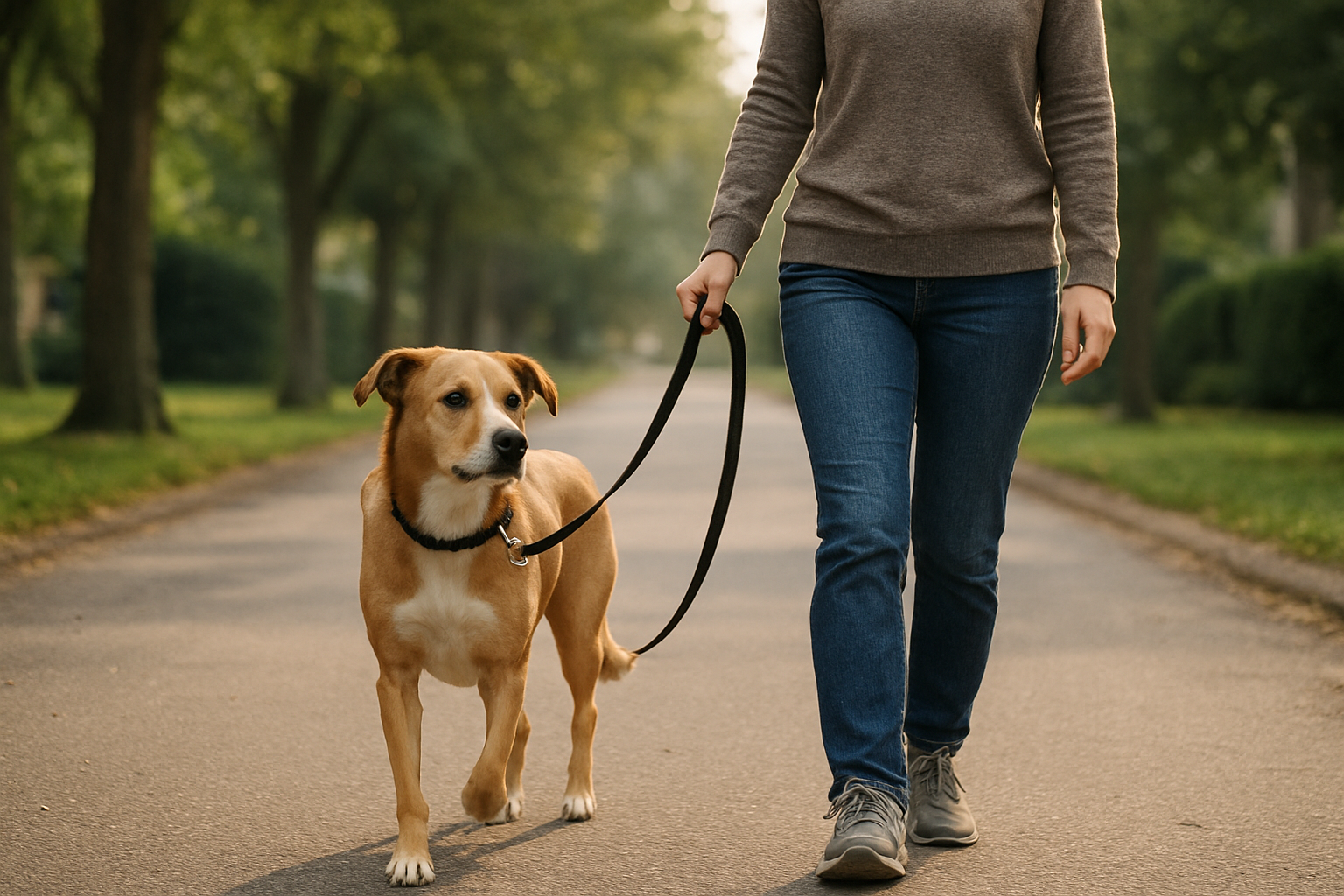
1. Prepare the right equipment and training space
Choose equipment that gives you control without causing pain. A well-fitted flat collar or comfortable harness, a standard leash, small soft treats, and a treat pouch are usually enough. Avoid retractable leashes while teaching this skill because their changing length can make position and leash tension harder to understand.
Use a quiet room, hallway, garden, or low-traffic outdoor area for the first sessions. Your dog should be able to notice you and accept food. If your dog is already barking, lunging, or unable to eat, the environment is too difficult for initial training.
- Pick one walking side and keep it consistent.
- Use a short verbal cue, such as “beside” or “with me.”
- Prepare rewards your dog can eat quickly without stopping for a long time.
- Keep sessions brief and finish while your dog is still engaged.
Before going outside, check that the collar or harness fits securely and that identification information is current. If your dog is fearful, reactive, or unusually strong, consider guidance from a qualified reward-based trainer.
2. Teach your dog where “beside” means
Stand still with your dog on your chosen side. Hold a treat close to your leg, say the cue once, and reward your dog when its shoulder is roughly level with your leg. Exact precision is not necessary at first; the goal is to create a clear, comfortable position.
Repeat this several times without moving. Then take one step and reward if your dog follows while remaining near your side. If your dog moves ahead, calmly reset rather than pulling it backward.
Checkpoint: look for voluntary attention
Before adding many steps, your dog should regularly glance toward you or move back into position after a reset. This shows that the reward location and walking position are beginning to make sense.
Reward frequently in the early stage. You may give a treat after one step, then two steps, and later several steps. Deliver the treat beside your leg rather than reaching far in front, since feeding position can influence where your dog chooses to walk.
3. Add movement without creating leash tension
Once your dog can follow for a few steps indoors, walk in straight lines and make gentle turns. Use your cue before moving, then reward your dog for staying beside you. Keep your pace natural and avoid sudden changes that make the exercise confusing.
If the leash becomes tight, stop moving. Wait quietly for your dog to release the tension, turn toward you, or return closer. Mark that moment with praise and resume only when the leash is loose.
Do not repeatedly pull your dog back while continuing forward. That pattern can teach the dog that pulling is part of normal walking and may increase frustration on both sides.
Training works best when the reward rate matches the difficulty:
- Easy setting: reward every few steps.
- Moderate setting: reward after a turn, check-in, or longer stretch.
- Difficult setting: return to frequent rewards and shorter distances.
4. Practice around controlled distractions
Do not move directly from a quiet room to a crowded park. Add one challenge at a time: a larger space, mild outdoor sounds, a person at a distance, or a calm dog far away. If your dog stops responding to the cue or refuses food, increase distance or return to an easier location.
Use distractions as training opportunities rather than forcing your dog to pass close to them. Ask for a brief glance at you, reward it, and then continue or move away. Your dog does not need to walk perfectly beside you for an entire outing; it needs repeated successful moments.
For dogs that react strongly to other animals, avoid close encounters and seek individualized help. A professional can help you design a safe distance and behavior plan. Do not use leash corrections, choke chains, or punishment to manage fear or aggression.
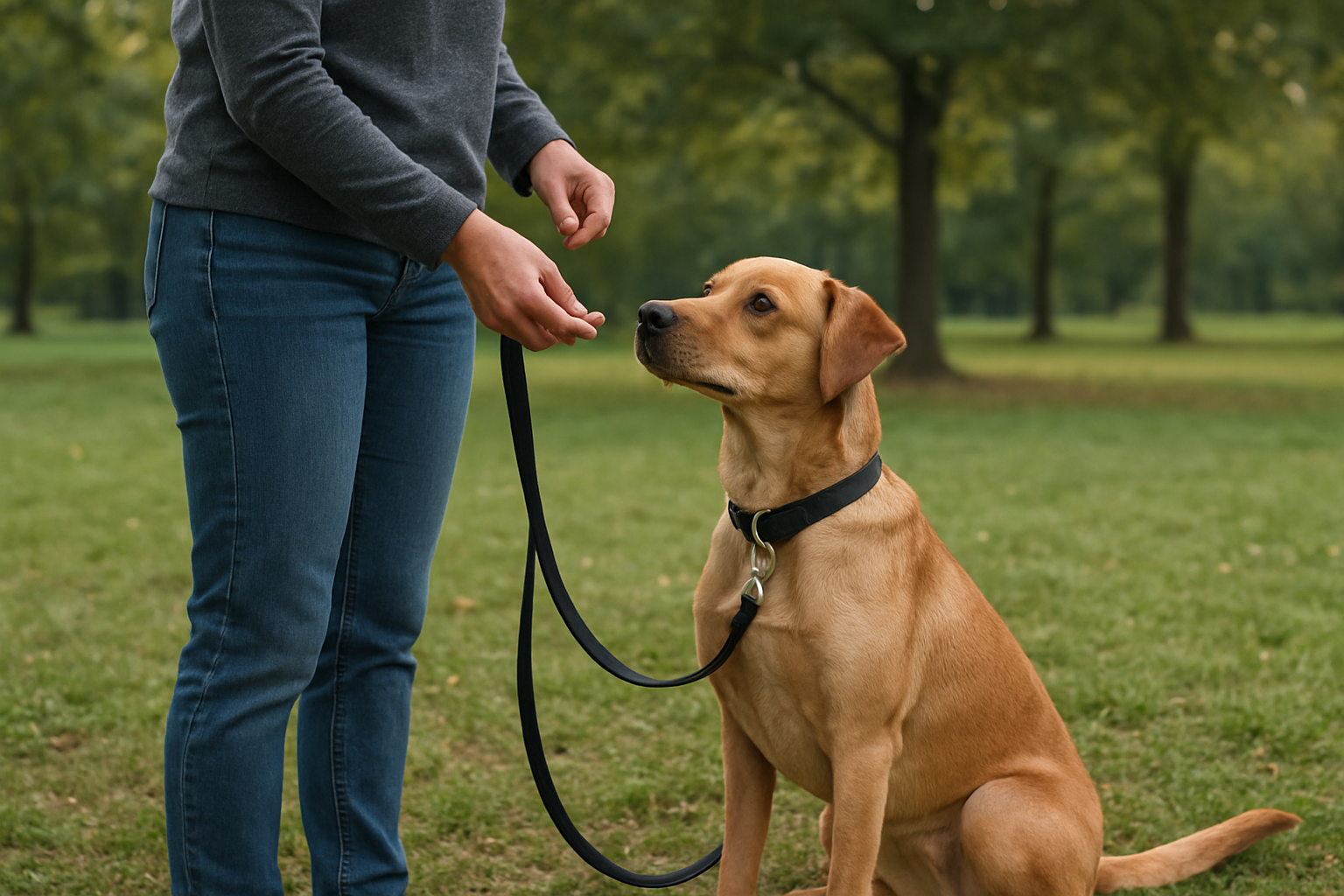
5. Build a reliable walking routine
Practice several short sessions across the week instead of relying on one long lesson. Begin each walk with a few easy steps near home, where your dog already knows the exercise. Gradually increase the length of the sections in which you expect your dog to stay beside you.
You can also use a release cue such as “free” to tell your dog when it may sniff or walk more casually. This makes the rules clearer: beside you during a focused section, then permission to explore when the leash is loose.
Sniffing is not automatically a training failure. Allowing safe opportunities to investigate can make walks more rewarding and reduce the pressure to maintain a formal position continuously.
Use this comparison when deciding what to change:
| What to look for | Likely meaning | Helpful adjustment | Warning sign |
|---|---|---|---|
| Loose leash and frequent check-ins | The difficulty is appropriate | Gradually add steps or mild distractions | Progress becomes inconsistent after every increase |
| Pulling toward smells | The environment is highly rewarding | Reward check-ins and allow planned sniff breaks | Your dog cannot eat or respond at all |
| Lagging behind | The dog may be uncertain, tired, or uncomfortable | Slow down and check equipment, paws, and temperature | Sudden limping, pain, or reluctance to move |
| Barking or lunging | The trigger is too close or intense | Create distance and end the difficult repetition | Repeated unsafe reactions or redirected biting |
6. Troubleshoot common walking problems
What if my dog pulls as soon as we leave?
Begin training just outside the door or in the driveway rather than starting with a full walk. Reward the first calm steps, then return indoors or pause. Repeat until leaving the home no longer immediately produces a surge of pulling.
What if my dog walks ahead to the end of the leash?
Stop before the leash becomes a constant restraint. When your dog turns back or the leash loosens, reward beside your leg and take a few steps in the opposite direction. Keep the change calm and predictable.
What if treats stop working?
Check the environment first. Your dog may be too distracted, anxious, full, or tired. Move farther from the trigger, use a more appealing but safe reward, shorten the session, or practice at another time.
What if my dog refuses to walk?
Do not drag the dog forward. Check for hot pavement, sharp objects, sore paws, ill-fitting equipment, heat, fear, or physical discomfort. Sudden or persistent reluctance, limping, breathing difficulty, or signs of pain warrants veterinary advice.
7. Avoid these common mistakes
- Expecting a formal heel for the entire walk.
- Increasing distance and distractions at the same time.
- Repeating the cue without showing the dog what earns it.
- Rewarding only at the end of a long, difficult stretch.
- Continuing after the dog is tired, distressed, or no longer responding.
- Using leash pressure to solve fear-based barking or lunging.
8. Use this training checklist
- Choose a consistent walking side and cue.
- Confirm that the harness or collar is secure and comfortable.
- Start where your dog can eat and pay attention.
- Reward the position beside your leg before adding distance.
- Stop or reset when the leash becomes tight.
- Add only one new distraction at a time.
- Include safe sniffing and rest breaks.
- Record what distance and distractions your dog handled successfully.
9. Advanced tips for real-world walks
Once your dog can walk beside you in several calm locations, vary your reinforcement. Continue rewarding important check-ins, turns, and successful passes, while occasionally replacing food with permission to sniff or move toward a safe area.
Teach an emergency turn separately in a quiet place. Say a cheerful cue, turn away, and reward your dog for following. This can help you leave an approaching distraction before the situation becomes difficult, but it is not a substitute for distance and careful management.
For longer journeys, plan water, shade, rest, and a route with room to move away from triggers. If you are transporting your dog to a new walking location, review safe travel equipment first, such as the guidance in how to choose safely for large-dog travel.
10. Take the next steps
Today, choose a quiet training area and complete three to five minutes of position practice. Tomorrow, repeat it with a few more steps, then note the point at which your dog begins to lose focus. Use that point as information, not as a failure: the next session should be slightly easier.
If your dog shows fear, repeated lunging, pain, or unsafe behavior, prioritize distance and professional support. A reliable walk develops from clear expectations, suitable equipment, and many manageable repetitions.
The most effective answer to how to teach a dog to walk beside you is not to demand perfection. Reward the behavior you want, protect your dog from overwhelming situations, and gradually make calm walking more rewarding than pulling.