The best washable dog pee pads for indoor training are absorbent, leak-resistant, large enough for your dog to turn around, and easy to wash without retaining odor. Look for a non-slip waterproof backing, clear care instructions, and a size that matches your dog’s habits rather than choosing only by appearance.
Reusable pads can reduce disposable waste and make indoor potty routines more consistent, but the pad itself is only one part of successful training. This guide explains which features matter, how to use a washable pad correctly, and when a different indoor toilet setup may be more suitable.
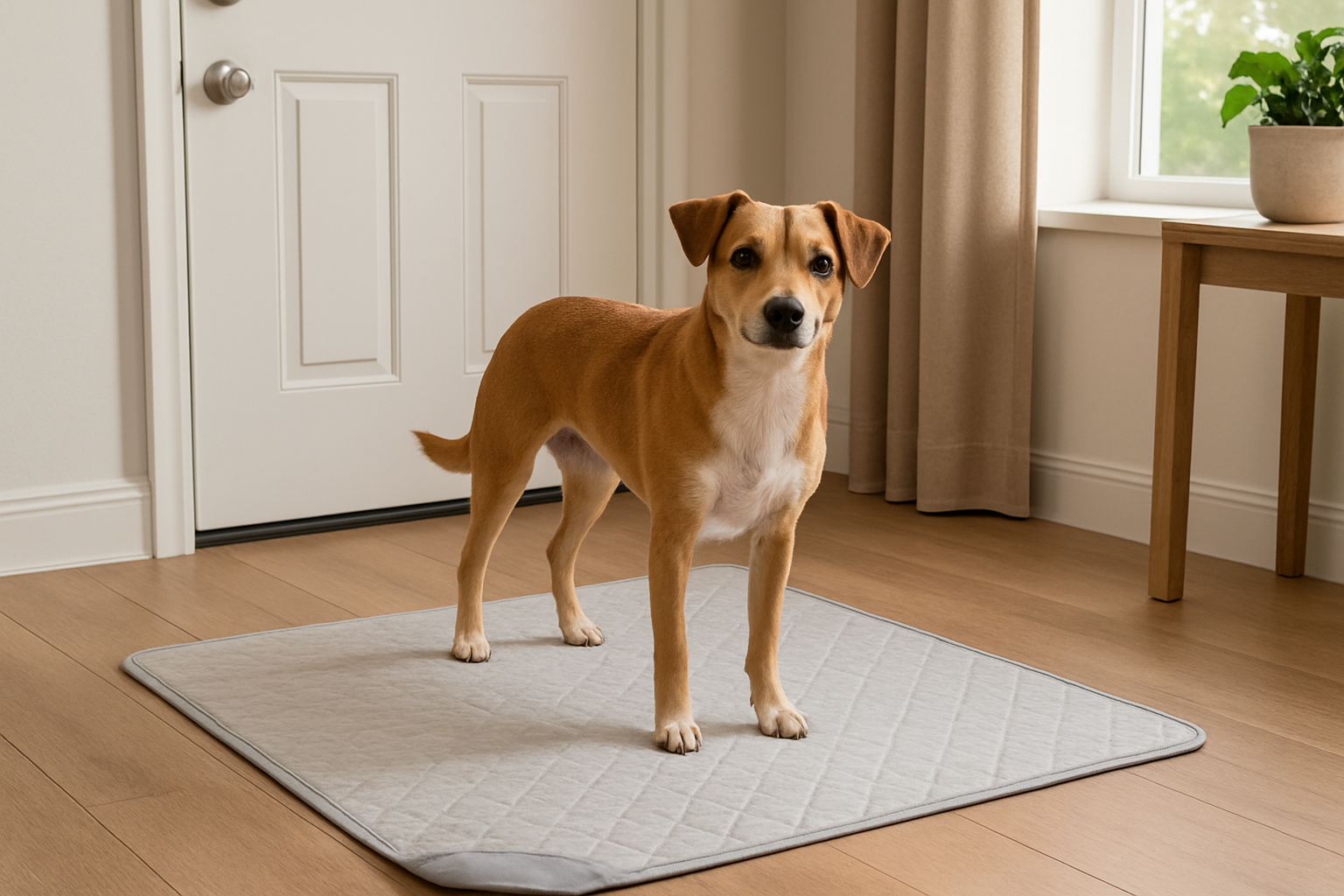
1. Decide whether a washable pee pad fits your training plan
Indoor pads can be useful for puppies in apartments, dogs with limited outdoor access, senior dogs, and households managing long periods between bathroom breaks. Veterinary behavior guidance recognizes that dogs can learn to eliminate indoors on absorbent pads, provided the routine is consistent and reinforced positively. VCA’s housetraining guidance also emphasizes supervision, consistency, and rewards rather than punishment. ([vcahospitals.com](https://vcahospitals.com/know-your-pet/house-training-your-puppy))
Before buying, decide whether the pad is a temporary training aid or a long-term toilet area. If your eventual goal is outdoor toileting, use the pad as one clearly defined location and gradually adjust the routine later. Switching between several indoor surfaces can make the rule less clear for a young dog.
- Good fit: apartment living, bad weather, mobility limitations, or a dog that cannot always go outside on schedule.
- Potential mismatch: a large dog that misses small targets, a dog that shreds fabric, or a home without enough time for frequent washing.
- Important distinction: a washable pad manages mess; it does not replace a potty-training schedule.
2. Compare the features that affect real-world performance
Marketing terms such as “heavy duty” or “odor control” are less useful than construction details you can inspect. The most dependable choices usually combine a top layer that dries reasonably quickly, an absorbent middle, and a waterproof bottom layer that extends close to the edges.
Use the table below as a buying filter. A warning sign does not automatically disqualify a product, but it tells you where problems may occur.
Washable dog pee pad buying comparison
| What to look for | Why it matters | Warning sign |
|---|---|---|
| Absorbent multi-layer core | Helps hold urine before it spreads across the surface | Thin fabric with no stated absorbent layer |
| Waterproof underside | Protects floors, crates, and rugs from seepage | Backing feels porous, cracks easily, or stops short of the edges |
| Large usable surface | Gives the dog room to approach, turn, and finish | Only the center is absorbent while the borders are narrow |
| Non-slip texture or grip | Keeps the target in place during scratching and movement | Smooth backing that slides on hard floors |
| Machine-washable construction | Makes repeated use practical | Complicated care rules or hand-wash-only instructions |
| Secure stitching | Reduces fraying and separation after repeated washing | Loose threads, exposed seams, or peeling layers |
Absorbency is not the same as leak protection
A pad may absorb a reasonable amount of liquid and still leak when urine reaches the edge. If your dog tends to stand near the perimeter, prioritize generous dimensions and a waterproof border. For puppies that circle before urinating, a larger pad or two overlapping pads may be more practical than a compact “travel” size.
Choose size and shape around your dog’s behavior
Measure the available floor area, then consider the dog’s stance. Small breeds may manage with a compact pad, while large breeds, males that lift their leg, or dogs that walk while urinating usually need more coverage. A pad that is technically absorbent but too small can create repeated “training failures” that are really sizing failures.
3. Check washing, drying, and odor-control requirements
Reusable pads only save effort when the cleaning routine is manageable. Read the care label before purchase and check whether the product can be machine-washed, whether fabric softener is discouraged, and whether it needs air-drying. Softener can reduce the ability of some fabrics to absorb liquid, while high heat may damage waterproof coatings depending on the material.
Have enough pads for rotation. One pad is rarely convenient for daily indoor training because a soiled pad may need to be removed immediately while the replacement is still damp or in the laundry. Two or three pads give you more flexibility, especially during the early weeks.
- Remove solid waste promptly and rinse or pre-treat the pad according to its care instructions.
- Wash urine-soaked pads separately from household towels when practical.
- Inspect the waterproof layer regularly for cracking, peeling, or persistent dampness.
- Replace a pad if it continues to smell after proper washing or no longer keeps the floor dry.
For accidents on flooring, use a cleaner appropriate for pet urine and follow the label directions. Persistent house soiling is not always a training issue: VCA notes that medical and behavioral causes should be considered when a previously trained dog begins urinating indoors. ([vcahospitals.com](https://vcahospitals.com/know-your-pet/dog-behavior-problems-house-soiling))
4. Use the pad as part of a clear training routine
Place the pad in one quiet, accessible location away from food and sleeping areas. Keep it there while your dog is learning. Moving the target around the home can make it harder for the dog to understand which surface and location are acceptable.
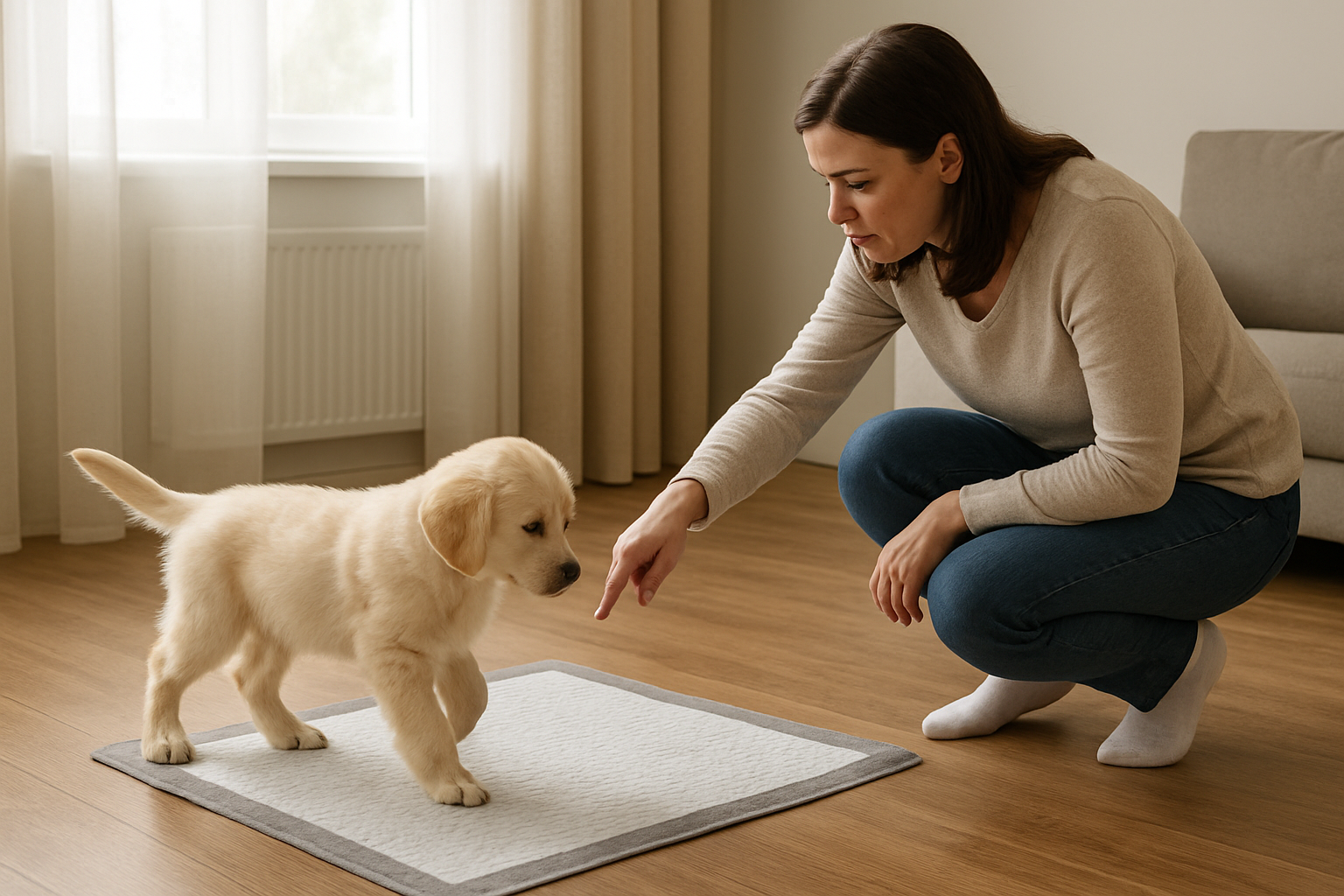
Take the dog to the pad after waking, eating, drinking, playing, and exercising. Watch for sniffing, circling, pacing, or suddenly leaving the room. When the dog uses the pad, reward immediately with calm praise or a suitable treat. The American Kennel Club’s pad-training guidance likewise recommends patience and a consistent routine. ([akc.org](https://www.akc.org/expert-advice/training/the-ins-and-outs-of-potty-pad-training/))
During unsupervised periods, reduce access to areas where accidents are likely. If an accident happens, avoid punishment. Clean the area thoroughly, review the schedule, and consider whether the pad is too small, too far away, slippery, or already saturated.
5. Consider alternatives before you buy
Washable fabric pads are not the only indoor option. Disposable pads can be simpler during illness, travel, or the first days with a puppy, although they create ongoing waste and may be easy for some dogs to shred. A washable artificial-grass toilet can suit dogs that are expected to transition to outdoor grass, but it may require more involved cleaning.
A litter-style indoor dog toilet or tray can provide a defined boundary and protect the floor, while a crate or pen setup can help with supervision when used appropriately. For a detailed routine, see our guide to how to potty train a puppy in an apartment.
- Choose washable pads when repeated use, lower disposable consumption, and easy floor placement are priorities.
- Choose disposable pads when convenience, travel, or temporary care is more important than long-term reuse.
- Choose a tray or grass system when edge containment or a specific surface transition matters most.
6. Avoid common buying mistakes
Buying by advertised absorbency alone
Absorbency claims may not explain how quickly liquid spreads, how much reaches the seams, or how the pad performs after many washes. Look for construction details and user-relevant care information instead of relying on one headline number.
Choosing a pad that is too small
A small pad may look convenient but create misses around the edges. If your dog is still learning, extra coverage is usually more useful than saving a few inches of floor space.
Ignoring movement
A pad that slides or bunches can make a dog avoid it. Use a non-slip version, a compatible tray, or a washable floor-safe holder. Do not use adhesive products that could leave residue or create a chewing hazard.
Expecting odor control without frequent washing
No fabric pad can make urine disappear. Odor depends on how quickly the pad is removed, washed, and dried, as well as the condition of the underlying floor.
7. Troubleshoot the most common problems
What if my dog uses the edge or misses?
Increase the pad size, move it closer to the dog’s usual location, and supervise the approach. If the dog consistently targets one edge, rotate the pad or place a second pad beside it temporarily.
What if my dog refuses the washable pad?
Check whether the material feels unstable, retains a strong detergent scent, or is placed in a noisy area. Some dogs have learned a different texture from disposable pads, tile, carpet, or grass. Transition gradually by placing the new pad under or beside the familiar surface, then reward investigation and correct use.
What if indoor accidents suddenly increase?
Review recent changes in schedule, access, stress, water intake, and cleaning. If the change is abrupt, or your dog strains, urinates unusually often, shows blood, dribbles urine, or seems painful, contact a veterinarian. A sudden break in house training can have a medical cause. ([vcahospitals.com](https://vcahospitals.com/know-your-pet/urinary-tract-infections-utis-in-dogs))
8. Final checklist and next actions
- Measure the intended location and choose a pad with room for your dog to turn.
- Confirm that the underside is waterproof and the edges are protected.
- Check washing, drying, and heat restrictions before purchasing.
- Buy enough pads to maintain a clean rotation.
- Use one fixed toilet location and reward correct use immediately.
- Clean misses thoroughly and never punish accidents.
- Replace the pad when odor, damage, or leaking persists.
For related household planning, you may also find our articles on cat versus dog care and reducing door barking useful.
Conditional verdict: The best washable dog pee pads for indoor training are the ones that match your dog’s size, stance, and washing routine—not necessarily the thickest or most heavily advertised option. Choose a large, stable, waterproof design if you can wash it promptly and use it within a consistent training plan. If you need maximum convenience, frequent travel portability, or stronger edge containment, disposable pads or a tray-based alternative may be the better fit.