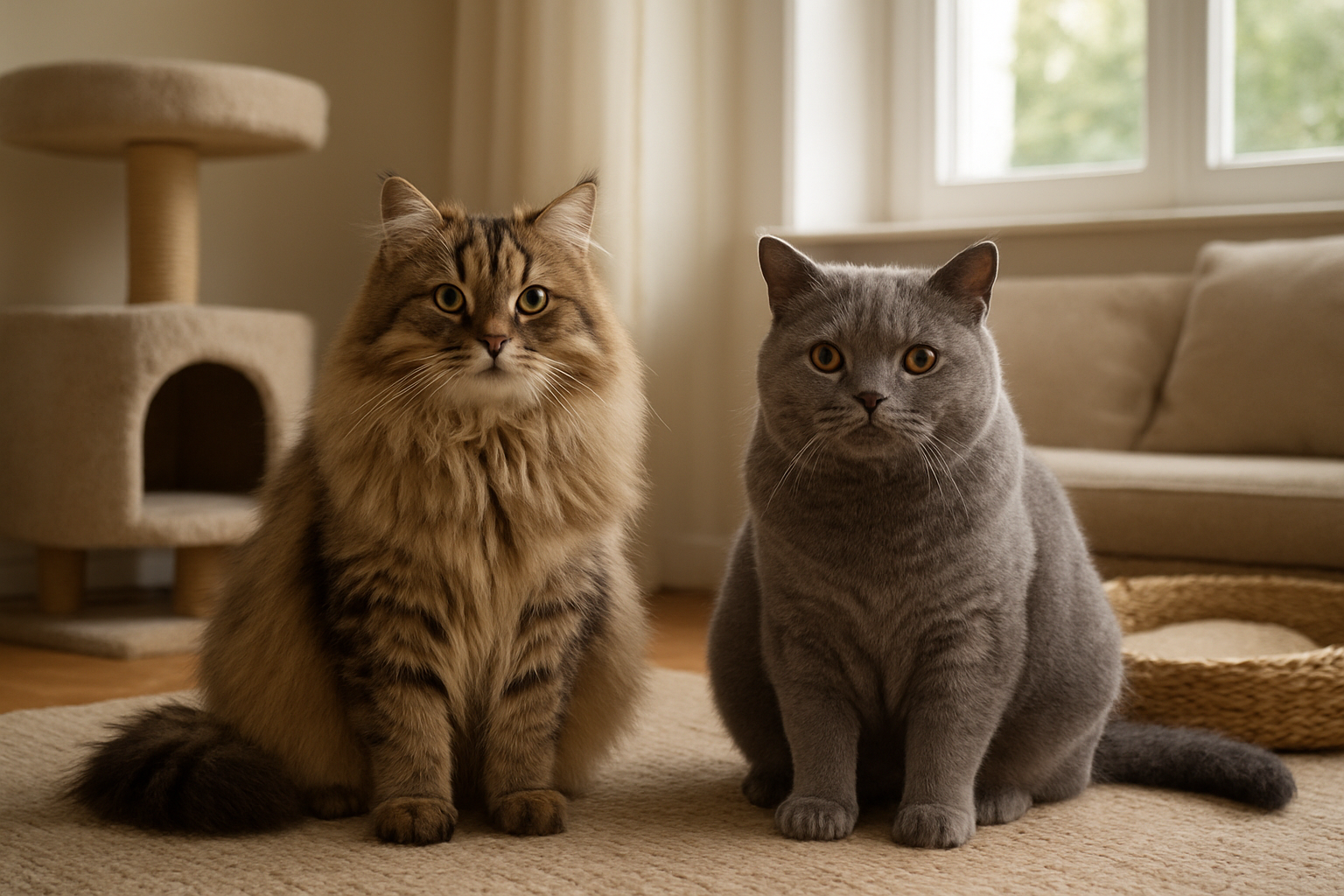
For most busy households, the British Shorthair is easier to live with because its short coat and calm, independent nature simplify daily care. Choose the Siberian instead if you want a more interactive, athletic cat and are prepared for more grooming, shedding, and climbing.
The best choice is not simply the breed with the friendliest reputation or the most attractive coat. Your schedule, tolerance for hair, home layout, and expectations about companionship all matter. This comparison looks at the practical differences between a Siberian cat and a British Shorthair so you can make a decision based on everyday life rather than appearance alone.
1. Start with the factors that actually affect daily life
Before comparing breed descriptions, list the conditions your cat will live with. A cat that seems ideal on paper may be a poor match if its exercise needs, coat maintenance, or social expectations conflict with your routine.
- Time: How much daily play and attention can you provide?
- Grooming: Are you comfortable brushing regularly and managing seasonal shedding?
- Space: Do you have secure vertical territory, climbing furniture, and places to retreat?
- Noise and activity: Would you prefer a quieter cat or an involved playmate?
- Household: Will the cat live with children, dogs, other cats, or long periods alone?
- Handling: Do you expect a lap cat, or would nearby companionship be enough?
Breed tendencies can guide your shortlist, but individuals vary. Ask a responsible breeder or rescue organization about the specific cat’s energy level, social behavior, grooming history, and response to handling.
2. Compare the two breeds side by side
The following table focuses on practical tradeoffs rather than show-ring characteristics. Official breed information from the Cat Fanciers’ Association Siberian profile, its British Shorthair profile, and TICA’s Siberian information supports the broad coat, size, maturity, and temperament distinctions.
Use this as a starting point, then confirm the individual cat’s behavior.
| Living factor | Siberian | British Shorthair | Practical tradeoff |
|---|---|---|---|
| Coat | Medium to long, dense, weather-resistant coat | Short, very dense, plush coat | The British Shorthair is usually simpler to maintain; the Siberian needs more attention to tangles. |
| Grooming | Regular brushing, with extra attention to the underside, tail, and leg furnishings | Periodic brushing, especially during heavier shedding | Neither is maintenance-free, but the Siberian generally requires more hands-on coat care. |
| Activity | Playful, athletic, and capable of high climbing and jumping | Moderately active, usually content with play followed by rest | Siberians need more climbing and enrichment opportunities. |
| Social style | Often interactive and involved with household activity | Affectionate but more independent and commonly less demanding | The Siberian may suit someone wanting a participating companion; the British may suit a quieter routine. |
| Handling expectations | May enjoy contact but is not automatically a lap cat | Often prefers companionship on its own terms | Meet the individual cat rather than assuming either breed will enjoy being carried. |
| Maturity | Slow to mature and may continue developing for several years | Also slow to reach full development | Young cats of either breed can be more energetic than their adult reputation suggests. |
| Best home setup | Cat trees, sturdy shelves, puzzle feeders, and active play | Comfortable resting areas, scratching posts, and moderate daily play | Both need enrichment, but the Siberian usually benefits from a more ambitious setup. |
3. Decide whether grooming or activity is the bigger burden
Siberian grooming and shedding
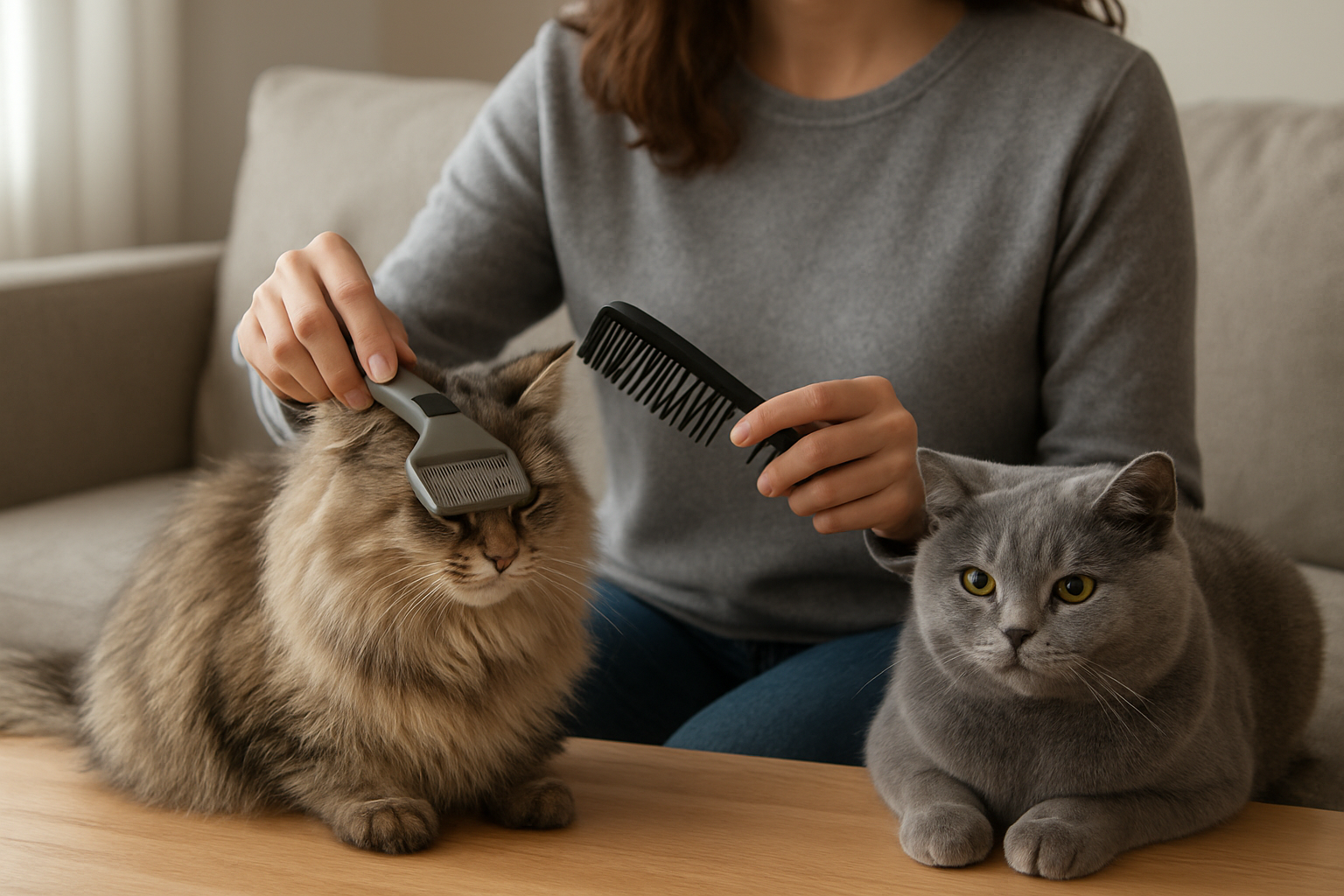
A Siberian’s coat can vary considerably between individuals. Some need weekly grooming, while others may go longer between full sessions; checking regularly for tangles is more useful than following a rigid calendar. Pay particular attention to areas where the coat is longer or rubs against the body, such as the tail, underside, and rear legs.
The main risk is allowing small knots to become tight mats. Introduce a comb and soft brush gradually, keep sessions short, and stop before the cat becomes distressed. During seasonal coat changes, you may need more frequent brushing and more cleaning around furniture and floors.
British Shorthair grooming and shedding
The British Shorthair’s short, dense coat is generally easier to inspect and brush. It still sheds, and loose hair can collect in the thick coat, so occasional brushing is worthwhile rather than optional. A rubber grooming tool or soft brush may be more comfortable than a sharp or aggressive de-shedding tool.
If your main concern is avoiding mats and keeping grooming time predictable, the British Shorthair has the practical advantage. However, “short-haired” does not mean “no shedding,” and a British Shorthair can still leave noticeable hair during heavier shedding periods.
4. Match temperament to the way you want to live
Siberians are often a better match for people who want an active relationship with their cat. They may follow household activity, learn routines, and seek interactive play. Their athletic build also means that a small floor-level scratcher may not be enough; provide stable vertical options and toys that encourage chasing, climbing, and problem-solving.
British Shorthairs are commonly described as calm, quiet, and adaptable. They may enjoy being near you without demanding constant handling or entertainment. That can work well for apartments, older adults, or people who want a companion that can settle while they work, provided the cat still receives daily play and attention.
Neither breed should be chosen solely because you expect it to tolerate unlimited carrying or cuddling. Cats communicate preferences through body language. Give either breed the option to approach, leave, perch nearby, and rest undisturbed.
5. Consider your home, schedule, and other pets
A Siberian can fit an apartment if the environment is enriched and secure, but limited space requires more deliberate planning. Use tall cat furniture, window access, rotating toys, and scheduled play to prevent boredom. Check that shelves and trees can support a strong, active cat safely.
A British Shorthair may be easier in a quieter or smaller home because it is often less driven to climb and patrol every area. Still, its sturdy body makes weight management important: measure meals, encourage movement, and ask your veterinarian for guidance if body condition changes.
With children or dogs, the individual introduction process matters more than the breed label. Use gradual scent exchange, separate resources, supervised meetings, and escape routes. Never force interaction because a cat appears naturally calm.
6. Choose the better fit by scenario
- You work long hours: The British Shorthair may be easier if the cat has enrichment and is not left without social contact for excessive periods.
- You want a playful, involved companion: The Siberian is often the stronger match, especially if you enjoy interactive games and climbing setups.
- You dislike brushing: Favor the British Shorthair, but plan for shedding and occasional grooming anyway.
- You have children: Either can work when the children are taught respectful handling and the cat has a retreat.
- You live with a friendly dog: Choose based on the individual cat’s socialization and use a slow introduction rather than relying on breed stereotypes.
- You want a quiet home: The British Shorthair is usually the safer starting point, although individual vocal behavior varies.
- You enjoy training and enrichment: A Siberian may provide more opportunities for active play, climbing, and learning routines.
7. Avoid the common decision mistakes
- Choosing by coat alone: A beautiful long coat creates a recurring grooming responsibility.
- Assuming calm means inactive: British Shorthairs still need play, scratching areas, and healthy movement.
- Assuming social means cuddly: A Siberian may want involvement without wanting to sit on your lap.
- Underestimating size and equipment: Use sturdy carriers, scratching posts, and cat trees appropriate for the adult cat.
- Ignoring the individual: Meet the cat, observe recovery from mild stress, and ask detailed questions about daily behavior.
- Expecting breed traits to solve loneliness: A predictable routine, enrichment, and appropriate social contact remain necessary for both.
8. What if your first choice is not behaving as expected?
If grooming becomes a struggle, shorten sessions and pair brushing with treats. Do not cut out severe mats at home with scissors close to the skin; ask a veterinarian or qualified groomer for help.
If a Siberian is restless, add structured play before meals, rotate toys, and increase vertical territory. Sudden behavior changes, excessive vocalization, hiding, or aggression deserve a veterinary check because behavior can change with pain or illness.
If a British Shorthair is gaining weight, review food portions, treats, and daily movement with your veterinarian. A quiet temperament should not be mistaken for a need to remain sedentary.
For general cat-care preparation, LaokPet’s guide on bathing a cat safely also offers useful handling principles, although routine bathing is not normally the central grooming task for either breed.
9. Use this final checklist before choosing
- Can you provide daily play, scratching outlets, and safe resting places?
- Will you brush often enough for the cat’s actual coat?
- Are you prepared for shedding from either breed?
- Do you prefer an interactive cat or a more self-contained companion?
- Can your home support a large, sturdy adult cat?
- Have you planned introductions if children, dogs, or other cats are present?
- Have you met the individual cat and discussed health history with a responsible source?
Final verdict: which cat is easier to live with?
The British Shorthair is the easier overall choice when your priority is predictable grooming, a quieter household presence, and a cat that is often comfortable with moderate daily interaction. It is not effortless: you still need to manage shedding, weight, play, scratching, and respectful handling.
The Siberian is the better choice when you want a more athletic and socially involved companion and can provide regular grooming plus meaningful enrichment. In the end, the easiest cat to live with is the one whose coat care, energy level, and social style match your actual routine—not the breed that sounds best in a short description.