The safest way to introduce a dog to a new cat is to move gradually: give the cat a protected room, exchange scents first, use a barrier for early visual contact, and keep the dog leashed during initial meetings. Do not expect the pets to become comfortable in one day.
A careful introduction reduces chasing, fear, and territorial conflict while giving both animals time to learn that the other pet is not a threat. This guide explains what to prepare, how to progress through each stage, when to pause, and what to do if the meeting does not go smoothly.
1. Prepare separate spaces before the cat arrives
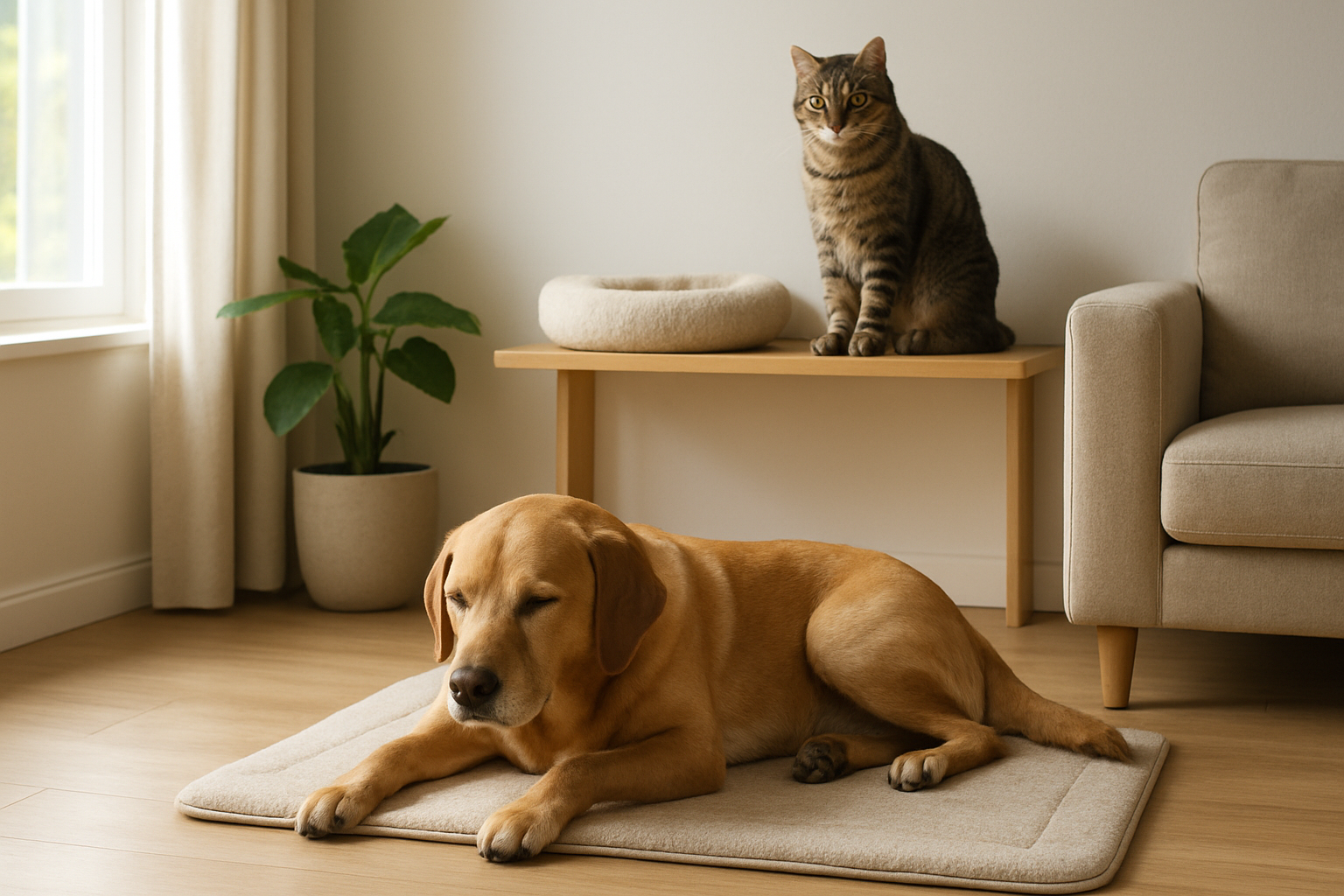
Your first goal is management, not friendship. Set up a quiet cat-only room with food, water, a litter box, a scratching surface, bedding, hiding places, and access to a high perch if possible. The dog should not be able to enter this room or stare through the doorway for long periods.
The dog also needs a predictable area with a bed, water, and appropriate chews or toys. Remove items that could trigger guarding, and keep both pets’ food and resting areas separate. A secure baby gate, tall pet gate, closed door, leash, and high-value treats are useful tools.
- Check that the cat has an escape route and elevated resting places.
- Keep litter, food, and medication out of the dog’s reach.
- Refresh the dog’s basic cues, especially “leave it,” “stay,” and name recognition.
- Plan how you will separate the animals when nobody is home.
The VCA introduction guidance recommends separate territories, gradual progress, barriers, and a leash for early dog-and-cat meetings. ([vcahospitals.com](https://vcahospitals.com/resources/new-pet/tips-for-fostering-a-shelter-pet-that-your-pet-will-approve?utm_source=openai))
2. Start with scent before sight
For the first several days, keep the dog and cat physically separated. Let each animal investigate the other’s scent without direct contact. Rub a clean cloth gently over one pet’s cheeks or shoulders, then place it near the other pet’s resting area. You can also exchange bedding, provided neither animal guards it.
Pair the scent with something pleasant, such as a meal, a food puzzle, or calm praise. Do not push the cloth toward the animal’s face. The point is to make the unfamiliar smell ordinary, not to force interaction.
Checkpoint: move on only when both pets are coping
Continue scent work while the cat is eating, using the litter box, grooming, and exploring normally. The dog should be able to notice the cat’s scent without frantic searching, barking, whining, or scratching at the door. If either pet becomes distressed, increase distance and slow down.
3. Allow controlled visual contact through a barrier
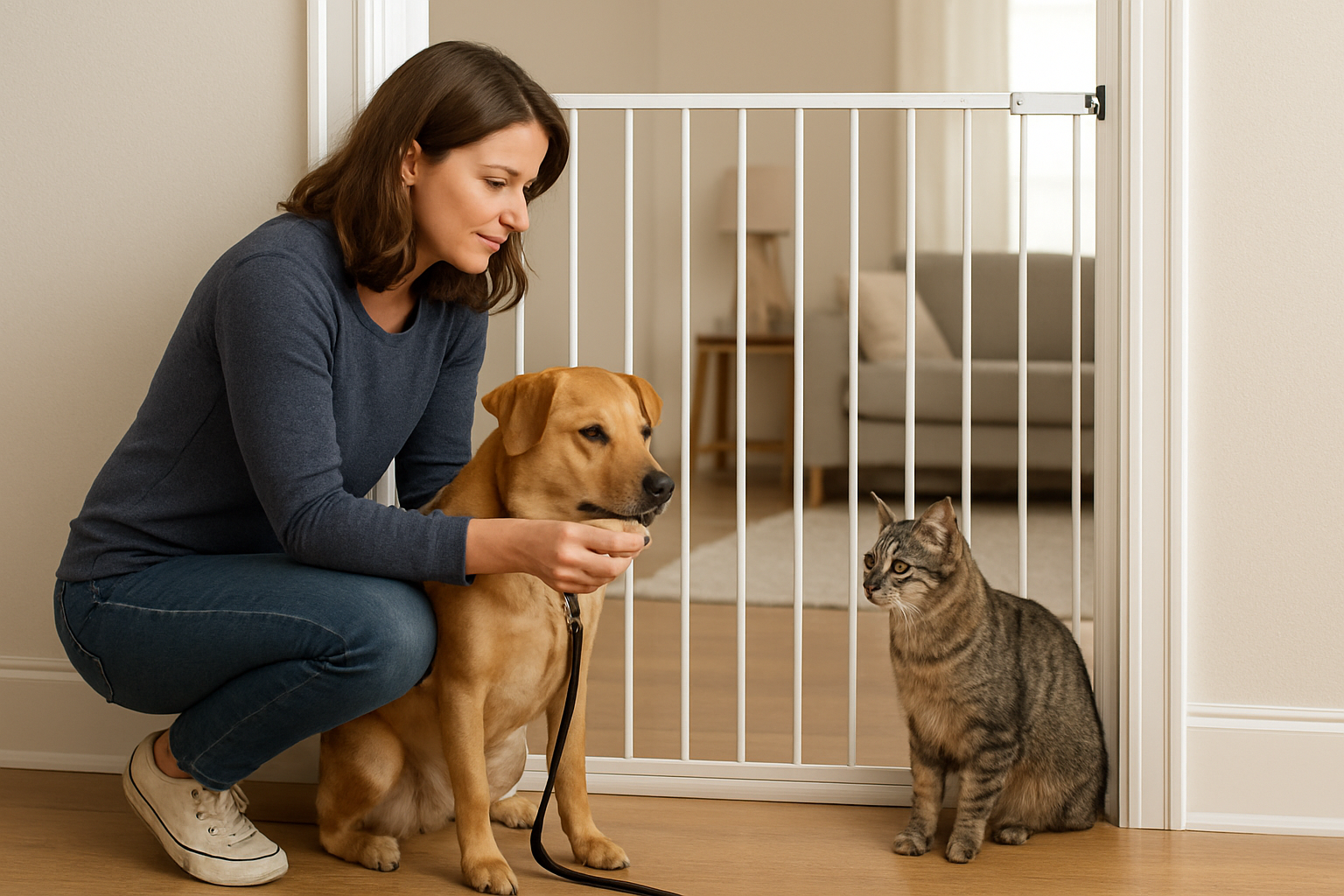
Once scent exchange is uneventful, let the pets see each other through a secure barrier. A tall gate, screen door, or slightly opened door can work, but the setup must prevent the dog from pushing through and prevent the cat from becoming trapped.
Exercise the dog moderately beforehand, then put the dog on a loose leash. Keep the cat free to leave. Reward the dog for looking briefly at the cat and then turning back toward you. Reward the cat for calm behaviors, but never lure the cat closer than it chooses to go.
Keep the first sessions very short—often less than a few minutes. End while both pets are still calm. Several successful sessions are more useful than one long meeting.
Use this table to decide whether the setup is ready for the next stage.
| What to look for | Warning sign | What to do |
|---|---|---|
| Dog glances at cat and responds to name | Fixed stare, lunging, barking, or ignoring food | Increase distance and return to scent work |
| Cat watches, sniffs, or walks away normally | Persistent hissing, hiding, swatting, or flattened posture | Block the view and give the cat more privacy |
| Both animals can eat or take treats | Either pet refuses food because of stress | Shorten the session and reduce intensity |
| Cat can retreat to a safe place | Cat is cornered or the dog blocks the exit | Stop immediately and redesign the room |
4. Introduce the dog and cat in the same room
When barrier sessions are consistently calm, arrange a brief face-to-face meeting. Keep the dog on a leash and allow the cat to move freely. Sit near the dog so you can interrupt a sudden chase without grabbing at either animal.
Ask for an easy behavior such as looking at you, sitting, or touching your hand. Reward calm responses. Keep the leash loose when possible; constant tension can make the dog more frustrated and may communicate that something alarming is happening.
Do not carry the cat toward the dog, hold the cat in place, or allow the dog to rush forward for a “quick sniff.” A cat that cannot escape may defend itself, and a dog that rehearses chasing can become harder to manage.
End the meeting before problems begin
Separate the pets if the dog stiffens, stalks, fixates, vocalizes intensely, or tries to chase. Also pause if the cat repeatedly growls, swats, hides, or cannot settle. Calmly guide the dog away with the leash and give both animals time to decompress.
5. Increase freedom in small stages
After several calm leashed meetings, allow the dog more freedom while keeping close supervision. You can use a lightweight house line if appropriate, but do not leave a dragging leash on a pet that could become tangled. Maintain cat-only areas that the dog cannot access.
Increase session length gradually, changing only one factor at a time. For example, first add a few minutes, then try a different room, and only later consider allowing the dog off leash while you remain present. Do not rush because the pets have had one successful interaction.
When you leave the house, separate them. VCA advises continued supervision for the first weeks and recommends separation when nobody is available to intervene. ([vcahospitals.com](https://vcahospitals.com/resources/new-pet/tips-for-fostering-a-shelter-pet-that-your-pet-will-approve?utm_source=openai))
6. Read body language instead of relying on friendliness
A wagging dog tail does not always mean the dog is relaxed, and a quiet cat is not necessarily comfortable. Look at the whole body and the ability to disengage.
- Promising signs: loose movement, normal eating, sniffing, turning away, grooming, play, and responding to familiar cues.
- Stress signs in dogs: rigid posture, closed mouth, hard staring, stalking, lunging, repeated barking, or inability to take treats.
- Stress signs in cats: crouching, ears held flat, puffed fur, rapid tail flicking, hiding, hissing, growling, or repeated swatting.
The ASPCA recommends not forcing animals to remain in situations where they are clearly fearful or uncomfortable, and advises professional help after aggressive behavior. ([aspca.org](https://www.aspca.org/pet-care/dog-care/dog-bite-prevention?utm_source=openai))
7. Troubleshoot common introduction problems
What if the dog chases the cat?
Separate them immediately and return to barrier work. Practice recall, attention, and “leave it” away from the cat first. Do not punish the dog after the chase; punishment may increase excitement or fear without teaching a reliable alternative.
What if the cat hides all day?
Make the cat’s room quieter, add a high resting place, and prevent the dog from waiting outside the door. If the cat stops eating, avoids the litter box, or shows ongoing distress, contact a veterinarian.
What if the dog is calm but the cat keeps swatting?
Give the cat more distance and more control over whether contact happens. A swat is a signal to stop, not an invitation to bring the dog closer. Continue scent and barrier sessions until the cat can observe the dog without repeated defensive behavior.
What if there is a bite, scratch, or serious fight?
Do not put your hands between fighting pets. Separate them using doors, barriers, or other safe distance methods, then check both animals for injuries. Seek prompt veterinary care for punctures, eye injuries, heavy bleeding, breathing trouble, weakness, or difficulty standing; the ASPCA lists these as emergency warning signs. ([aspca.org](https://www.aspca.org/pet-care/general-pet-care/emergency-care-your-pet?utm_source=openai))
8. Avoid these common mistakes
- Putting the new cat down in the middle of the room and letting the dog rush over.
- Holding the cat so it cannot escape.
- Allowing the dog to practice chasing, even if the chase looks playful.
- Moving forward after one calm meeting instead of waiting for a pattern.
- Leaving food, toys, beds, or litter areas where the pets may compete.
- Assuming they are safe together simply because neither animal is vocalizing.
9. Use this introduction checklist
- Prepare separate rooms and escape routes.
- Gather a leash, secure barrier, treats, and cleaning supplies.
- Exchange scents before allowing visual contact.
- Reward calm behavior through a barrier.
- Keep the first same-room meetings short and leashed.
- Allow the cat to approach or leave freely.
- Supervise every interaction until calm behavior is well established.
- Arrange professional help if there is repeated aggression, chasing, injury, or severe fear.
10. Take the next steps at the right pace
Today, prepare the cat’s safe room and practice the dog’s attention cues without the cat present. Once both animals are settled, begin scent exchange. Over the following days, use the checkpoint signs in this guide rather than a fixed calendar to decide when to progress.
Some dogs and cats become comfortable sharing a home without becoming close companions. That is a successful outcome if both can eat, rest, move around, and use their resources without fear. When you introduce a dog to a new cat, prioritize predictable routines, escape options, and calm supervision over speed.
For additional preparation, you may also find LaokPet’s guides to calm puppy behavior and choosing a safe dog enrichment toy useful while building better household routines.