To how to crate train a puppy at night, make the crate feel safe during the day, place it near you at bedtime, take your puppy out for quiet toilet breaks, and respond to crying without turning the night into playtime. Go slowly, keep the routine predictable, and never use the crate as punishment.
Some puppies settle quickly. Others need several nights of patient practice. The aim is not to force silence. It is to help your puppy feel secure while learning that nighttime is for resting and that toilet needs will be handled calmly.
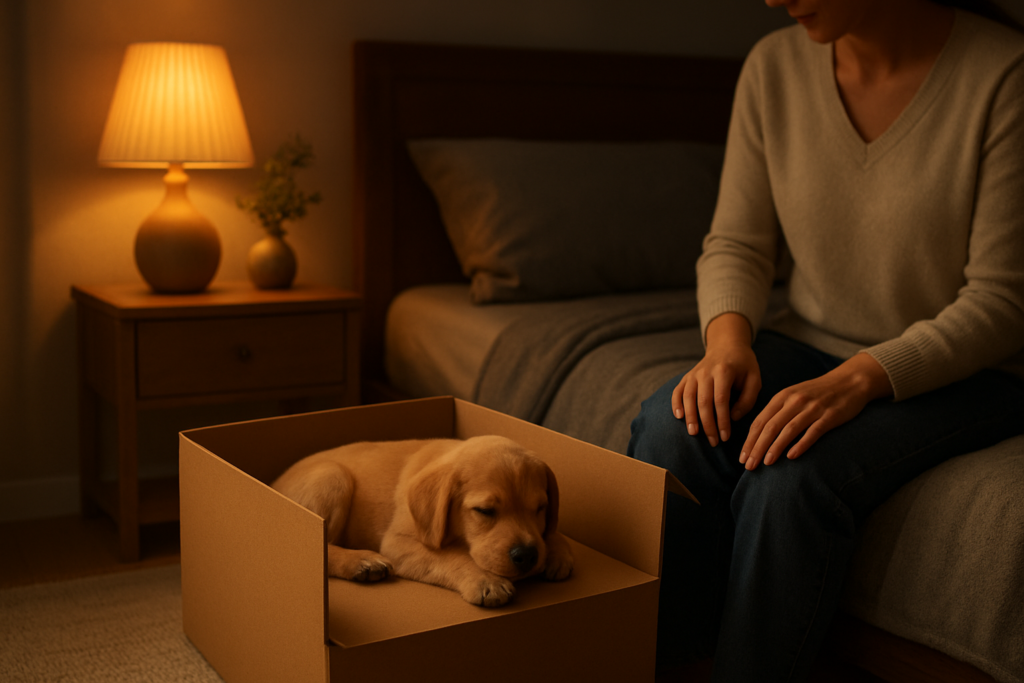
What nighttime crate training should look like
A well-managed nighttime routine has four parts: a comfortable crate, positive daytime practice, a final toilet trip, and a boring, predictable response when your puppy needs help. Your puppy may still wake during the night, especially when young. Success means gradual progress, not an immediate full night of sleep.
Use reward-based training. Offer food, praise, or a safe chew to build good associations, and allow your puppy to choose the crate whenever possible. Avoid shouting, banging on the crate, or leaving a frightened puppy to panic. These responses can make the crate feel less safe.
Prepare the crate and sleeping area
Choose a sturdy crate that allows your puppy to stand up, turn around, lie down comfortably, and stretch. It should not be so large that your puppy can easily sleep in one area and toilet in another. If your puppy is growing, use a safe divider that leaves enough room for movement and adjust it as needed.
- Place the crate in a quiet part of your bedroom or just nearby at first. Being close helps you notice genuine toilet needs and can reduce loneliness.
- Use a flat, washable surface. Avoid loose bedding if your puppy chews, shreds, or eats fabric.
- Remove collars, harnesses, and dangling tags before crating if they could catch on the crate.
- Keep the room comfortably cool and well ventilated, away from direct heat, draughts, and household hazards.
- Offer only a chew or toy that is suitable for your puppy and that you have already observed them using safely.
Do not cover the crate in a way that blocks airflow, and do not place it where other pets or people can disturb a resting puppy. The door should open freely, and the crate should never be used for punishment after an accident or unwanted behaviour.
Build positive crate habits before bedtime
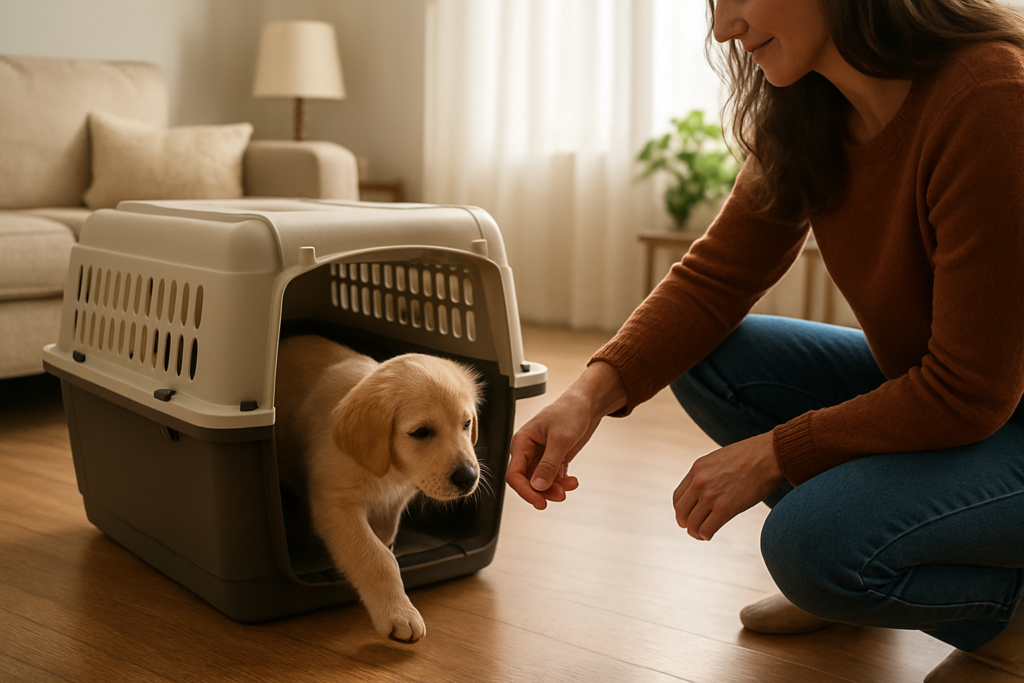
Night training is easier when the crate is already familiar. During the day, leave the door open and scatter a few pieces of food near the entrance. Reward your puppy for looking at the crate, stepping inside, and resting there. Keep early sessions short and relaxed.
When your puppy is comfortable entering, feed some meals near or inside the crate. Close the door for only a few seconds while you remain nearby, then open it before your puppy becomes worried. Slowly add time, movement, and distance across many sessions. If whining, scratching, or rushing increases, make the next repetition easier.
Do not lure your puppy inside and then create a surprise separation every time. Mix crate entries with calm exits and open-door relaxation. Your puppy should learn that the crate is not a trap and that people return.
Step-by-step: how to crate train a puppy at night
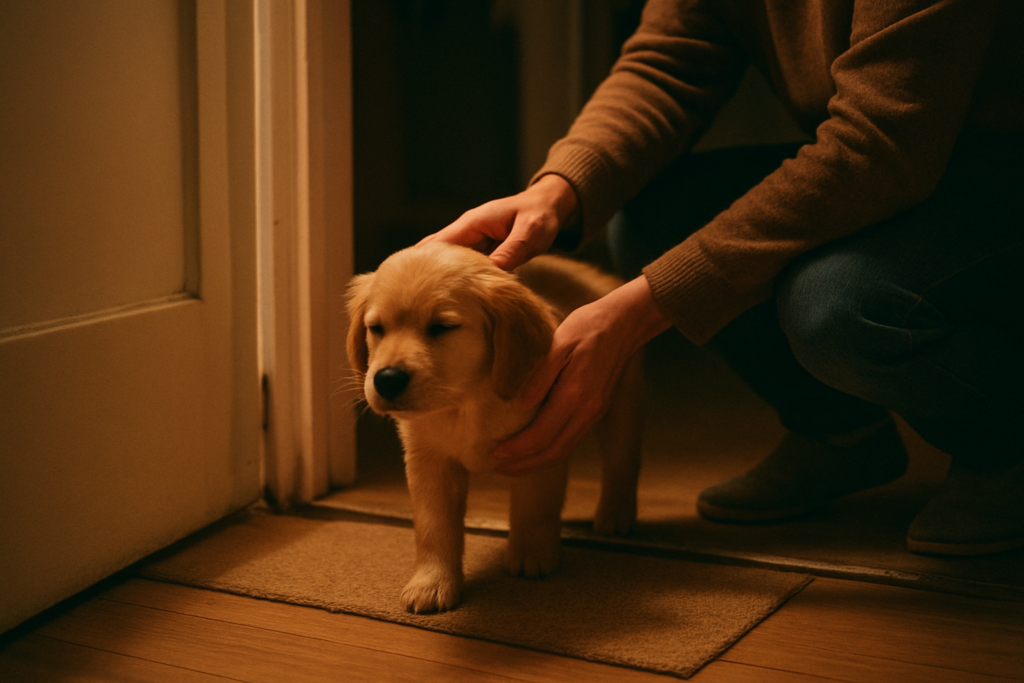
1. Set a calm evening rhythm
About an hour before bed, shift from exciting activity to quiet interaction. A short, gentle play session, simple training, and relaxed contact can help your puppy settle. Avoid trying to exhaust your puppy with intense play; an overtired puppy may become more restless rather than sleepier.
Keep water available according to your puppy’s normal needs, but avoid making sudden changes to food or water routines just to prevent waking. Young puppies need appropriate hydration and regular meals. Ask your veterinarian about any routine changes if your puppy has a health condition or special dietary need.
2. Take your puppy out immediately before bed
Carry or calmly guide your puppy to the usual toilet area. Keep this trip quiet and focused. Wait without turning it into a game, then reward toileting in the right place. Give your puppy enough time to finish, since rushing back inside can lead to an accident soon afterward.
3. Guide your puppy into the crate
Use a calm cue if you have taught one, or place a small reward inside and let your puppy walk in. Close the door gently. Keep your voice soft and your movements slow. At first, sit beside the crate while your puppy settles. You can gradually move farther away as your puppy becomes comfortable.
4. Respond to crying thoughtfully
Pause and assess rather than reacting instantly to every sound. A brief whine may fade as your puppy settles. Continuous or escalating distress means the step may be too difficult. Speak calmly or move closer, and consider opening the crate for a quiet toilet trip if enough time has passed or your puppy shows signs of needing to go.
If you take your puppy out, keep lights low and interaction minimal. Go directly to the toilet area, wait, praise quietly if they go, and return to the crate. If they do not toilet after a reasonable wait, return indoors and try settling again. Do not start play, offer a full meal, or give exciting attention during a night waking.
5. Plan age-appropriate toilet breaks
Many young puppies cannot stay dry all night. A planned alarm can be more successful than waiting for frantic crying. The right schedule varies with age, size, health, previous toilet habits, and the individual puppy. Start with a realistic interval and gradually extend it only when your puppy is staying dry and settling well.
Look for patterns. If accidents happen at a similar time, set the alarm slightly earlier for a few nights. If your puppy consistently stays dry and wakes calmly, slowly add time. Never punish an accident. Clean the area thoroughly with a suitable odour-removing cleaner and review the schedule, supervision, and crate size.
6. Start the morning quietly
When it is time to begin the day, take your puppy straight outside. A puppy that has just woken may need to toilet quickly. Afterward, offer breakfast, exercise, and attention. Keeping the first moments calm helps separate nighttime settling from daytime activity.
A simple nighttime crate-training checklist
- ☐ The crate is correctly sized, safe, ventilated, and free from hazards.
- ☐ Your puppy has practised entering and relaxing in the crate during the day.
- ☐ The crate is close enough for you to notice genuine distress or toilet needs.
- ☐ Your puppy has had a calm evening and a final toilet trip.
- ☐ You have planned quiet, age-appropriate nighttime toilet breaks.
- ☐ Any chew or toy has been observed to be safe for your individual puppy.
- ☐ You will respond calmly and will not punish crying or accidents.
- ☐ You will track patterns and adjust gradually rather than expecting instant results.
Common mistakes that slow progress
Using the crate only when you leave
If the crate appears only before separation, your puppy may connect it with being alone. Practise short, pleasant crate sessions while you are home. Leave the door open at times, and reward calm choices without always closing the door.
Expecting too much too soon
A puppy that can rest for ten minutes during the day may not be ready for several hours overnight. Increase duration in small steps. If progress stops, return to an easier level instead of adding pressure.
Letting bedtime become exciting
Repeated talking, games, bright lights, or freedom around the house can teach a puppy that waking leads to fun. Keep necessary care kind but uninteresting. Save energetic interaction for the morning.
Ignoring every cry
Crying can mean loneliness, fear, discomfort, or a full bladder. Ignoring escalating distress is not a humane training plan. Check the situation calmly, meet genuine needs, and reduce the difficulty of the next session when needed.
Opening the door during a tantrum every time
Opening the crate at the peak of ordinary complaining can teach your puppy that louder behaviour makes the door open. When you are confident there is no urgent need, wait for a brief quiet pause before opening it. This advice does not apply to panic, illness, injury, overheating, or another safety concern; act promptly in those situations.
Troubleshooting nighttime problems
| What you notice | What to try |
|---|---|
| Your puppy cries as soon as the door closes | Return to open-door games and very short closed-door sessions. Sit nearby, reward calm behaviour, and build duration gradually. |
| Your puppy wakes soon after bedtime | Review the final toilet trip, evening activity, feeding routine, and crate comfort. Take them out quietly if they may need to toilet. |
| Your puppy has repeated accidents | Use a smaller safe crate area if appropriate, increase supervision and toilet trips, and seek veterinary advice if the pattern is sudden or unusual. |
| Your puppy bites the crate or tries to escape | Stop and assess safety. Make daytime practice easier and remove hazards. Seek help from a qualified force-free trainer or veterinarian if panic continues. |
| Your puppy settles but wakes very early | Keep the early toilet trip boring, then return to the crate if suitable. Gradually shift the morning routine rather than rewarding early waking with immediate play. |
Safety and welfare essentials
Never crate a puppy for longer than they can comfortably manage. A crate cannot replace toilet training, exercise, social contact, mental activity, or supervision. Puppies need regular opportunities to move, explore safely, eat, drink, toilet, and interact with their family.
Watch body language. Panting when the room is not hot, frantic scratching, drooling, trembling, repeated escape attempts, freezing, or inability to take a familiar treat can signal that your puppy is overwhelmed. Give them space and make the next training step easier. Do not use a crate to manage serious separation distress without professional guidance.
Contact a veterinarian for sudden toileting changes, repeated diarrhoea or vomiting, signs of pain, breathing difficulty, marked lethargy, injury, or any concern that your puppy is unwell. For persistent fear, severe separation problems, or training difficulties, a qualified reward-based trainer can help create an individual plan.
Advanced practical tips for smoother nights
Keep a simple log for several nights. Note dinner, water, final toilet time, crate entry, waking times, toileting, accidents, and morning start. Patterns are more useful than guessing. Change one part of the routine at a time so you can see what helps.
Use the same short bedtime sequence each night: calm activity, toilet trip, crate, quiet settling, and lights down. Predictability can reduce uncertainty. A familiar household scent nearby may be comforting, but never put loose fabric in the crate if your puppy chews or swallows it.
Practise brief daytime separations after your puppy can relax in the crate with you nearby. Step away for a few seconds, return calmly, and build slowly. This supports nighttime training without making the first long separation happen at bedtime.
Consider whether the crate is the best temporary sleeping arrangement for your puppy. Some puppies need a larger puppy-proofed area while they learn to settle, especially if confinement causes intense distress. The goal is safe rest and good welfare, not proving that one setup must work for every dog.
Useful next steps for puppy parents
Begin with a daytime crate session today, then use the same calm sequence at bedtime. Keep the first night realistic: prepare for at least one toilet break, stay nearby, and judge progress by calmer settling and fewer problems rather than by a perfect night.
For more practical guidance, browse LaokPet’s dog care articles and pet-care guides. Continue to adjust the plan to your puppy’s age, health, temperament, and history. Gentle consistency, close observation, and timely professional support are the foundations of humane nighttime crate training.