Quick verdict: The Border Collie usually needs more exercise and more demanding mental stimulation than the Australian Shepherd. Both breeds require an active household, but Border Collies tend to be more intense, focused, and sensitive to an under-stimulating routine.
Choosing between an Australian Shepherd and a Border Collie is not simply a question of which dog can run farther. You also need to consider training time, problem-solving activities, settling indoors, age, health, and how consistently you can provide structure. This comparison explains the practical difference and helps you match each breed to your lifestyle.
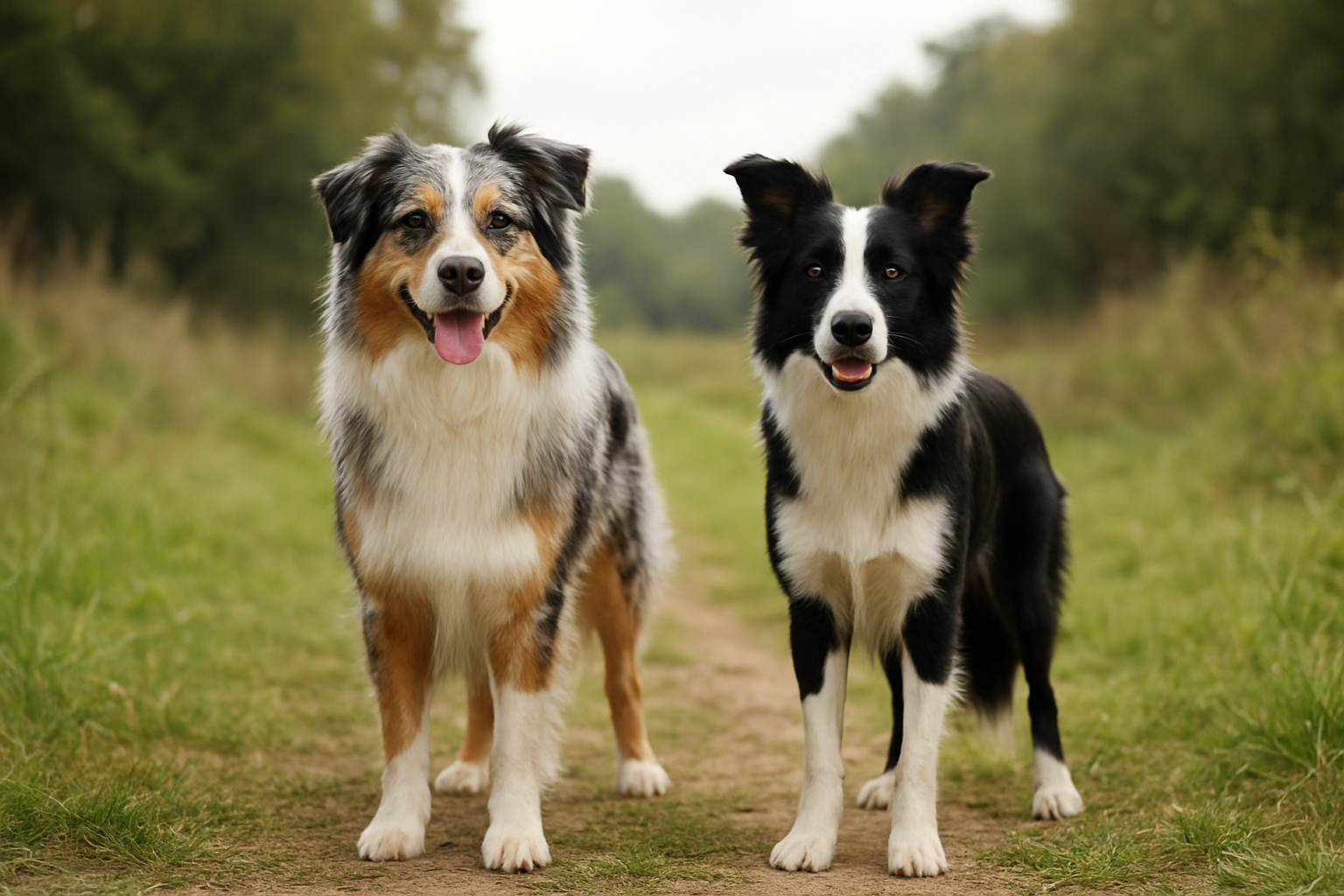
1. Compare exercise needs by more than running time
Both breeds were developed for demanding herding work, so neither is a low-maintenance companion. The American Kennel Club describes the Australian Shepherd as a high-energy, athletic dog needing daily exercise and a job, while Border Collies are commonly described as requiring substantial physical activity combined with mental stimulation.
That distinction matters. A long walk may help burn energy, but it may not satisfy a dog that was bred to make decisions, respond to movement, and work closely with a handler. Exercise should include movement, training, exploration, and opportunities to settle afterward.
For general breed background, see the AKC Australian Shepherd profile and the AKC guide to whether a Border Collie suits your lifestyle.
2. Australian Shepherd vs Border Collie: side-by-side exercise comparison
The table below describes typical breed tendencies, not guarantees. Individual dogs vary according to age, breeding, health, previous experience, and daily routine.
| Exercise dimension | Australian Shepherd | Border Collie |
|---|---|---|
| Overall energy | High; usually needs substantial daily activity | Very high; often needs both vigorous activity and focused work |
| Best physical outlets | Hiking, running after maturity, retrieving, swimming, agility, herding | Running, agility, herding, flyball, advanced retrieving, structured games |
| Mental stimulation | Important; training and jobs help prevent boredom | Essential; problem-solving and ongoing learning are often central to well-being |
| Typical training style | Responsive, intelligent, energetic, sometimes protective or easily overexcited | Exceptionally focused and quick to learn, but can become obsessive or frustrated |
| Risk of under-exercise | Destructive behavior, barking, jumping, chasing, or overprotectiveness | Destructive behavior, compulsive movement, chasing, fixation, or difficulty settling |
| Best household match | Active owners who enjoy daily involvement and varied activities | Experienced, highly engaged owners who enjoy regular training or dog sports |
In practical terms, the Border Collie often has the higher exercise ceiling. The Australian Shepherd is also demanding, but many Aussies are satisfied with a balanced combination of physical activity, obedience work, social time, and a clear daily routine.
3. Why the Border Collie often needs more
Border Collies were selected for close, responsive livestock work. Their intelligence is a major strength, but it also means that repetitive exercise without mental engagement may not be enough. A Border Collie may finish a walk and immediately look for another task if the routine does not include thinking, learning, or controlled interaction.
Activities such as agility foundations, scent games, advanced obedience, structured retrieving, and herding lessons can be more useful than simply increasing mileage. The AKC guide to active dog breeds also emphasizes that Border Collies need more than an occasional neighborhood walk.
What a realistic Border Collie routine may include
- A substantial daily walk, hike, run, or carefully managed play session.
- Short training sessions spread across the day rather than one exhausting drill.
- Problem-solving games, scent work, food puzzles, or sport foundations.
- Practice settling on a mat, resting indoors, and disengaging from movement.
The last point is easy to overlook. Teaching a high-drive dog to relax is part of meeting its needs; constantly escalating physical exercise can create a fitter dog without solving the underlying frustration.
4. Where the Australian Shepherd fits
Australian Shepherds are also active working dogs and should not be chosen as casual walking companions. The breed commonly enjoys hiking, retrieving, obedience, agility, swimming, and participating in family activities. The AKC notes that Aussies need a great deal of daily exercise and benefit from having a job.
Compared with many Border Collies, an Australian Shepherd may be somewhat more adaptable to varied activities and a less competition-focused routine. That does not make the breed easy or low-energy. An Aussie without sufficient structure may bark, herd children or other pets, chase movement, become destructive, or develop overprotective habits.
For Australian Shepherd-specific guidance, the Australian Shepherd Club of America’s owner guide is useful when evaluating whether your schedule matches the breed.
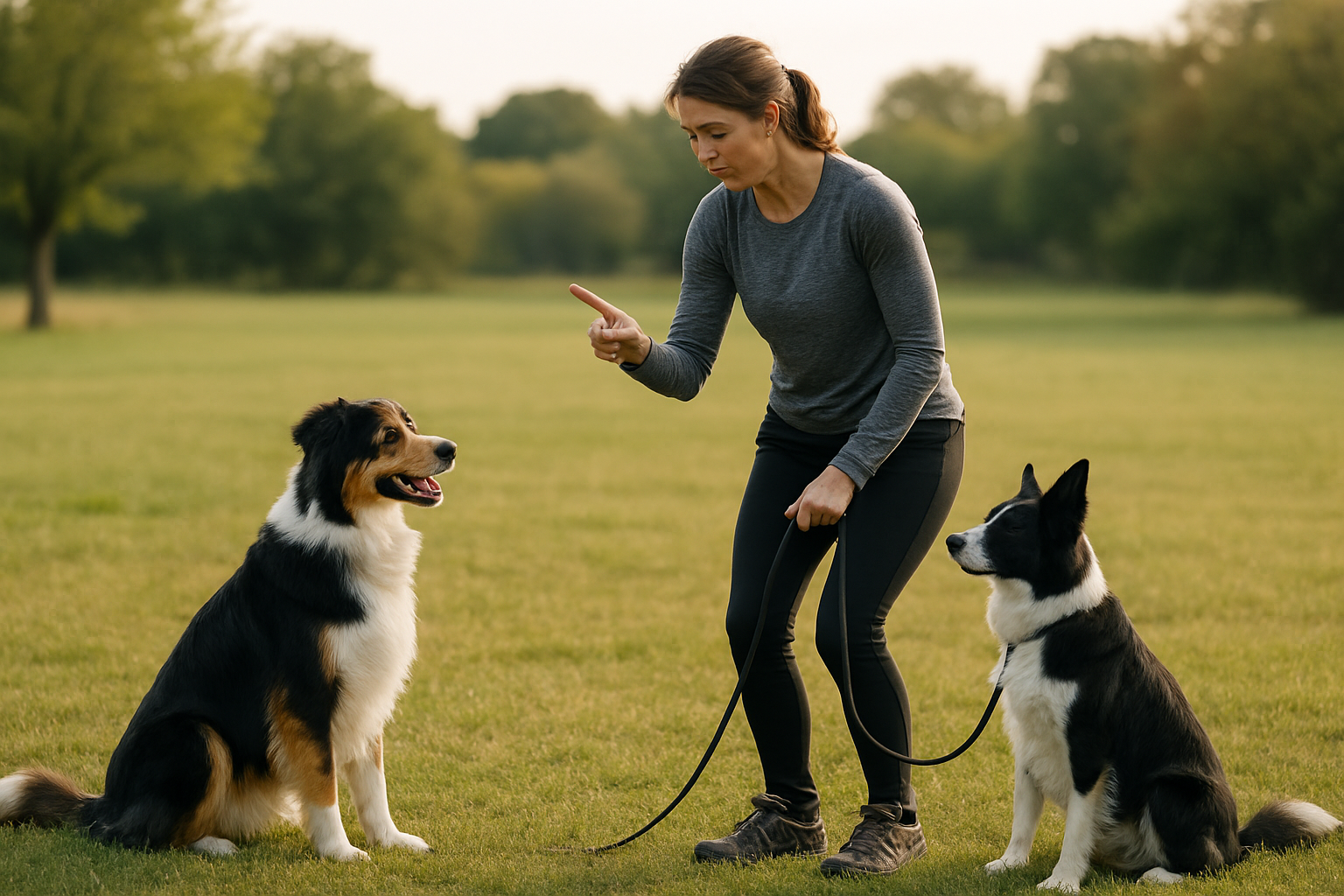
5. Match the breed to your actual lifestyle
Your best choice depends on what you will do consistently, not what you hope to do occasionally. Be honest about your work schedule, weather tolerance, access to safe exercise areas, training experience, and willingness to manage a dog that notices everything.
Choose an Australian Shepherd if you want:
- An athletic companion for hiking, outdoor activities, and dog sports.
- A trainable dog that enjoys learning but does not necessarily need advanced work every day.
- A dog that can participate in family routines when those routines include regular activity.
- A herding breed with a strong work ethic and a somewhat broader range of suitable outlets.
Choose a Border Collie if you want:
- A highly focused partner for agility, obedience, herding, or other structured training.
- A dog that enjoys learning new behaviors throughout life.
- A demanding intellectual challenge as well as an active companion.
- To build your daily routine around training, enrichment, and controlled activity.
If your idea of exercise is one relaxed walk followed by several hours alone, neither breed is a good match. A fenced yard can help, but it does not replace interaction, training, or supervision.
6. Adjust exercise for age, health, and arousal
Puppies should not be pushed into forced running, repetitive jumping, or long endurance sessions before their bodies mature. Use short, age-appropriate play, exploration, basic training, and rest. Adult exercise plans should still be increased gradually, especially after a sedentary period.
Senior dogs may remain mentally enthusiastic while needing lower-impact movement. Joint pain, unusual fatigue, persistent restlessness, limping, or a sudden change in behavior should be discussed with a veterinarian rather than “solved” by adding more exercise.
Also watch arousal levels. A dog that becomes frantic, fixated, or unable to settle may need better recovery periods and calmer training, not simply longer games.
7. Common mistakes when comparing these breeds
- Choosing by appearance: Coat color and markings do not tell you whether your schedule suits the dog.
- Counting only minutes: Ten minutes of thoughtful training can be more useful than a longer repetitive walk.
- Assuming a large yard is enough: Outdoor space does not provide guidance, companionship, or mental work by itself.
- Over-exercising a young dog: Repetitive high-impact activity can be inappropriate during growth.
- Rewarding frantic behavior: Constantly throwing a ball may reinforce fixation instead of teaching control.
- Ignoring rest: Active dogs still need predictable downtime and practice relaxing.
8. Practical checklist before you decide
- Can you provide meaningful activity every day, including busy or bad-weather days?
- Will you train for calm behavior as well as athletic performance?
- Do you have safe places for off-leash activity, or a plan for controlled exercise?
- Can you budget time for grooming, veterinary care, classes, and enrichment?
- Will the dog be alone for long periods without a suitable midday plan?
- Are all household members prepared for herding behavior around children, cats, or other dogs?
If you are bringing a dog into a home with a cat, read how to introduce a dog to a new cat calmly before making the transition.
9. What if your dog still seems hyperactive?
First, review the full routine: sleep, exercise, training, enrichment, social exposure, and opportunities to settle. A dog may appear “under-exercised” when it is actually overstimulated, frustrated, anxious, or missing clear boundaries.
If a well-structured plan does not improve persistent restlessness, compulsive behavior, aggression, pain, or sudden behavior changes, contact your veterinarian and consider a qualified reward-based trainer or veterinary behavior professional. The AKC guidance on hyperactive dogs also recommends ruling out medical causes when behavior remains concerning.
10. Final verdict: which dog needs more exercise?
Border Collies usually need more exercise overall, especially more intense mental engagement and structured work. Australian Shepherds are still a serious commitment and may be the better choice if you want an active, trainable dog for hiking, family activities, and sports without building your entire schedule around advanced training.
Choose the Border Collie when you genuinely want a highly driven working partner. Choose the Australian Shepherd when you can provide daily activity, training, and companionship but prefer a dog whose needs may fit a slightly wider range of active lifestyles. In either case, success depends less on finding the “tiredest” breed and more on providing an appropriate balance of movement, learning, social connection, and rest.