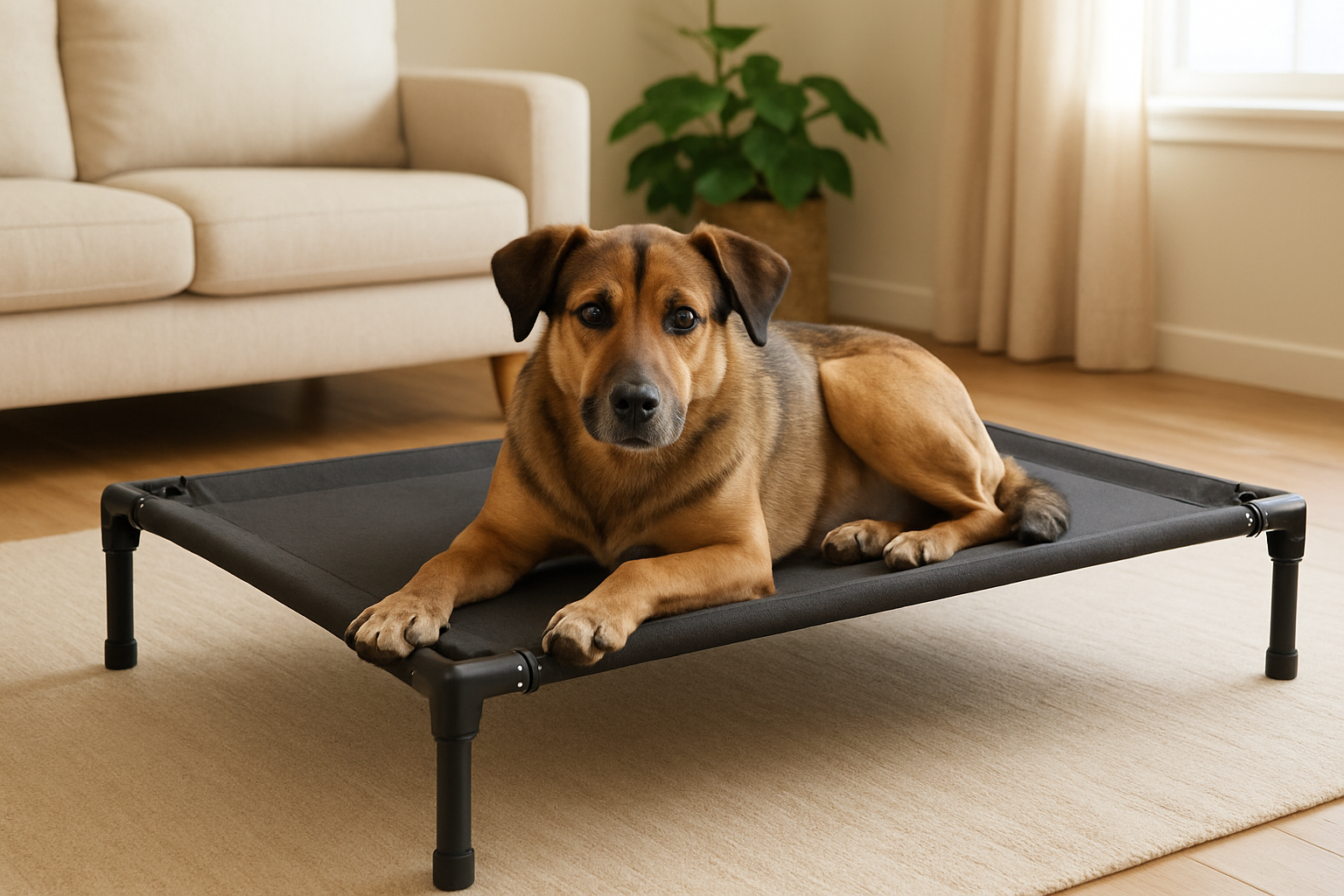
The best dog bed for a destructive chewer is usually an elevated cot with a tightly fitted, replaceable sling rather than a soft stuffed bed. For dogs that shred fabric, start with a chew-resistant frame-and-sling design, then add padding only if your dog can use it without tearing or swallowing pieces.
Chewing can quickly turn a comfortable bed into a choking, swallowing, or intestinal-obstruction risk. This guide compares practical bed types and leading options, explains what “chew proof” does and does not mean, and helps you choose based on your dog’s chewing pattern, sleeping habits, size, and environment.
1. Decide what kind of chewing problem you are solving
“Destructive chewer” can describe several different behaviors. A dog that nibbles a corner is easier to accommodate than one that digs through fabric, removes zippers, or chews whenever left alone. The right bed depends on where and when the damage happens.
- Crate chewing: prioritize a fitted, low-profile bed with no loose edges or exposed stuffing.
- Digging and nesting: choose a taut sling or tightly woven cover rather than a loose cushion.
- Separation-related destruction: do not rely on a stronger bed alone; address the underlying behavior with a qualified trainer or veterinary professional.
- Outdoor use: look for waterproof or quick-drying materials and a frame that will not absorb moisture.
AKC guidance also recommends caution when adding bedding to a crate, especially for puppies or dogs that shred fabric. If your dog destroys bedding when unsupervised, a bare, safely managed crate may be preferable until the behavior improves. AKC’s crate-training guidance explains why bedding should be introduced carefully.
2. Compare the most useful bed designs
Use the table below as a quick screening tool before comparing individual products.
| Bed design | What to look for | Best for | Warning sign |
|---|---|---|---|
| Elevated cot | Metal or aluminum frame, taut replaceable sling, rounded or protected corners | Persistent chewers, hot rooms, outdoor use | Loose fabric, exposed fasteners, sharp frame edges |
| Chew-resistant crate bed | Snug fit, minimal seams, durable coated fabric, no loose fill | Dogs that need a crate pad | Overhanging edges that can be gripped through crate bars |
| Padded ripstop bed | Tightly woven cover, concealed zipper, washable replacement cover | Moderate chewers needing more cushioning | Visible stuffing, easily opened zipper, loose piping |
| Plush or bolster bed | Reinforced seams and washable cover | Dogs that do not shred bedding | Frayed fabric or missing filling after the first use |
3. Ranked picks for destructive chewers
1. Kuranda All-Aluminum Dog Bed — Best overall for determined chewers
Best for: dogs that destroy cushions, dig at corners, or need a durable everyday platform.
Kuranda’s aluminum-frame design is the strongest general starting point when durability matters more than plush comfort. The elevated structure keeps the dog off the floor, reduces access to loose edges, and allows the cover to be replaced if it eventually wears out. Kuranda states that its chew-resistant beds are backed by a one-year chew-proof warranty, with material-specific exceptions. Review the manufacturer’s warranty and fabric limitations before buying.
Limitations: It may feel too firm for dogs that prefer a nest-like cushion, and the frame can be less suitable for dogs with mobility limitations unless the height is carefully selected.
2. K9 Ballistics Chew Proof Armored Vinyl Elevated Bed — Best for extreme chewing and wet areas
Best for: powerful chewers, diggers, kennels, patios, and dogs that wet or soil bedding.
This model uses a metal frame and a coated vinyl sling designed for dogs that have already destroyed conventional beds. The waterproof surface is practical for outdoor areas and easy-clean spaces, while the lack of loose stuffing removes one common source of shredded-bed debris. The manufacturer rates this design for its highest chew-resistance category and describes it as suitable for indoor or outdoor use. Check the current construction and size details carefully.
Limitations: Vinyl can be less comfortable than fabric in cold conditions, and some dogs may need a separate approved mat once they have demonstrated that they will not destroy it.
3. Kuranda Chew Proof Dog Bed with Cordura or indoor fabric — Best for a cooler, fabric-like surface
Best for: dogs that need a more familiar fabric surface but still attack soft beds.
A taut fabric sling can offer a better balance between durability and comfort than a fully padded mattress. The key advantage is that there is little loose material for a dog to grab, while the elevated design promotes airflow underneath. Choose the fabric according to the environment and your dog’s digging style rather than assuming every cover has the same resistance.
Limitations: Woven fabric is not invulnerable. Dogs that focus on digging can eventually damage even a strong sling, so inspect seams and corners often.
4. K9 Ballistics Chew Proof Armored Padded Crate Bed — Best chew-resistant crate option
Best for: dogs that need padding inside a crate but have outgrown ordinary fleece or stuffed mats.
This type of crate bed is more appropriate than a loose plush cushion when the dog needs a designated sleeping surface in a crate. Look for a close fit, durable outer material, and construction that prevents the dog from easily lifting or bunching the bed. It is a reasonable compromise for moderate to heavy chewers that cannot comfortably use an elevated bed.
Limitations: No padded crate bed should be treated as unsupervised-proof for a dog that immediately opens seams or swallows fabric. Introduce it while you are present first.
5. K9 Ballistics Tough Ripstop Orthopedic Bed — Best for moderate chewers needing cushioning
Best for: adult dogs that chew occasionally but still benefit from a thicker sleeping surface.
Ripstop covers and orthopedic-style foam can provide more cushioning than a cot while being easier to manage than a loose-fill pillow. This category makes sense for older or lean dogs when comfort is a higher priority and the dog has shown some ability to leave bedding intact.
Limitations: Foam beds remain vulnerable at zippers, seams, and corners. They are not the first choice for a dog that methodically dismantles every soft item.
6. Heavy-duty elevated cot from a reputable kennel supplier — Best budget-style format
Best for: owners who want the basic advantages of an elevated cot without extra padding.
A well-built cot can be effective because its design limits access to stuffing and keeps the sleeping surface under tension. Compare frame strength, replacement sling availability, fastener placement, and edge finishing rather than choosing solely by appearance.
Limitations: Generic cots vary widely. Avoid models with thin fabric, exposed plastic corners, unstable legs, or covers that can be pulled off from the side.
7. Washable flat mat with a chew-resistant cover — Best for supervised comfort
Best for: dogs that are improving but still need observation around soft bedding.
A flat mat is easier to inspect and replace than a bed with bolsters, zippers, and multiple layers. It can work in a living room or beside an elevated bed, provided your dog does not shred it when alone.
Limitations: This is not a high-security choice for a committed chewer. Use it only after a supervised trial and remove it at the first sign of tearing.
4. Match the bed to size, posture, and location
Measure your dog while lying in its usual sleeping position, then allow enough length for stretching without making the bed so large that it slides or leaves accessible edges. For crates, the bed should fit closely enough that the dog cannot fold it into a chewable pile.
Consider the floor and room temperature as well. Elevated beds improve airflow and can be helpful in warm spaces, while a low-profile padded bed may be easier for a senior dog to access. If your dog has arthritis, weakness, or trouble rising, ask your veterinarian whether the bed height and firmness are appropriate.
5. Use a safer introduction and inspection routine
- Set up the bed in a calm sleeping area, away from cords and other chew targets.
- Allow your dog to investigate it while supervised.
- Reward calm lying rather than encouraging rough play on the bed.
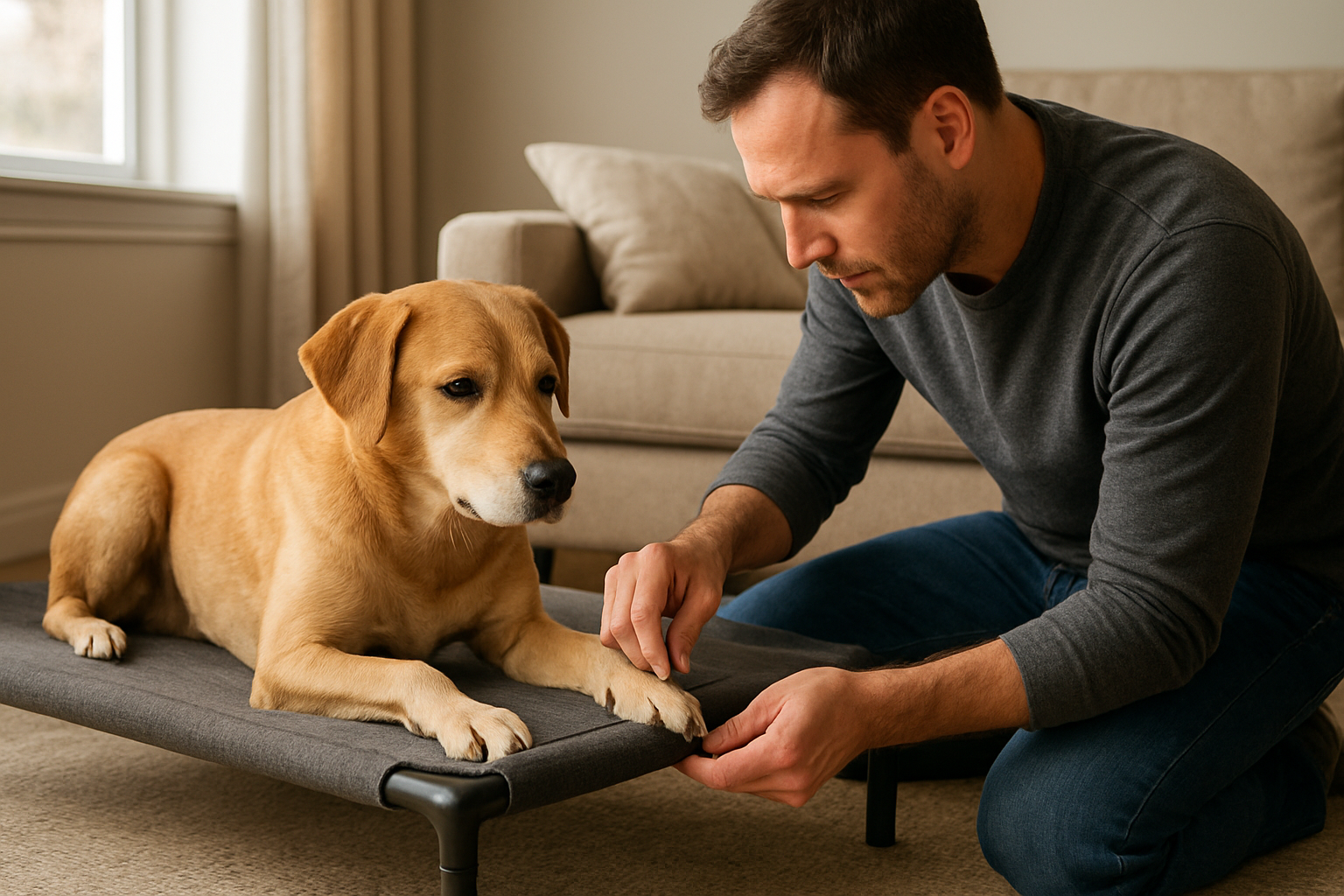
- Inspect seams, corners, fasteners, and underside tension before each unsupervised period.
- Remove the bed if any material is missing, frayed, exposed, or detachable.
Shredded bedding can become a choking or gastrointestinal hazard. PetMD advises close attention when dogs tear apart beds, toys, or blankets because swallowed fabric and fragments may cause serious problems. Review basic home-alone safety guidance, especially if destruction happens when you leave.
6. Common mistakes when buying a dog bed for a destructive chewer
- Assuming “indestructible” means unsupervised-proof: Treat marketing language as a starting point, not a guarantee for every dog.
- Buying the softest bed first: Extra padding often creates more seams, edges, and loose material to attack.
- Ignoring replacement parts: A replaceable sling or cover can make a durable frame more useful over time.
- Choosing by weight rating alone: A strong frame does not help if the fabric is easy to grip.
- Leaving damaged bedding in place: The moment your dog removes pieces, the bed has failed its safety purpose.
7. What if your dog still destroys every bed?
Use a safe, comfortable resting area without loose bedding while you work on the behavior. Increase appropriate exercise and enrichment, provide approved chew items, and review the dog’s routine around departures. If chewing is sudden, extreme, paired with panic, or accompanied by attempts to escape, contact your veterinarian and consider a qualified behavior professional.
For crate training, avoid using the crate as punishment and introduce comfort items gradually. You can also read LaokPet’s KONG Classic Dog Toy review for ideas about supervised food-based enrichment, or see the guide to safe puppy toys for teething and chewing.
Action checklist before you buy
- Measure your dog’s sleeping length and the available space.
- Decide whether you need a crate bed, elevated cot, indoor bed, or outdoor option.
- Choose a design with minimal loose fabric and no exposed stuffing.
- Check whether the cover or sling can be replaced.
- Read warranty exclusions for digging, fabric type, and normal wear.
- Plan where the dog will rest if the bed must be removed.
- Supervise the first several uses before leaving the dog alone with it.
Final recommendation by scenario
For the most determined chewers, start with the Kuranda All-Aluminum Dog Bed or a similarly constructed elevated aluminum cot. For wet areas or dogs that destroy fabric beds immediately, the K9 Ballistics Chew Proof Armored Vinyl Elevated Bed is the more practical format. For crate use, choose a close-fitting chew-resistant crate bed only after a supervised trial. If your dog is a moderate chewer and needs cushioning, a durable ripstop orthopedic bed may be suitable—but inspect it carefully and do not leave it available once damage begins.
The best dog beds for destructive chewers are not simply the thickest or most expensive. They are the beds whose materials, shape, and access points match your dog’s specific method of destruction, with safety inspection and behavior management treated as part of the purchase.