To teach a puppy to stop biting hands and clothes, calmly end the interaction whenever teeth touch people, then redirect the puppy to an appropriate toy and reward gentle behavior. Avoid hitting, shouting, or pushing the puppy away, because those reactions can add excitement or turn the moment into a rough game.
Puppy mouthing is common during play, teething, exploration, and periods of overexcitement. The goal is not to stop every use of the mouth; it is to teach your puppy that human skin and clothing are never the right targets, while toys, chews, and calm games are acceptable outlets.
1. Prepare the right setup before training
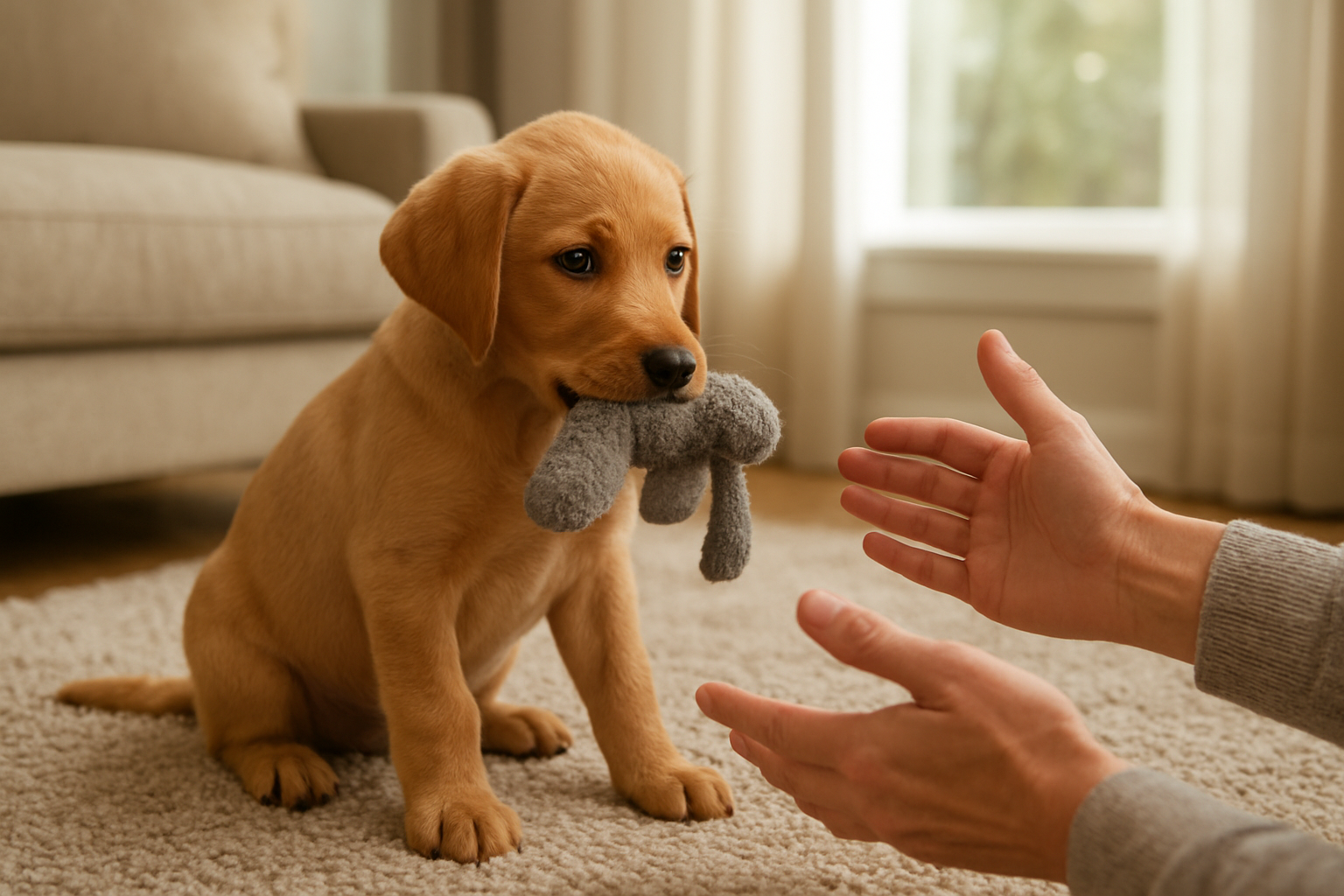
Training works better when you prevent easy mistakes. Before play or handling, place several suitable toys around the rooms where your puppy spends time. Choose toys that are large enough to hold safely, including fleece tug toys, soft toys designed for puppies, and durable chew items appropriate for your dog’s size and chewing style.
- Keep one long toy near the sofa, doorway, and puppy pen.
- Wear clothing that is easy to protect during active play.
- Use baby gates or a puppy playpen to create a calm area.
- Have small treats available for rewarding calm behavior.
- Schedule toilet breaks, meals, play, and naps rather than relying on constant free access.
A safe puppy playpen setup can help you manage biting without chasing your puppy or grabbing at their collar.
Keep the training rule simple for every household member: teeth on people or clothes make attention stop; teeth on a toy make play continue.
2. Identify why your puppy is biting
Watch what happens immediately before the behavior. Puppies commonly bite during play, when they are teething, when they want attention, or when they are overtired. A puppy who grabs trouser legs while you walk may be trying to start a chase game, while a puppy who becomes frantic in the evening may need a toilet break, chew, or nap rather than more activity.
Do not assume that every bite means aggression. During ordinary play, a puppy’s body is often loose, bouncy, and easy to redirect. However, biting around food, handling, a leash, resting places, or valued objects deserves closer attention. The American Kennel Club advises consulting a veterinarian or qualified trainer when biting occurs outside normal play situations or cannot be redirected. Read the AKC guidance on when puppy biting needs extra support.
Use this comparison to decide what to do next:
| What you observe | Likely situation | What to do | Warning sign |
|---|---|---|---|
| Loose body, wagging, playful movement | Play mouthing | Pause attention and redirect to a toy | Bites become harder or impossible to interrupt |
| Repeated biting after active play | Overexcitement or fatigue | End the game and offer a quiet rest | Puppy remains distressed or escalates |
| Chewing furniture or hands throughout the day | Teething or insufficient chew access | Rotate safe chews and supervise use | Swallowed pieces, vomiting, or damaged teeth |
| Growling or biting around food or handling | Possible fear or resource guarding | Stop confrontational training and seek help | Stiff posture, freezing, snapping, or punctures |
3. Use the same response every time teeth touch you
When your puppy bites your hand or grabs clothing, avoid pulling sharply. Fast movement can make hands, sleeves, and trouser legs more exciting. Instead, make your body still, use a brief neutral phrase such as “All done,” and remove attention.
- Freeze. Stop waving your hands, walking, or tugging at the clothing.
- Release the target calmly. If the puppy is attached to clothing, wait for a moment of slack rather than wrestling.
- End attention. Turn away or step behind a gate for roughly 5 to 10 seconds.
- Reset with a toy. Return with a toy in your hand, not with bare fingers near the puppy’s mouth.
- Reward the better choice. Praise softly or offer a treat when the puppy takes the toy, sits, or keeps four paws on the floor.
A high-pitched yelp helps some puppies understand that a bite was too hard, but it excites others. If your puppy becomes more frantic after you say “ouch,” skip the vocal reaction and quietly withdraw attention instead. The important lesson is the predictable loss of play, not the particular word you use.
Checkpoint: After several repetitions, your puppy should begin releasing sooner, looking for the toy, or pausing when you become still. Progress may be uneven, especially during teething or at the end of a busy day.
4. Teach what your puppy should bite instead
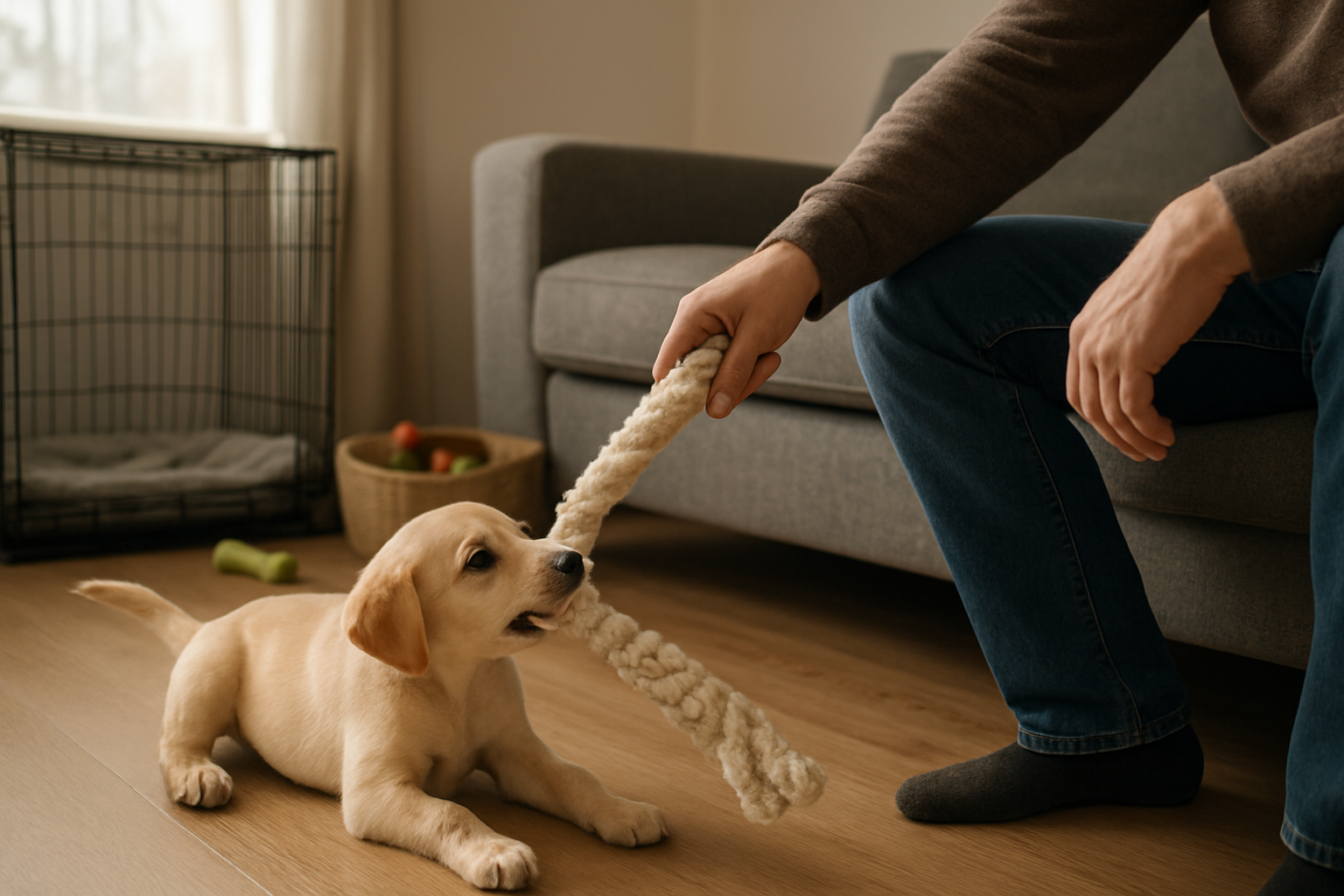
Redirection works best before the puppy is fully wound up. Start a short play session with a toy that keeps your hands away from the mouth. Long tug toys can create more distance between your fingers and the puppy’s teeth.
When the puppy chooses the toy, keep the game controlled and pause regularly. Ask for an easy behavior such as “sit,” then restart play as the reward. This teaches that calm, cooperative behavior makes good things happen.
- Offer a chilled or puppy-safe chew during teething periods.
- Rotate toys so they remain interesting without leaving every item available at once.
- Use food puzzles or simple scatter feeding for supervised mental activity.
- Practice gentle handling after exercise, when your puppy is calmer.
Reward calm contact as well. If your puppy approaches without biting, touch the shoulder briefly, give a treat, and stop before excitement rises. Gradually build up petting duration while continuing to reward a relaxed mouth.
5. Manage clothing attacks without creating a chase game
If your puppy bites trouser legs, sleeves, or dressing gowns, stop moving rather than pulling away. Keep a toy near common trigger points, such as the front door or bedroom. Toss the toy a short distance, or guide it along the floor, then reward the puppy for following it.
Do not chase your puppy to retrieve clothing or push them away with your hands. Both actions may provide the attention and movement your puppy wanted. If the behavior continues, calmly guide the puppy to a pen or quiet area with a chew and allow a brief decompression period.
For family safety, children should not be asked to manage an active biting episode alone. An adult should supervise puppy-child play and teach children to stand still, fold their arms, and call for help rather than running or squealing.
6. Prevent the tired-and-wild cycle
Many puppies bite most intensely when they need sleep. Keep a simple log for two or three days: note the time, trigger, activity level, and what stopped the episode. If biting regularly follows a long play period, shorten the session and schedule quiet time earlier.
Balance physical activity with sniffing, chewing, basic training, and rest. More exercise is not always the answer; repeatedly tiring a puppy into a frantic state can make the behavior harder to manage.
7. Use reward-based training and avoid common mistakes
The American Veterinary Society of Animal Behavior recommends reward-based methods for dog training and advises against aversive tools and physical or psychological punishment. Review AVSAB’s humane dog training position statements before choosing a trainer or training plan.
Common mistakes
- Allowing hand wrestling sometimes and correcting it at other times.
- Using “no” repeatedly without showing the puppy an acceptable alternative.
- Pulling clothing away quickly and accidentally rewarding the chase.
- Putting a puppy in a crate angrily or using the crate as punishment.
- Offering unsafe chews that splinter, break apart, or are small enough to swallow.
- Continuing play after the puppy is too excited to respond.
8. Troubleshoot the problem when progress stalls
What if the puppy ignores the toy?
Use a more interesting toy, move it slowly along the floor, and start the redirection earlier. If the puppy is already frantic, stop the interaction and offer a quiet reset rather than presenting several toys in quick succession.
What if the puppy bites harder after you say “ouch”?
Stop using the vocal reaction. Freeze, withdraw attention briefly, and resume only when the puppy is calmer. Some puppies interpret high-pitched sounds as an invitation to continue playing.
What if the puppy keeps attacking ankles?
Carry a toy before walking through the room, stop when the puppy approaches, and reward a sit or toy grab. Use gates to limit access during predictable high-energy periods. If the behavior is intense or causes injury, arrange help from your veterinarian and a reward-based behavior professional.
When should you seek professional help?
Contact a veterinarian if bites repeatedly break skin, the behavior appears suddenly, or your puppy may be in pain. Seek qualified behavior support for stiff posture, freezing, guarding, fear-related biting, bites during routine handling, or behavior that cannot be interrupted safely.
9. Follow this daily puppy-biting checklist
- Place suitable toys in every active area.
- Use toys instead of hands for all rough play.
- Freeze and withdraw attention when teeth touch skin or clothes.
- Resume only with a toy or calm behavior.
- Schedule naps before your puppy becomes frantic.
- Supervise children and keep clothing attacks from becoming chase games.
- Record triggers so you can adjust timing and management.
Next actions for the next seven days
- Choose three safe toys and place them where biting usually begins.
- Teach every household member the same freeze-and-withdraw response.
- Run three short toy-based play sessions each day.
- Reward calm greetings, sitting, and gentle handling.
- Track when biting happens and add rest before the usual trigger time.
- Book veterinary or professional training advice if biting is fearful, defensive, unusually intense, or injures someone.
Learning how to teach a puppy to stop biting hands and clothes is mainly a consistency exercise: remove the reward for biting people, make appropriate toys easy to choose, and reinforce calm alternatives. With sensible management and reward-based practice, most families can turn chaotic mouthing into safer, more polite play.