For most families with younger children, guinea pigs are the easier choice—but neither animal is a low-maintenance starter pet. Choose guinea pigs if your child enjoys gentle observation and supervised feeding; choose rabbits only if your family can provide more space, longer-term care, and calm, respectful handling.
The better option depends less on which animal looks friendlier and more on how your child wants to interact with a pet. This comparison looks at handling, housing, daily care, social needs, costs, lifespan, and supervision so you can make a realistic choice.
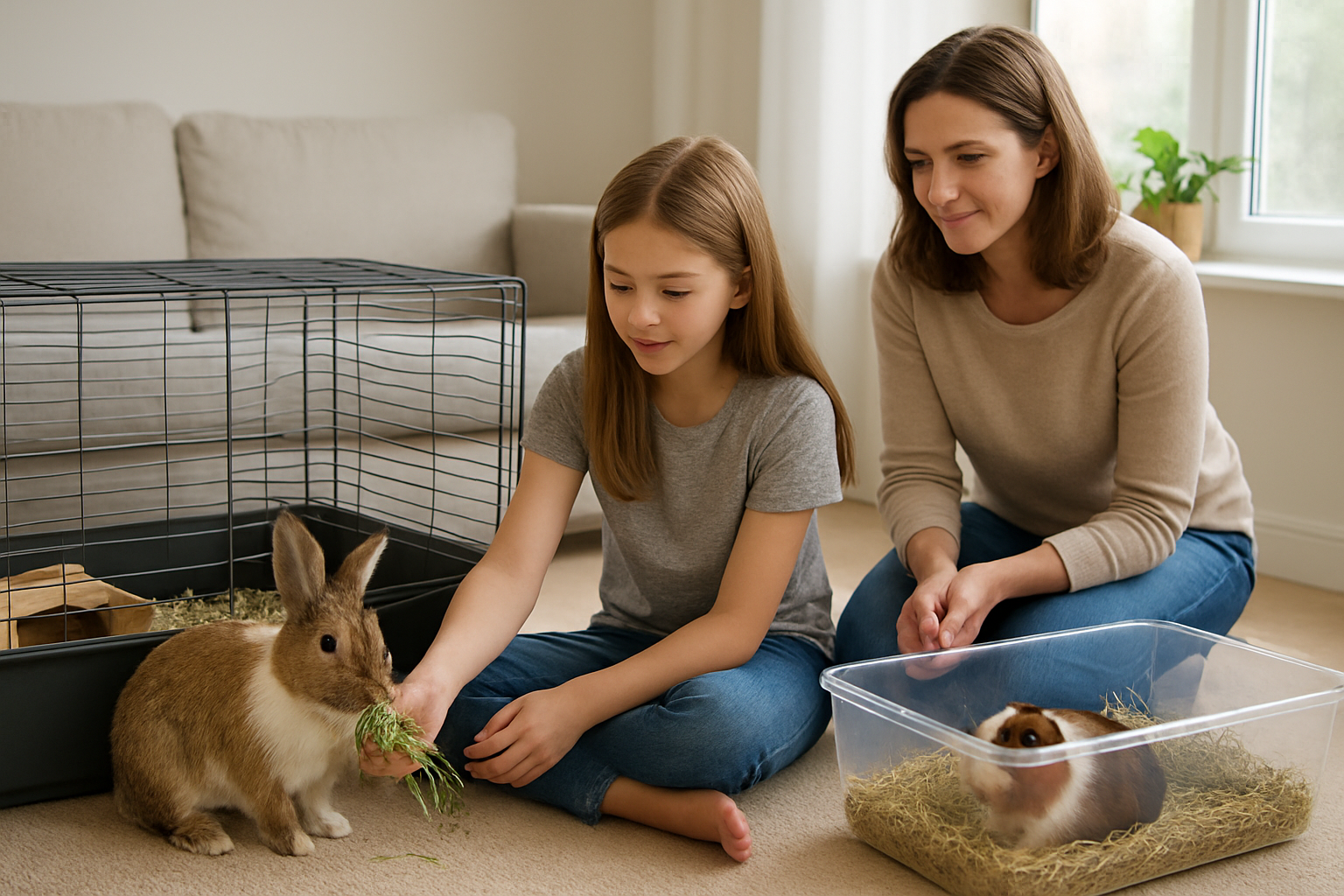
1. Start with the child’s expectations
The first question is not “Which pet is cuter?” It is “What does your child expect to do with the pet?” Many children imagine a small animal that can be picked up, carried around, and cuddled. Rabbits and guinea pigs often do not fit that picture.
Rabbits are prey animals and commonly feel unsafe when lifted. They may struggle, kick, or injure themselves if they are dropped. Guinea pigs can also find being picked up frightening, although many become comfortable with gentle stroking, hand-feeding, and calm interaction at ground level.
The RSPCA’s family pet guidance recommends considering the animal’s natural behavior, housing, companionship, and care needs before choosing a pet for a child. It also stresses that children should not be the sole owners of animals.
2. Compare the practical care requirements
Both species need more than a small cage, a food bowl, and occasional attention. They need same-species companionship, suitable housing, exercise, enrichment, fresh food, routine cleaning, and access to veterinary care.
Rabbits generally require the larger and more complex setup. They need room to run, explore, rest, hide, and express natural behaviors such as digging and jumping. Many families also need to rabbit-proof indoor areas because rabbits chew electrical cables, furniture, and other household materials.
Guinea pigs still need generous floor space, hiding areas, exercise, and daily cleaning tasks. Their diet must include constant access to hay and a reliable source of vitamin C because guinea pigs cannot produce it themselves.
The PDSA guinea pig guide notes that guinea pigs need space to explore and should live with other guinea pigs. The RSPCA pet-readiness advice similarly identifies companionship and large, secure accommodation as important needs for both species.
The table below summarizes the main decision points.
| Decision factor | Rabbit | Guinea pig | Warning sign |
|---|---|---|---|
| Handling | Usually prefers ground-level interaction and may dislike being picked up | Often enjoys gentle stroking and hand-feeding but still needs careful handling | Your child wants to carry the pet frequently |
| Space | Needs substantial exercise space and safe roaming areas | Needs a spacious enclosure with hides and room to move | You are planning to use a small starter cage |
| Companionship | Usually needs a compatible rabbit companion | Needs one or more compatible guinea pig companions | You intend to keep only one animal |
| Daily care | Hay, fresh food, cleaning, exercise, grooming, enrichment, and monitoring | Hay, vitamin C, fresh food, cleaning, enrichment, and monitoring | Your family has no dependable adult care plan |
| Child interaction | Best for calm older children who enjoy observing and training | Often easier for gentle feeding, talking, and supervised stroking | Your child becomes loud or frustrated around nervous animals |
| Long-term commitment | Commonly a long commitment, often around 8–12 years | Usually a shorter commitment, but still several years of daily care | You are choosing mainly because the pet seems temporary |
3. Decide which pet suits your child’s age and temperament
For younger children
Guinea pigs are often the more manageable option because children can participate in simple, supervised activities such as offering vegetables, filling hay, watching behavior, and making safe enrichment. However, the child should interact with the animal on the floor or beside the enclosure rather than lifting it without an adult.
Young children can accidentally squeeze, chase, drop, or corner a small animal. Always supervise contact, provide hiding places, and stop the interaction if the pet shows signs of fear or stress.
For older children
An older child who is patient and willing to follow rules may enjoy a rabbit. Rabbits can be playful, intelligent, and responsive to positive training, but they are not usually a good match for a child who mainly wants a cuddly pet.
The House Rabbit Society’s guidance on children and rabbits explains that rabbits generally prefer staying on the ground and can be frightened by loud, fast, or forceful interaction. That makes personality and family routine more important than age alone.
4. Compare food, cleaning, and health responsibilities
Both animals need daily observation because small changes in eating, droppings, movement, or behavior can indicate illness. An adult should learn the normal routine of the animals and arrange care with a veterinarian familiar with rabbits or guinea pigs.
Rabbits need a high-fiber diet based mainly on hay, along with suitable greens and measured pellets. Their teeth grow continuously, so chewing and diet are important parts of routine care. They may also need vaccinations, parasite prevention, grooming, nail trimming, and regular health checks depending on veterinary advice and local risks.
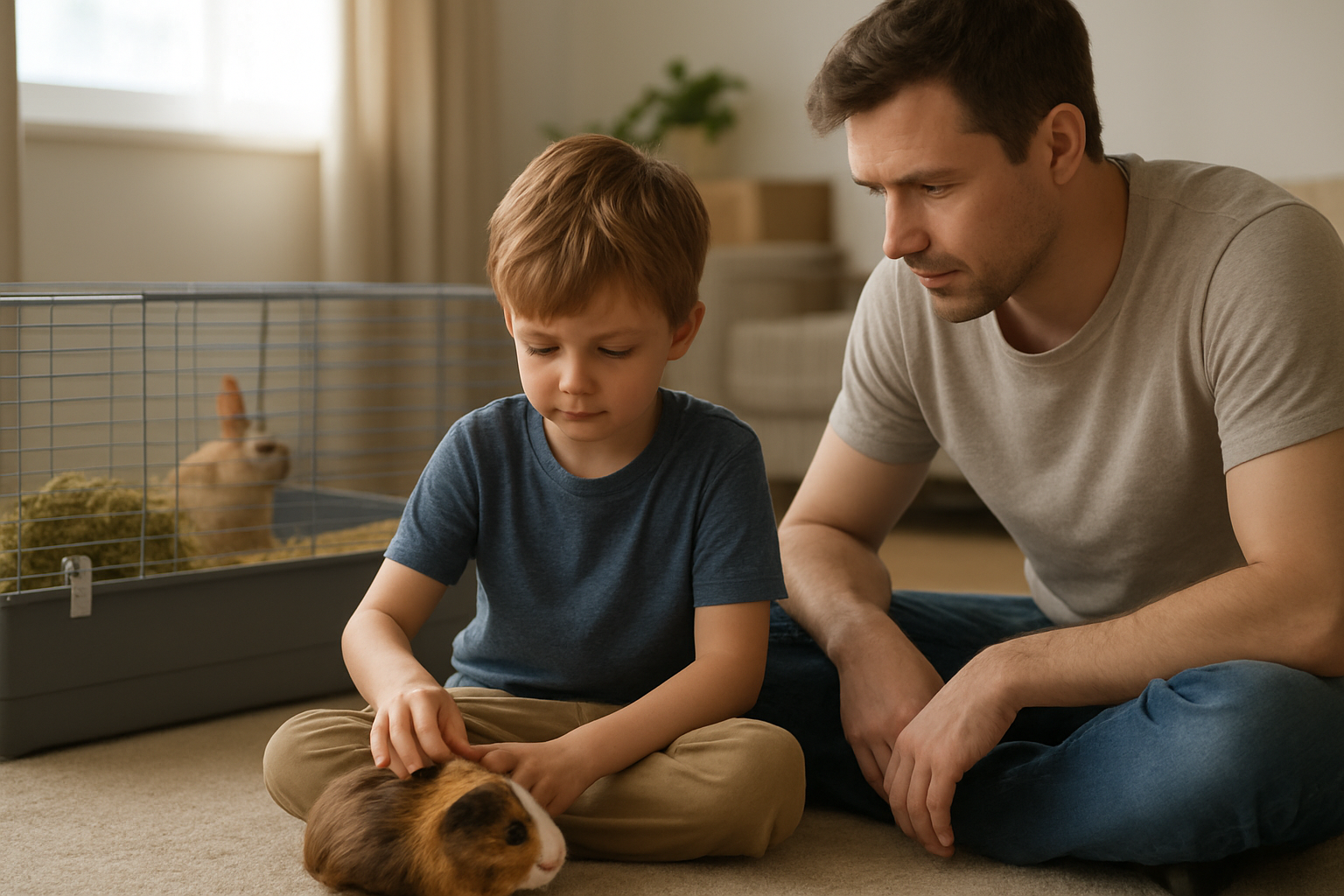
Guinea pigs also depend heavily on hay for healthy teeth and digestion. Fresh vegetables and an appropriate vitamin C source are essential considerations. Their enclosure usually needs frequent spot-cleaning, with more thorough cleaning scheduled according to the number of animals, enclosure size, and bedding system.
Do not assume that a smaller animal means lower veterinary responsibility. Both species can hide illness, and emergency treatment can be costly. Before adoption, identify a suitable local veterinarian and ask about routine care, diet, emergency symptoms, and safe handling.
5. Understand the social and housing commitment
Neither rabbit nor guinea pig should normally be treated as a solitary pet simply because the family provides human attention. Both species are social and generally need compatible companions of their own kind.
Do not house a rabbit and a guinea pig together as a substitute for same-species companionship. They communicate differently, have different dietary needs, and a rabbit can unintentionally injure or bully a guinea pig. The RSPCA’s guidance on rabbits and guinea pigs advises against keeping the two species together.
Before choosing either pet, measure the space available rather than relying on a shop display. Plan for exercise, hiding areas, food storage, cleaning supplies, safe flooring, and separation from dogs, cats, cables, extreme temperatures, and other hazards.
6. Match the pet to your family’s routine
Choose guinea pigs when your family wants:
- A pet that can be watched, talked to, and gently stroked.
- Simple child tasks such as preparing vegetables or refreshing hay.
- A generally smaller and less complex living area than a rabbit requires.
- A pet suited to a calm child who accepts that handling must be limited.
Choose rabbits when your family can provide:
- More space for exercise and safe indoor or outdoor living.
- Calm, ground-level interaction rather than frequent carrying.
- A long-term adult commitment to diet, cleaning, enrichment, and veterinary care.
- An older child who can follow handling rules consistently.
If your child is unsure, consider visiting a reputable rescue or arranging a supervised educational session before adopting. Meeting an individual animal can reveal more than choosing by species alone, because temperament varies considerably.
7. Use this family decision checklist
- Can an adult take full responsibility if the child loses interest?
- Can you provide at least two compatible animals of the same species?
- Do you have enough space for exercise, hiding, feeding, and cleaning?
- Will your child accept that the animal may not enjoy being picked up?
- Have you identified a veterinarian with relevant small-mammal experience?
- Can your family manage daily care during holidays, illness, and busy school periods?
- Do you have a plan for emergency veterinary costs?
Common mistakes when choosing between a rabbit and guinea pig
- Buying a single pet: Human attention does not replace a suitable same-species companion.
- Choosing a tiny cage: Both species need meaningful floor space, not just room to turn around.
- Expecting cuddles: Ground-level interaction is often safer and less stressful.
- Letting a child become the sole caretaker: Adults must own the routine and monitor health.
- Housing the species together: Rabbits and guinea pigs have different needs and should not be combined casually.
- Ignoring the long-term commitment: A child’s interest may change, but the animal’s needs will not.
What if your child wants a pet they can hold?
Pause before adopting either species. Explain that gentle care means allowing the animal to choose contact, providing hiding places, and avoiding chasing or grabbing. If your child cannot accept those boundaries, wait or choose a different family activity instead of placing an animal in a stressful situation.
If a rabbit or guinea pig suddenly becomes aggressive, unusually quiet, stops eating, or resists normal handling, do not punish it. Separate children from the animal and contact a veterinarian, because pain or illness can change behavior.
Next actions before bringing one home
- Write down what your child wants to do with the pet.
- Measure and prepare the full living area.
- Budget for companions, food, bedding, equipment, and veterinary care.
- Visit a rescue or responsible source and ask about temperament and history.
- Prepare an adult-led care schedule before adoption day.
- Teach every child in the home how to approach, feed, and leave the animals alone.
Final verdict: rabbit or guinea pig for children?
For many households, guinea pigs are the better first choice because their daily interaction can be easier to structure around gentle feeding, observation, and supervised stroking. They still need companions, space, specialized food, and adult care, so they are not effortless pets.
Rabbits may be the better choice for an older, calm child and a family prepared for a larger setup and longer commitment. The right answer in the rabbit vs guinea pig decision is the species whose natural behavior your family can respect—not the one your child simply finds most appealing.